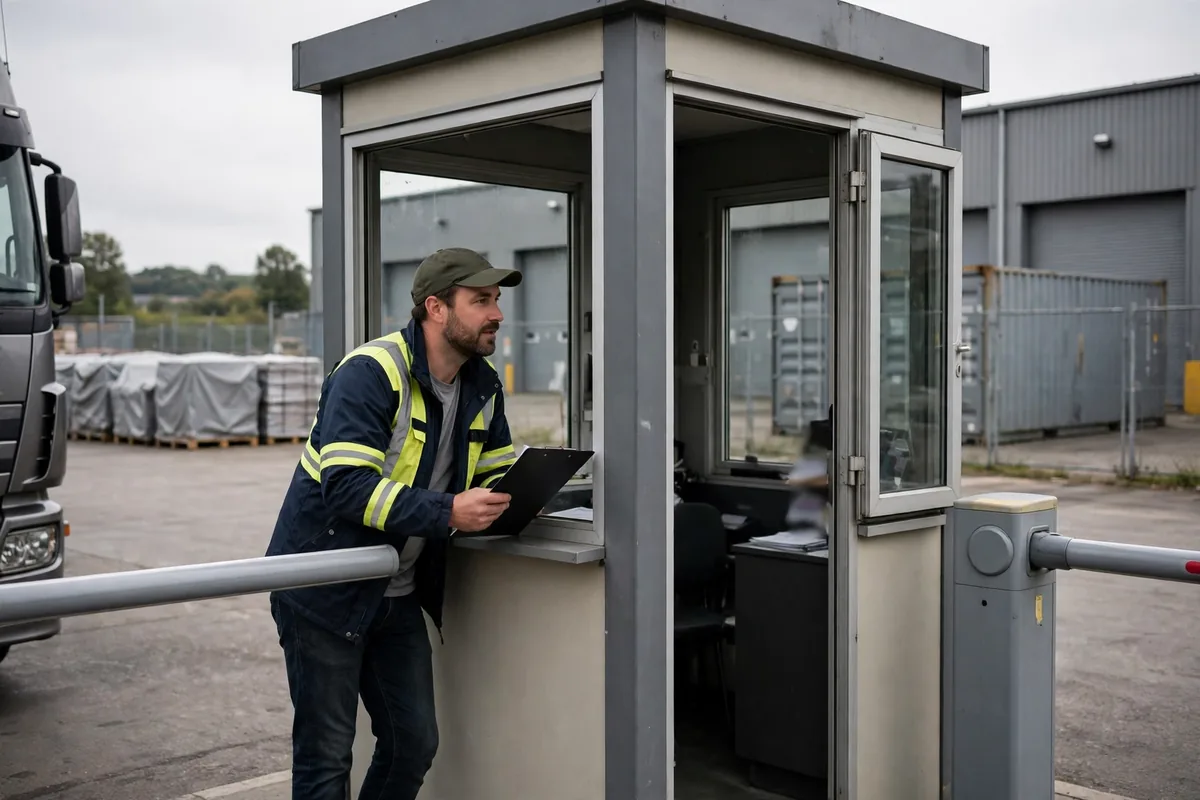
Let me tell you what a dock appointment no-show looks like from the driver's seat, because from the office it looks like a blank line on a schedule, and from the cab it looks like a day going down the drain. One Tuesday morning last October I pulled into a home-goods warehouse in Ontario, California, with a full trailer, booked for 8 a.m. I checked in at 7:40. The guard told me to wait outside. At 10:30 a dispatcher came out and said the truck ahead of me never showed, the freight wasn't ready, and I should pull aside and wait for the afternoon. I sat in that yard for more than six hours, burned a whole day on one load, and lost the next load I had lined up. I showed up. The truck showed up. The freight showed up. The plan fell apart anyway.
That is the part people miss when they talk about no-show rates. A missed appointment is not just an empty dock door. It is a forklift driver standing around with nothing to do, a clerk waiting on paperwork that never arrives, and the next truck stacking up at the gate because nobody is free to receive it. The American Transportation Research Institute found drivers wait an average of about 3.5 hours at shipper and receiver facilities, and that drivers were detained at 39.3% of deliveries in its 2023 survey. The usual free waiting time is two hours. After that, detention commonly runs $25 to $75 an hour, with about $50 an hour a common figure — check the current policy on the official site before relying on any rate, because contracts vary. One empty slot ripples through the whole afternoon.
When the dock appointment no-show rate climbs, the money leaks in plain sight
Here is the math, worked out on a mid-size facility so you can see the shape of it. These are hypothetical figures, an illustrative example, not any one warehouse's real books:
| Item | Illustrative example |
|---|---|
| Appointments booked in a month | 200 |
| Dock appointment no-show rate | 15%, or 30 appointments nobody kept |
| Dock time wasted per empty slot | 1.5 hours |
| Dock hours wasted in the month | 45 hours |
| At a $50-an-hour detention yardstick | About $2,250 |
That $2,250 is only the part you can put on a spreadsheet. It leaves out the dispatcher spending the afternoon on the phone hunting for replacement trucks, and the replacement trucks arriving out of sequence and knocking the rest of the day sideways. It leaves out the quieter cost, too. A driver who wastes a day at your place thinks twice before taking your freight again. He will take a slightly cheaper load to the warehouse that unloads on time.
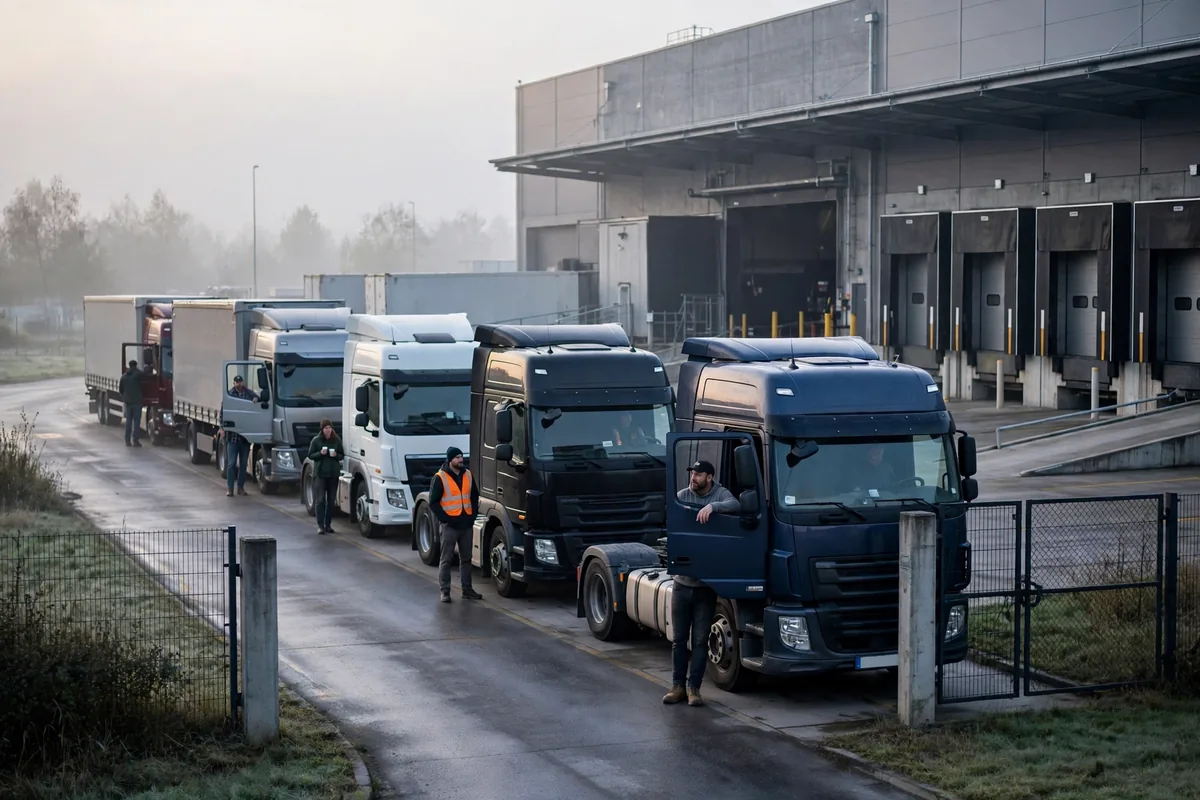
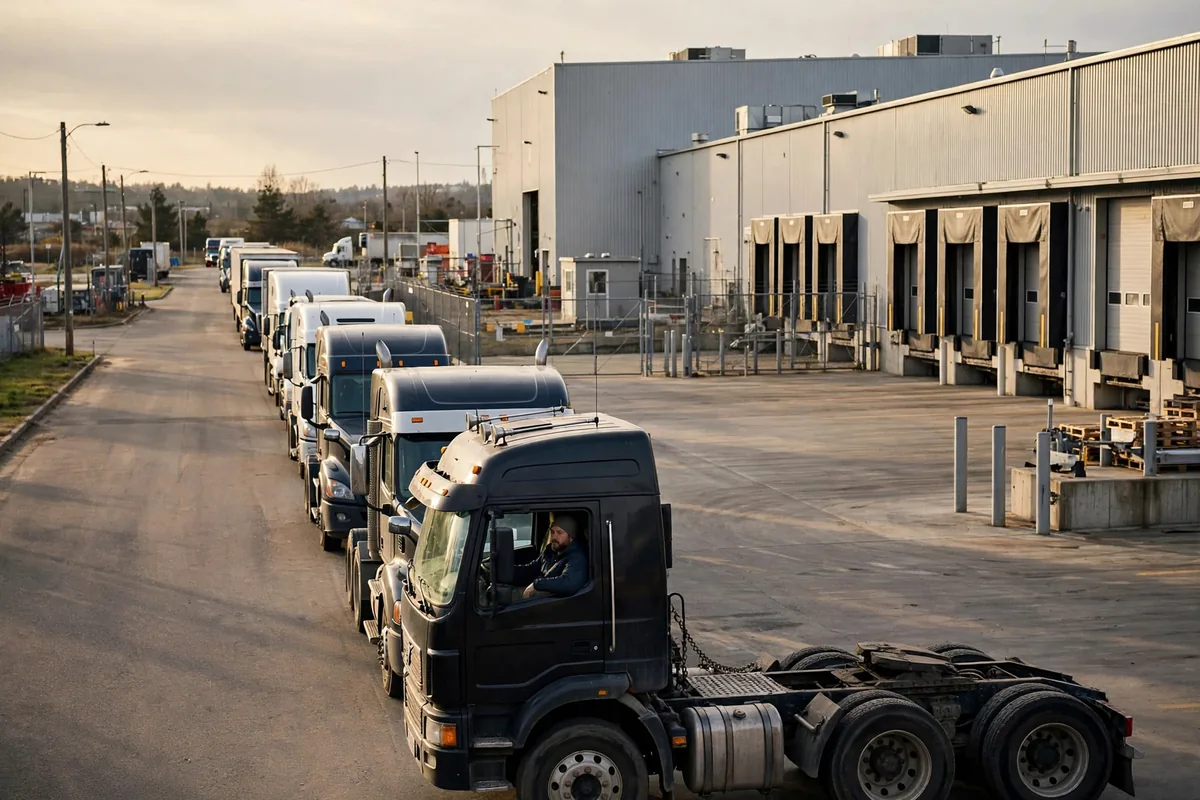
I saw the other side of the same problem in Dallas in the winter of 2024, at a cold-storage site. I was booked for 9 a.m. and arrived at 8:50 to find seven trucks already lined up, all booked into the same 9 to 10 a.m. window. The guard worked through the paperwork one truck at a time, and I did not get a door until after 11. An old hand who runs that lane every week told me the place books six trucks an hour into a building that can unload two at a time. The rest wait in the cold. Once drivers learn that pattern, they stop treating the appointment as real. They show up late on purpose, or they take another load first and swing by if there is time. The schedule says one thing. The yard says another. Drivers believe the yard.
A high no-show rate is usually the warehouse grading its own homework
Here is the judgment that surprises warehouse managers when I say it out loud: if your no-show rate is high, the first thing to fix is your own booking sheet, not the drivers. Fining drivers is the easy move. Put up a sign, hold a deposit, send a warning letter. You can do all of that before lunch, and none of it brings a single truck back, because none of it answers why the truck stayed away. Drivers keep appointments that pay. A driver who arrives, unloads, and leaves in two hours will guard that appointment like gold. A driver who arrives and sits for five hours will treat the next one as a suggestion.
Overbooking is the trap that keeps the cycle going. A warehouse afraid of empty doors books extra trucks to cover the gaps. The extra trucks crowd the gate, the wait gets longer, more drivers decide the appointment is not worth keeping, and the no-show rate climbs again. The fix that looks like caution — book more, just in case — is what makes the problem worse. The honest number is the number of trucks you can actually unload in an hour. If one door turns a trailer in ninety minutes, you book one truck, not two, and you leave room for the load that runs long. An empty door for ten minutes costs you ten minutes. Three trucks waiting two hours costs you three drivers who may not come back.
There is a second habit that burns trust just as fast. Some warehouses change appointment times on the morning of the delivery and only update the system, without a call. A driver rolling down the highway is not staring at a booking portal. He arrives at the original time and gets told his slot moved to 3 p.m. Where is he supposed to go? Turning around on the interstate costs half an hour and a tank of fuel. Do that to a driver twice and he learns the lesson: book the slot, but do not plan around it. Keep another load in your pocket.
Three things that actually move the dock appointment no-show rate
Book to real capacity. Count what your doors and your crew can actually turn in an hour, on a normal day, with a normal crew, and book to that number. Leave a buffer for the load that runs over and the trailer swap that takes longer than it should.
Say it early, and say it to the person. If a time has to move, move it the day before, by phone and by text, and do not call it moved until the driver confirms. If it moves by more than two hours on the day itself, give the reason: freight not ready, a door down, the truck ahead stuck. Drivers can sit through a long wait when they know what they are waiting for. They walk away from a wait nobody can explain. DHL's own analysis put the average driver wait at 2.5 hours, and noted that unloading 24 pallets from a 48-foot trailer takes about 30 minutes — so when four trucks are queued ahead of you, that is two hours before your turn even starts. The wait itself is not the insult. The silence is.
Split the count before you act on it. A no-call no-show is one thing. A driver who calls half a day ahead to cancel is another. A slot your own team moved, which the driver then missed, belongs on your side of the ledger, not his. Track those three separately for three months and the picture gets clear: which carrier keeps ghosting you, which time of day goes empty most, and how much of the problem is your own rescheduling. Most warehouses with a bad rate have never split the number. They know the total is high. They have no idea where it is high.
Before I take a load, I ask dispatch one question now: does that warehouse unload on time? If the answer comes with a pause, I build in an extra hour or I pass on the load. Drivers talk. Word about a warehouse travels truck to truck faster than any review site. A dock schedule is not really a timetable. It is a promise, and drivers keep score on promises. Book what you can actually handle, say it early when it changes, and count the misses honestly. Do those three, and the no-show rate comes down on its own. An old saying among drivers holds up here: a load is only as good as the door it is going to.
By Shifu Zhao, Trucking Veteran (15 yrs)