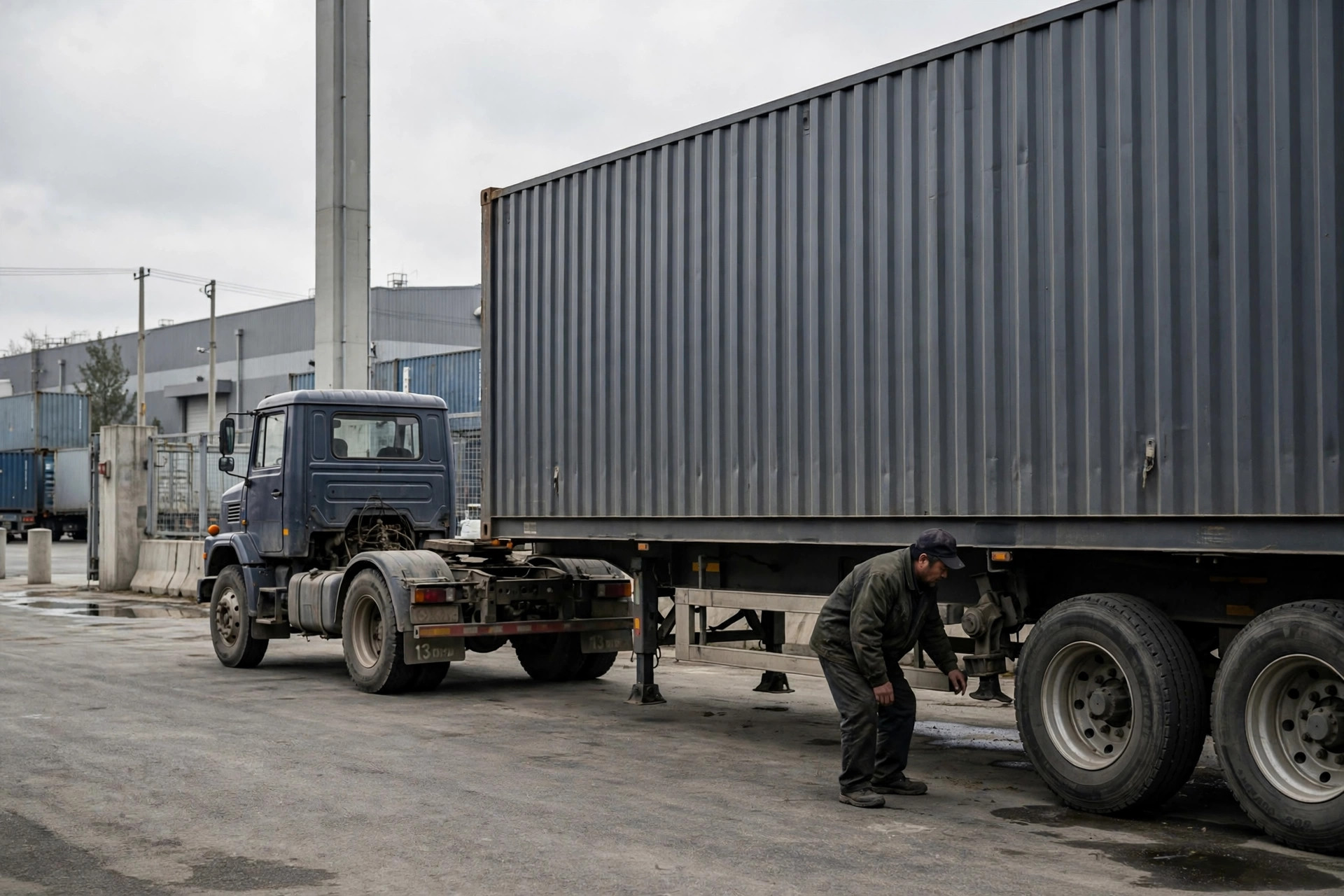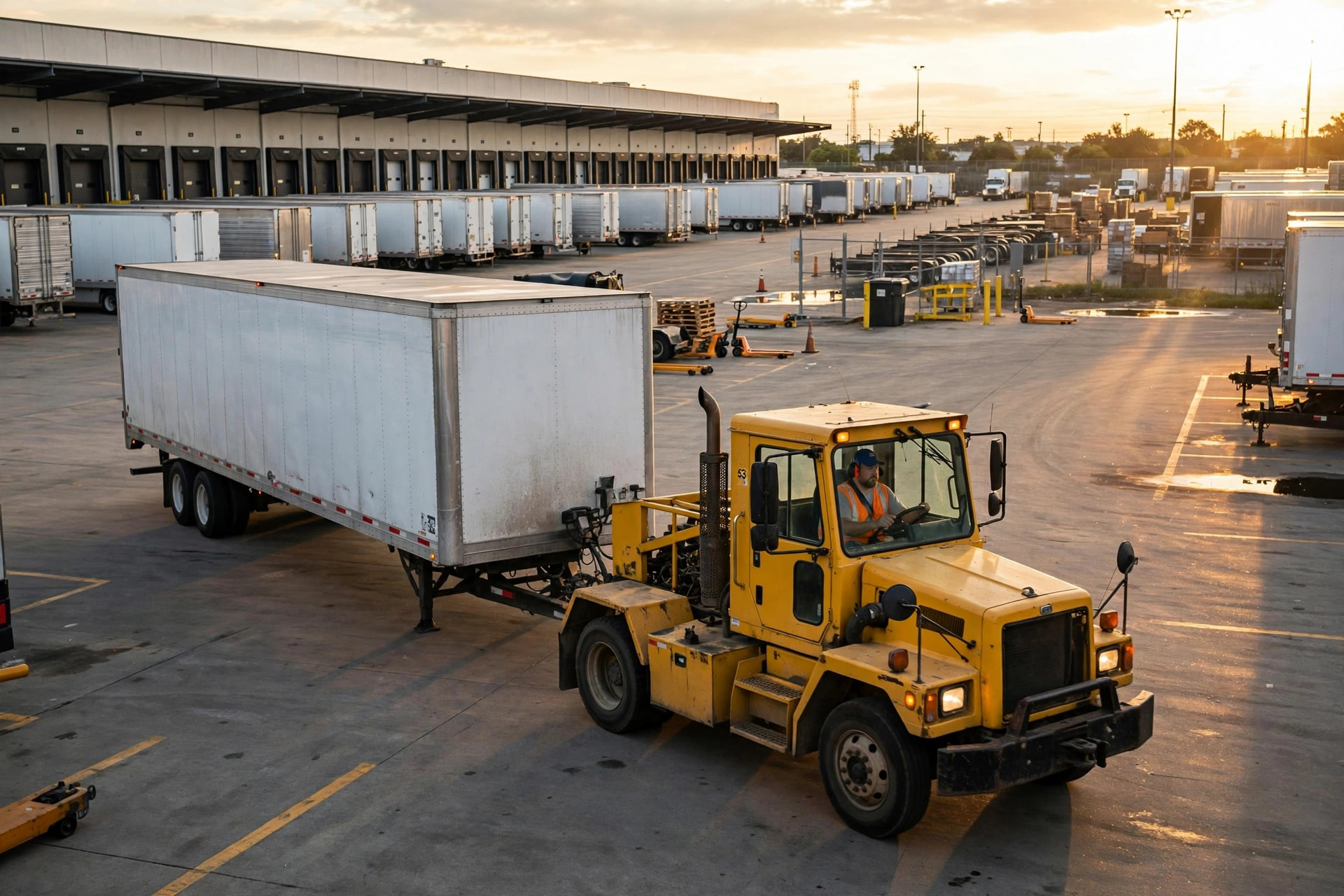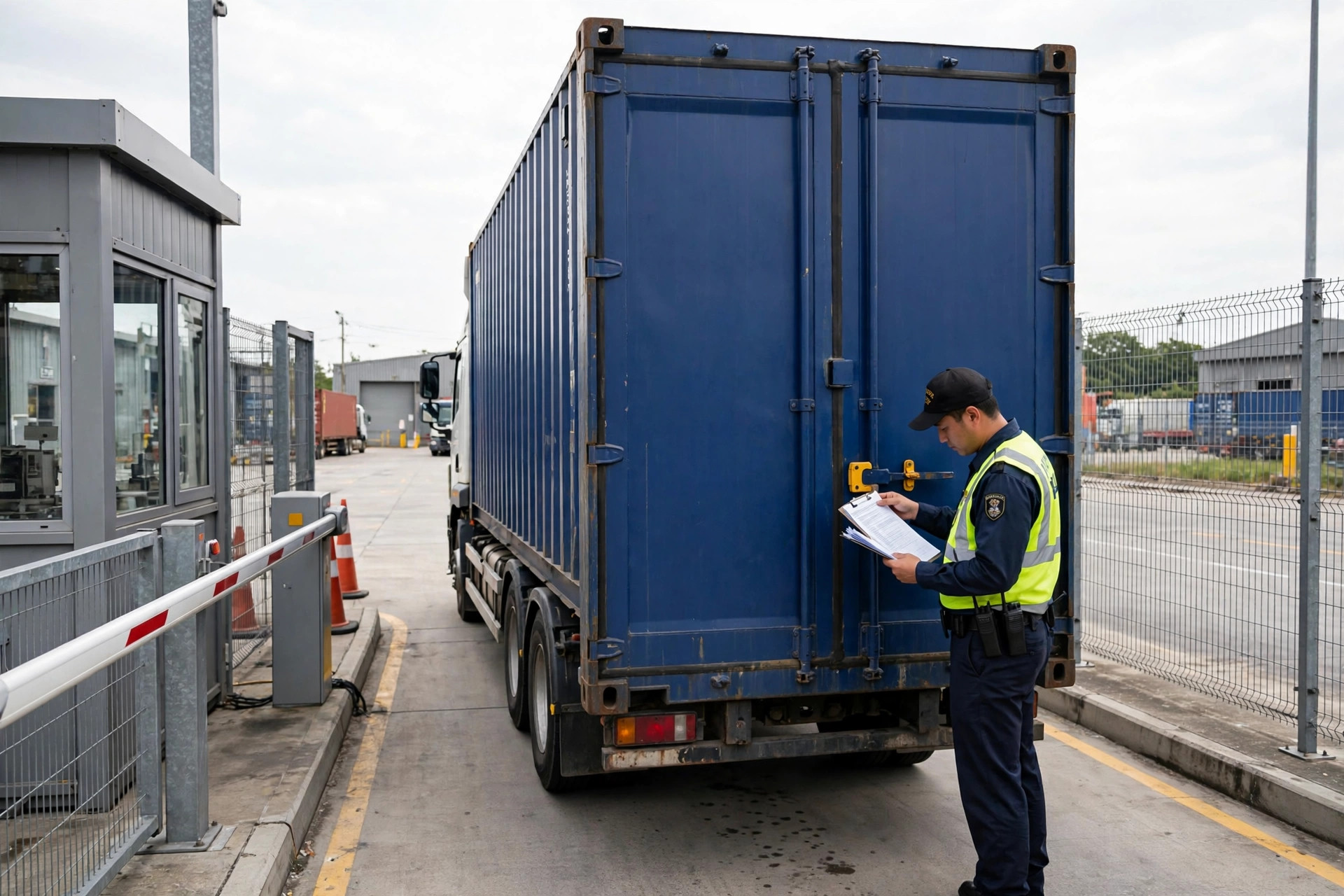
I'll tell you a story from the summer of 2024. I had an appointment at an auto-parts distribution center outside Chicago — one of those places that slices its day into 15-minute windows. Mine was 2:15 to 2:30 in the afternoon. Then a rollover on I-80 shut the highway down, and I rolled up to the gate at 2:23. Eight minutes late. The guard barely looked up from his screen: "Your window's gone. Rebook." The earliest slot open was 6 PM. So I sat in that lot for four hours, engine idling, load going nowhere. Detention pay? My contract didn't have a line for it. That whole afternoon just evaporated.
After fifteen years behind the wheel, I'll tell you straight: nothing scares me more than a 15-minute window. A truck runs on a highway, not on rails. A traffic jam, a weigh station, fueling up, a backup at the last dock — any one of those eats ten minutes, and a 15-minute window is gone. The tighter the window, the more the whole gamble of the road gets dumped on the driver's shoulders. From what I've seen over the years, maybe six out of ten trucks actually hit a 15-minute window. The rest either show up two hours early to squat in the lot, or they eat the penalty.
What a 15-minute window really costs a driver
That Chicago day taught me a rule I still follow: any warehouse with 15-minute windows, I build in a full hour of buffer. But here's the catch — show up an hour early and the guard waves you to the side: "Too early, wait over there." Early doesn't get you in. Eight minutes late gets your appointment canceled. It's not an appointment system, it's an exam, and it's one you can fail with the answer key in your hand.
Some places are even harsher. I know an old-timer running the Midwest lanes who hit a food warehouse in Indiana last winter. Snowstorm, slick roads, he was twelve minutes late. The guard turned him away and told him to come back the next day. A full reefer load sat in the lot overnight with the cooling unit burning fuel all night. When he finally unloaded the next day, the shipper dinged him a late fee too. Twelve minutes. Whose fault was that, exactly?
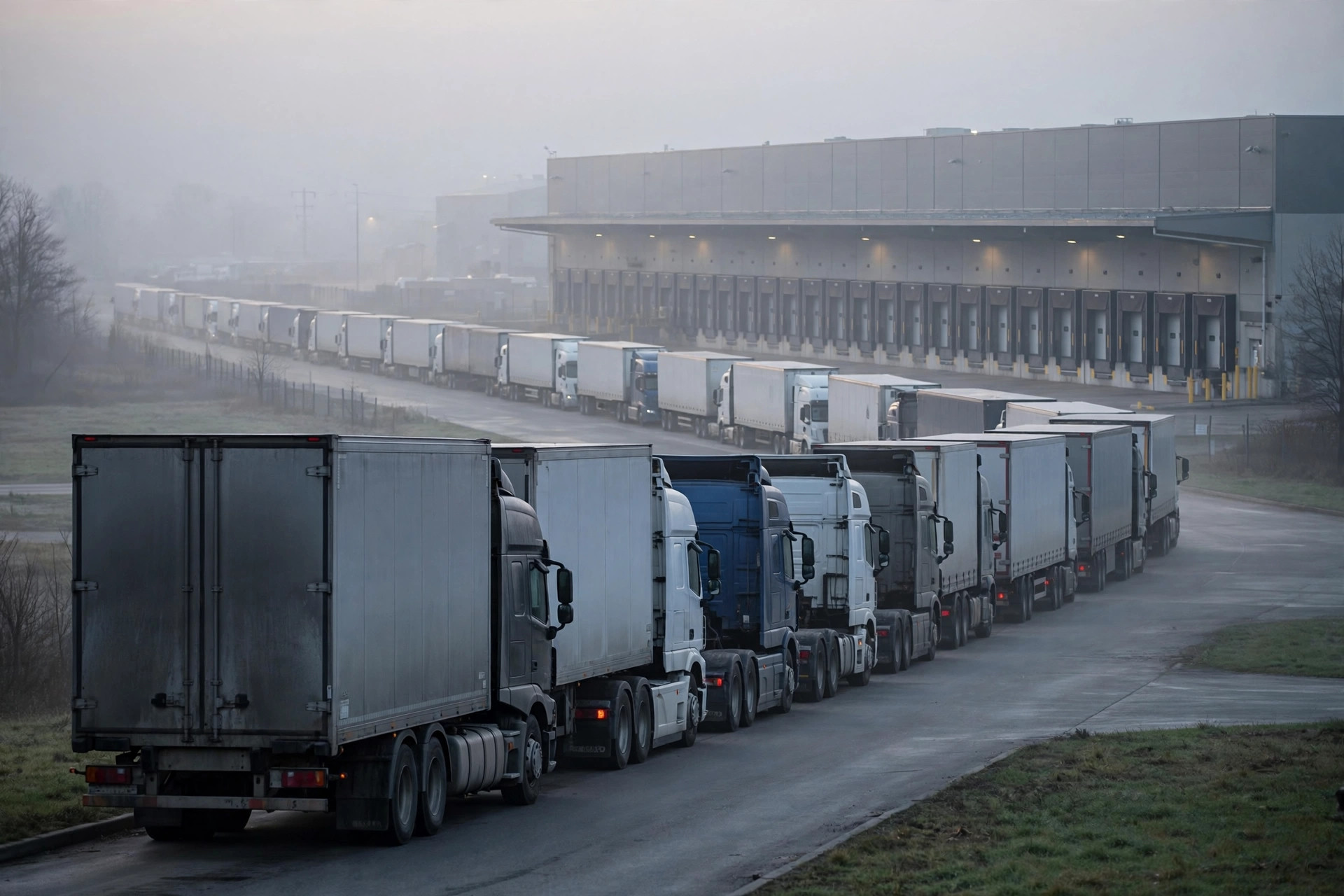
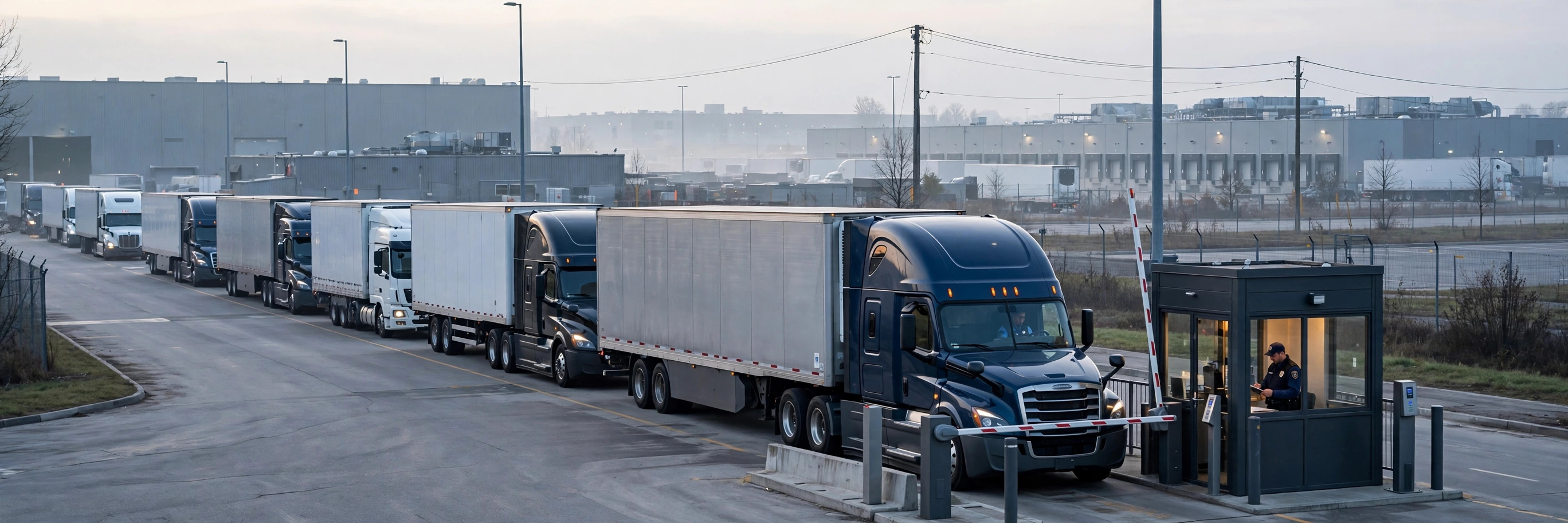
And drivers adapt — not always in ways the warehouse likes. A few guys I know running Chicago lanes just show up the night before and sleep in the lot outside the gate. Why gamble on morning rush hour when you can be first in line at 5:30 AM for the 6:00 window? So now you've got a dozen trucks camped overnight, and when the guard opens up in the morning, every one of them claims to be first. The queue didn't disappear. It just moved to last night. That's what I mean when I say: if you don't do the math on what your gate can actually handle, drivers will always find a way around your "precision."
The other extreme: the 8 AM stampede
You'd think stretching windows to a full hour fixes everything. It doesn't. Last fall I saw the flip side at a food warehouse in Dallas. They booked by the hour, and the 8 AM slot had eighteen trucks on it.
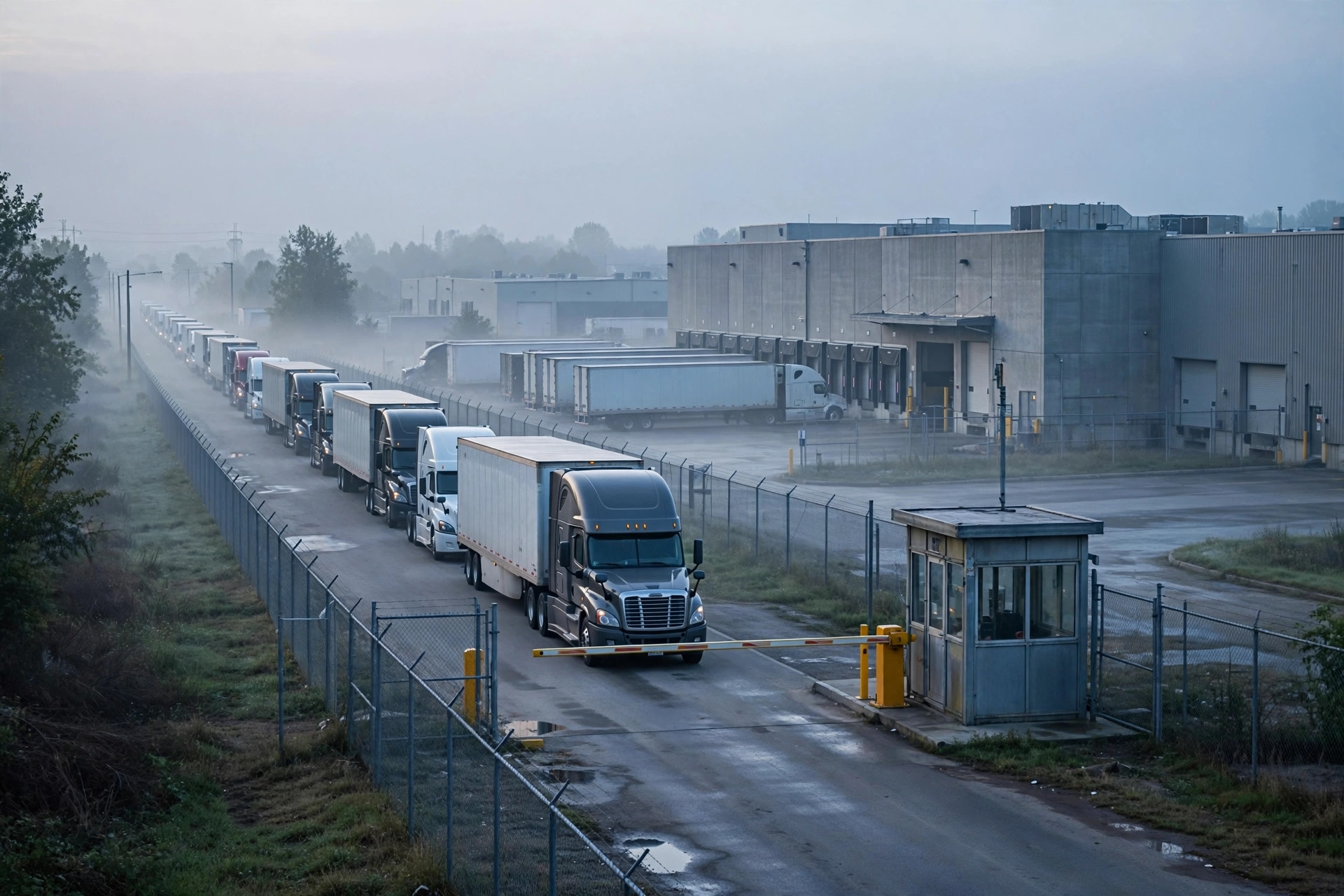
Every driver times their arrival for the top of the hour — nobody wants to sit around waiting, right? So between 7:50 and 8:10, a dozen-plus trucks pour into the gate at once. The gate had two attendants, and checking one truck in — paperwork, seal verification, ID check — takes six or seven minutes on a good day. Two people can clear maybe fifteen trucks an hour, and there were eighteen in the line. The queue spilled out onto the public road, a cop showed up, dispatch was tearing their hair out, and drivers were leaning on their horns and yelling at each other.
That warehouse eventually switched to 30-minute windows, capped at eight trucks each. Their dispatcher told me average wait time dropped from about two hours to around forty minutes. The problem was never "is the window fifteen minutes or an hour." It was "how many trucks did you cram into that window."
Do the math before you pick a granularity
Here's the back-of-the-envelope formula I've been preaching to warehouse managers for years:
Trucks your gate can clear per hour = 60 ÷ minutes per check-in × number of gate lanes
In my experience, five to eight minutes per truck is normal. Say six minutes, two lanes — that's twenty trucks an hour, flat out. Now work backward: a 15-minute window should hold at most five trucks, a 30-minute window ten, a one-hour window twenty. Overbook the window and your "precision" exists only on paper.
Here's how the options stack up (based on two lanes at six minutes a truck — treat these as industry ballpark figures, every warehouse should measure its own):
| Window size | Trucks per window | How it feels to a driver | Real pressure on the gate |
|---|---|---|---|
| 15 minutes | 5 or fewer | Like catching a train — miss it and you're done | One slow check-in cascades through the next four windows |
| 30 minutes | 10 or fewer | Tight, but reachable | The sweet spot — smallest swings |
| 1 hour | 20 or fewer (must cap it) | Most forgiving | Everything piles up at the top of the hour |

Now here's the counterintuitive part, and I've argued this with plenty of warehouse managers who didn't believe me at first: finer windows don't mean better on-time performance. They can mean worse.
Tight windows push drivers to arrive two or three hours early just to hold a spot, which clogs the access road worse than ever. And zero-tolerance windows are brittle — one check-in runs ten minutes long and the next three or four windows are wrecked in a chain reaction. A coarser window with a hard cap, sized to what the gate can genuinely clear, moves everyone through faster. On-time performance isn't produced by punishment. It's produced by arithmetic.
There's also a driver's-eye-view calculation most warehouses never see. Those four hours I burned in Chicago — fuel, time, all gone, no detention clause in the contract. Detention in this industry typically runs somewhere in the tens to around a hundred dollars an hour, depending on the contract. So drivers have learned: any warehouse with 15-minute windows and a cancel-on-late policy gets a higher quote. Call it a risk premium. The warehouse thinks it's saving money by running a tight ship, but the freight rate already has it baked back in — with interest. There's an old saying in trucking: the wool always comes off the sheep's back.
My advice, for what it's worth
First, measure your gate's real throughput before you choose a granularity — not after. Pull a week of check-in data, figure out the average minutes per truck and how many lanes you run. That's the foundation. Everything built on top of an unmeasured gate is guesswork dressed up as a system.
Second, give late arrivals a grace period — fifteen to thirty minutes on either side, not zero tolerance. The most driver-friendly warehouse I know lets anyone within half an hour straight through, and guess what: their drivers actually want to run that lane, and their on-time rate is the best I've seen. Why? Drivers aren't scared, so they don't camp out three hours early, so the gate stays clear. The more you punish, the earlier drivers arrive to squat, the worse the jam. It's a death spiral.
Third, reward on-time instead of punishing late. Some warehouses give priority slots or peak-season preference to carriers with clean on-time records.
And for my fellow drivers: on a 15-minute-window warehouse, build in at least an hour of buffer — better to wait on the shoulder than gamble on traffic. On hourly windows, don't aim for the top of the hour; show up twenty minutes early and you'll be near the front of the line. Every one of those lessons cost me an afternoon.
There's an old saying back home: you can't eat hot tofu in a hurry. Same goes for a gate house. Understanding the math beats tightening the screws. A time window isn't "advanced" because it's sliced thin — it's advanced when it matches what your gate can actually clear. Next time a warehouse manager brags to me about "15-minute precision management," I've got one question for him: how many trucks can your gate actually clear in an hour? If he can't answer that, the precision is all on paper.
By Shifu Zhao, Trucking Veteran (15 yrs)