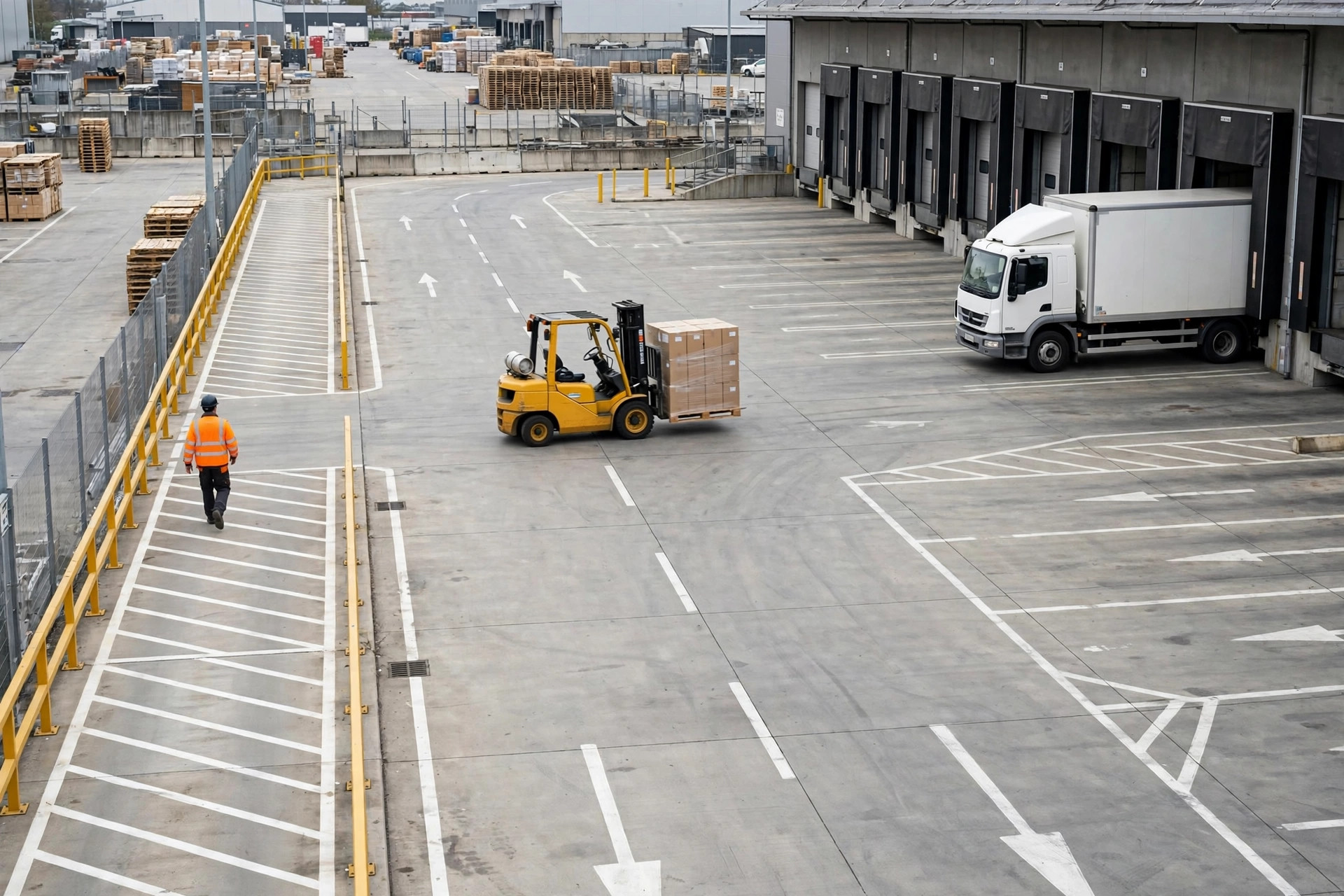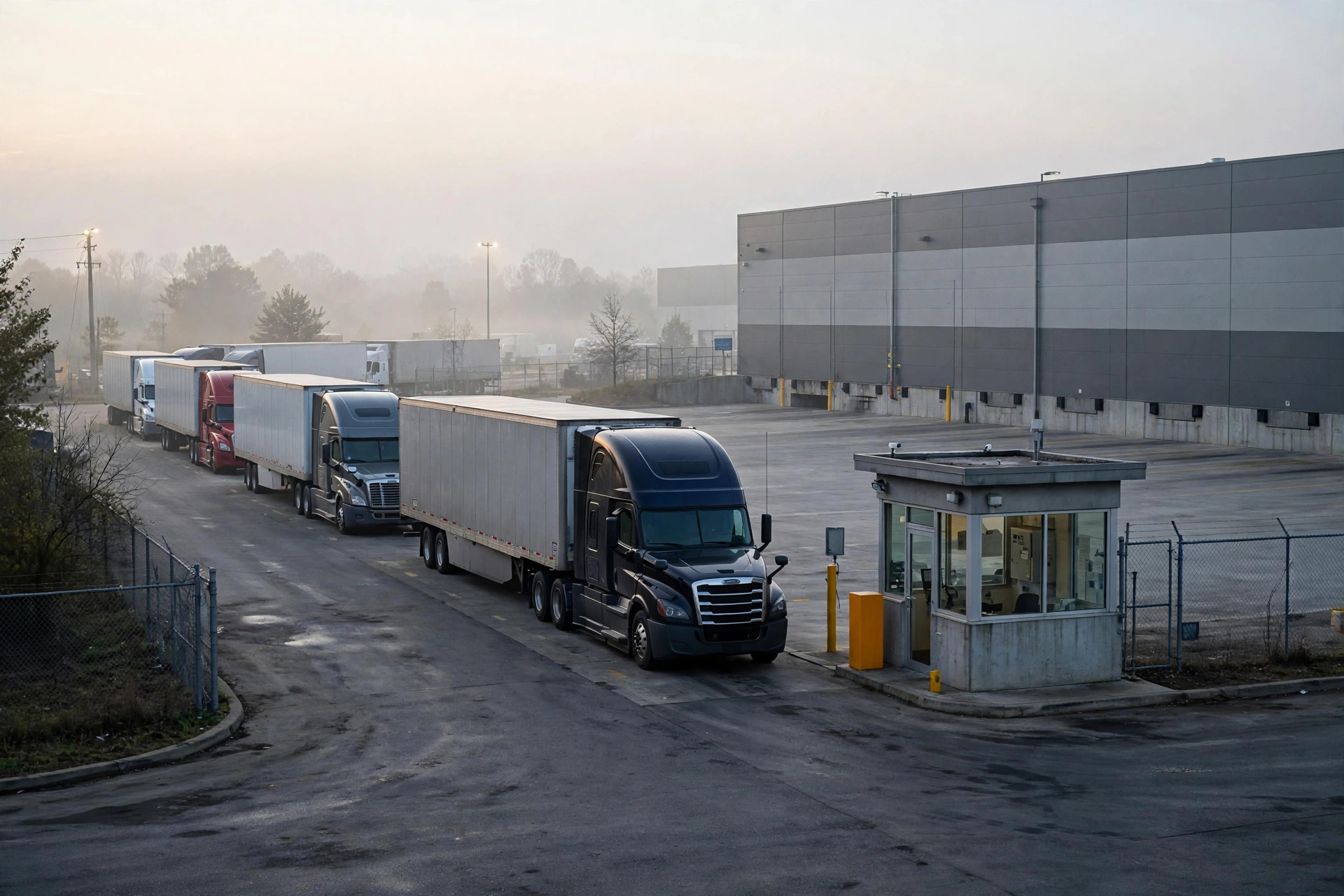
Let me tell you something. This past April, I was sitting in my cab outside a big distribution center in Fontana, California, waiting on a 2 PM dock appointment. Wind was blowing sand straight into my teeth. Up ahead, a box-truck driver jumped out and started yelling at the guard. The guard just said one thing: your fleet no-showed three times this month. The YMS flagged you red. You're not coming through this gate today.
The driver stomped around with a whole playlist of excuses — traffic, a blowout, dispatch never told him. The guard pointed at his screen. "The system says so. Not me."
I sat in my cab and kept my mouth shut. But it hit a nerve. I've tasted that blacklist medicine myself, years ago.
Three Months on the Blacklist Taught Me Plenty
Back in 2019, I was running dedicated lanes around Dallas-Fort Worth. One day I had three dock appointments stacked tight. The second warehouse kept me waiting four hours — a forklift broke down and everybody just stood around. By the time I rolled into the third warehouse, my dock window had closed. The guard said no slot today, rebook tomorrow.
I was young and hot-headed. Figured if they wouldn't take me, fine — I turned the truck around and left. Never canceled the appointment in the system. Big mistake.
A month later I tried to book that same DC. The system wouldn't let me pick a time. I called them up, and they told me: too many no-shows on your record. Appointment privileges suspended for three months.
Three months. I knew that lane like the back of my hand, and one badly handled no-show cost me three months of work. Later I learned how the warehouse does the math: one empty dock slot means the crew, the forklifts, and the reserved pallet positions all sit idle. You no-show once, and it's not one time slot they lose — it's the rhythm of the whole shift.
After that, I learned my lesson: if you can't make it, cancel ahead. Say it early. Don't squat on a slot you're never going to use.
A YMS That Books Dock Appointments Needs a No-Show Policy
Fifteen years on the road taught me one pattern: the well-run warehouses all have a clear no-show policy written into their yard management system. The sloppy ones just yell at the driver and do the same thing next time. The difference is whether there's a tiered system behind it.
I've talked to plenty of warehouse managers and watched how the big 3PLs do it. The good ones all run a three-step playbook:
Step one: log it and warn — first no-show. The system logs it automatically and notifies the carrier's dispatcher within 24 hours: you no-showed this time, watch it next time. No fine, no restriction. Just a warning. But it's on the record.
Step two: restrict the booking window — two no-shows in 30 days. Now it's not a warning anymore. The system narrows that carrier's bookable slots automatically: no peak hours, only early-morning or late-afternoon off-peak windows, and bookings must be made 48 hours ahead — same-day appointments are off the table. In plain English: you don't keep time, you don't get prime time.
Step three: blacklist — three no-shows in 30 days, or a malicious no-show. Appointment privileges frozen for 30 to 90 days, during which the carrier can't book any dock. A malicious no-show — booking three docks, running one, and not bothering to cancel the other two — skips the first two steps and goes straight to blacklist.
Punishment alone isn't enough. There has to be a way back. The fairest reinstatement process I've seen works like this: the carrier files an appeal online, explains what happened, and attaches a corrective plan — new dispatcher, a pre-departure confirmation process, whatever. The warehouse ops manager reviews it within three business days. If it passes, the freeze lifts, but the carrier goes on a 60-day probation. One more no-show during probation, and the freeze doubles.
One thing a lot of warehouses miss: peak-season exemptions. November through December, freight doubles, roads jam, warehouses burst — no-show rates climb no matter what. Blacklisting at normal thresholds during peak season just chases capacity away. The smart play: loosen the restriction threshold during peak (say, three no-shows in 30 days before restrictions kick in), but keep zero tolerance for malicious no-shows. Loosen where it makes sense, stay strict where it counts.
Banning on First Offense Makes On-Time Rates Worse
Sounds backwards, I know. But fifteen years of driving tells me it's true.
Some warehouses take the easy way: one no-show, instant blacklist. Feels tough. But good drivers and good fleets get wiped out by the same broom. Out here, anything happens — highway closures, blowouts, the previous warehouse running four hours late. None of that is the driver's fault. Ban them once and they stop taking your freight. Come peak season, you can't find a truck, and your on-time rate craters.
The warehouses with tiered systems? Carriers know exactly where they stand: first one's a warning, second one's a restriction, third one's the real deal. There's hope and there's fear. Drivers actually try harder — nobody wants to slide from "warned" to "blacklisted."
A blacklist is for the chronically unreliable, not the occasionally unlucky. Mix those two up and the blacklist is worthless.
Straight Advice for Warehouses and Appointment Managers
- Define "no-show" in writing first. How late is a no-show — 15 minutes? 30? Put it in the appointment rules and let the system judge automatically. Don't leave it to an argument with the guard.
- Make canceling easier than no-showing. Two taps on a phone to cancel, and no-shows drop on their own. Half of no-shows are really "meant to cancel but it was too much hassle."
- Nudge before the appointment. Push a reminder to the driver two hours out. Sounds small, but I know plenty of drivers who made it because of that ping.
- Track late and no-show separately. And separate controllable causes from uncontrollable ones. When a storm hits and everybody's late, you can't blacklist at normal standards.
- Make the blacklist visible. Carriers should be able to see their own no-show record and current tier. A blacklist nobody can see has zero deterrent power.
At the end of the day, a YMS is a tool for managing dock appointments, and the blacklist is one part of that tool. Whether the part works depends on whether the rules behind it are fair and clear.
There's an old saying back home: without rules, nothing stands square. But rules that make no sense won't draw a straight line either. Punish clearly, give people a way back — drivers respect that, and warehouses sleep better.
By Shifu Zhao, Trucking Veteran (15 yrs)