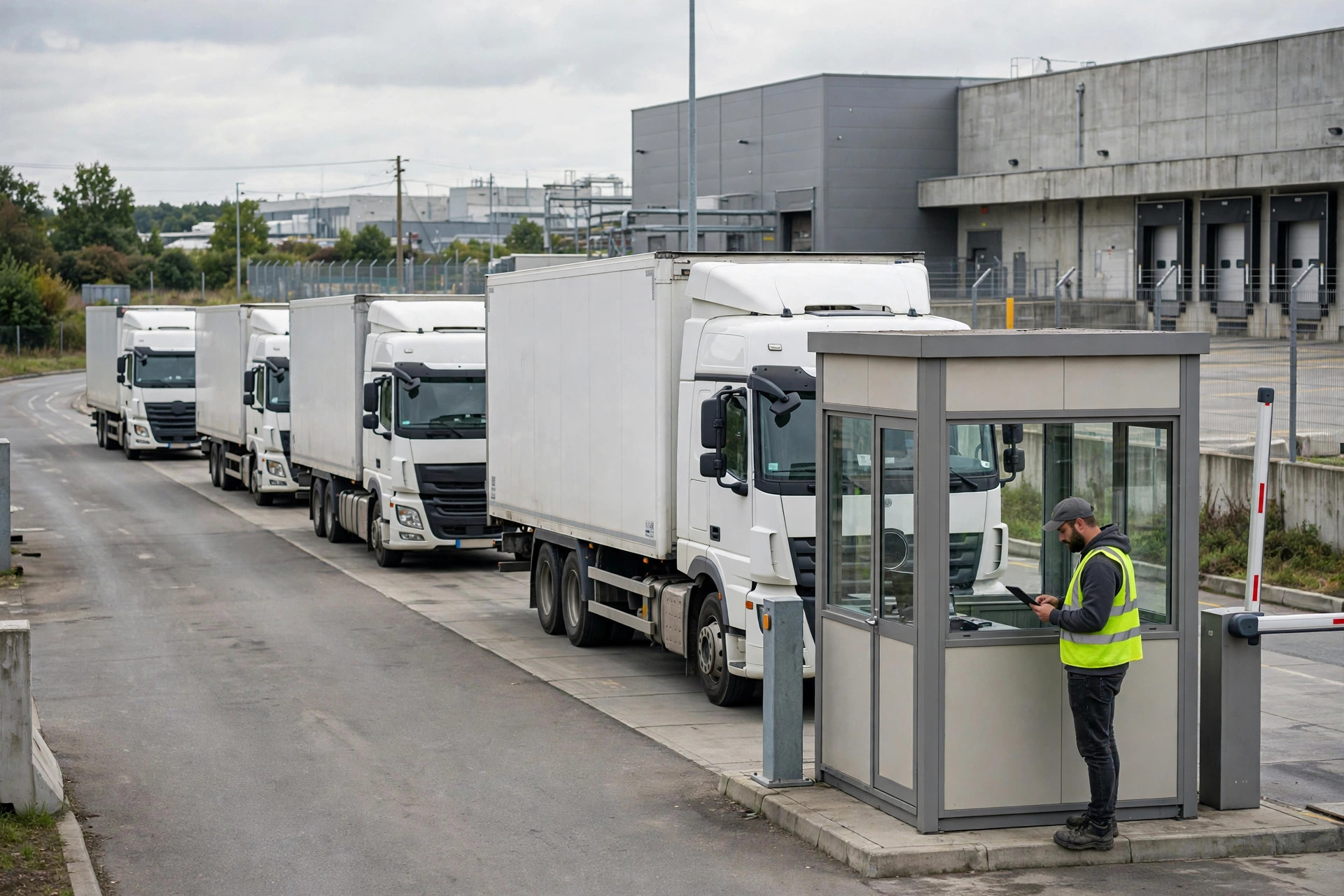
At a YMS selection meeting once, the sales deck was full of intelligent scheduling and AI dock planning. I asked just one question: can you tell me right now how long each truck waits at the gate on average? Five seconds of silence. If you can't answer that, what exactly is the scheduling supposed to optimize?
More sobering still: many yards don't even have the basics — what time each truck was scheduled, what time it arrived, what time it left. Without those three timestamps, a YMS is decoration. No system, however expensive, can produce a credible plan from nothing.
I've sat through too many YMS selection decks full of "digitalization" and "intelligence." Ask "how long do drivers currently wait at your gate on average" and the room goes quiet. If you can't answer that, what exactly is the scheduling supposed to optimize? Step one of YMS isn't buying software — it's building the data foundation. And the data foundation is three timestamps.
Timestamp One: Appointment Time — Where Planning Starts
Appointment time is when the driver (or carrier) plans to arrive. With it, the warehouse knows "14 trucks are coming tomorrow morning" in advance, and can staff receiving and plan dock doors.
Many yards still run appointments on "phone calls plus a group chat." A driver shouts "arriving tomorrow morning" in the chat, nobody records it, and the receiving team walks in blind. The first improvement is simple: even without software, capture appointments in a shared spreadsheet — date, license plate, carrier, cargo type, ETA. Five columns is enough.
After a month of appointment data, you can answer your first management question: which time slot gets the most trucks? The answer is almost always 9 to 11 AM. That single finding drives receiving shift planning — two extra people on the early shift solves half the problem.
Timestamp Two: Check-In Time — The Truth About Waiting
Check-in time is when the driver actually reaches the gate and completes entry registration. Appointment time versus check-in time tells you "on time or not"; check-in time versus actual load/unload start tells you "how long they waited."
Dwell time is the most expensive number in yard management. A truck waiting 4 hours at the gate wastes the driver's day, and next time the carrier quotes you, "that facility is hard to get into" gets priced in. I've modeled this: for a yard handling 50 trucks a day, cutting average wait from 3 hours to 1 saves very real detention fees and hidden surcharges over a year — the exact figure depends on carrier contracts, but the direction is certain.
Capturing check-in timestamps needs no fancy hardware. A tablet and a barcode scanner at the guard booth — the driver scans the appointment QR code on arrival and the time logs itself. Don't even want to buy a tablet? A paper sign-in sheet works too — as long as someone enters the data into the spreadsheet daily instead of letting the paper rot in the guard booth drawer.

Timestamp Three: Departure Time — Closing the Loop
Departure time is when the truck finishes loading or unloading and exits the yard. With it, a complete visit finally closes the loop: appointment → check-in → load start → load end → departure.
Departure is the most neglected timestamp, because "the truck left" doesn't feel like something worth recording. But without it you can't compute two critical metrics: total yard time per truck (departure minus check-in) and dock turnover (trucks per door per day).
When total yard time per truck exceeds 6 hours, something in the process is broken — appointments out of control, understaffed loading crews, or paperwork stuck somewhere. That number argues a hundred times more persuasively than "I feel like the gate is congested."
Only Then Does YMS Make Sense
Collect the three timestamps steadily for a month, and you'll hold the data asset YMS needs most: arrival distribution by time slot, average wait, no-show rate, dock turnover. At that point you can write your own YMS requirements:
"I need the system to manage appointments (replacing the spreadsheet), manage check-in (replacing the tablet scan), auto-calculate wait times and no-show rates, and warn me before arrival peaks." Those four sentences are a better YMS requirements document than most 50-page consultant decks.
Conversely, if you can't collect the three timestamps, any YMS vendor pitching "intelligent scheduling" gets one question from you: where does the scheduling algorithm's input data come from? If they can't answer, pass early.
Don't Miss the Fourth Number: No-Show Rate
Once the three timestamps are flowing, a fourth management metric comes free: the no-show rate — booked trucks that never arrive, as a share of total appointments.
Above 15% no-shows, yard planning falls apart: you staffed and staged dock doors for 14 trucks, 9 showed up, and labor and doors idle; the 5 no-shows flood in another day and wreck that plan too. Three remedies, lightest first:
Lightest is reminders. After appointment confirmation, auto-text the driver 2 hours ahead. Many no-shows aren't deliberate — the driver forgot, or got held up at the previous stop without saying so. One reminder recovers plenty.
Medium is tiering. Grade carriers by no-show rate in three tiers: under 5% get appointment and dock priority; 5% to 15% get normal scheduling; over 15% need manual confirmation for bookings and no peak-slot access. Refresh the tier list monthly — carriers who see themselves in tier C start managing their drivers.
Heaviest is charging. For repeat no-shows without advance cancellation, levy a no-show administration fee or deduct it from freight. This must be written into the carrier contract — verbal agreements are worthless. The fee needn't be large; the point is making no-shows cost something.
The no-show rate has one hidden use: auditing your own appointment process in reverse. If a carrier's no-show rate suddenly jumps from 5% to 25%, don't rush to penalize — ask first: is our appointment confirmation too slow, with drivers rerouting while they wait? Data cuts both ways; don't use it only to punish others.
The Timestamps' Second Job: Auditing Carrier Bills
The three timestamps have one more use most people miss: auditing bills. Whether a carrier's detention and demurrage charges are legitimate comes down entirely to timestamps.
Without your own time records, when a carrier says "my truck waited 5 hours at your gate," you just pay. With check-in and departure timestamps, you have evidence: the system shows this truck's total yard time was 2 hours 10 minutes, loading took 1 hour 40, waiting only 30 — whether detention is owed becomes obvious.
A 3PL I know audits detention bills against timestamp data every month and routinely knocks 20% to 30% off disputed charges. Over a year, the savings cover the YMS software's annual fee. So don't underestimate three timestamps: they're not just YMS input — they're chips on the negotiating table with carriers.
One last thing: these timestamps pay off beyond YMS. When negotiating annual carrier contracts, laying out "your trucks' average wait at my yard is X hours, on-time rate is Y%" makes for a much stronger posture at the table. Data feels like a chore to collect — and like magic when you use it.