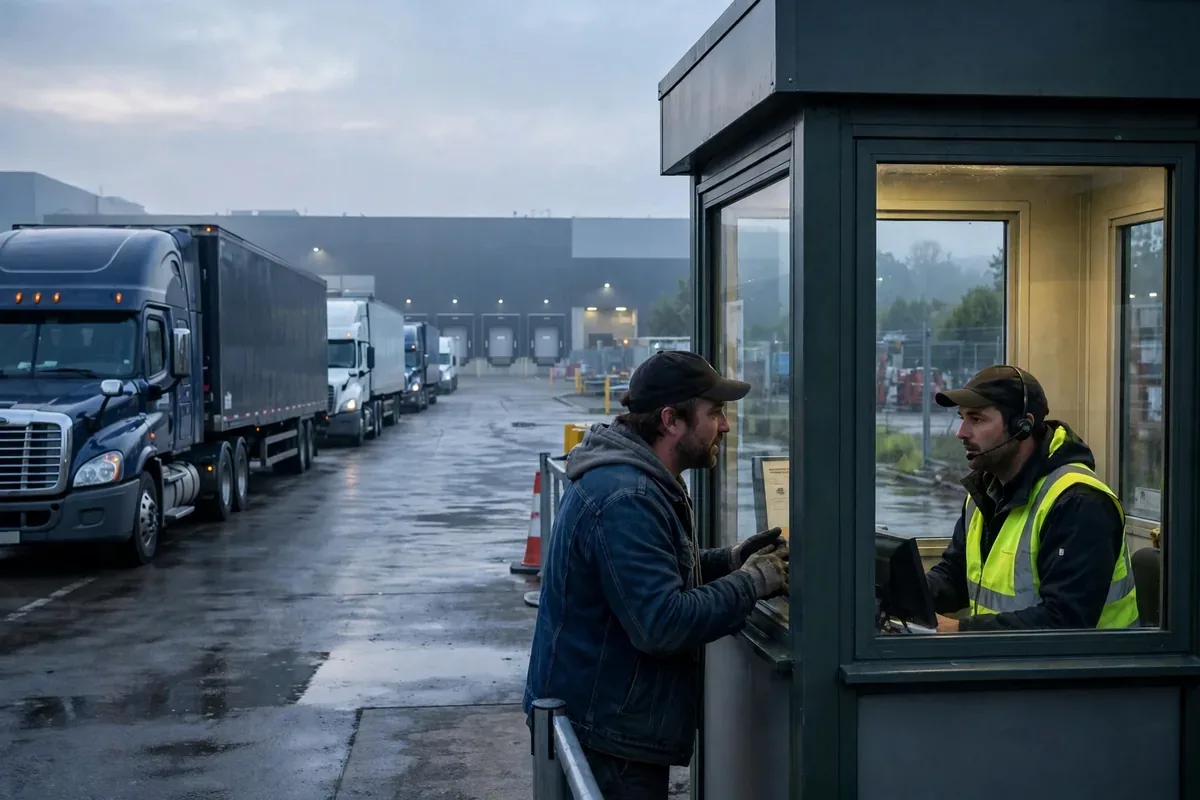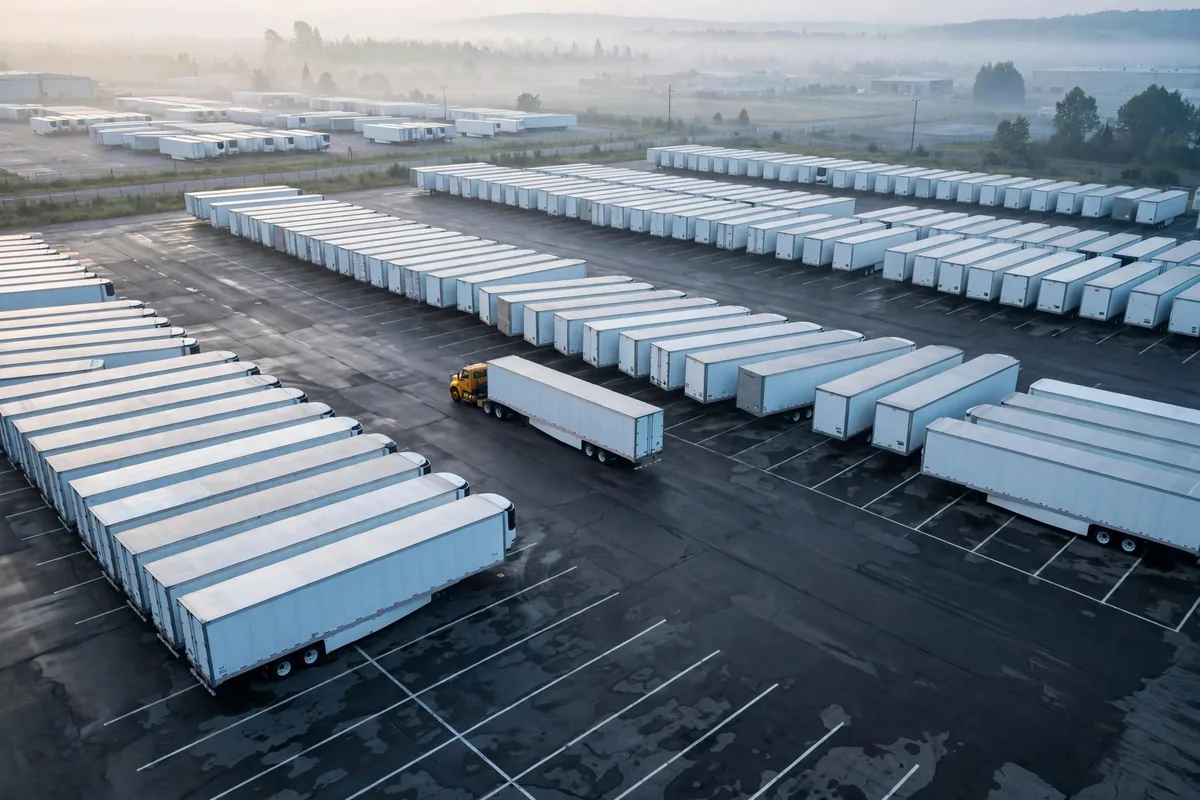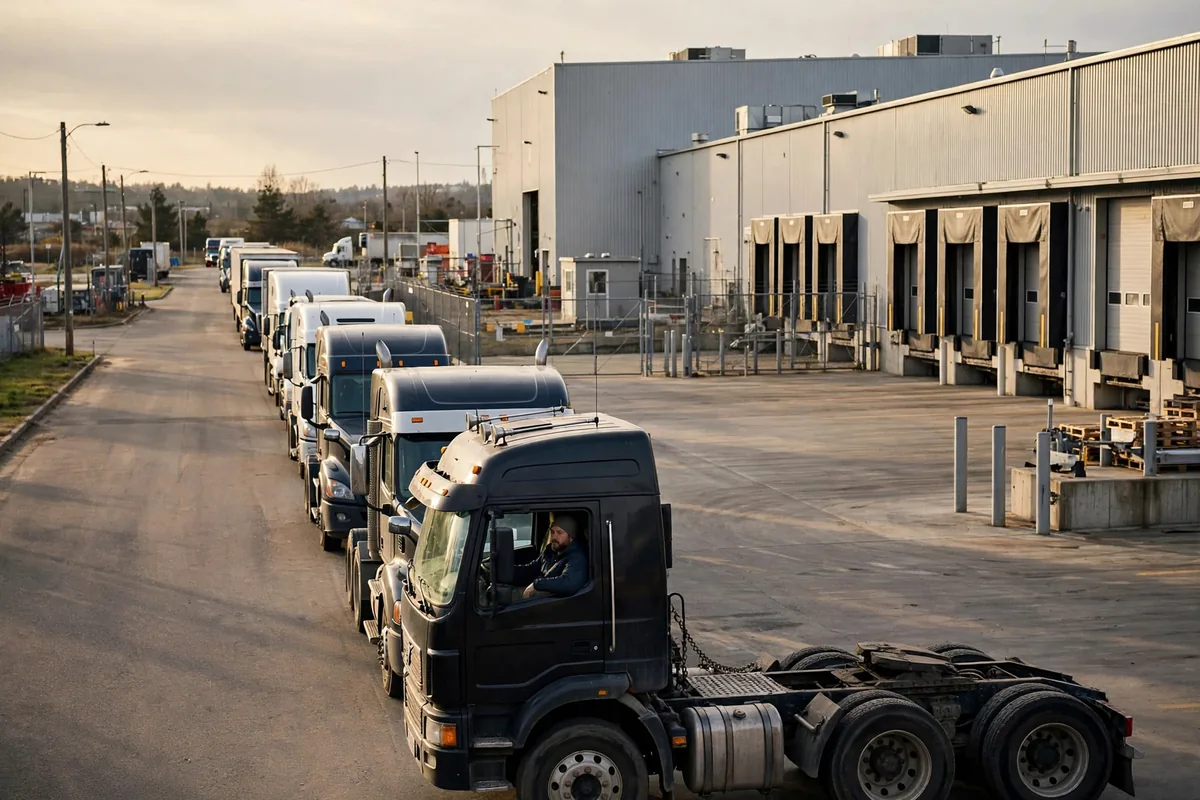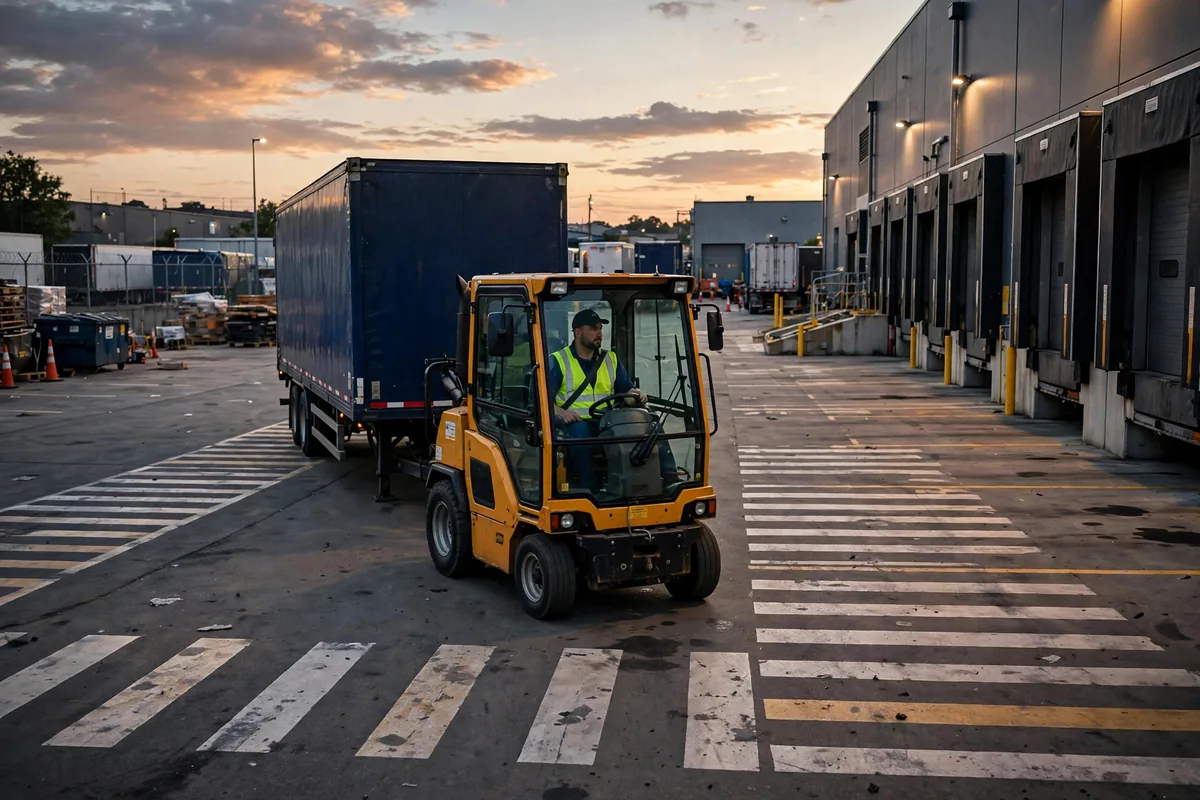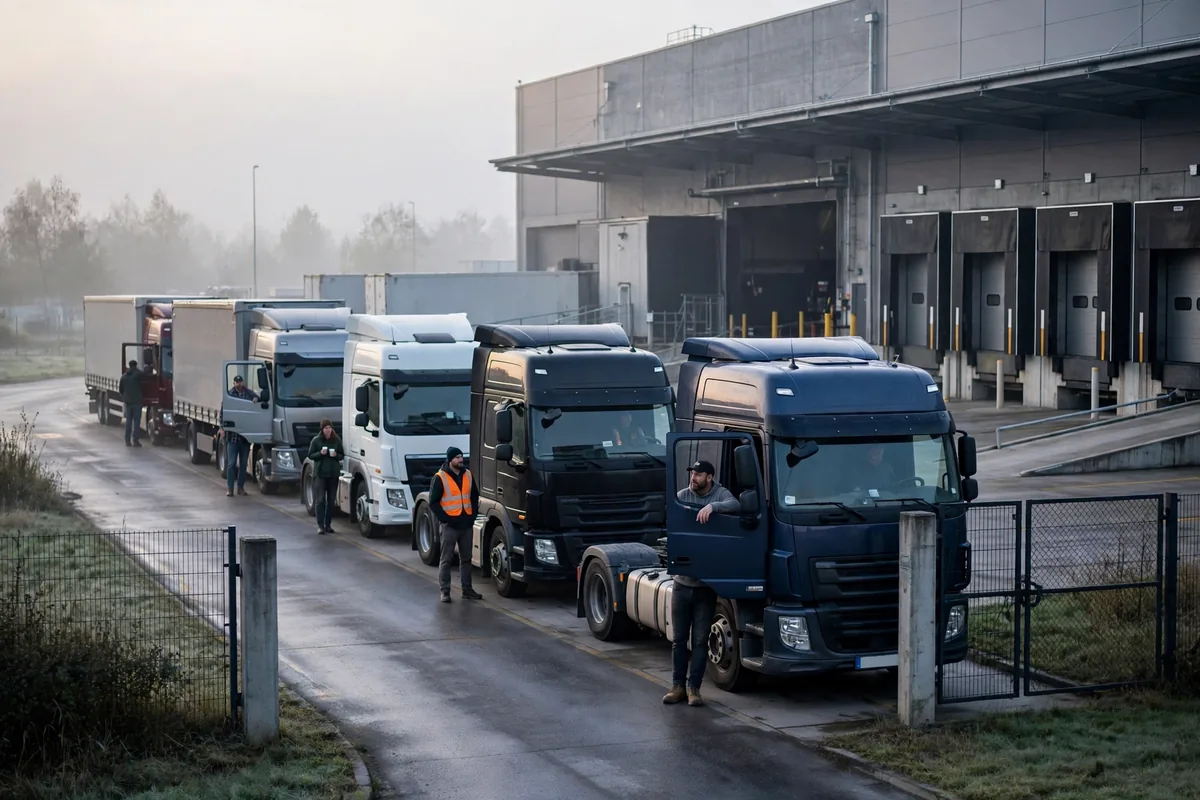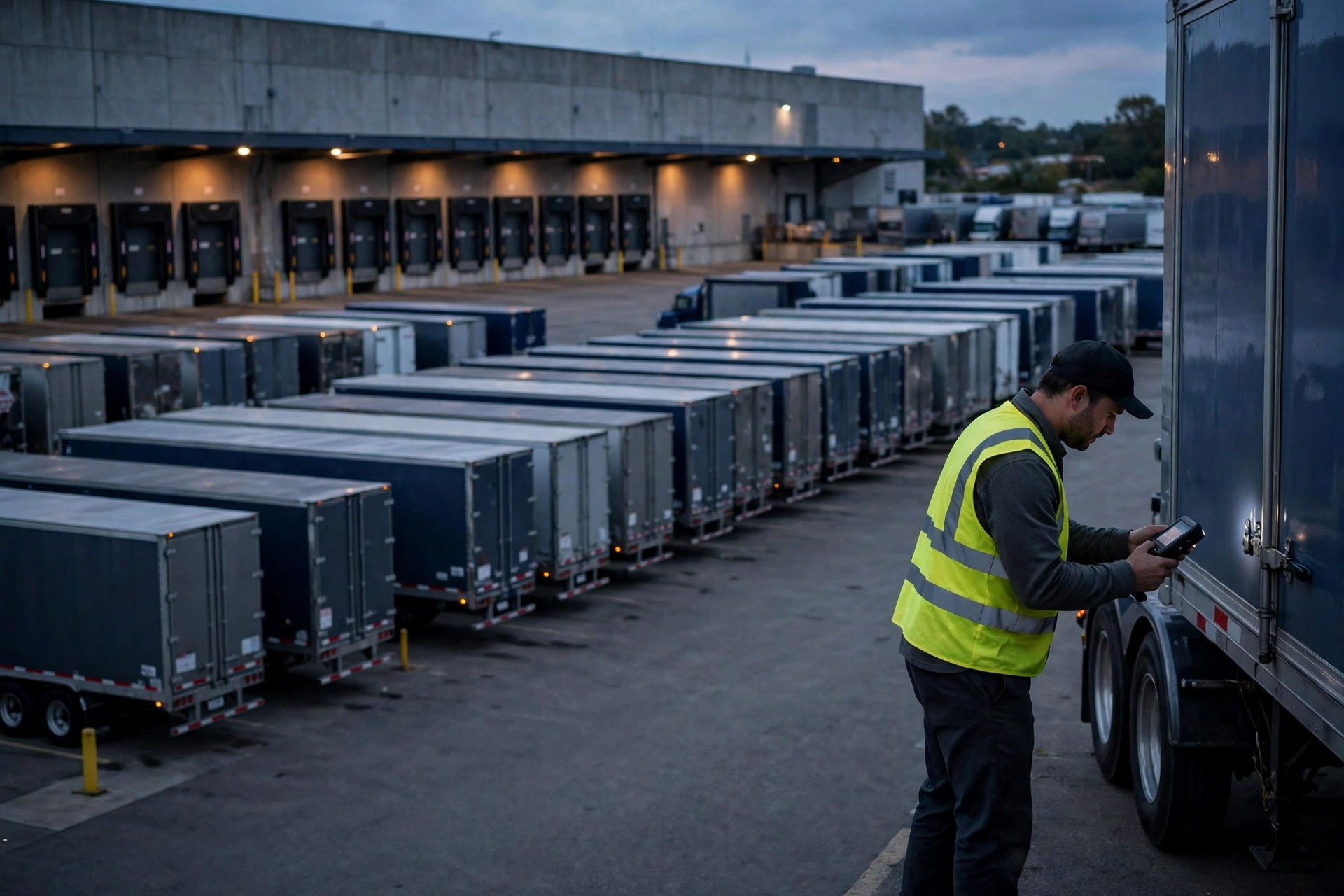
Let me tell you about a winter night. I got to a yard gate a little after three in the morning, and the guard told me to wait outside. The trailer I was supposed to pick up was written down as parked in Zone C. I drove around Zone C twice and could not find it anywhere. In the end an old hand from the warehouse rode out on a little electric cart and led me to it, sitting in a far corner of Zone D with frost on top. I spent close to two hours just looking for that trailer. My pickup window was gone, and my next delivery appointment nearly fell through. I have been driving for fifteen years, and that kind of lost-trailer morning has happened to me more than once.
Counting trailers by hand in those days meant a notebook and somebody's memory. The guard wrote a line when a trailer came in and crossed it out when one left. It sounds simple. Out in the yard, it never worked that cleanly. Handwriting got messy, night-shift handover was a rough summary at best, and when a tractor dropped one trailer and hooked another, the number on the paper stopped matching the trailer on the ground. A driver would ask at the gate where his trailer was, the guard would flip through the notebook, the warehouse would call someone in the yard, and that person would walk out to look. Half an hour could disappear in one loop like that.
Counting Trailers by Hand Loses Time, Not Just Paper
Here is a drop-and-hook mix-up I saw up close. One warehouse had three trailers to send out in a morning, all written down on the sheet. One of those trailers had been moved the night before, and the person who moved it told nobody and changed nothing on paper. The driver went to the spot on the sheet and found empty ground. The warehouse crew, the driver, and the dispatcher spent close to an hour on the phone sorting it out, before someone found the trailer parked beside a maintenance bay in another zone. All three departures slipped that day. Drivers sat in the yard burning fuel and time, and the receiving windows at the next stops got tight.
Then there was a rainy night count. The yard needed a full trailer inventory check, so two people went out with a notebook and flashlights, matching numbers trailer by trailer. The rain soaked the notebook, the writing blurred, and halfway through they had to go back inside and start over. By the time they finished, dawn was coming, and two trailer numbers still did not line up, so they had to walk the yard again in daylight. A notebook is not useless. It just cannot keep up once a yard gets big, the trailer count climbs, and night shifts rotate. People get tired, people forget, and one wrong line throws everything off.
This is the yard trailer inventory check most people price wrong. Everyone thinks counting by hand is free, because there is no system to pay for. But the real price is measured in time, not in the cost of a notebook. One driver waiting an extra hour in a yard holds up more than himself. It holds up the trucks behind him, the receiving window, and the warehouse's whole departure plan. One wrong drop-and-hook costs phone calls, searching, and rework, and none of that shows up as a line item. A system looks expensive because you can see the price. Hand counting looks cheap because its cost is scattered everywhere.
What Changed When the Yard Went on YMS
Later that same warehouse put in a yard management system, and the work changed without getting complicated. A trailer comes through the gate, the guard scans it, and the system holds its location and status. A trailer moves, someone in the yard updates the location, and the paperwork follows the move instead of relying on word of mouth. A driver asks at the gate where his trailer is, and the guard can look it up and say which zone, whether it is empty, and whether it is ready to go. That is the whole trick, and it is a big one.
The table below compares that one yard before and after, using figures from its own records as an illustrative example. These are not industry averages. Every yard has different trailer volume and layout, so run your own numbers through the same comparison.
| What we compared | Counting trailers by hand | After YMS went live | | Average time to find one trailer | Often half an hour or more, sometimes one to two hours for a hard one | Guard looks it up and gives a location in minutes | | Sorting out a wrong drop-and-hook | Several people on the phone, an hour at best | Location and status are in the system, a mismatch shows up at once | | A full yard inventory check | Two people working all night, still possibly two trailers off | Walk the yard against the system location list, done in half a day | | Night-shift handover | Word of mouth and a notebook, the next crew guessing | Handover reads the system status, where every trailer is and what state it is in |
The biggest change was not speed. It was certainty. Before, a driver got to the gate and heard a vague answer, and right away he worried he was in for a wasted trip. Now the guard can tell him exactly where the trailer sits and whether it is ready, so the driver does not wander the yard guessing. The warehouse side changed too. Dispatch plans departures from the real trailer locations in the system, not from where the notebook said they were yesterday. Plans hold, trucks move, and the line at the gate gets shorter.
Now, a system on its own does not fix everything. I have seen yards put in a system while the yard crew kept working the old way, moving trailers without updating the location, until the system numbers drifted away from reality again. A tool is only as good as the updates behind it. So that warehouse made one hard rule: whoever moves a trailer updates its location the same day, no exceptions, and the team lead spot-checks three trailers at every handover. If one is wrong, it gets fixed on the spot. That rule is what keeps the system numbers honest.
Two Pieces of Straight Advice
To shippers, here is my advice. If you send freight into the same yard often, ask how they do their yard trailer inventory check, by notebook or by system, and whether they can tell you where a trailer is when it arrives. It sounds small, but it decides how long your truck sits in that yard. An extra hour in the yard ripples into freight cost, receiving windows, and the next stop's plan. Do not judge a yard only by the rate on the quote. Ask how long finding a trailer takes.
To warehouses, here is mine. Do not wait until trailers pile up beyond control before you fix this. When the count is low, a notebook works fine. When it grows, the notebook is the first thing that breaks. Get locations and status into a system early, and build the habit of updating a location the moment a trailer moves. It is far easier than cleaning up a mess after the yard has already gone sideways. A driver can feel within five minutes of entering a gate whether a yard is run well. Trailers found fast mean drivers willing to come back, and the warehouse work runs smoother.
There is an old saying among drivers: sharpening the axe does not slow down the chopping. Counting trailers looks like a small job, but every minute it wastes is real money and real time. Once you add that math up honestly, get the system in place if that is what it takes, and set the rule that keeps it true. Stop making drivers circle the yard looking for their own trailer.
By Shifu Zhao, Trucking Veteran (15 yrs)