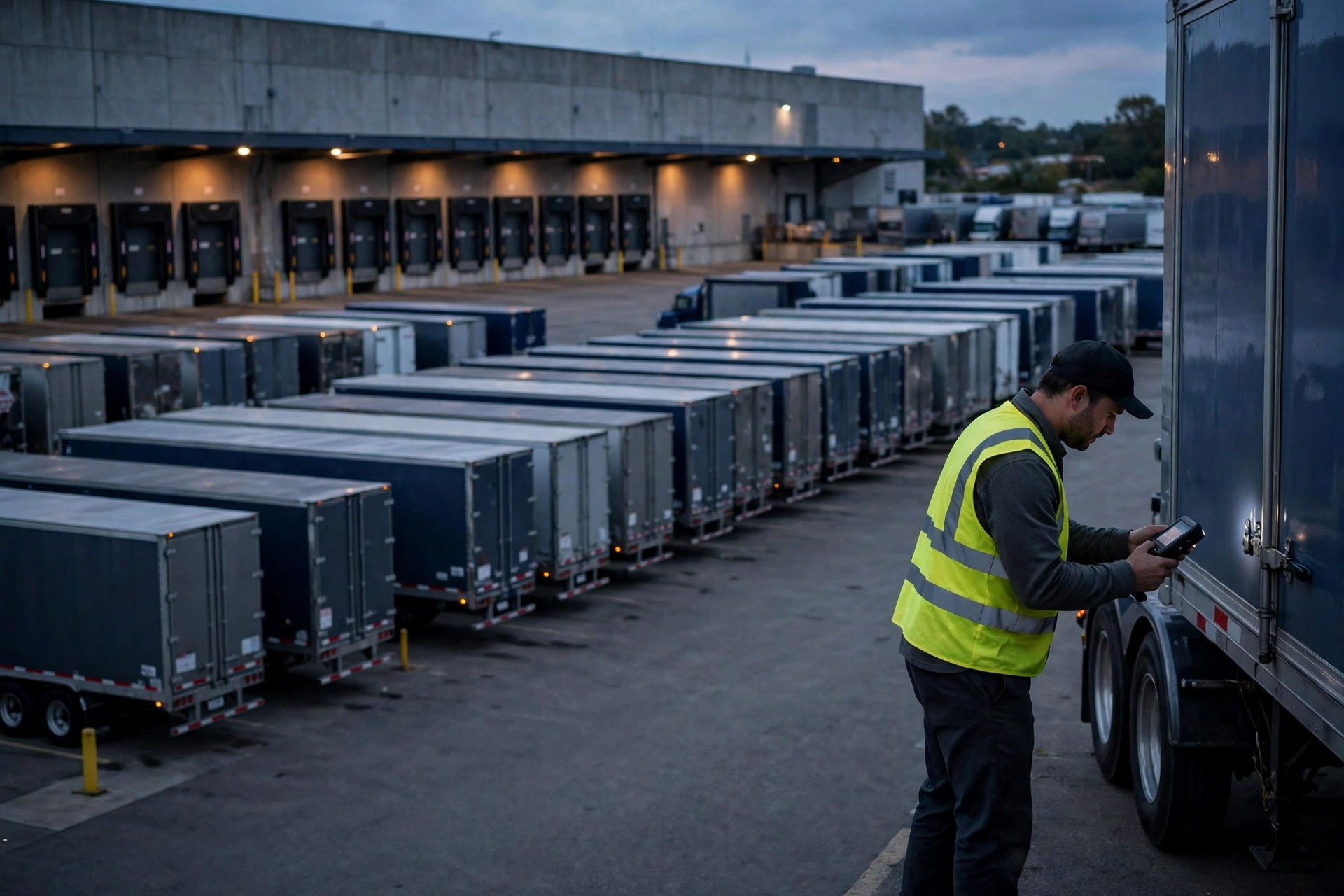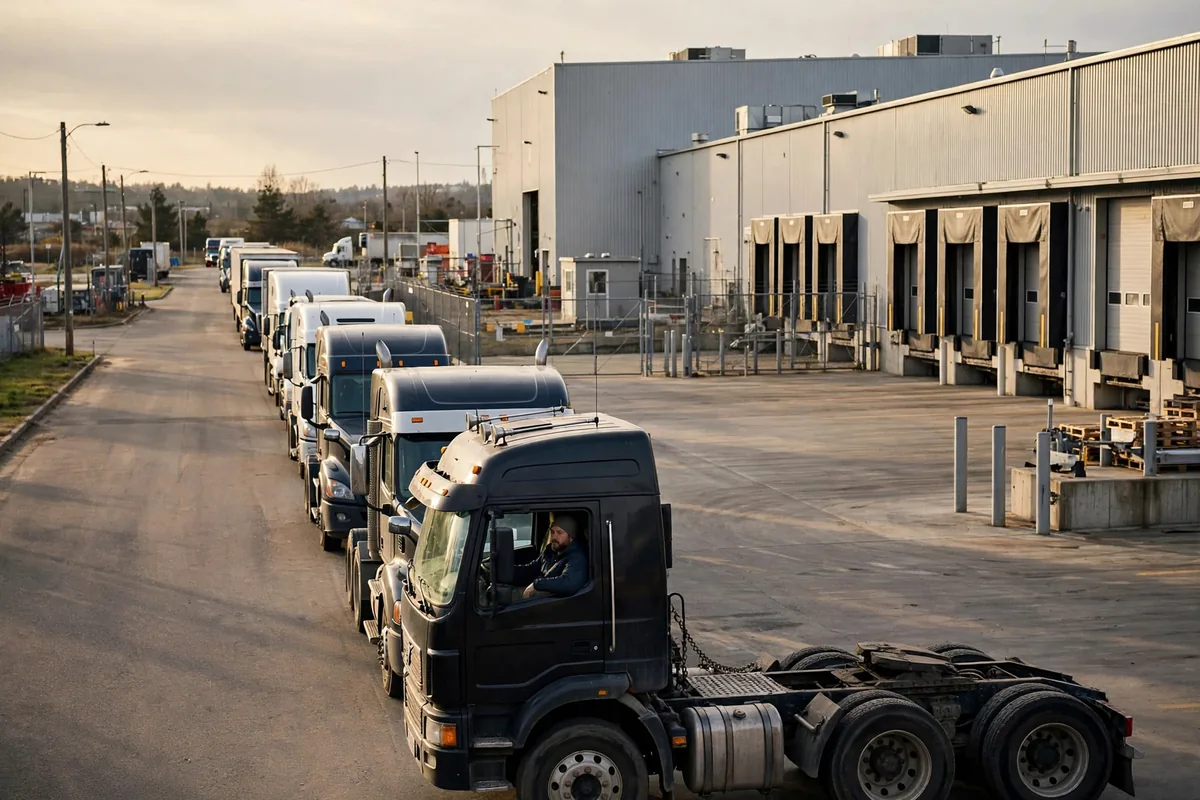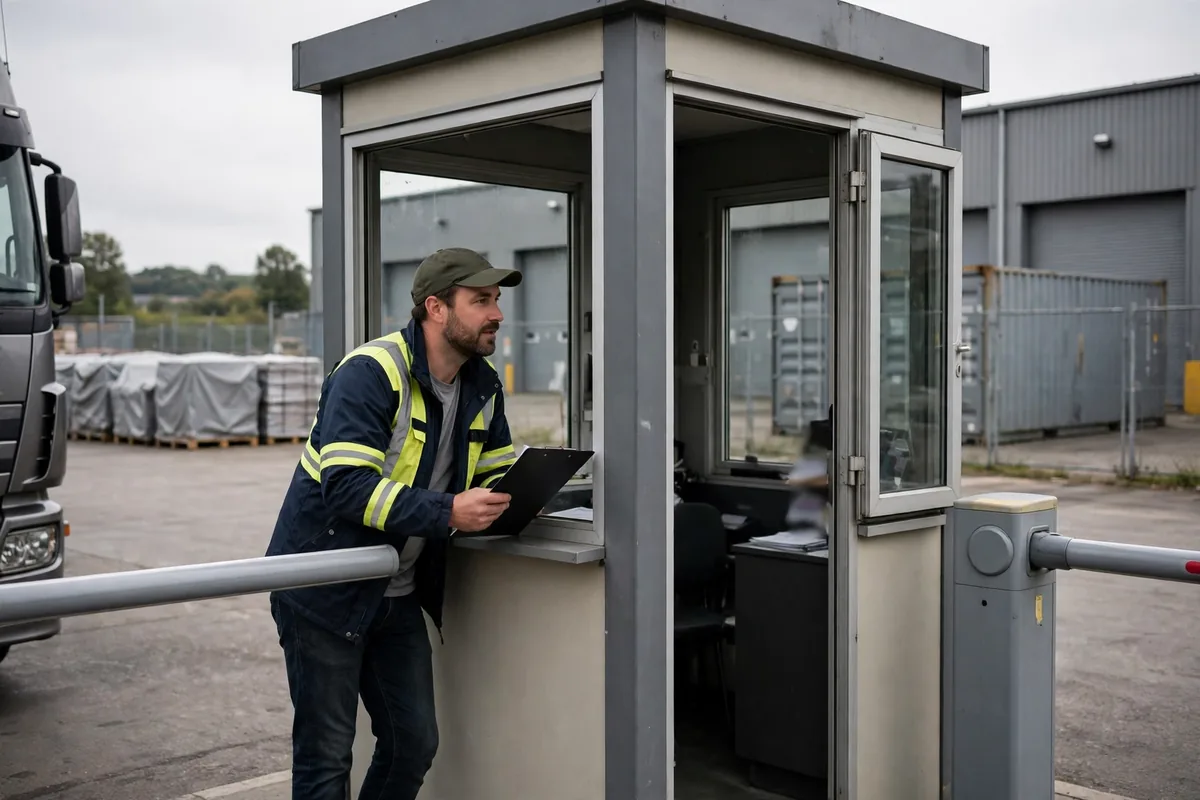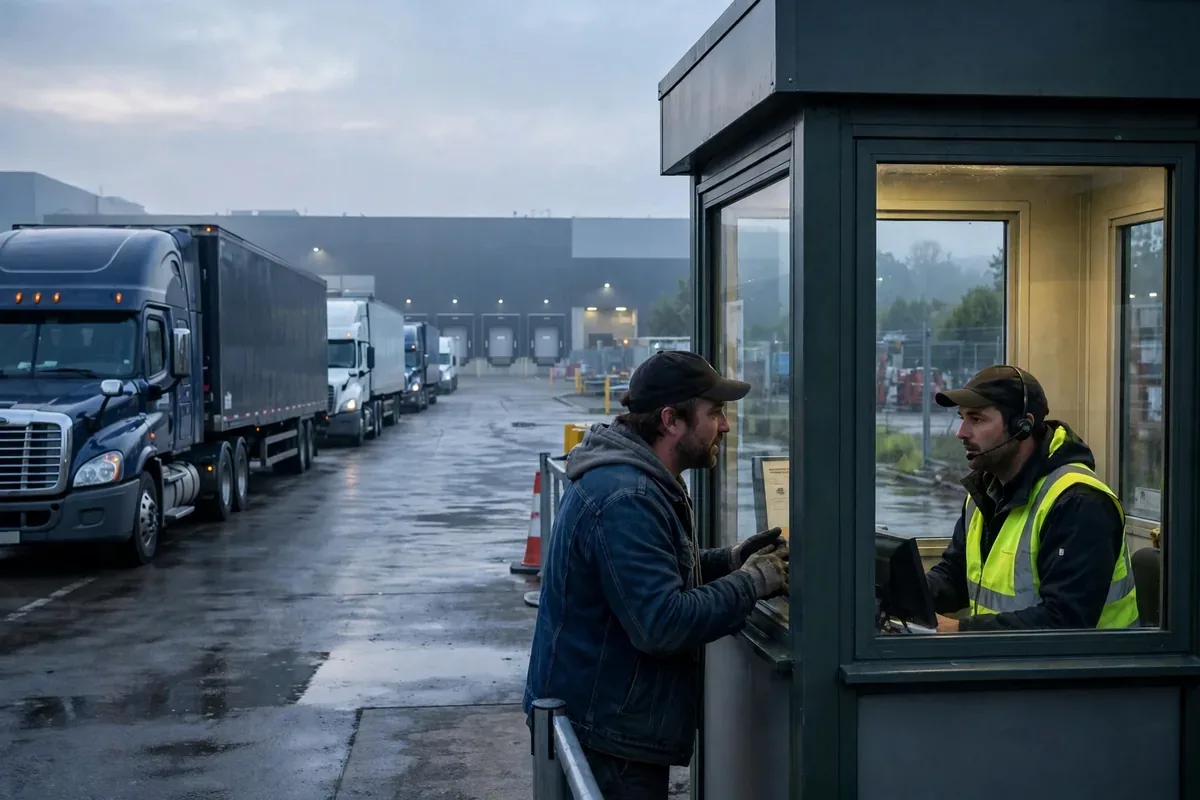
Let me tell you something after fifteen years behind the wheel: the worst part of the job isn't traffic on the highway. It's arriving at a warehouse gate and finding nobody in charge, while yard check-in queue driver waiting time starts ticking from the moment you join the line.
Two falls ago, I hauled a load of frozen food to a distribution warehouse outside Ontario, California, appointment set for 10 a.m. I got there at 9:40, and eleven trucks were already lined up outside the gate. Nobody came out to talk to us. No number tickets, no estimated wait, nobody who could say what time we'd get in. My dispatcher kept calling — my next pickup was in San Bernardino at 3 p.m. I finally got through the gate at 1:20 p.m., finished unloading, and rolled out at 3:40. The next load was gone. That day, from the time I left the yard in the morning to the time I parked for the night, I spent less than six hours actually driving.
That wasn't a uniquely bad day. Any long-haul driver can tell you a version of the same story. That is what yard check-in queue driver waiting time looks like up close. The real question is whose money those hours cost, and whether the warehouse ever does the math.
Yard Check-In Queue Driver Waiting Time Is a Bill Somebody Pays
Start with the numbers that are on the books. In the United States, a truck driver is legally allowed to drive at most 11 hours a day. That is a federal rule, and nobody gets around it. But a 2024 report from the American Transportation Research Institute found that drivers average only 6.5 to 7 hours of actual driving per day. So where do the other four hours go? A big chunk of them disappears at warehouse gates and docks.
The same report says drivers faced detention at 39.3 percent of stops in 2023, and at one stop in ten, the wait ran past two hours. Two hours matters because that is the industry's standard free window — the first two hours of waiting are expected to be free, and detention pay only starts after that. Some carriers negotiate detention rates of $30 to $50 an hour, but drivers often never see that money. The paperwork drags on for weeks, and the claim quietly dies.
Do the arithmetic another way. A driver has 11 hours of legal driving time. Three hours in a check-in queue cuts nearly a third of the day. On short-haul work, a driver who could run two loads a day drops to one. On long-haul, a bad queue means the driver parks for the night where he stands. The carrier prices the truck by miles turned; the driver earns by miles driven. When the truck sits outside a gate, the odometer doesn't move, and everybody in the chain loses money.
And here's the part warehouses miss: that money comes back around. Carriers that get burned by waiting build it into their rates. Freight gets more expensive year after year, and the warehouse that "saved" money by running the gate with one person pays for it on the freight bill. The wool comes off the same sheep, as the old saying goes.
There is another cost almost nobody talks about. While a driver waits at the gate, the truck can't shut down. A reefer has to keep running the whole time to hold temperature. One summer afternoon outside a cold-storage warehouse near Phoenix, I waited two and a half hours in heat over 100 degrees, air conditioning running, watching the fuel gauge drop. Nobody reimbursed that fuel. It came straight out of the trip.
Why the Gate Always Falls Apart
After all these years, I've seen gate chaos come down to the same three causes.
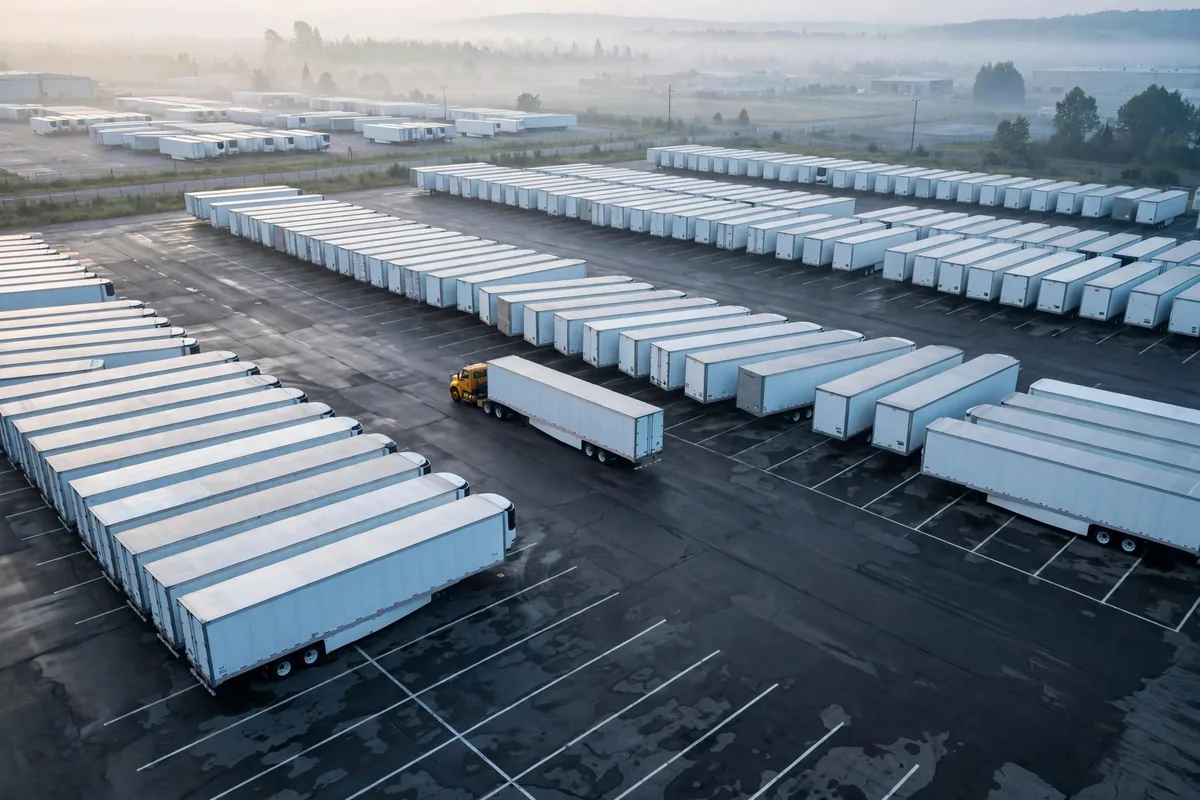
First, everybody arrives at once. The appointment system may show time slots, but in practice everyone books 9 to 11 in the morning. Drivers want to unload early and catch the next load; shippers want morning deliveries. So twenty trucks show up in the same hour, the gate admits one at a time, and the line backs up onto the street. By 3 p.m. the same gate is dead quiet. The problem isn't too many trucks. It's too many trucks in the same hour.
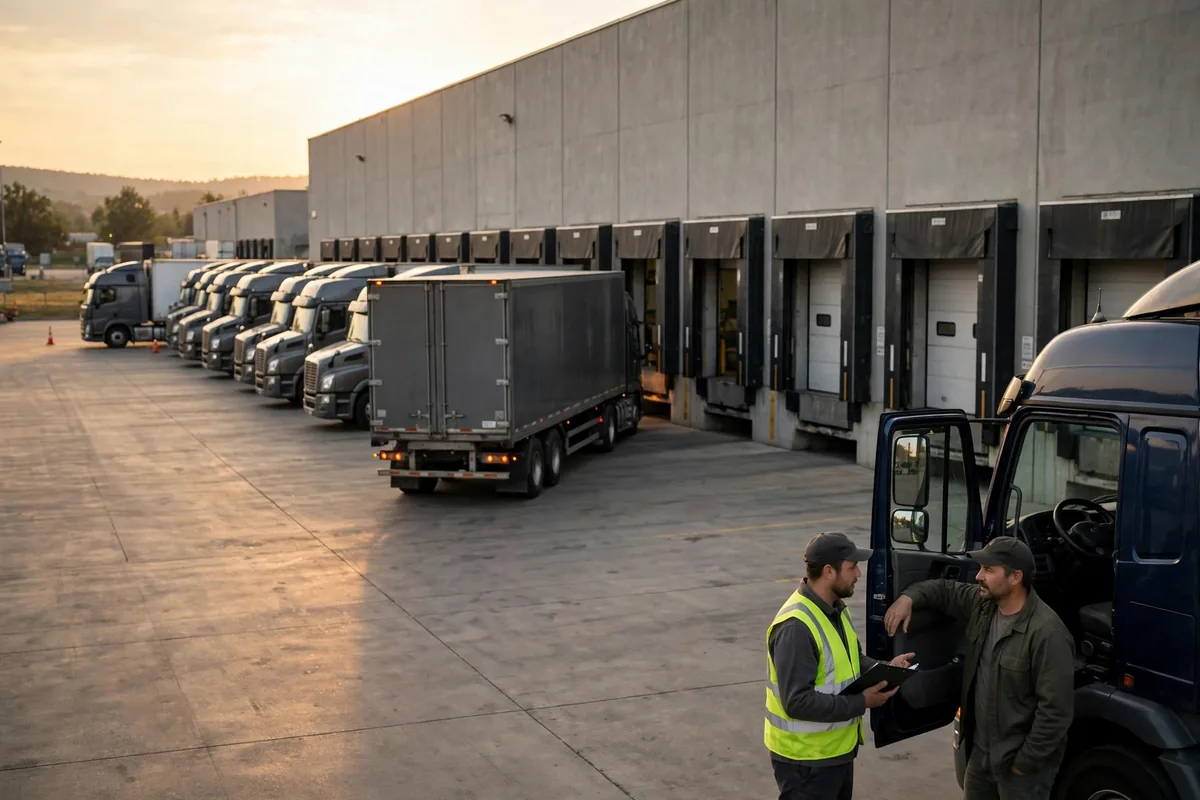
Second, nobody talks to anybody. The driver doesn't know what the warehouse looks like today, and the warehouse doesn't know where the driver is. The worst case I saw was a dock door that broke down in the morning, cutting unloading speed in half. The gate guard knew. The dispatcher knew. Nobody told the dozen drivers already on the road. A single phone call would have fixed it. Instead, the trucks arrived to find a line that wasn't moving.
Third, the queue has no referee. One person at the gate is doing registration, checking IDs, and giving directions all at once. When it gets busy, the familiar faces wave through first and the drivers who waited properly wait longer. I'm not saying the gate staff are lazy — one person doing three jobs is going to lose control of the line. But once drivers see the queue isn't enforced, it stops being a queue.
Add those three together and you get the truth about the gate: nobody set out to waste the driver's time, but the whole process was built as if the driver's time were free.
Three Things a Warehouse Can Do About Driver Waiting Time
This is fixable, and I know because I've been to warehouses where it works. The ones with the shortest waits all do the same three things. None of it is high-tech.
First, make appointment windows real. Don't just put a few slots in a system and call it done. Spread the windows from 7 a.m. to 5 p.m., cap the popular hours, and give drivers a reason to take the quiet ones. Some warehouses automatically push a full 10 a.m. slot back by half an hour, and the driver sees the change on his phone right away. The point of appointments isn't to police drivers. It's to spread the trucks out.
Second, confirm before the driver arrives. A text or a call before departure: the dock is running normally, your appointment stands, expect to get in around this time. The driver replies when he's twenty minutes out. Two messages, and both sides know what to expect. It costs almost nothing and saves dozens of trucks sitting idle at the gate. These days, when I take a load, one of the first things I check is whether the warehouse confirms appointments. If it doesn't, I take note.
Third, give the gate a fast lane. A drop-and-hook truck and a live-load truck are not the same job, and putting them in one line wastes everybody's time. A drop-and-hook driver registers, drops the trailer, and leaves — about half an hour, start to finish. That truck deserves its own lane. Pre-registration helps too: the driver sends the plate number, the bill of lading, and the appointment number ahead of time, and at the gate it's one scan and he's through. Move the paperwork online and the gate guard only has to verify and wave trucks in. The line starts moving.
The most important part is the attitude. The warehouse has to accept one thing: every minute a driver waits at the gate is money the warehouse is spending. Cut yard check-in queue driver waiting time and you cut freight rates, missed loads, and burned fuel in one move. It just doesn't come out of the warehouse's budget directly. It comes back through freight rates, through the shipper's invoice, through the next quote. Once you see that, staffing the gate stops looking like a cost and starts looking like a saving.
There's an old saying in trucking: trucks waiting on people is business; people waiting on trucks is waste. A driver delivers your freight on time to your door, and you leave him sitting outside for half a day — that's no way to run a business. Next time you see a row of trucks idling outside a gate, don't just think "busy day today." Think about whose bill that line is really on.
By Shifu Zhao, Trucking Veteran (15 yrs)