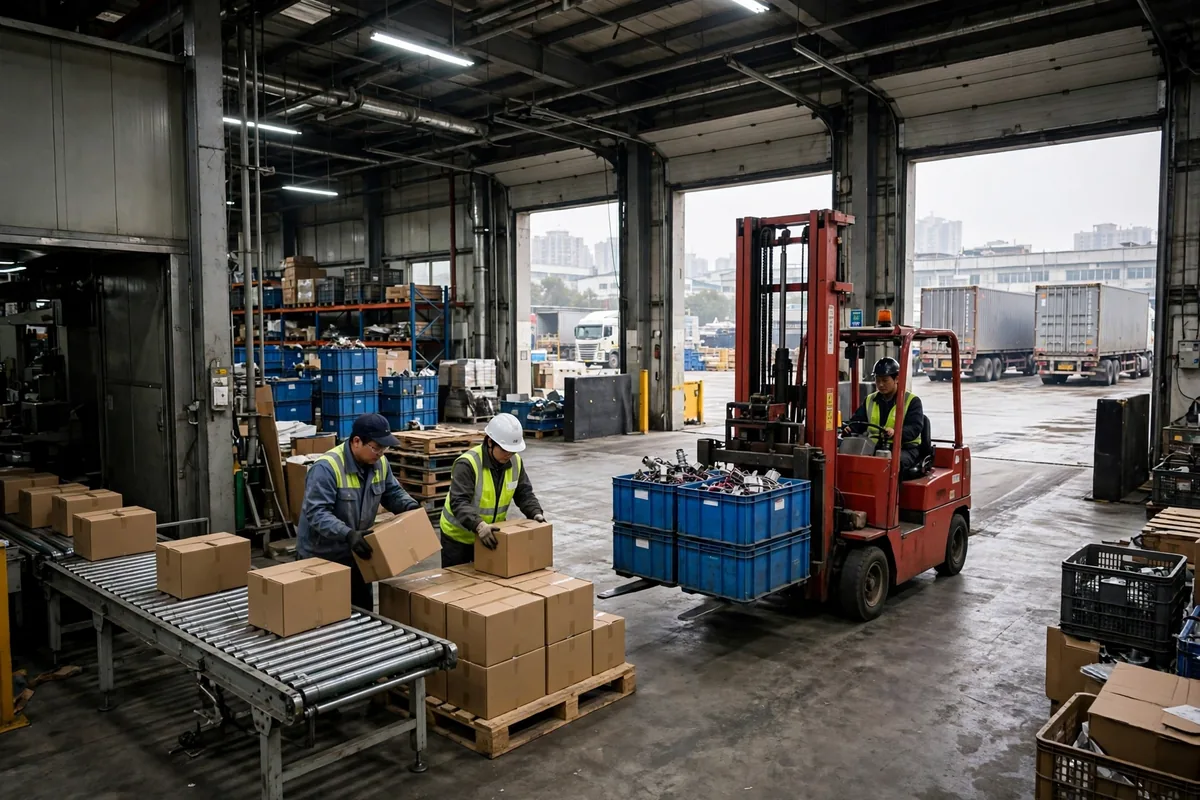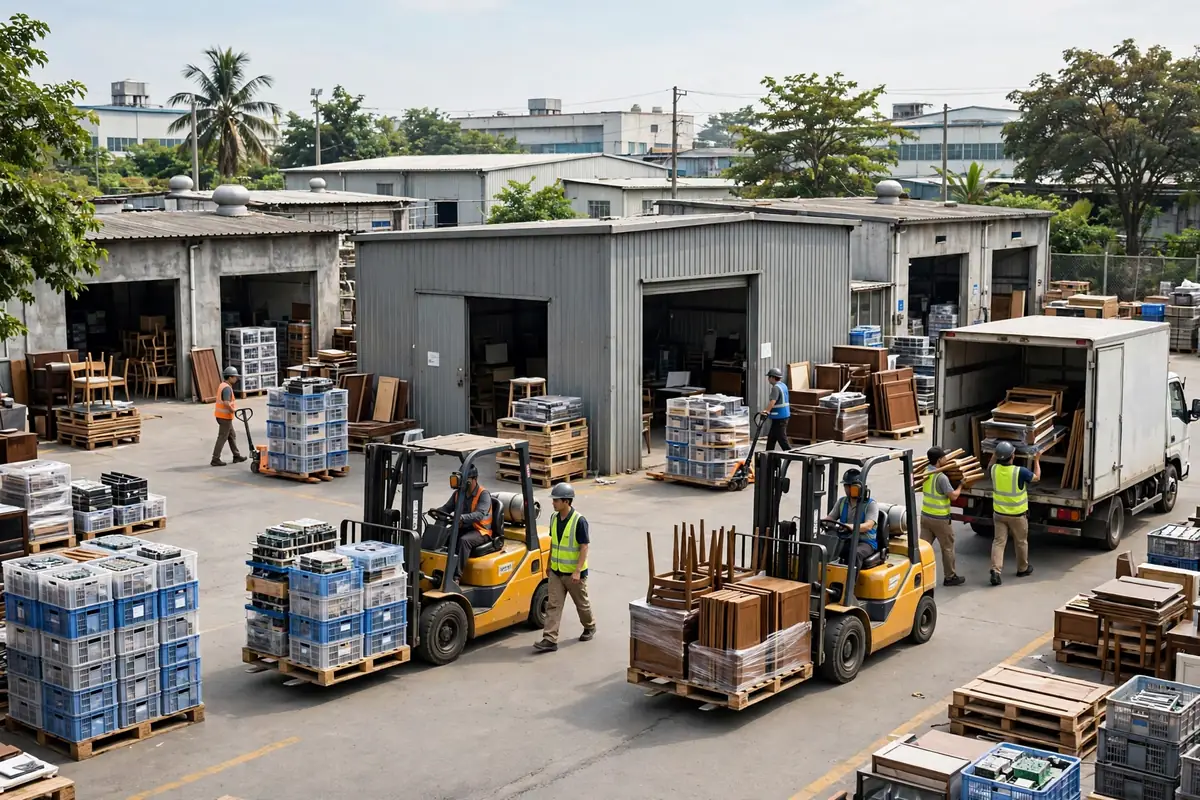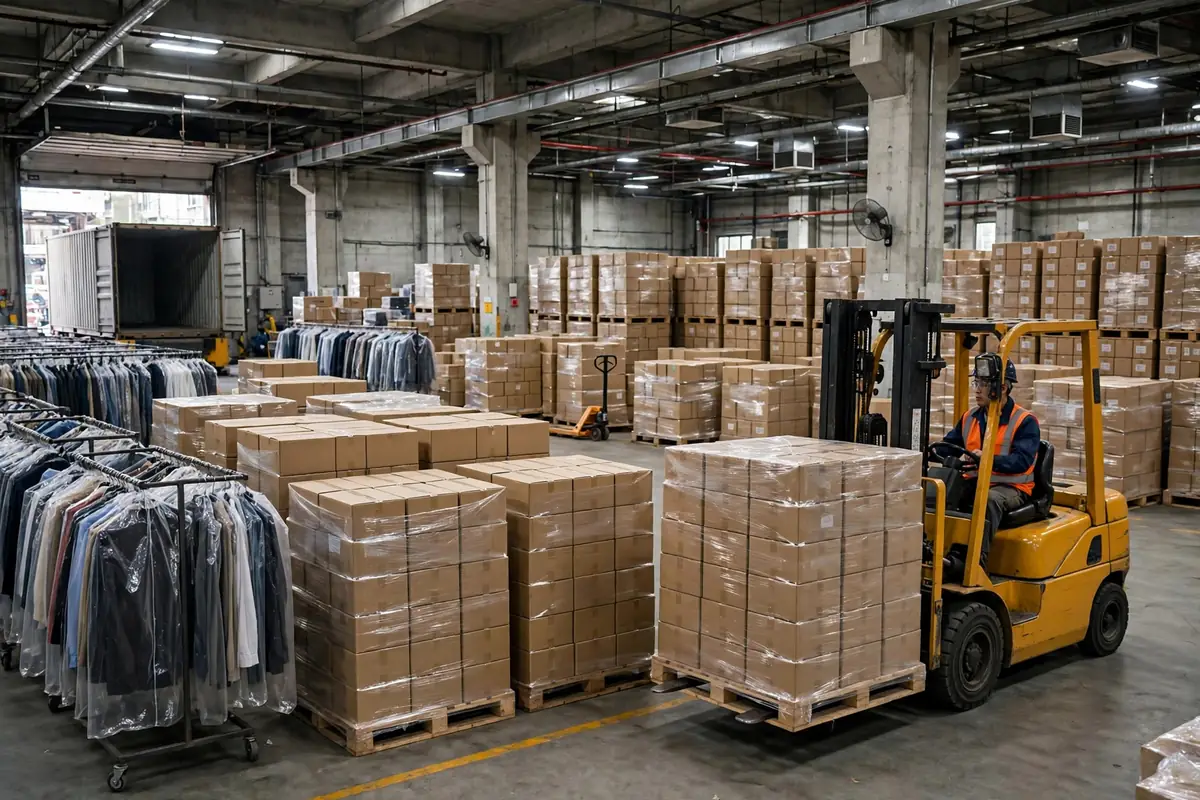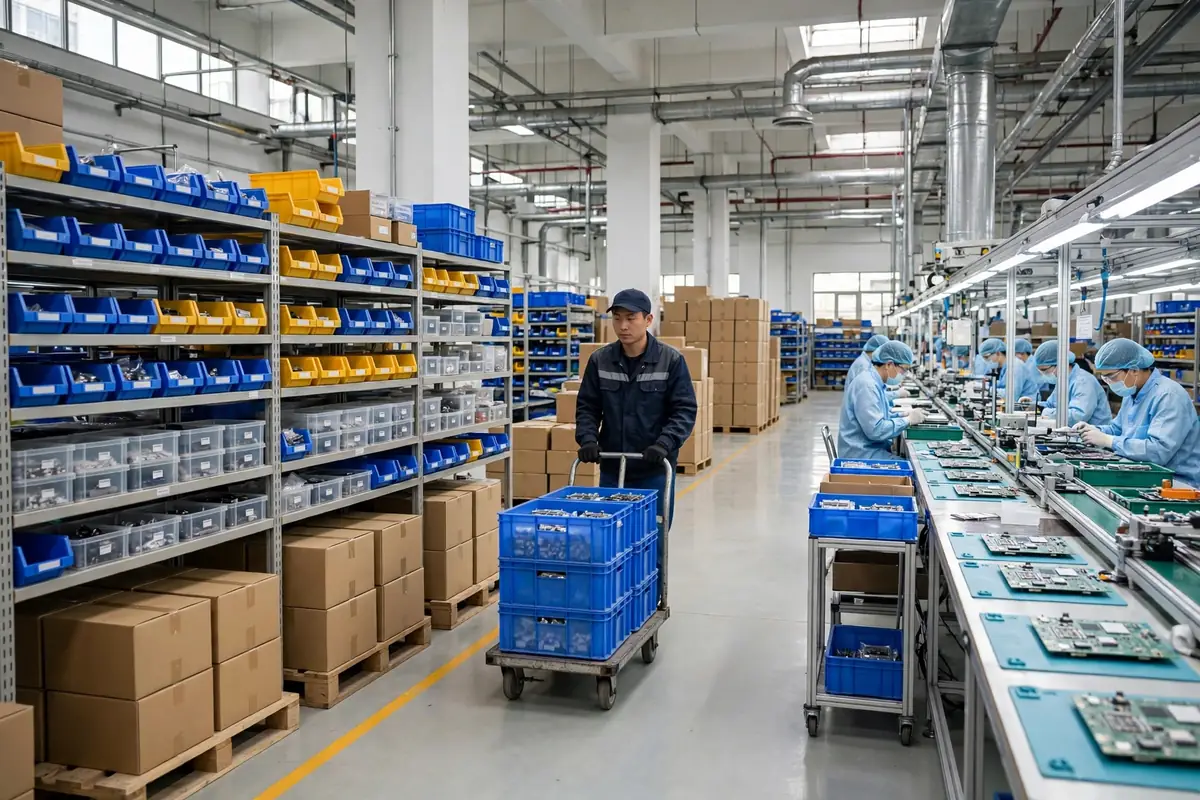
At half past six in the morning, Old Chen from the night shift was waiting for me at the warehouse gate. Two line-side racks were empty again. Let me be honest with you: in xiamen warehouse logistics manufacturing, the thing that scares me is not volume. It is rhythm breaking down. The line starts turning, people stand around waiting for material, while my team has been idle half the night. Then everything arrives at once and the aisles jam solid. At the morning huddle I did not shout. I asked three questions: who delivered the last replenishment, at what time, and how much? The numbers told the story in a minute. The day shift had drawn the next day's material early. The system still showed stock. The racks showed air. The goods differ across factories — electronics, shoes and clothing, bathroom products. The lesson does not: a factory warehouse wins on steady rhythm, not on strong backs.
Lesson one is division of labour. A factory warehouse guards rhythm. An outside rented warehouse guards flexibility. Trouble starts when both do the same job. At one site we stored everything beside the factory: raw material, work in progress, finished goods, returns, packaging. Then peak season arrived. Finished goods blocked the forklift aisles, raw material trucks could not get in, and finance counted work in progress mixed with goods awaiting inspection until midnight without balancing. After that we split the work with a hard rule. Only material needed for today's and tomorrow's production earns a place in the factory warehouse. Everything bulky, seasonal or slow goes to the outside warehouse, which must promise two things: trucks on call, and paperwork closed the same day. Space closest to the line is your most expensive space — not because of rent, but because one blockage there stops everything.
First, the xiamen warehouse Split: Rhythm Inside, Flexibility Outside
The hardest part after the split is line-side replenishment. The line-side store is small, but it is the line's food supply. Empty racks stop production. Overflowing racks block the aisle and bury old batches. We tried three methods. The first was shouting: the line calls, we deliver. The loudest shift got served first, and the most urgent material was often not what arrived. The second was timed patrols every two hours, but in peak season a fast line could empty a rack three times between patrols. The third method is the one we kept: replenish by consumption rhythm. For every line and material we set a minimum level and a fixed quantity. Hit the level line, deliver the fixed quantity — no more, no less. In practice it is all about people. Some workers fear a stoppage and hoard material at their stations. Others see the level hit and wait, hoping for a fuller cart. For hoarding: no stockpiling at stations, and a team leader who lets it happen carries the excess back himself. For waiting, we tied replenishment to handover, with levels recorded and signed for.
Here is the counterintuitive part, said plainly: a fuller line-side store is not a safer one. Fill it up and the aisle narrows, picking slows, and first-in-first-out falls apart. Old batches sink to the bottom while new ones get used first, and nobody notices until quality sampling finds it. At a bathroom products factory, a batch of fittings sat at a station so long the packaging took on moisture and the whole batch had to be re-inspected. The skill of a line-side store is not how much it holds, but how fast it turns. Fast turns keep levels visible and batches traceable, instead of buying tomorrow's rework in advance.
Then there is the people problem, bigger than the goods problem. Peak season arrives like a wave, and regular staff cannot carry it alone, so you bring in temporary workers. I use three rules. First, temps never form their own team. They sit inside experienced teams, one veteran to at most two newcomers, and the veteran gets a lighter quota that day so mentoring is paid work, not a punishment. Second, for the first three days a newcomer does one fixed job only — labelling means labelling, scanning means scanning. Rotate a new hand daily and every error is born at the rotation. Third, never run an all-newcomer night shift: a nervous worker mis-scans a batch, and by morning the wrong material is on the line.
Next, the logistics manufacturing Lifeline: Replenish by Level, Not by Shouting
Lesson two is the export window. Finished goods must be gathered, labelled and held ready for the truck into the port area. We used to count backwards loosely from the customer's closing time and assume the slack would cover us. One peak season, a footwear shipment left production half a day late. We told ourselves we could catch up. Then truck booking, port queue and documents each slipped a little — the total, nearly a day. The goods missed the planned vessel, and no single step had made a big mistake. Our mistake was failing to manage the window as one chain.
After that we fixed a backward-counting board in the finished goods area. Start from the latest port entry time and count back: latest truck departure, gathering complete, labelling complete, latest production finish, buffers written down. If one step slips, the shift sees how much room is left and decides on the spot. The table below is an illustrative example of that logic; the timings do not represent any carrier or port arrangement. Always work from the latest official notice.
| Step (illustrative example) | Count back from latest port entry | Shift must confirm |
|---|---|---|
| Production finished and inspected | 3 blocks before | Quantity and batch match plan |
| Labelling and packing finished | 2 blocks before | Marks match documents |
| Gathering finished, truck booked | 1 block before | Vehicle matches load |
| Truck departs | Half a block before | Driver and paperwork ready |
The board's real value is that it replaces “should still be fine” with “two blocks left.” Feelings lie in a warehouse, because veterans estimate from quiet days, and peak season is nothing but surprises. With the board, one late step alarms the whole chain. We would rather gather half a day early and let goods wait than gamble on the last hour. And in xiamen warehouse logistics manufacturing, if the finished goods end is forever chasing vessels, nobody remembers your line-side accuracy. The customer remembers one thing: whether you missed the ship.
Lesson three is about your old hands. The most valuable stock in a factory warehouse is in experienced workers' heads — which material scans wrong easily, which supplier's cartons tear, which line eats more after a mould change. Our team leader Wu can tell you at the morning huddle which line will run short today. So we started paying for that knowledge: veterans like Wu turn it into one page of reminders posted at the rack. “This material comes from two suppliers and the labels look alike — check the last digits after scanning.” One sentence like that cut mis-picks visibly in peak season. Once experience is written down, every newcomer has a teacher.
All of it still has to land on daily reconciliation: line-side levels, factory movements, outside stock — three ledgers, aligned the same day. Our iron rule is ring-fence first, investigate second: freeze the batches and time window involved, then work through documents and the shift's account calmly.
Finally, Windows and Rosters: When the Window Closes, Extra Hands Do Not Help
So here is the whole picture. In xiamen warehouse logistics manufacturing, the factory warehouse, outside warehouse, line-side store and finished goods area are four positions in one warehouse. One guards rhythm, one guards flexibility, one guards the line's food supply, one guards the sailing window. When all four hold, the chain holds. My biggest lesson is unglamorous: there are no magic moves, only dull methods repeated without drift — levels drawn visibly, time counted backwards, rosters written early, differences closed the same day.
A last reminder for fellow warehouse managers. Check three things a week before peak. One: are the level lines on every rack still right — if the line changed products, did the levels change with it? Two: is the backward-counting board current, rebuilt from the latest sailing and port notices? Three: is the temp roster written down, veterans paired with newcomers on paper? Do those three a week early and you will sleep through peak season. Leave them until the wave hits and you cannot catch up — you just work nights and leak at every seam.
By Chen Feng, Warehouse Operations Manager