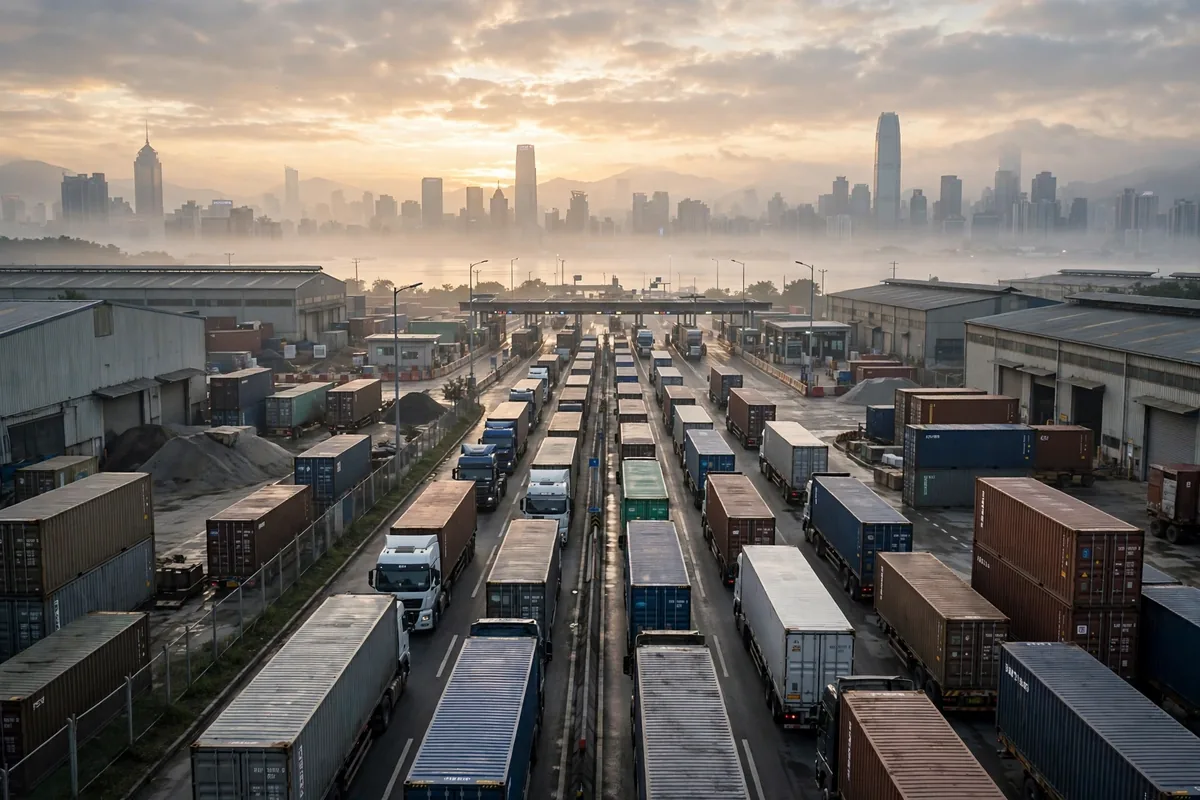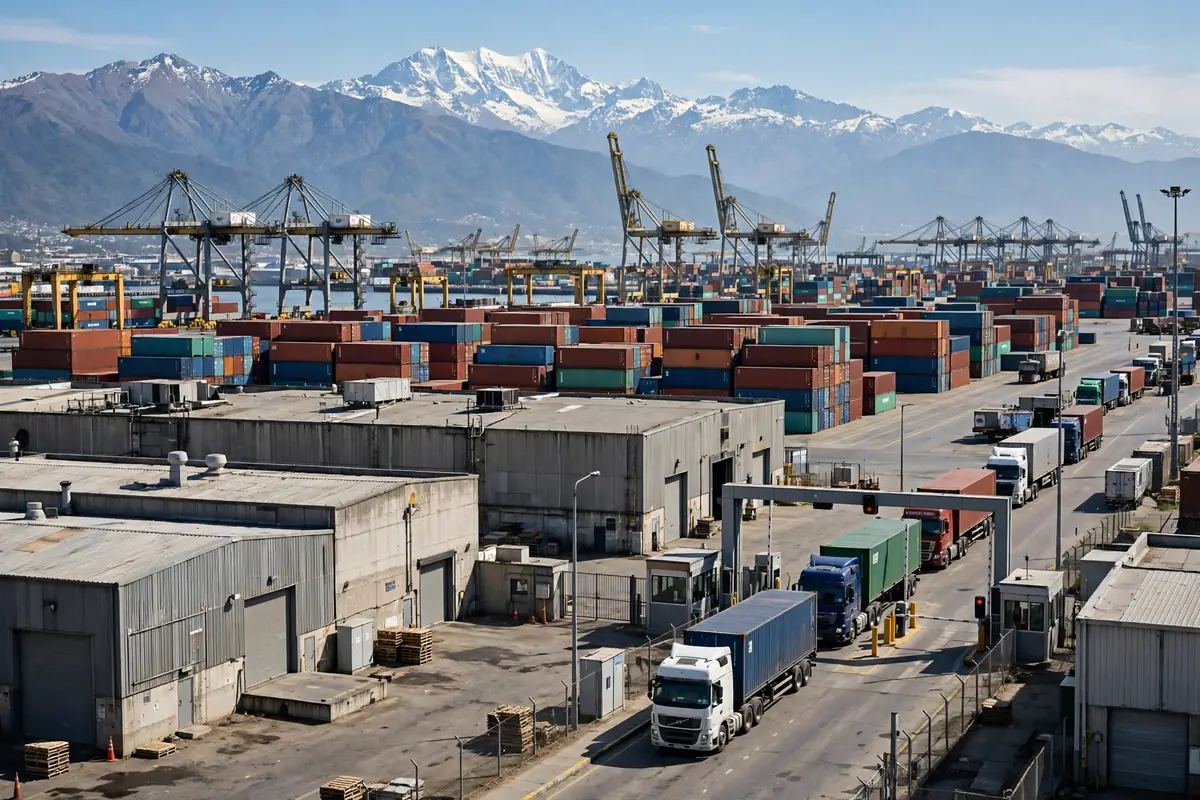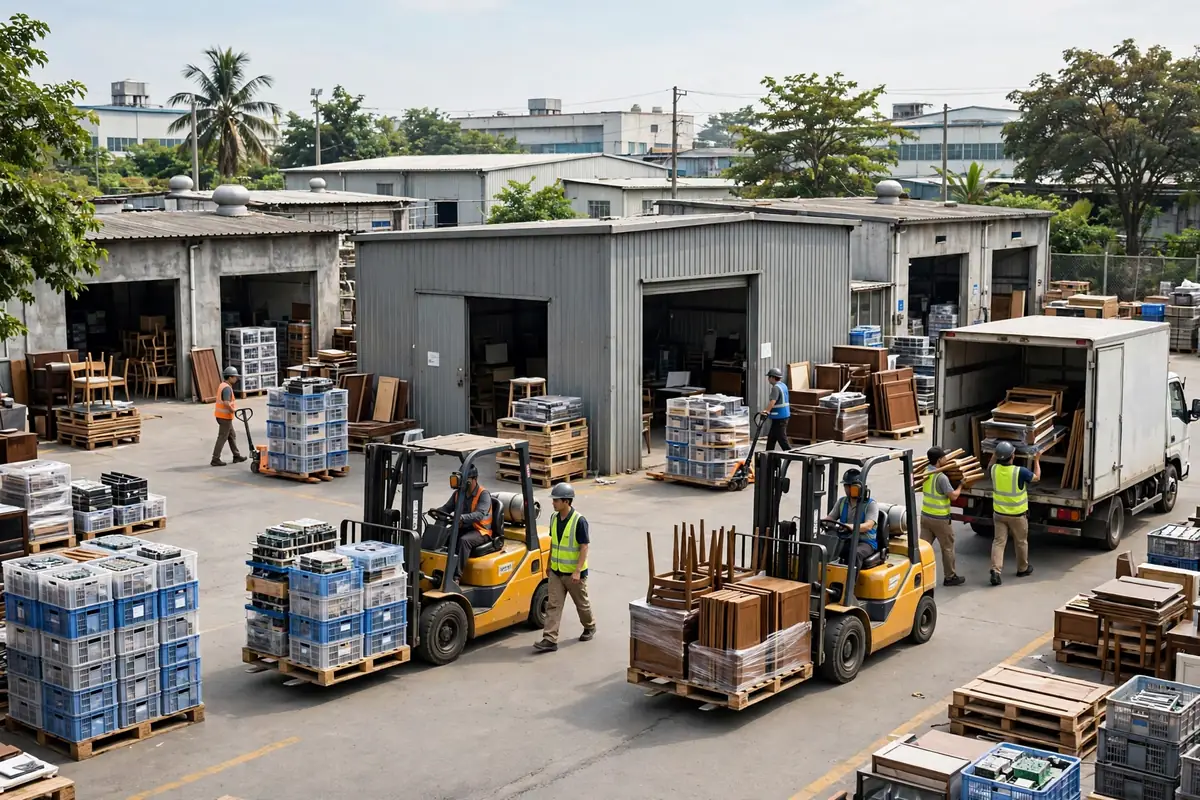
Judged by the standards of a consumer distribution center, a typical Dongguan factory warehouse looks inefficient: modest floor space, rents that are rarely the lowest available, and inventory that turns over at a pace that seems almost impatient. That judgment, however, rests on a category error. What dongguan warehouse logistics manufacturing describes is not a warehouse type at all, but a supply system that has grown directly against the production line, and its performance is therefore measured not by how much stock sits on each square meter, but by whether the right material, in the right batch, reaches the right workstation inside a narrow time window. Arriving an hour late is a failure, but arriving three days early and occupying scarce line-side space is, in its own way, also a failure.
A consumer warehouse faces one dominant source of variability: order fluctuation. A manufacturing warehouse in Dongguan faces four curves moving at once — orders, process changeovers, inbound material quality, and delivery dates. When any curve shifts, the warehouse is where the shift first becomes visible, which is why it can look disorderly to an outsider while remaining, from the factory's perspective, entirely rational.
A Dongguan warehouse serves the line, not the consumer
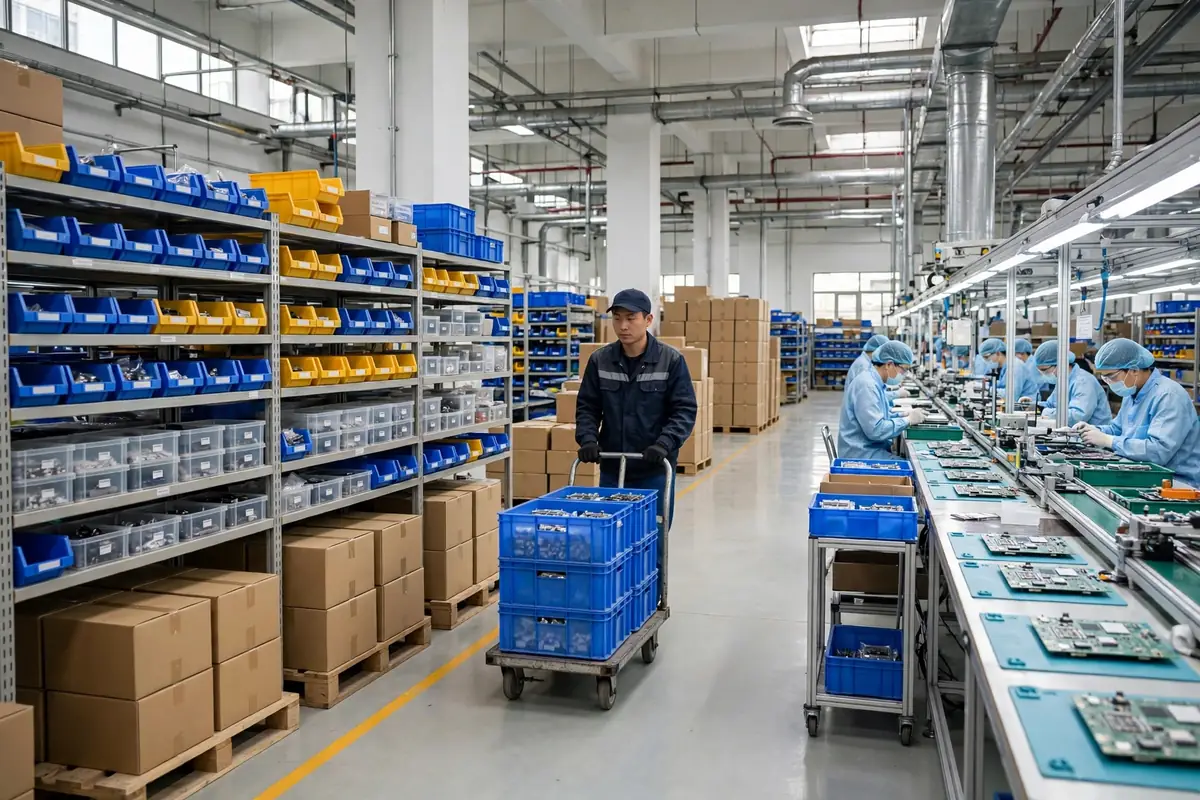
Consider a precision electronics components factory in the Chang'an area. Its line-side store consists of only two rows of heavy racking and a staging area smaller than half a basketball court. On a representative morning, the first inbound materials clear inspection at half past seven, the line changes over at eight, and two items on the work order are still missing because an upstream molding supplier has slipped. The warehouse team does not wait for a complete kit. It releases what has arrived according to work-order priority, isolates the missing items, and signals planning to resequence production. To a visitor, the operation looks untidy because kitting is incomplete. From a manufacturing standpoint, however, the warehouse has protected the one outcome that matters most: the line keeps running, and the waiting is absorbed by the warehouse rather than by equipment and operators standing idle.
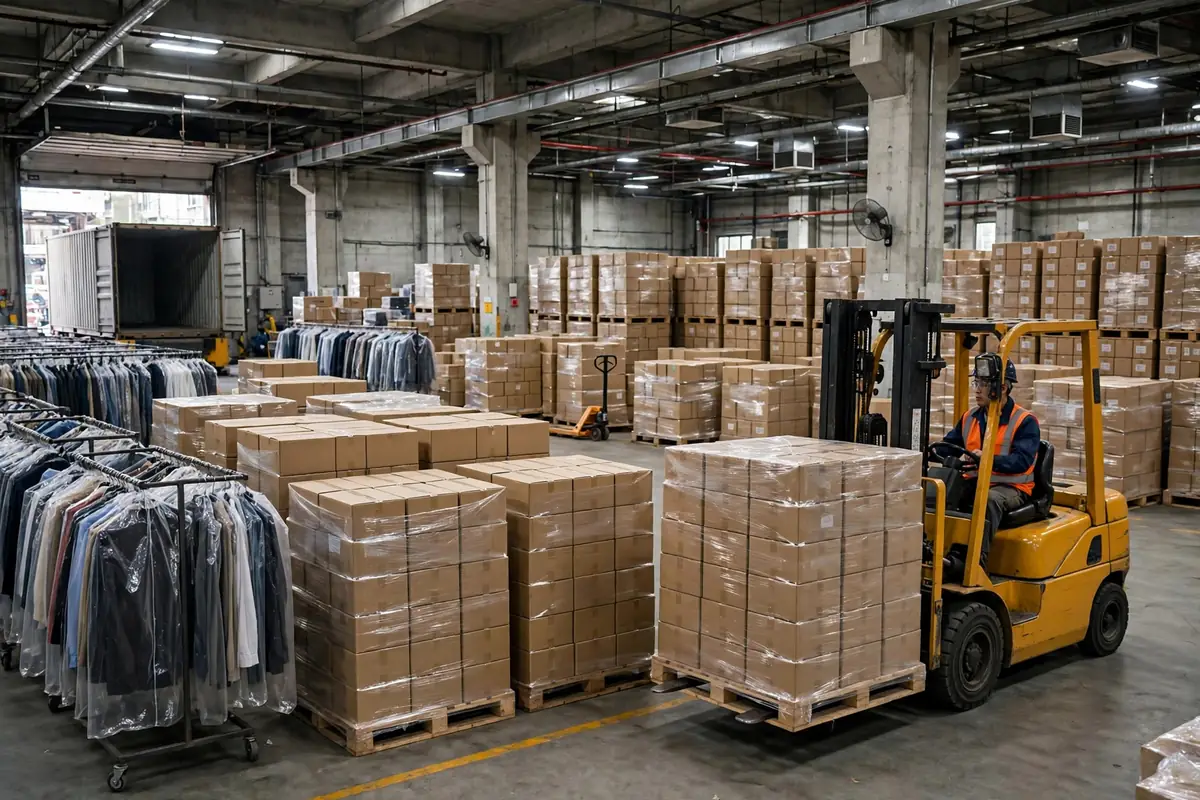
Furniture production around Houjie and Dalingshan presents the opposite physical problem. Bulky, irregular, and easily damaged products make movement itself the dominant cost, so aisle width, proximity of packing materials, and loading sequence matter more than raw picking speed. One furniture maker moved its finished-goods store to a larger, cheaper site farther from the plant and initially recorded an attractive saving on rent. Within a single quarter, the additional shuttle trips, the longer damage-handling chain, and the loss of loading flexibility had eroded that saving, and high-frequency finished goods were moved back next to the factory, leaving only slow samples and tail stock at the remote site. Specific local rent and industry figures should be checked against the latest official statistics; the structural point does not depend on any single number. In Dongguan, comparing warehouses on rent per square meter alone will reliably produce advice that contradicts operating results.
The counterintuitive conclusion follows directly: a good Dongguan warehouse often looks expensive, and sometimes even looks disorganized, because its money has been spent on proximity to the line, on shorter feedback loops, and on flexible local labor, rather than on more impressive racking or a larger single footprint.
How one town, one product reshapes manufacturing logistics
The second structural factor is the town-level specialization for which Dongguan is known: garments around Humen, hardware and molds around Chang'an, furniture around Houjie, electronics around Tangxia, knitwear around Dalang. This pattern was not designed by a planning office; it is the accumulated result of decades of supply-chain self-organization, and it changes the meaning of a collection radius. In a single-industry city, radius is sensibly measured in kilometers. In Dongguan, it is more accurately measured in towns and industry belts, because a short cross-town trip on the map can cross into an entirely different supplier pool, a different labor market, and a different delivery rhythm.
The toy sector illustrates the mechanism. Orders are frequently shared between factories in Dongguan and the Chenghai area, and a Dongguan plant rarely holds all of its materials in its own store. It relies on molders, printers, and packaging suppliers in nearby towns delivering within hours. The warehouse then functions less as a store and more as a metronome, converting irregular arrivals from many small suppliers into a stable feeding rhythm. Hand it to a general operator charging by pallet and labor hour, and that function tends to disappear, because such an operator is optimized for standardized receiving, not for constant small exceptions and order changes.
For that reason, dongguan warehouse logistics manufacturing is best understood not by counting total warehouse space in the city, but by examining the distance structure between stores and factories. Line-side stores solve problems measured in minutes, shared town-level warehouses solve problems measured in hours, and cross-town regional facilities solve problems measured in days. The three layers are not substitutes for one another, and consolidating them into a single large site does not create efficiency; it converts minute-level problems into day-level problems.
This structure also explains why large single-site developments have never fully absorbed Dongguan's warehousing demand. Manufacturing orders fluctuate weekly, sometimes daily, while a large facility needs stable throughput to justify its lease, staffing, and systems. The time scales do not align, so three forms coexist: factory-run line-side stores, small outsourced town warehouses, and regional distribution sites. They are not stages from backward to advanced, but answers to different radii of volatility, and any claim that one will replace the others should be treated with caution.
Self-run or outsourced: judge by volatility, not by size
The familiar debate about whether a factory warehouse should be self-run or outsourced usually draws the line at scale: a certain area, a certain order volume. In Dongguan, that test misleads, because the real boundary is set by who absorbs volatility and who owns exceptions. A more useful framework asks four questions. First, how tightly are materials coupled to process changeovers and batch rules; the tighter the coupling, the stronger the case for self-running. Second, how frequent are exceptions such as order changes, urgent replenishment, and inserted jobs; daily exceptions are difficult to transfer through a contract. Third, where does volatility originate; volatility created by the factory's own scheduling is usually better absorbed internally, while seasonal channel peaks are often better absorbed by an external operator. Fourth, how is responsibility for a line stoppage defined; if that responsibility must remain inside the factory, the line-side function should remain inside as well.
Applied consistently, the framework often produces two different answers inside the same factory. The Chang'an electronics plant discussed above has good reasons to keep its small line-side store under its own control, even though its area is modest, because its exception frequency and stoppage responsibility cannot be fully transferred. The same factory's finished-goods distribution, facing comparatively standardized channel shipments, can reasonably be outsourced to gain labor elasticity and line-haul resources. The boundary, in other words, runs through processes, not through the factory gate.
One further variable is routinely underestimated: local labor. Labor markets between Dongguan's towns are not fully connected, and workers who know a product's assembly and inspection routines in one town cannot necessarily be recruited at the same cost in another. An operator that transplants a management team from a different town usually discovers the mismatch in its first peak season. Several factories that brought an outsourced warehouse back in-house after a year were not reacting to price at all, but to the loss of that local knowledge.
Taken together, these observations suggest that the next stage of Dongguan warehousing may not be larger single sites, but a finer division of labor: line-side functions moving closer to factories and becoming more responsive, regional functions becoming more network-oriented, and shared town-level warehouses providing elastic buffering between the two. What may become genuinely scarce is not floor space itself, but operators who understand both manufacturing rhythm and town-level resources. As newer industry belts, from new energy equipment to intelligent terminals, continue to cluster in different towns, it remains an open question whether this town-based form of warehouse organization will be replicated for new product categories, or gradually displaced by more centralized regional networks, and the answer will likely differ from one industry belt to the next.
By Dr. Chen, Supply Chain Researcher