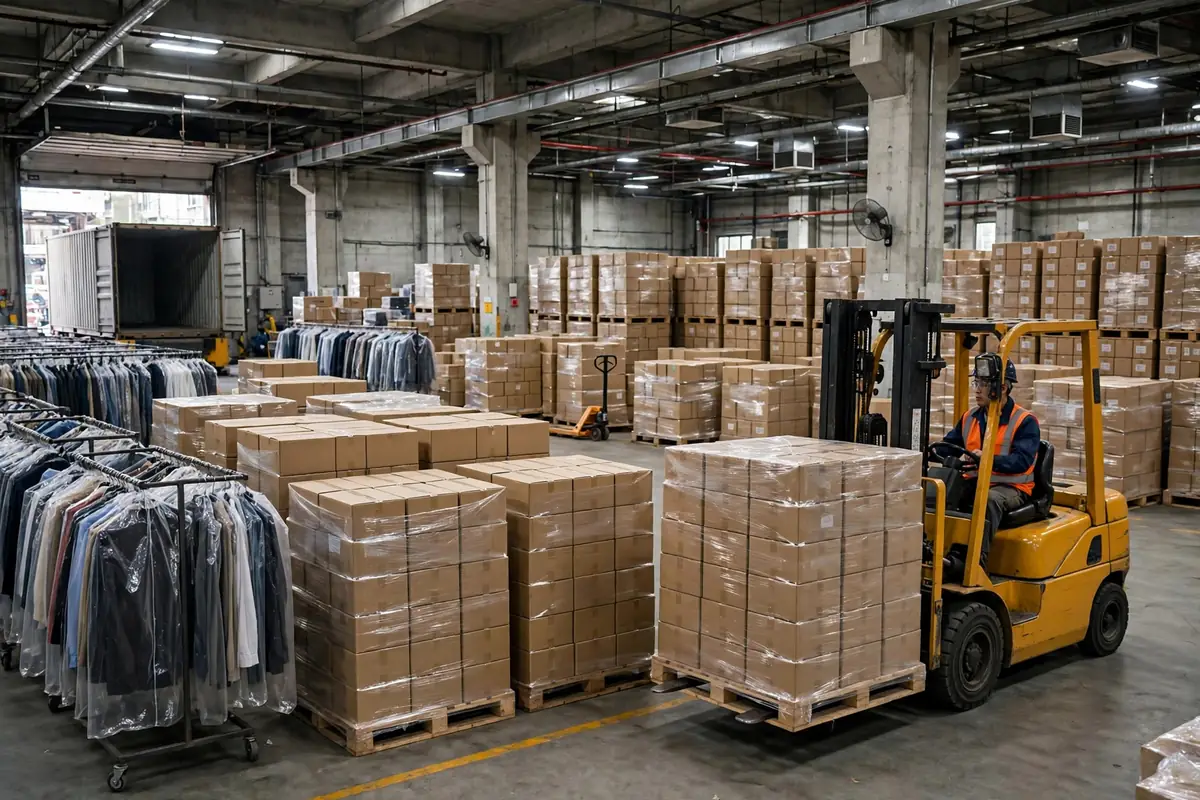
Any serious reading of quanzhou fujian warehouse logistics manufacturing has to begin with a structural observation: in Quanzhou, warehousing demand is generated primarily by manufacturing rhythms rather than by consumer distribution alone. Footwear and apparel, building materials and stone processing, and food production have clustered for decades across Jinjiang, Shishi, Nan'an, and Hui'an, and raw-material stores, finished-goods warehouses, and consolidation facilities have consistently located where the factories are. This factory-anchored geography differs in kind, not merely in scale, from the distribution-centred networks of large consumption cities, and it explains much of what follows.
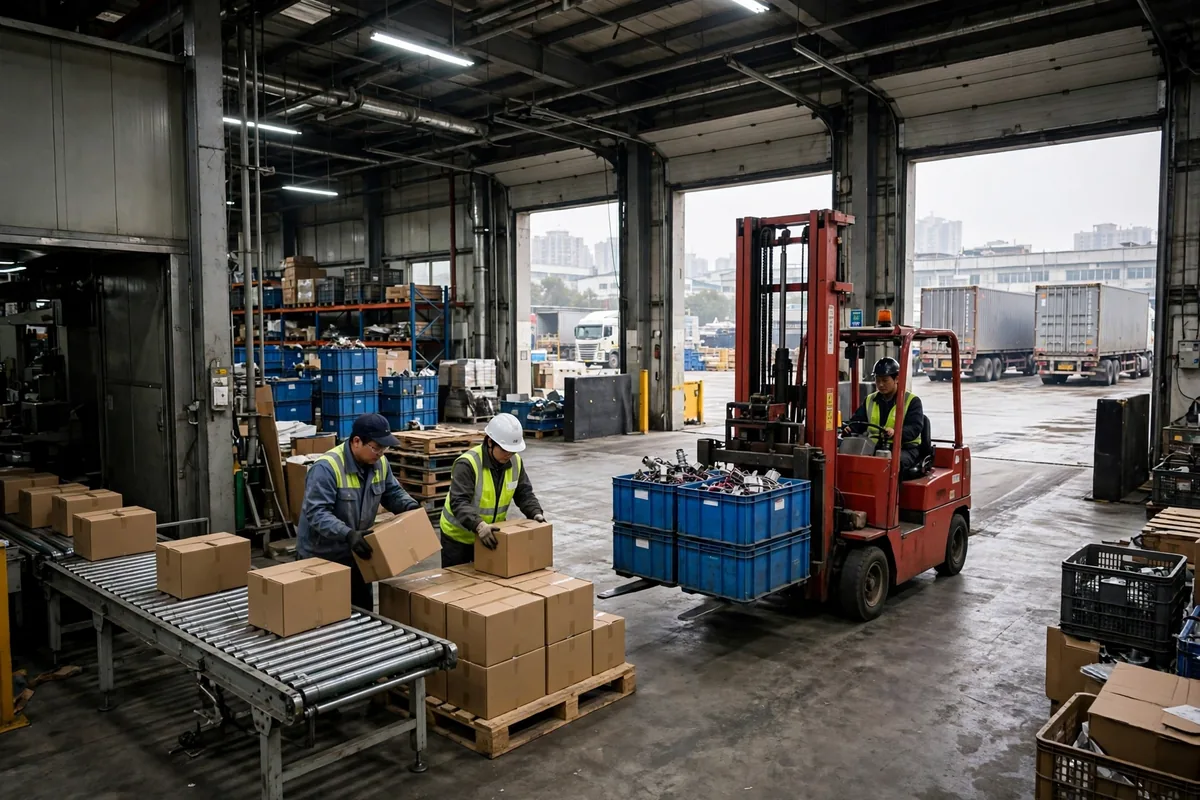
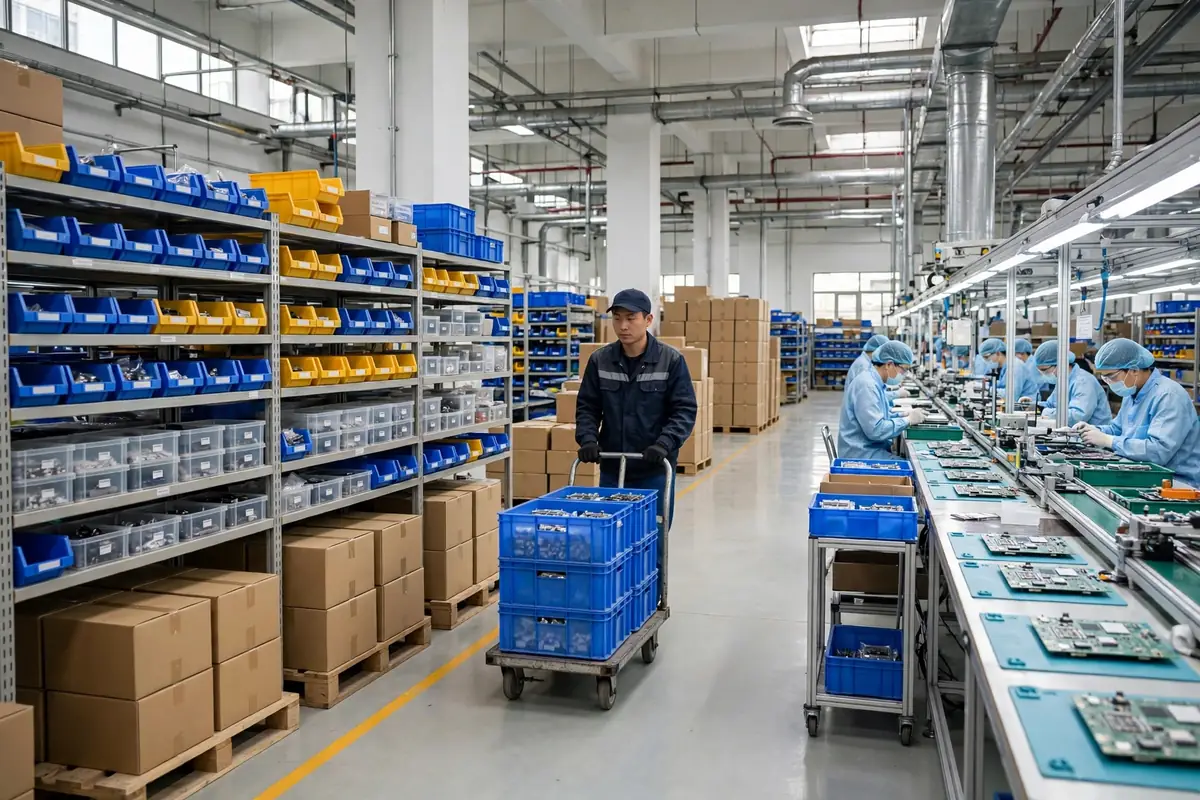
The market can be described as a two-layer structure. The first layer consists of factory-operated warehouses handling inbound materials, line-side replenishment, and finished-goods staging, sited immediately beside production and managed according to production schedules rather than order waves. The second layer consists of third-party facilities absorbing three categories of incremental demand: fulfilment for e-commerce and livestream channels, export consolidation and container loading, and the seasonal overflow that smaller factories cannot house internally. The two layers are complements more than substitutes. Factory warehouses supply certainty; third-party warehouses supply elasticity. A growing manufacturer typically begins with self-operated space, outsources part of the volatility, and redraws the boundary as its channel mix changes, a sequence that recurs frequently among Quanzhou's footwear producers.
How the quanzhou fujian warehouse logistics manufacturing division of labour took shape
Three causal threads account for this pattern. The first is the gradient of firm size: leading brands can justify dedicated or long-leased facilities, while the long tail of small and medium factories depends on shared capacity, so demand is stratified by construction. The second is channel change. Domestic e-commerce, cross-border e-commerce, and traditional wholesale coexist within the order pools of the same factories, yet they impose sharply different requirements for picking, labelling, and returns handling, which creates the economic basis for specialised operators. The third thread is the inherited building stock. Older industrial premises vary considerably in clear height, floor loading, and fire-protection standards, and converting them to warehouse use involves real constraints; this has pushed higher-specification demand toward purpose-built logistics parks. This article deliberately stays qualitative: figures for output value, freight volume, or port throughput should be taken from the latest official releases rather than repeated from memory.
Why Quanzhou warehouse logistics follows the industrial clusters
The first cluster effect is seasonality. Illustrative scenario: a footwear factory's finished-goods intake follows the rhythm of trade fairs and selling seasons, so demand for storage can rise steeply within a few weeks as autumn and winter ranges arrive, then fall back just as quickly. This pulse-shaped demand means third-party contracts in Quanzhou are negotiated around flexibility clauses at least as much as around headline rent.
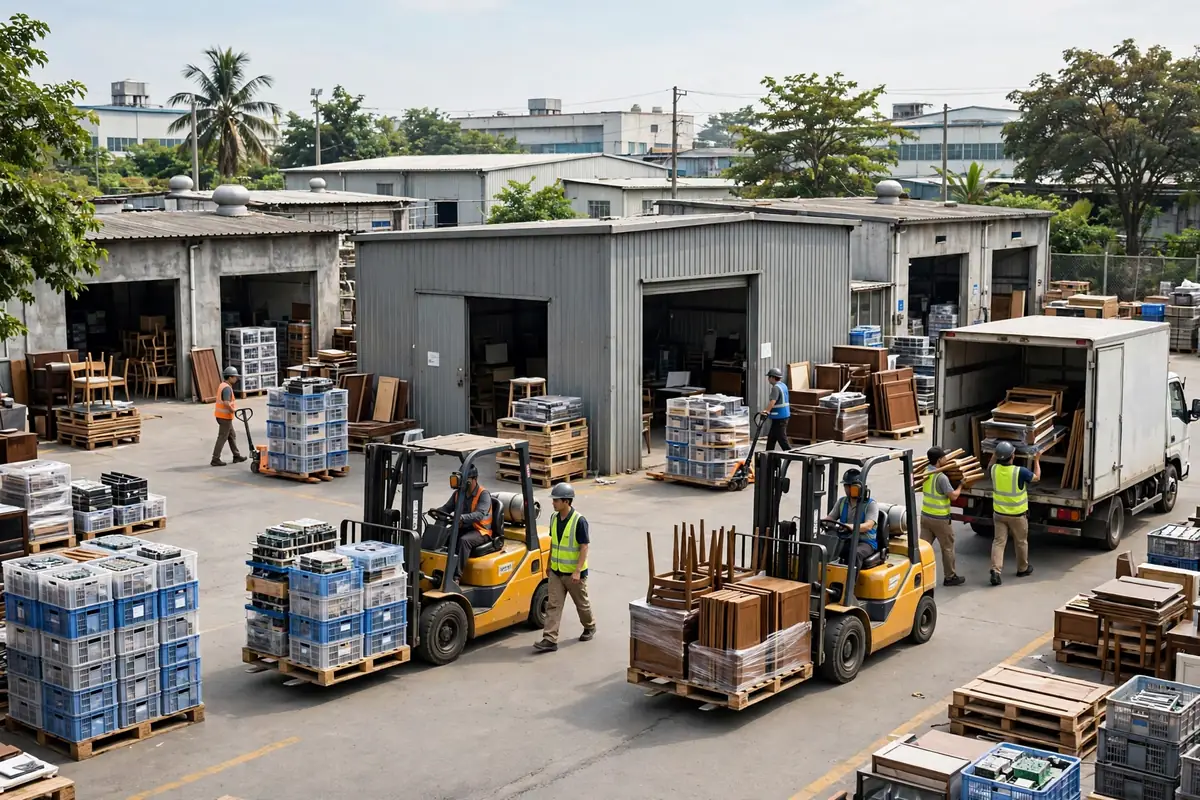
The second effect is heavy freight. Plumbing products and stone from areas such as Nan'an are heavy per unit, damage-sensitive, and comparatively slow-moving, which places demands on floor loading, forklift capacity, and handling technique that have almost nothing in common with small-parcel e-commerce operations. Mixing heavy and light operations under one roof is a reliable predictor of simultaneous damage and efficiency problems. The third effect is export consolidation. Many smaller factories cannot fill a container alone, so consolidation warehouses combine cargo from multiple shippers, verify shipping marks, and assemble documentation; in functional terms, they perform part of the supply-chain coordination role, not merely storage.
| Export routing option | Typically suited to (qualitative) | Principal trade-off |
|---|---|---|
| Ship via Quanzhou port | Cargo originating nearby, valuing short drayage | Shortest factory-to-port leg; sailing frequency and route coverage must be assessed shipment by shipment |
| Ship via Xiamen port | Cargo needing denser schedules or cross-border e-commerce services | Richer route and service resources; longer inland haul and greater transit variability |
| Ship via Fuzhou port | Cargo originating further north or tied to existing carrier arrangements | Useful as a diversion option; requires joint evaluation of drayage cost, schedule fit, and destination coverage |
A further consideration is how consolidation timing interacts with the routing decision. Because many exporters ship less-than-container volumes, the warehouse must first accumulate cargo from several factories before a booking becomes economical, and the length of that accumulation window differs by port and by sailing schedule. A route with a longer inland haul may still produce the shorter total lead time if its consolidation window closes earlier and its sailing connects more directly with the destination. Conversely, the nearest port can become the slowest option when cargo waits for a sailing that fits. Evaluating ports on drayage distance alone therefore systematically misleads; the correct unit of analysis is the full chain from factory gate to vessel departure, including waiting time at every handover point.
There is no stable universal ranking among these options. The choice among Quanzhou, Xiamen, and Fuzhou ports is fundamentally a trade-off among drayage distance, schedule density, destination coverage, and total cost, and because carrier networks change, the sensible practice is quarterly review rather than a permanent designation.
What manufacturing going global now asks of local warehousing
As Quanzhou manufacturers expand toward markets such as Southeast Asia and the Middle East, three new requirements are becoming visible. Illustrative scenario: a footwear exporter completes quality inspection in its domestic warehouse, then must relabel, repack, and palletise separately according to each destination country's requirements before staged consolidation; a single labelling error can become a clearance problem at the destination port. The first requirement, therefore, is professionalised pre-export processing, including country-specific packaging, compliant labelling, and traceable inspection records. The second is inventory visibility across domestic warehouses, consolidation points, and in-transit stock, so that supply can be reallocated among markets. The third is a local channel for returns and residual stock, because the uncertainty of overseas business eventually returns home in physical form and needs a planned exit rather than an improvised one.
Two trend judgements can be offered, with explicit caution. First, the service boundary of third-party warehouses is likely to keep moving upstream, with inspection, packaging, and consolidation coordination increasingly purchased as a bundle; the basis for this judgement is that channel fragmentation continues to deepen while smaller factories show declining capacity and willingness to build full in-house capability. Second, warehouse stock is likely to differentiate further, with facilities suited to heavy goods, light goods, domestic distribution, and export consolidation separating more clearly in rent, conversion investment, and tenant mix. A two-to-three-year horizon is appropriate for testing both judgements, and either should be revised if the pace of industrial relocation or the regional port network changes materially.
The open question is whether, as the organisational model shifts from factory plus trading company toward factory plus multi-channel operations, warehousing in Quanzhou will remain accounted for as a cost centre, or whether it will be recognised as one of the few pieces of professional infrastructure that smaller manufacturers can realistically share when they go global. The investment pattern of the next upgrading cycle will probably answer that question more convincingly than any forecast, including this one.
By Dr. Chen, Supply Chain Researcher