Companies arriving in Ningbo for the first time often start with the same tidy idea: lease one large, inexpensive warehouse, put raw materials, work in progress, and finished export goods under a single roof, and manage everything centrally. According to long-running observation of manufacturing cities in the Yangtze River Delta, that idea starts to creak within the first month in Ningbo. The reason is structural. At its core, ningbo warehouse logistics manufacturing is not one logistics problem but two, running on different clocks. One clock belongs to the factory line and ticks in hours. The other belongs to the port and ticks in vessel cut-offs and sailing schedules. Forcing both clocks into a single building saves rent. What it quietly spends is line-stop risk and export reliability.
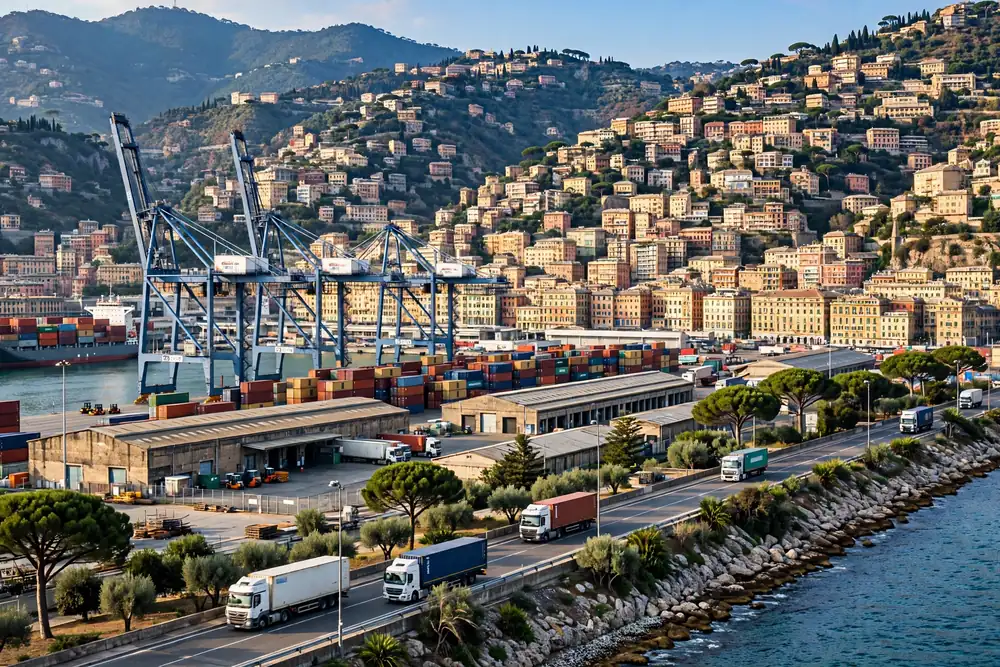
Ningbo combines two identities that rarely sit this close together. It is one of the world's busiest container ports, and it is also a dense manufacturing city, with automotive parts, home appliances, and injection-molded products clustered across districts such as Beilun, Yinzhou, Cixi, and Yuyao. According to the general pattern visible in these clusters, suppliers are geographically close to the factories they serve, yet order volatility is high, because domestic, export, and e-commerce demand peaks rarely coincide. Any serious warehouse plan here has to start by treating the factory warehouse and the port warehouse as different species, not as larger and smaller versions of the same thing.
Ningbo warehouse logic, part one: stay close to the line
A factory warehouse has one overriding job: the line must never wait for material. Its real scorecard is not pallets stored per square meter. It is whether a line-stop caused by a missing part ever happens, and whether kits are complete before the morning shift starts.
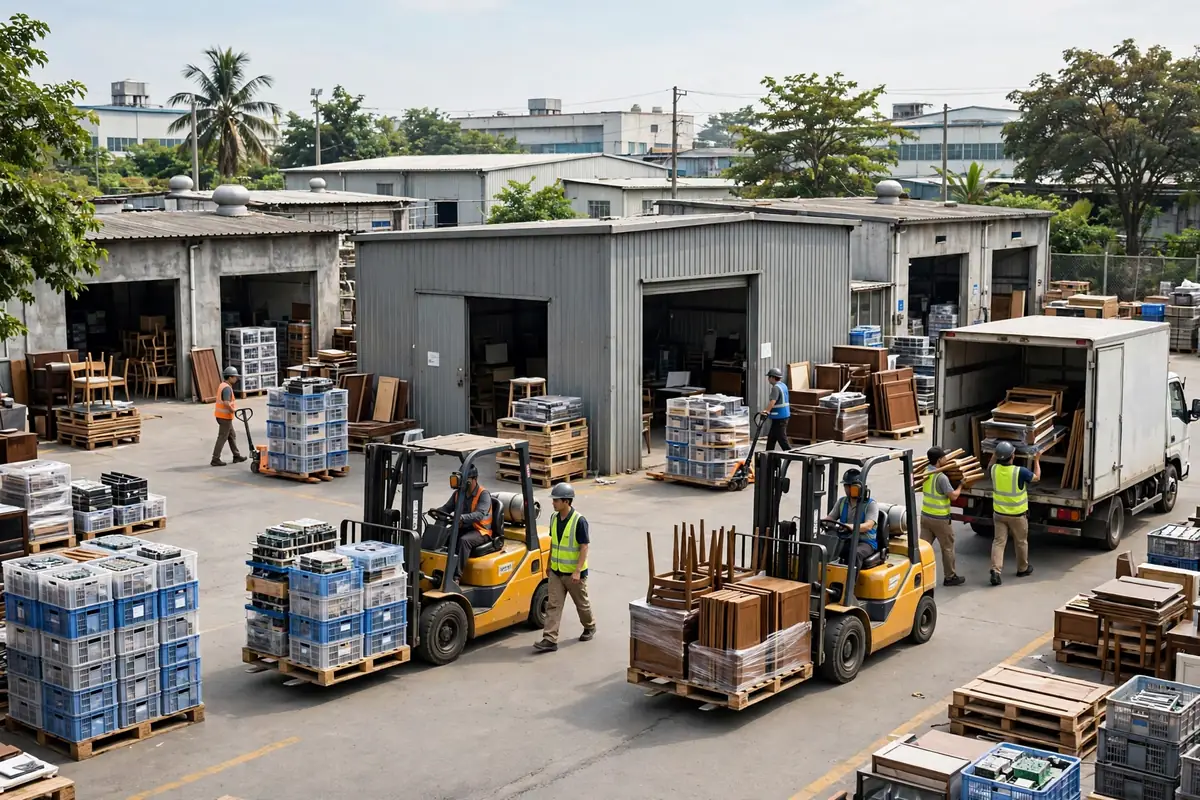
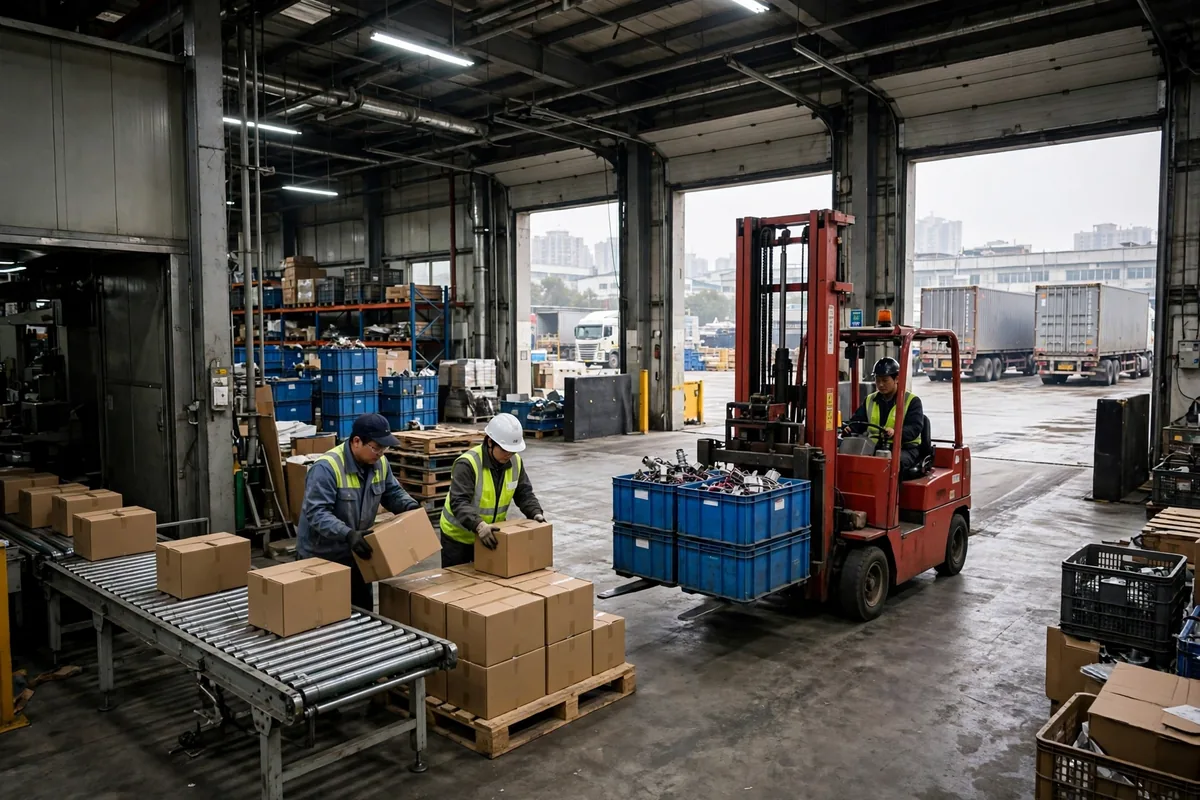
Consider an illustrative example. Imagine an auto parts plant running two shifts, with stamping, molding, and final assembly sharing fasteners, harnesses, and packaging materials sourced from suppliers within a short drive. If every delivery first travels to a distant central warehouse and is then redistributed once a day, a single traffic jam or picking delay becomes a production delay. The more resilient pattern is a small near-plant node running milk-run collections and vendor-managed inventory: core suppliers are picked up on fixed loops, stock sits close to the plant, the factory draws against a kanban signal and settles on actual consumption, and safety stock stays thin but turns very fast. The building is unglamorous and lightly automated. Its entire value is proximity and response time.
That near-plant node does a second, underappreciated job. It absorbs supplier quality noise. A failed incoming inspection, a mismatched batch label, or damaged packaging discovered at a distant hub takes half a day to loop back to the supplier. Discovered next door to the plant, the same problem closes in hours, with a replacement delivery the same shift. According to established lean logistics practice, the inventory value held in such nodes is usually modest, but their leverage over production continuity is disproportionately large.
The port warehouse runs on vessel time, not factory time
A port-area warehouse serves ships, not lines. Its calendar is written by bookings, cut-offs, and sailings, which makes its workload brutally uneven: the forty-eight hours before a cut-off can run through the night, and the two days after a sailing can leave whole bays empty.
Take a second illustrative example. Picture a home appliance exporter in Cixi at peak season, shipping to several overseas markets at once, consolidating orders by destination into full containers, with part of the volume needing relabeling, re-cartoning, and photo documentation before loading. If that export work permanently occupies the factory warehouse's docks and floor space, domestic dispatch and inbound materials keep getting interrupted. Move export consolidation to a warehouse near the port instead, and the factory simply ships out by production batch on full trucks, while sorting, sequencing, and staging happen at the port node. The factory floor gets quieter immediately. In essence, the port warehouse is a buffering and sequencing machine: it converts the factory's uneven continuous output into the discrete, sailing-by-sailing container flow the port requires.
Judging such a site on rent per square meter alone is therefore a category error. Drayage distance to the terminal, willingness to work irregular hours, and the ability to add temporary labor in peak weeks matter just as much. Current carrier rates and port schedules should always be checked against the latest published information rather than figures quoted in any article, because they move quickly.
Ningbo manufacturing seasonality: never size the network to the average
Export manufacturing in Ningbo swings hard by season. Appliances, seasonal goods, and outdoor categories each peak on their own calendar, and overseas buyers routinely pull sailings forward or push them back, so peak throughput at a port warehouse can sit far above the monthly average. Size the network to the average and it jams at peak; size it to the peak and you pay rent on empty space most of the year.
This is where ningbo warehouse logistics manufacturing diverges most clearly from consumer-goods distribution in a pure consumption city. There, peaks are largely written by the promotional calendar and are comparatively predictable. Here, peaks are the product of overseas orders, vessel schedules, and factory production plans stacking on top of each other. The uncertainty is higher, so the answer has to be elasticity rather than fixed area: a guaranteed base footprint, a pre-agreed overflow option near the port for peak weeks, and clear rules, written in advance, about which product families live in the base site and which ones spill to overflow.
The counter-intuitive conclusion follows from that structure. In Ningbo, a deliberately redundant two-node network often costs less over a full year than one highly consolidated mega-warehouse. The mega-warehouse wins on rent and equipment amortization. The two-node network wins on avoided line stops, shorter drayage loops, lower peak-season outsourcing premiums, and fewer late-shipment penalties. Those avoided costs are scattered across different lines of the accounts, which is exactly why a simple site-selection spreadsheet so often misses them.
One big warehouse versus two smaller nodes: an illustrative calculation
The following comparison is an illustrative example only. None of the figures represent an actual Ningbo warehouse quote; real rents and haulage prices must be obtained from current market inquiries.
Assume a manufacturer handling the equivalent of ten thousand pallet movements a month across inbound materials and outbound finished goods, with exports at roughly sixty percent of volume. Option one is a single low-rent warehouse set away from both the main plants and the port. Option two splits the work between a small near-plant warehouse and a port-side consolidation warehouse.
| Factor (illustrative example) | Single large warehouse | Two-node network |
|---|---|---|
| Fixed rent and base labor | Lower; scale spreads the cost | Higher; two base footprints to fund |
| Material response to the line | Slower; daily planned deliveries, costly emergency runs | Faster; shift-level replenishment from next door |
| Export drayage | Longer loops, higher peak-season waiting risk | Short loops, staging next to the port |
| Peak elasticity | Whole operation outsourced at weak bargaining power | Only the port node needs temporary expansion |
| Failure exposure | Concentrated; one disruption hits everything | Split; the two flows do not block each other |
The table is not claiming the two-node option wins every row. It plainly loses on fixed cost. The decision framework is the point: estimate the cost of one line stop first, then the cost of one badly delayed container, and only then compare the rent difference. If the expected value of those two risks clearly exceeds the rent saving, the two-node network is the cheaper design, however the rate cards look. In study after study of manufacturing clusters, that sequence — risk first, rent second — is what separates networks that survive peak season from networks that merely look efficient in a proposal.
One final trend judgment, offered with a time horizon. Over the next three to five years, as specialization inside Ningbo's clusters deepens, warehouse location decisions will keep shifting from a cost-center logic toward a network-node logic. Competitive advantage in ningbo warehouse logistics manufacturing will belong less to whoever runs the single largest building, and more to whoever's combination of nodes best matches how goods actually flow.
Which leaves an open question worth carrying into every network review in this city. As factories become more flexible and order batches keep getting smaller, will the boundary between the near-plant warehouse and the port warehouse eventually dissolve into a system that assigns work by order rather than by location — and if it does, which of today's fixed assets becomes the stranded one?
By Dr. Chen, Supply Chain Researcher