At 5:40 in the morning I was standing at the gate of our Wuhan warehouse near Yangluo on the Yangtze, waiting for the first truck. The sky was barely light, the air off the river was damp, and Lao Zhao from the night shift was squatting by the dock eating hot dry noodles. He told me the rail-water boxes from last night had been delayed again, and the terminal had already called three times. I will say it plainly: if you run a warehouse in Wuhan and only watch what happens inside your four walls, you will not run it well. Freight here arrives by river, leaves by rail, and fans out by highway into the central provinces. If one leg slips, the warehouse feels it first.
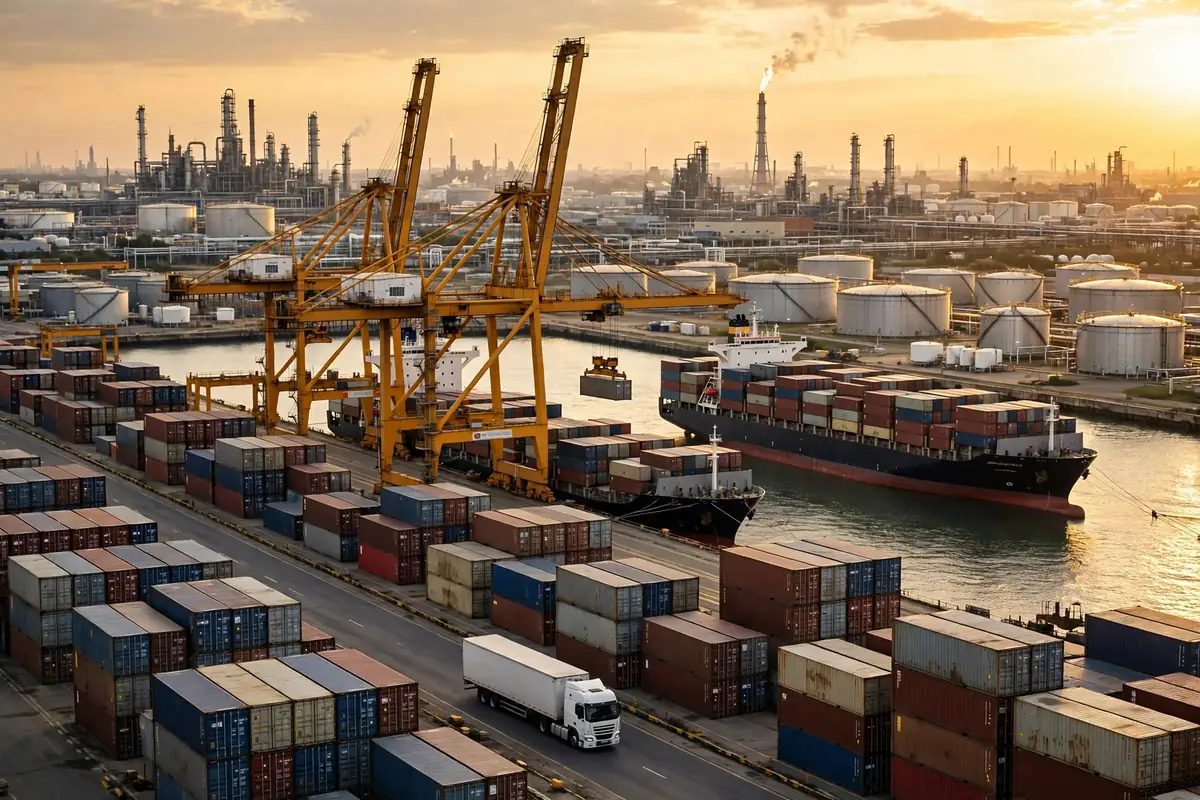
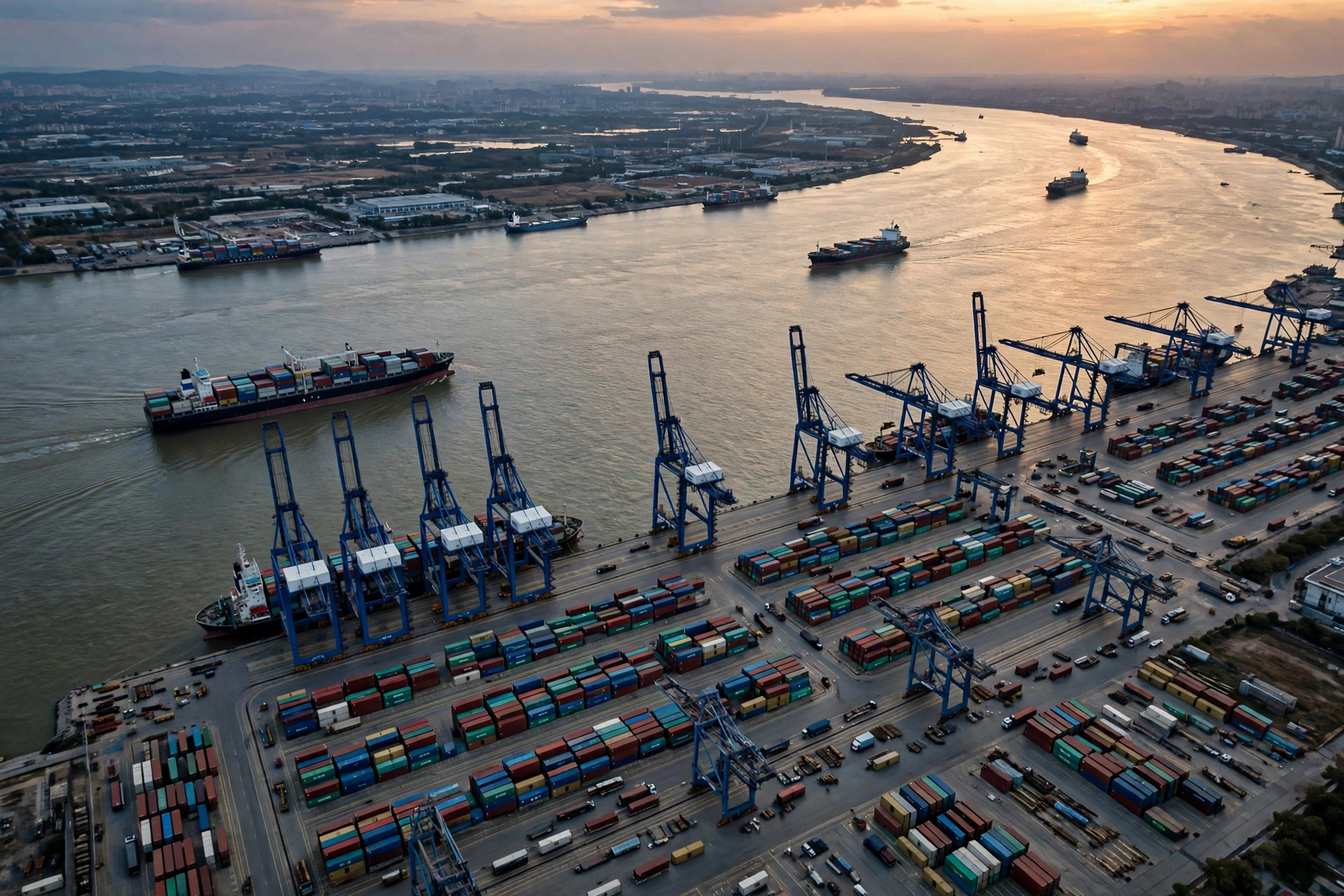
Wuhan sits where the Yangtze meets the Han River, and Wuhan Port is the largest inland port in the middle reaches of the Yangtze. In 2024, ports along the Yangtze mainline moved about 4.02 billion tons of cargo and 26.21 million TEU of containers, according to Xinhua reporting in December 2024. That scale tells you the river is not scenery. It is a trunk logistics corridor, and a Wuhan warehouse is a transfer point on that corridor. Choose the wrong spot, and you spend the rest of the lease paying for it.
Wuhan Yangtze River Warehouse Logistics Starts With How Freight Moves
Owners who come to Wuhan looking for space usually ask two questions first: what is the rent, and how far is the highway ramp. Very few ask the only question that matters first, which is how the freight actually moves. Container cargo arriving through Yangluo on a river-sea service punishes every extra kilometre of drayage between the port and the warehouse. Consumer goods bound for city distribution punish every hour a driver spends stuck in urban traffic because the warehouse was placed next to a port it never uses. There is no single right location in Wuhan. There is only a right location for a specific flow.
In 2024 I helped a friend who sells small home appliances review his setup, a scenario illustration from our work together. He had rented a tidy warehouse in Dongxihu because the building was clean and the yard was easy to work. His goods, though, were imported components landing at Yangluo, several containers a week, hauled across the city, unstuffed, then sorted again for orders across the central provinces. In the peak month that October, three containers in one week arrived late for pickup, and the night shift worked four straight overtime nights. Lao Zhao said it best: we were not slow, the warehouse was simply too far from where the freight entered the city.
We split the flow. A smaller, fast-turn site near Yangluo took over unstuffing and labelling, while Dongxihu kept storage and regional distribution only. The next time pickups ran late, at least unstuffing no longer waited on a cross-city truck. That is the first lesson Wuhan teaches you: freight here has several doors, and each door needs its own way of being received.
Vehicles are a different flow again. Ro-ro throughput at Wuhan Port exceeded one million vehicles in both 2024 and 2025, the highest in the middle and upper Yangtze, and the Hannan port area alone handled more than 700,000 vehicles in 2025. Locally built vehicles can clear customs in Wuhan, with the process completed in about 48 hours, and river-sea intermodal services let an inland ro-ro vessel meet an ocean vessel directly at a coastal port, skipping coastal warehousing altogether. For a warehouse handling vehicles or parts, inbound appointments, staging and port delivery have to lock onto vessel schedules and customs timing, because missing a sailing by a day means a different ship.
Port-Side or Suburban: The Wuhan Yangtze Warehouse Comparison
When I walk a site with an owner, I use one fixed comparison and I do not let the conversation drift into gut feeling. A port-side warehouse serves flows tied to sailings: import unstuffing, export consolidation, ro-ro staging and customs timing. It wins on short drayage and fast reaction when a schedule changes, and it loses on tight space, hard expansion and dock congestion in peak weeks. A suburban warehouse serves flows tied to orders: regional distribution, e-commerce fulfilment and spare-parts storage. It wins on space, clean zoning and easier hiring, and it loses whenever a sailing deadline has to be met from far away.
| Factor | Port-side (Yangluo, Hannan) | Suburban (Dongxihu and similar) |
|---|---|---|
| Tied to | Sailings, pickups, customs | Orders, distribution, storage |
| Biggest risk | Tight space, dock queues | Long drayage, missed sailings |
| Best fit | Container trade, vehicles, parts consolidation | Consumer distribution, e-commerce, spares |
| Management focus | Syncing with terminal and schedule | Waves, labour productivity, delivery radius |
Here is a hypothetical worked example, with illustrative numbers only and no claim about real Wuhan rents. Suppose a port-side site costs 30,000 yuan a month more in total than a suburban site, but a certain import flow needs 120 extra drayage trips a month from the suburban site at an all-in 350 yuan per trip. That is 42,000 yuan a month, so the supposedly expensive port-side warehouse is actually 12,000 yuan cheaper for that flow. Run the same maths for freight that never touches the river, and the port-side premium is money burned for a view of the water. I never tell anyone to always choose the port. If the freight does not float, the warehouse does not need to sit beside the river.
That leads to the counterintuitive point I repeat most often in Wuhan: being close to the port does not automatically make you efficient. Stuff distribution, storage and returns processing into a port-side building and the dock becomes a daily fight between pickup trucks, delivery trucks and returns vehicles, all wanting the same doors at the same hours. Our fixed rule became simple. The port-side site only does work tied to sailings, and any pallet that has not moved in a week gets transferred out. Expensive ground has to be forced to keep freight moving.
Low water and flood season are the other Wuhan lesson. In the dry season, lower levels restrict vessel draught and river-sea connections can slow or shift. In flood season, terminals and road legs both need more buffer. During one dry season in 2023, a parts shipment we had consolidated for a ro-ro connection was pushed back when the sailing moved, and because we had staged everything tightly against the original date, the outbound area jammed and inbound freight had nowhere to go. We rented emergency space and learned the rule: any plan tied to the river needs slack built in on purpose. We now stage sailing-bound freight in two waves, keep outbound bays marked by sailing, and hold one weekly check with the terminal and carriers on the next two weeks of schedules.
Rail-water intermodal is changing warehouse routines too. In the first three quarters of 2025, container rail-water intermodal volume through Hubei ports reached 278,800 TEU, up 8.37 percent year on year, and Wuhan Port accounted for 257,900 TEU, up 52.65 percent, which was 38.21 percent of the total for China's inland river ports. Train cut-off times are not flexible the way a truck departure can be. Picking waves and dock clearing have to be planned backwards from the train, not forwards from the shift start.
For distribution into the central provinces, our settled pattern is to separate freight by flow first and by destination second. River and rail freight runs on its own line against sailings and train schedules. Regional orders are cut off at a fixed time each day by province and route, and late urgent orders travel on a clearly priced express path instead of being stuffed into a closed wave. In peak season we also stopped mixing the port-side and suburban teams on one roster, because the two sites run on different clocks. One named person owns vessel schedules, one owns train schedules, and one owns container pickups, and any change is passed to the floor the same day.
If you are placing a warehouse in Wuhan, draw the flow before you sign for the space. Where does the freight enter, does it leave by rail or by road, and is a sailing deadline attached to it? Answer those honestly and the location mostly chooses itself. Keep the river work near the river, and the order work where the space and people are.
By Chen Feng, Warehouse Operations Manager