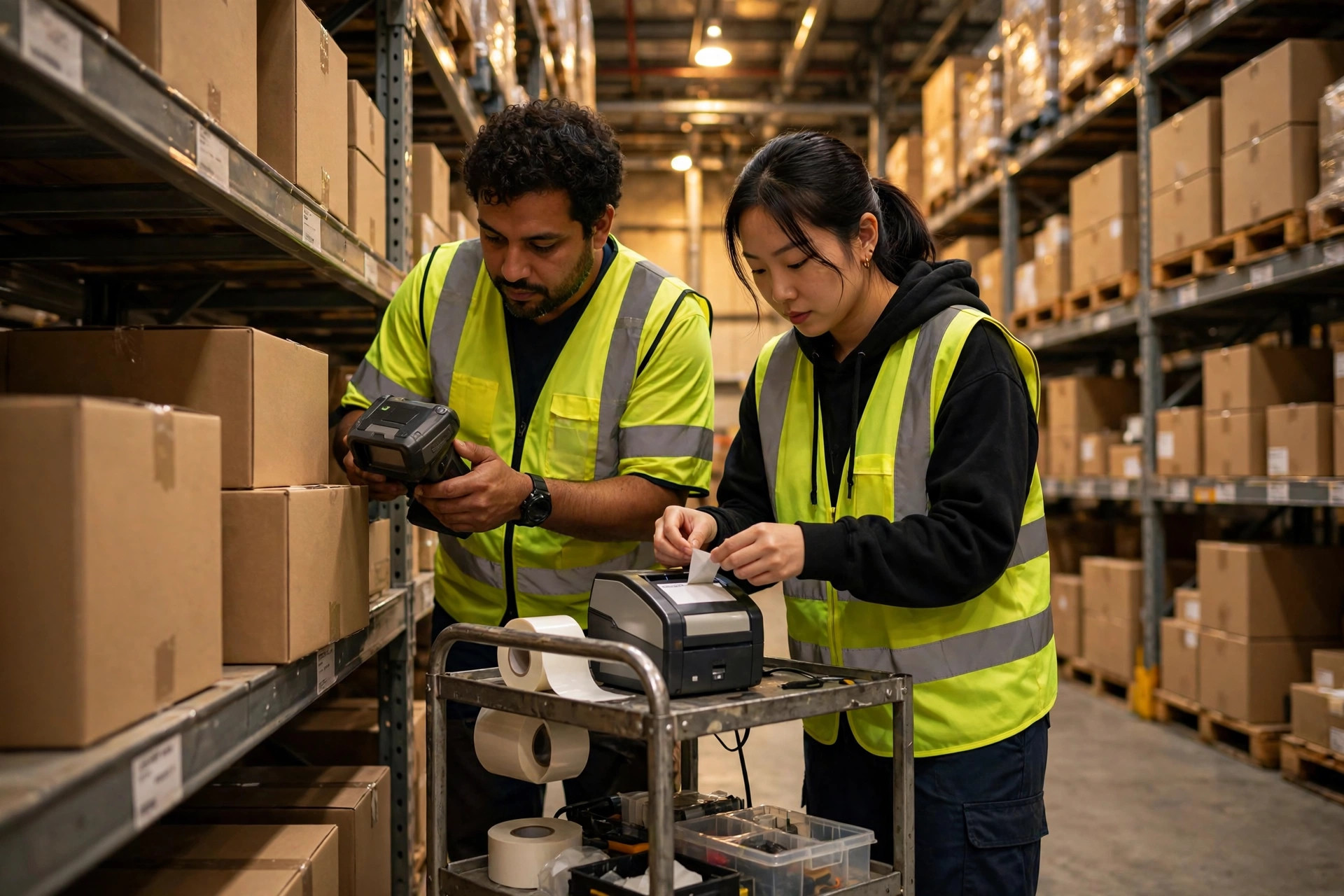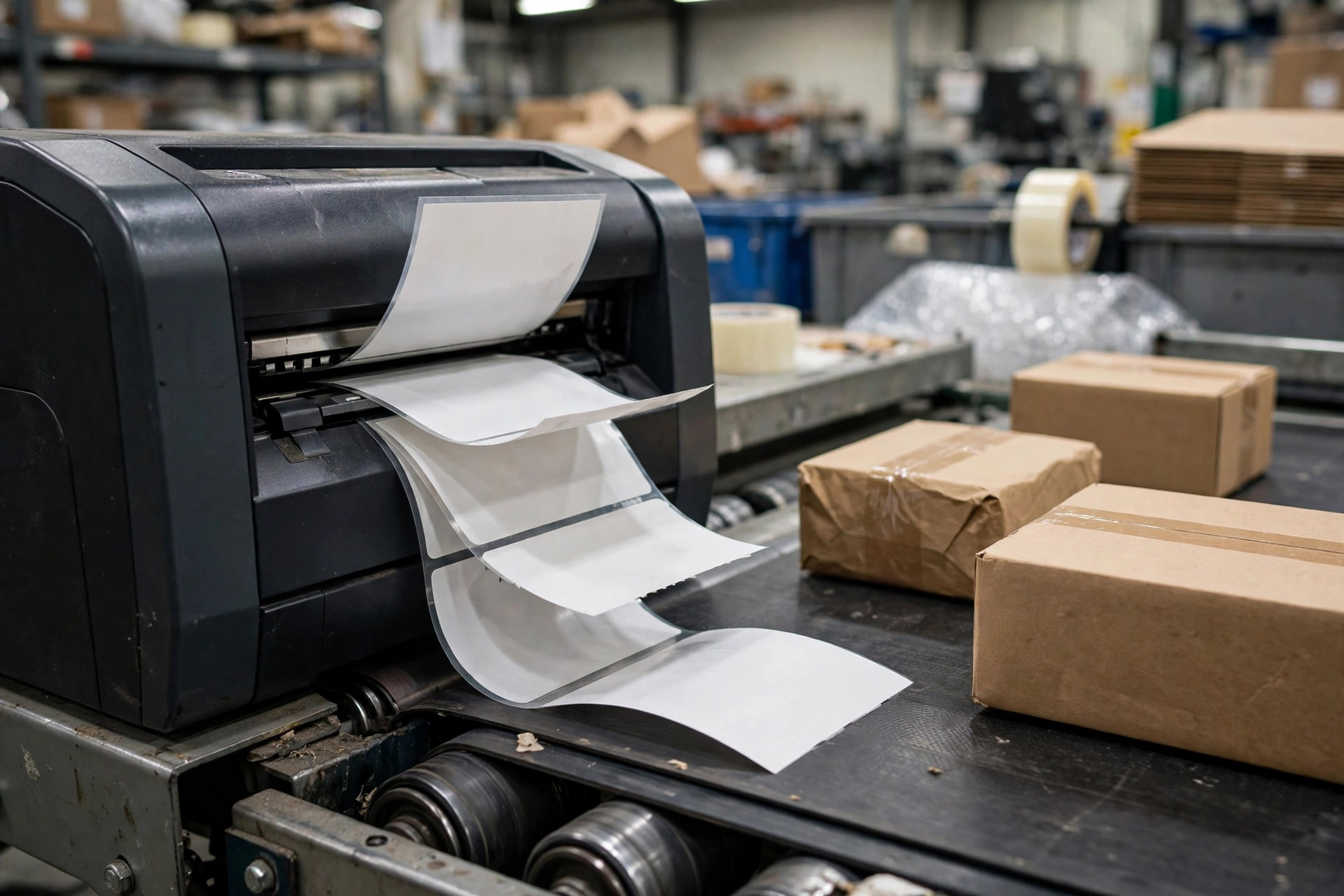
On November 11, 2023, at 11 p.m., I squatted next to our packing station and watched Xiao Li peel off the 437th misprinted shipping label and toss it into the trash. The bin was overflowing. Paper balls were rolling on the floor. That night we shipped just over 900 orders — and nearly half the labels went straight into the garbage. The reason was so dumb I can barely admit it: parcels going out via one carrier got printed with another carrier's label template.
Let me set the scene. I run a 3,000-square-meter warehouse. On a normal day we push 300 to 500 orders; during a big sale we can spike to one or two thousand. Label printing is one of those things big companies handle with IT teams and standardized workflows. We don't have any of that. What we had was a laser printer we also used for office documents, and a pile of template files named things like "label-final" and "label-final-v2-really-final."
We managed to sabotage ourselves twice before I learned my lesson.
The first disaster is the one I opened with. Our label templates lived on the desktop of an old PC. One file was called "label-new," another "label-new-final," another "label-new-final-2." Xiao Li was half asleep that night, clicked whichever one looked right, and hit print. The two carriers' electronic labels look about 80% identical. By the time anyone noticed, 400-plus labels were already stuck on boxes. We reworked until 2 a.m. while the courier stood at the door stomping his feet. The lesson from that night is tattooed on my brain: the more templates you have, the more certain the disaster; the messier the filenames, the more certain the human error.
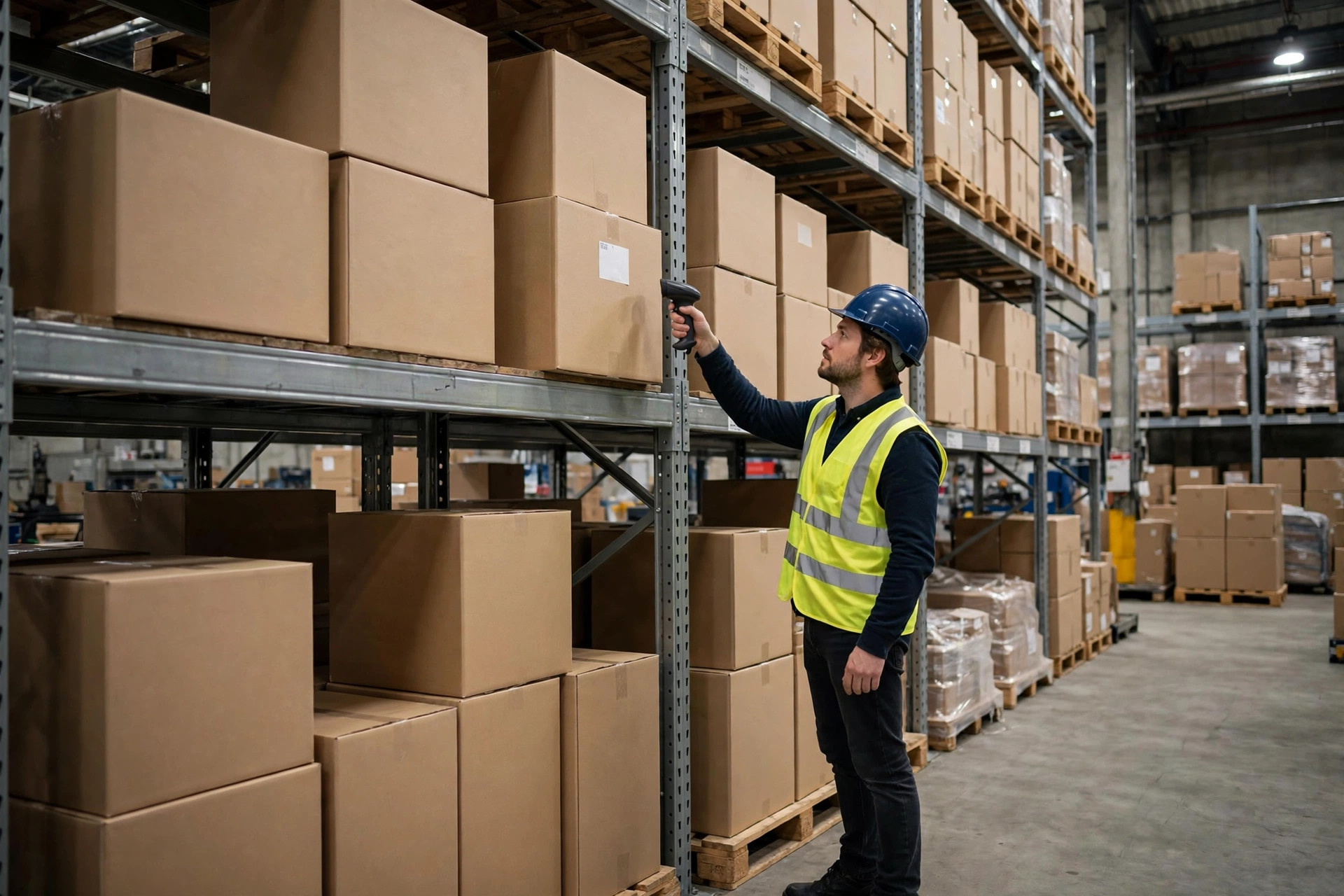
The second one happened in March 2024. Our location labels were handwritten — yes, with a marker pen, don't laugh, that's how a small warehouse saves money. Our picker A-Qiang misread a handwritten "B-12-03" as "B-12-08" three days in a row and mis-shipped the same Bluetooth earbuds more than 40 times. A handwritten "3" and "8" look dangerously alike under dim warehouse lights. Returns shipping plus bad reviews cost us over 2,000 yuan. That was the first time it hit me: for labels, pretty doesn't matter. Readable and matchable matters.
Our Duct-Tape Playbook: Three Label Types, Three Ways to Survive
After the bleeding stopped, I split every label in the warehouse into three categories, each with its own dirt-cheap fix. Full disclosure up front: the enterprise playbook doesn't work for us, and frankly we couldn't afford it if it did — we small warehouses can't burn that kind of money.
Category one: shipping labels — never design your own, mooch off the free ones.
This is the big one. Label rules belong to the carriers. They change a field today, resize something tomorrow; any template you maintain yourself will fall behind sooner or later. Our rule now: every shipping label prints straight from the e-commerce platform backend or the carrier's free system. The template is their problem, updates are their problem, we just click print. Zero cost, zero version-mismatch risk.
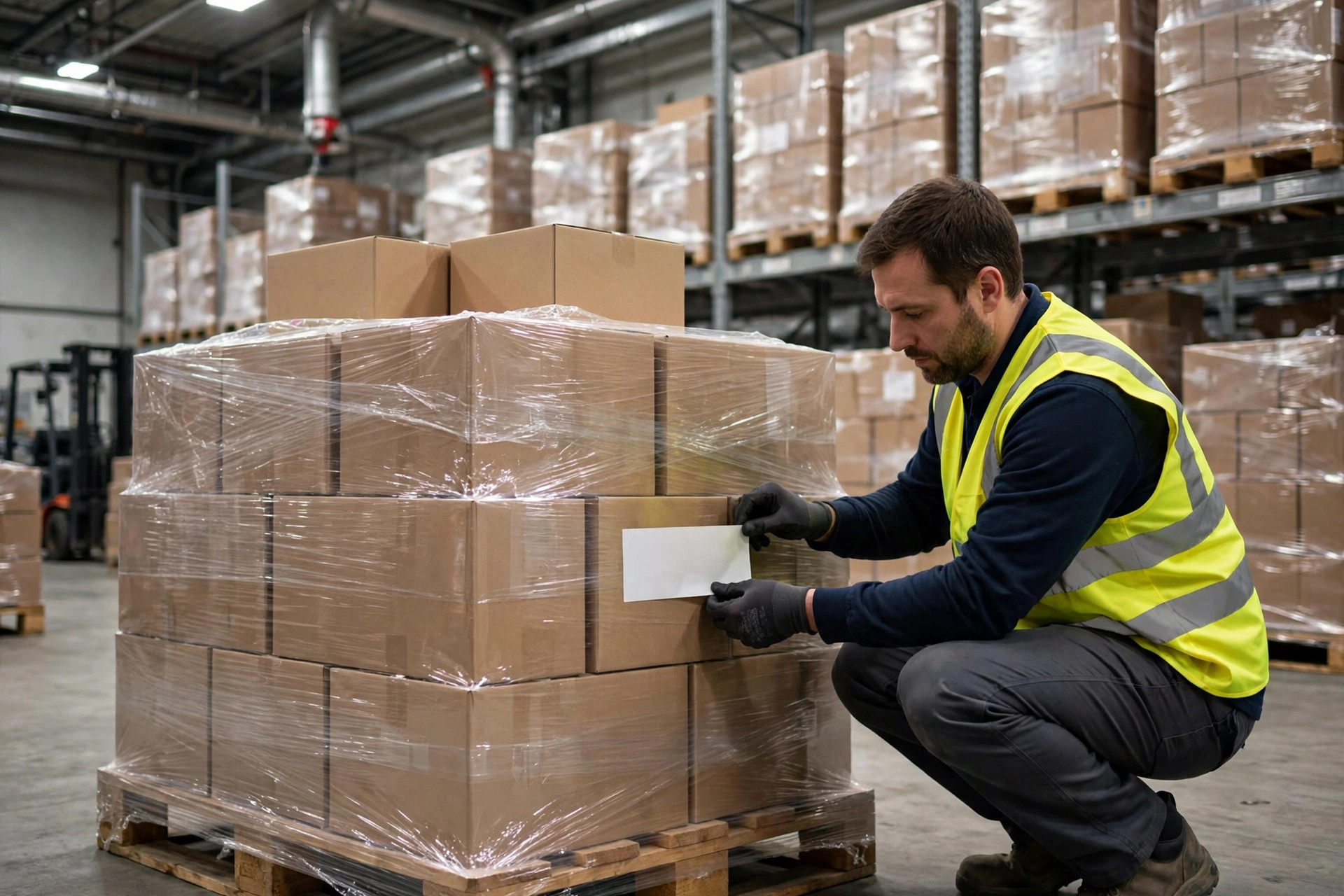
Category two: location labels — Excel plus QR codes, pennies apiece.
A location label has exactly two jobs: it must scan, and it must be legible. Our method is gloriously low-tech: one Excel sheet, column A holds the location code, column B generates the matching QR code with a free barcode font, printed on A4 sticker sheets — 24 labels per page, cut apart and stuck on the racking. Pennies per label, big typeface, readable under the worst lighting. Location changed? Edit the Excel, reprint one label, thirty seconds, done.
Category three: pallet labels — laminated A4 paper, reprint when it dies.
Pallet labels take the most abuse: a forklift scrapes them, rain soaks them, they're gone. We once considered waterproof label stock — several hundred yuan a roll, and my heart bled. Then it clicked: regular A4 paper, run it through a laminator, zip-tie it to the pallet. Waterproof, scrape-proof, under one yuan a pop. Torn, faded, info changed? The template's on the computer; reprint in two minutes. Labels are consumables — stop spending durable-goods money on them.
Running the Numbers: When a Real Printer Is Actually Worth It
Someone always asks: Xiao Ma, did you never consider buying a proper barcode printer? I did the math, and I'll do it for you too:
| Option | Upfront cost | Cost per label | Who it's for |
|---|---|---|---|
| Industrial thermal barcode printer (4-inch) | A couple thousand yuan | Pennies | 1,000+ orders/day with dedicated packers |
| A4 laser + sticker sheets | Printer already exists (mooched from the office) | Pennies | Small warehouse at 300–500 orders/day |
| Handwritten marker | Zero | Zero | Don't. Seriously, don't. |
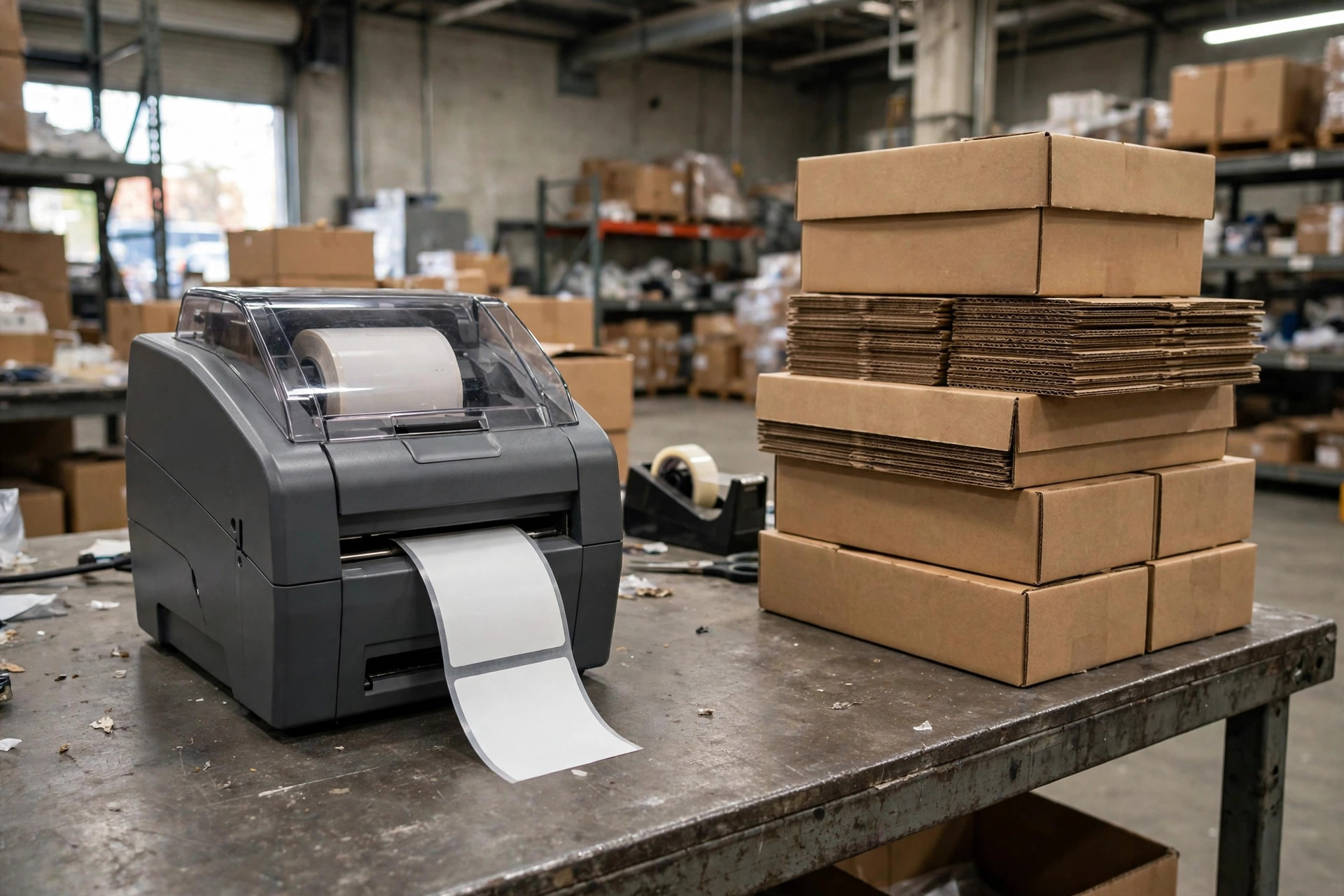
See the trick? Per-label cost is basically identical either way — the difference is throughput. At 300 to 500 orders a day, the A4 route is plenty. Buy the thermal printer when volume crosses about a thousand a day and your packers start complaining their hands hurt from cutting labels. We bought our first thermal printer in September 2024 — right when daily volume had stabilized above 800 orders.
Here's the counterintuitive takeaway, free for fellow operators: in label management, fewer templates is better, and good-looking is a vanity requirement. Our entire warehouse runs on four template files: one shipping label (platform-printed, not our problem), one location label, one pallet label, one spare. Every template lives in one folder with a ruthlessly enforced naming scheme — "purpose_version_date," like "location-label_v3_202409." Only I can edit templates. Anyone who wants a change comes to me first. Sounds primitive, but since that rule went in, our 2024 Singles' Day sale ran with zero label incidents.
Results, and Advice for Warehouses Like Ours
The results are concrete: 2024's big sale, 2,000-plus orders, zero wasted shipping labels. After switching location labels to print, pickers find stock noticeably faster, and A-Qiang hasn't mis-picked since — printed "B-12-03" and "B-12-08" look nothing alike.
Three pieces of advice for small warehouses, all paid for in cash and tears:
First, don't DIY your shipping labels — the free electronic labels from platforms and carriers are the best templates you'll ever get. Second, location and pallet labels are perfectly manageable in Excel; the thing you must nail down is who is allowed to change a template — one owner, so there's always someone accountable. Third, don't buy equipment on day one — do the volume math first. Equipment is for scale, not for anxiety.
Label printing looks like a small thing, but a small warehouse's life is stitched together from small things. Big companies have systems, processes, and budgets. We don't. We have duct-tape solutions — and when the duct tape holds, that's enough.
Small warehouses have their own way of surviving.
By Xiao Ma, Small Warehouse Owner