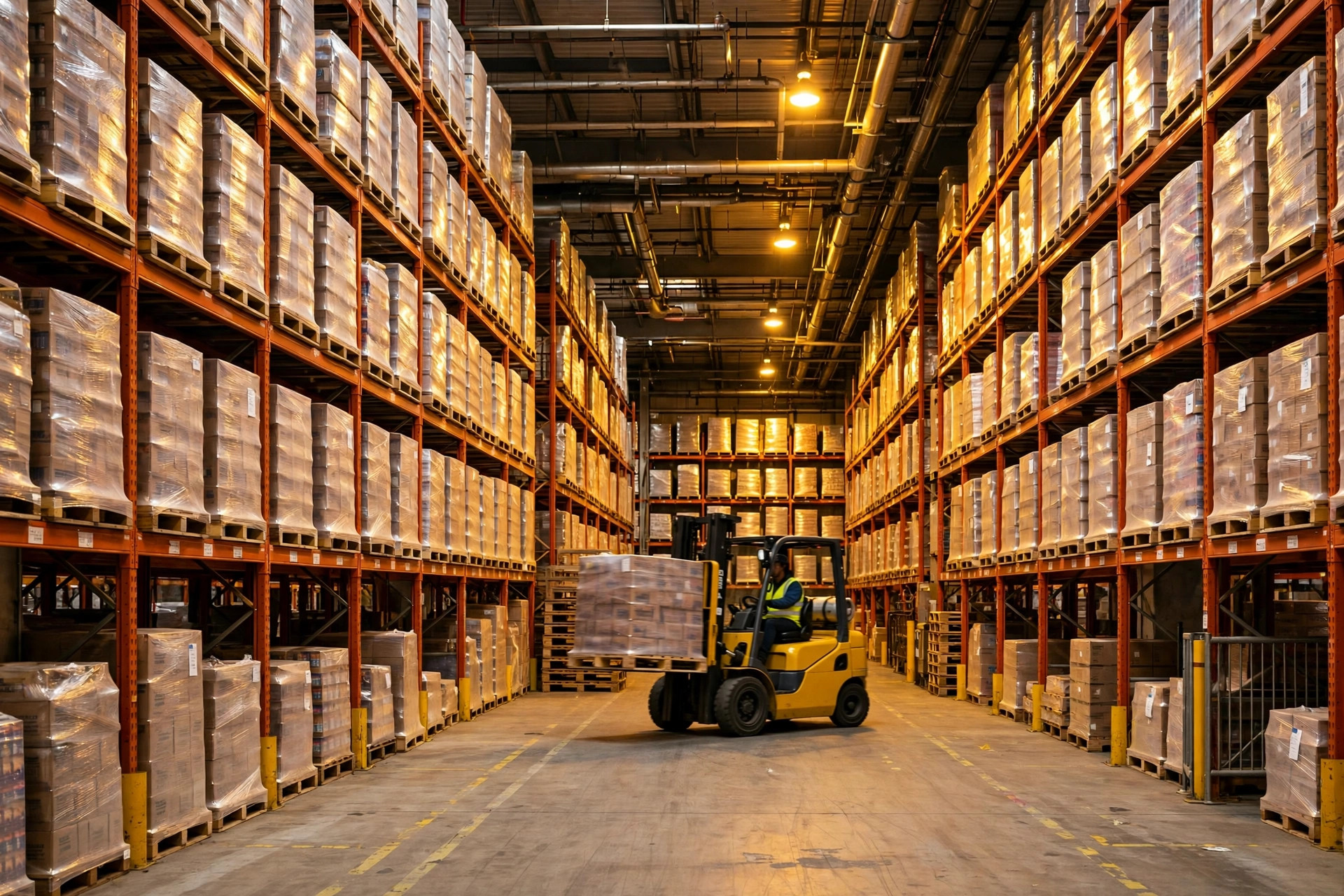
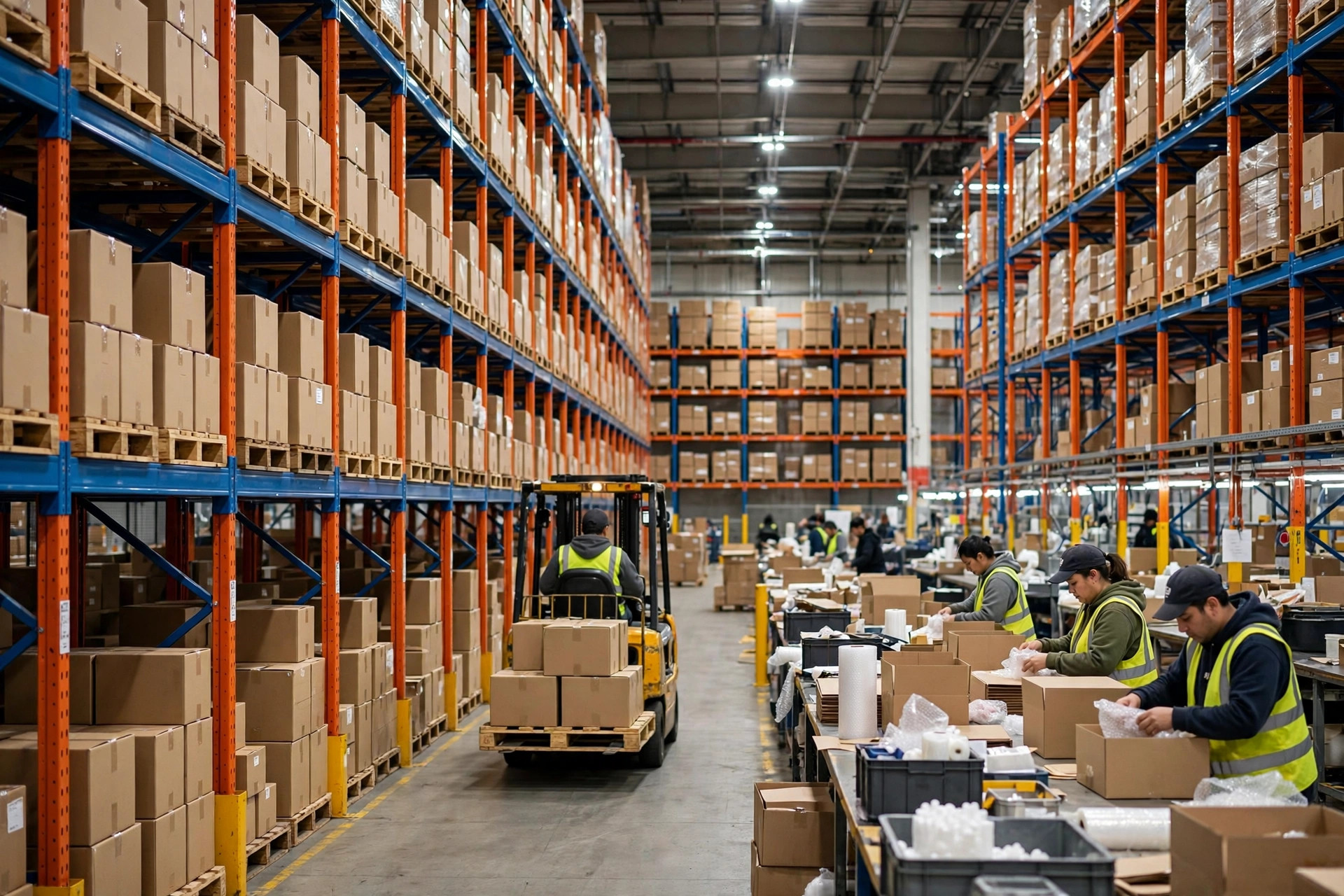
We had a client, a home decor e-commerce founder out of Ontario, California, who came to me in early 2024 about a dedicated warehouse. Three rounds of talks, signed a three-year contract, the whole 50,000-square-foot building all his. On opening day he posted: "Our own warehouse. Feels right." Less than a year later, he was back in my office asking how to get out of it.
"Susan, it's not that I don't want the prestige. This prestige burns close to a hundred grand a month."
Full disclosure: I sell warehouse services. The bigger the dedicated contract, the bigger my commission. Everything below is the stuff your 3PL salesperson usually doesn't tell you.
Two Models, Two Business Logics
Let's start with how each model actually bills you, because that's where most confusion begins.
A shared warehouse sells you slices of a building. You pay for what you use: pallet positions per month, picks per unit, receiving per truckload. Your goods share the building with a dozen other clients — same forklifts, same pickers, same system. The upside is flexibility: 2,000 pallets in the slow season, 8,000 at peak, capacity stretches with you. The downside is exactly that: at peak, everybody surges, and your freight waits in line.
A dedicated warehouse sells you the whole thing. The entire building, the entire crew, the entire process, serving you alone. The billing logic flips: rent by total square footage, labor by headcount, management fees as a percentage. You pay for the full cost of that building existing for you. The upside is control: your SLA comes first, your process is customized, your peak season never competes with someone else's. The downside: when your volume dips, the entire building's cost lands on your head alone.
Think of it as carpooling versus chartering the whole bus. The charter is comfortable — but if the seats are empty, you still pay for all the gas.
The Math: Where's the Break-Even Point?
This is the table we use internally when building proposals. The key insight: look at your volume stability across the year, not your peak.
| Dimension | Shared wins | Dedicated starts to win |
|---|---|---|
| Monthly order volume | Wild swings, peak 3x+ off-peak | Relatively stable, within ±30% |
| Space utilization (vs. peak capacity) | Annual average below 60% | Annual average above 70–75% |
| SKU count & complexity | Under 500 SKUs, standard picking | 1,000+ SKUs, or special processes (kitting, QC, labeling) |
| Growth outlook | Next year is a question mark | 2–3 years of visible growth ahead |
| SLA requirements | Can tolerate 1–2 day peak delays | Contracted cutoffs with penalties |
Take that Ontario home decor client. Peak season (September to December): 120,000 orders a month. Slow season (February to May): under 20,000. That's a 6x swing. The dedicated contract was staffed and sized for peak, so for half the year, half the racking sat empty and half the pickers had nothing to do — while rent and payroll didn't drop a dollar. What he overpaid in those six slow months would have covered three years in a shared building.
Now the flip side: a Chicago food importer we signed in 2023. Steady 60,000–80,000 orders a month, under 20% annual fluctuation, 800+ SKUs, plus lot tracking and FIFO for imported food. A shared building's generic process couldn't handle their expiry logic, and at peak they kept getting bumped by other clients. After moving to dedicated, their per-order fulfillment cost actually dropped roughly 20% — because the process was built for them, and labor productivity went up.
Remember this line: if your annual average space utilization can't clear 70%, dedicated will probably lose you money. Run the number yourself — your actual pallet counts over the past 12 months divided by the space you're about to lease. Do it before you listen to any salesperson's pitch. Including mine.
The Counterintuitive Part: The Real Trap Isn't the Price
Most people think the trap of a dedicated warehouse is that it's expensive. Wrong. The real trap is that your volume can't keep a dedicated crew productive.
In a shared building, a picker handles your freight today and the next client's tomorrow — always busy, productivity maxed out. In a dedicated building, those 30 people serve only you. When your orders drop by half in the slow season, they work half days — and you're paying for their idle hours. A 3PL is not a charity; every bit of that cost flows straight into your management fee.
Worse is the turnover. Slow season, no work, your experienced pickers quit — they walk to a shared building or an Amazon FC down the road. When peak comes back, the 3PL can only hand you fresh hires and train them on the fly. Your SLA looks beautiful on paper; the people executing it started last month. Error rates double, and you're the client catching the heat.
So before signing anything dedicated, ask yourself one question: can my volume keep a 20- to 40-person team busy year-round? If not, walk away. I don't usually say that in pricing meetings. Today I'm making an exception.
The Third Option: Don't Pick Just One
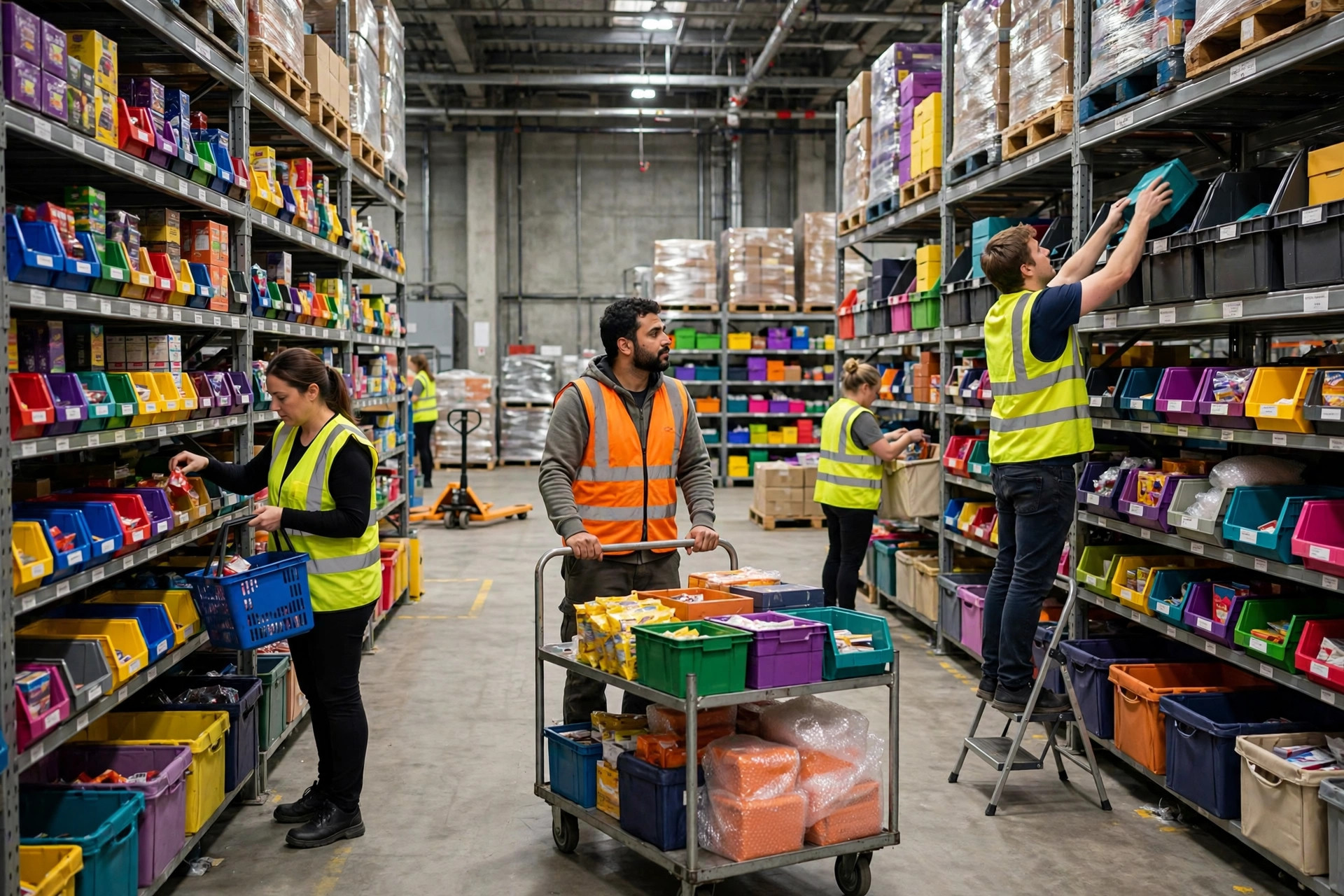
How did we solve it for the Ontario client? A hybrid: core SKUs and everyday orders in a small 20,000-square-foot dedicated space, running steady all year; overflow from promos and peak season pushed to our shared building. Dedicated handles the customized process and the SLA; shared absorbs the volatility.
This "dedicated base + shared surge" combo fits a huge middle segment: businesses with a stable baseline but 2–3x holiday spikes. It runs 30–40% cheaper than pure dedicated, with far better peak experience than pure shared. The catch: you're managing two inventories and two reconciliations, so your WMS has to show global stock in one view. Verify that before you sign — it's the precondition that makes the whole play work.
Negotiating a Dedicated Contract: Ask These Three Questions
Okay, insider talk over. Here's the practical stuff. Next time you sit across from any 3PL negotiating dedicated space, drop these three questions and they'll know you're not a rookie — the quote tends to get more honest after that.
One: how is slow-season labor billed — can we settle on actual hours? Dedicated contracts default to fixed headcount billing, twelve months, no exceptions. What you want is "base crew + flex labor": scale down in slow months, scale up at peak, and pay follows actual hours. If you can't win this clause, you can't dodge the dedicated trap.
Two: what's the utilization guarantee clause? Some 3PLs will commit to it — for example, backfilling space with smaller clients (with your consent) to keep utilization up, or fee rebates if utilization falls below an agreed line. A provider willing to sign that is confident in their leasing ability. One that won't? Draw your own conclusions.
Three: what's the exit — how much notice, what penalty? A three-year contract sounds great, but who knows what your business looks like in three years. The exit terms must be in black and white: six months' notice, a cap on penalties, a transition window to clear inventory. That Ontario client spent two months negotiating his way out — the contract was vague, and it cost him dearly.
One last thing, from the seller's side of the table: a good 3PL isn't afraid of these three questions. What scares us is the client who asks nothing and signs the fastest — because when peak season hits, that client is the first one getting a rate increase. Don't be that client.
By Susan, 3PL Sales Director