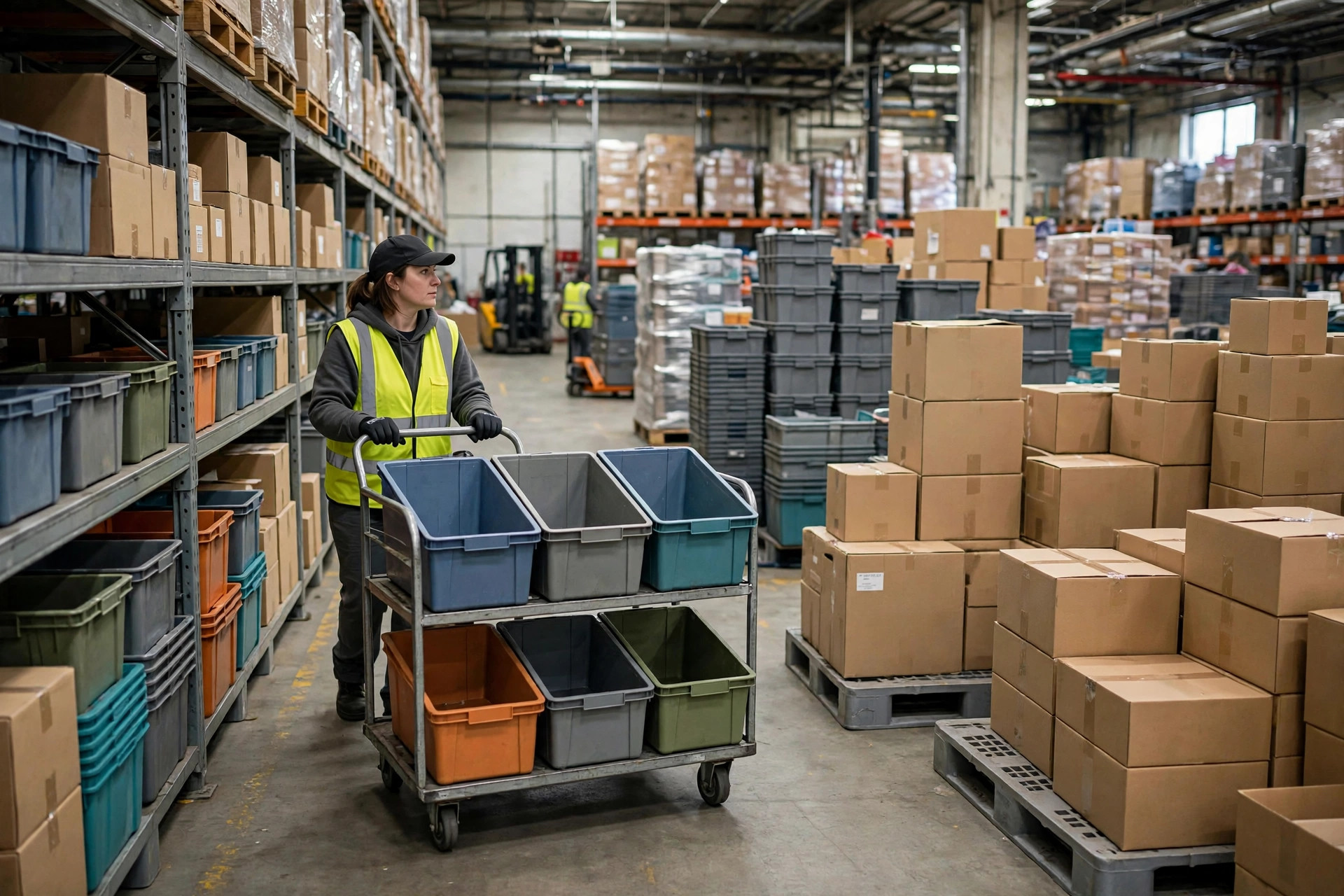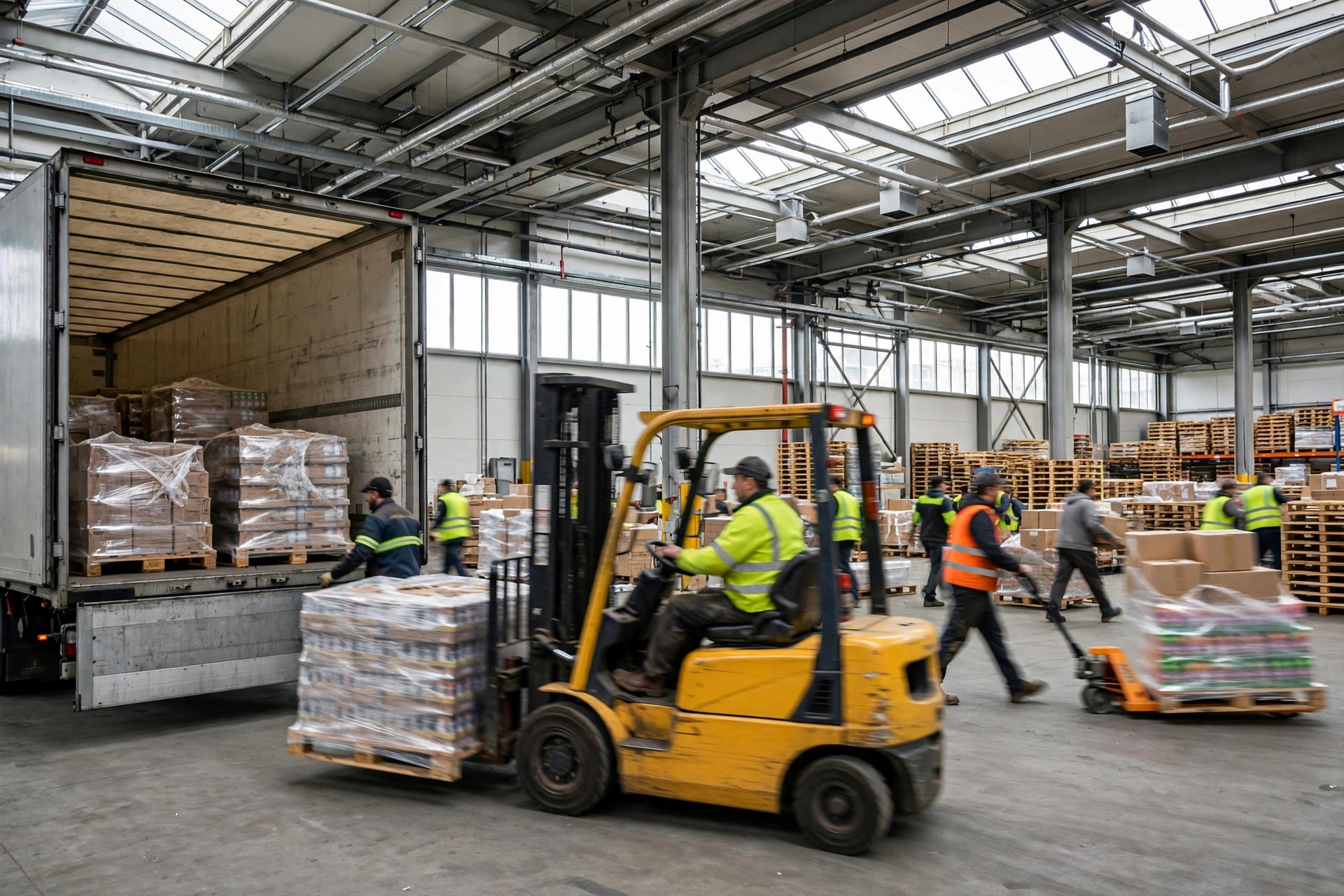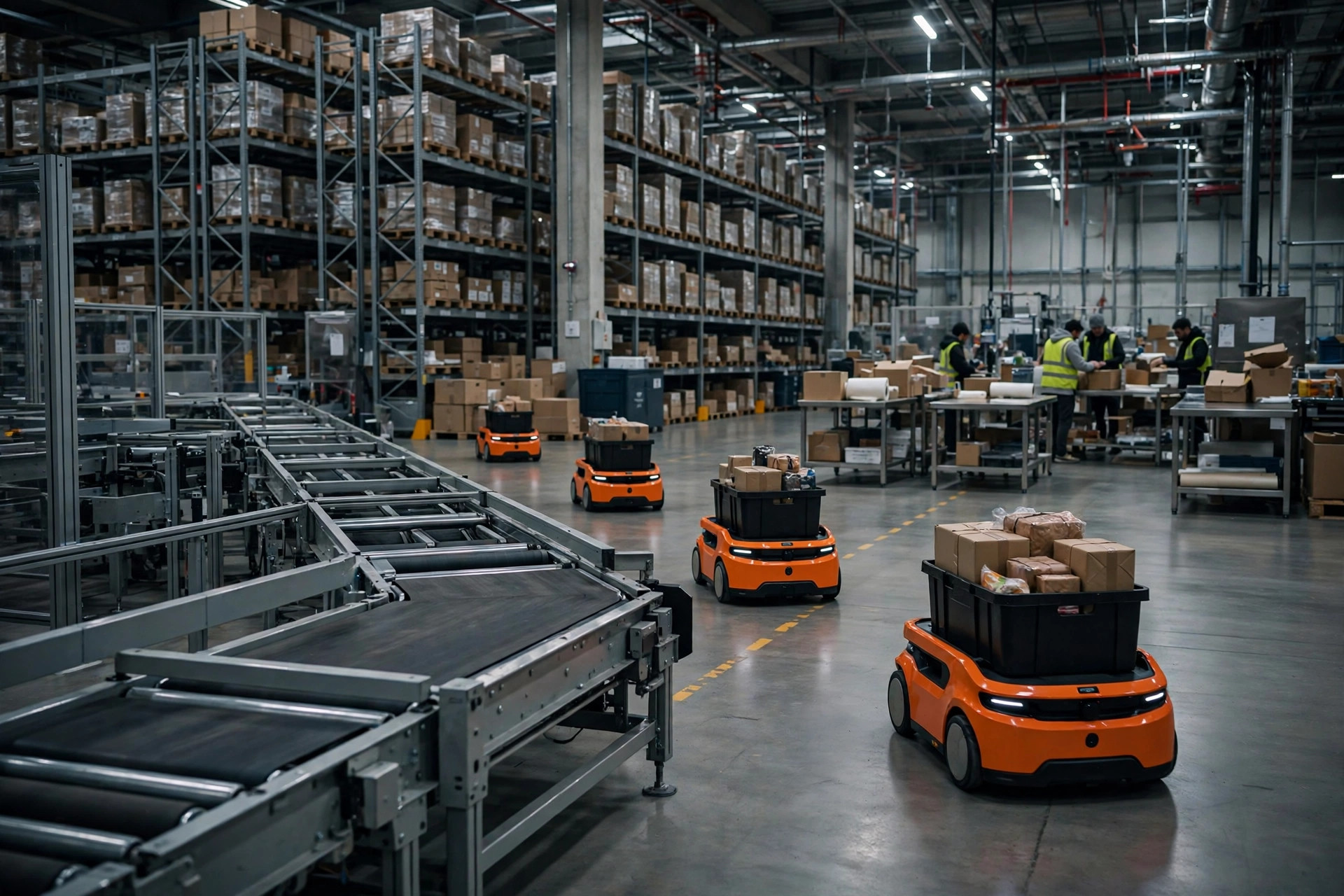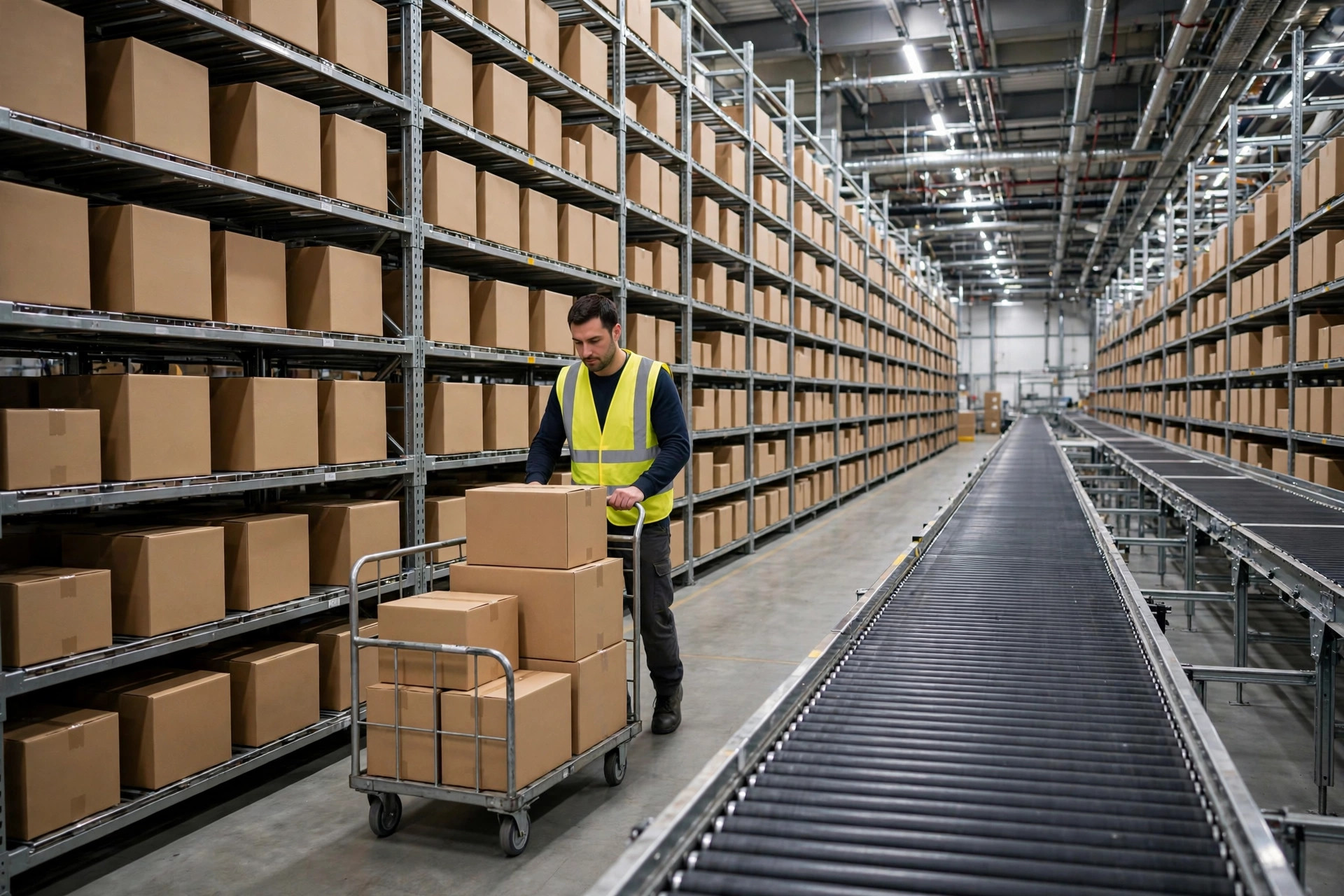
Same 8,000 orders a day. Two warehouses. Two completely different floors.
Warehouse A sits in California's Inland Empire. Last year it switched its WES to continuous flow release. I walked the pick floor at two in the afternoon, and it was eerily calm: pickers pushed their carts down the aisles, picking as they went, never waiting for work. The conveyor in front of the pack stations ran at a steady pace. Nothing piled up. Nobody was running around. Warehouse B, same neighborhood, similar volume, still runs old-school wave picking: every day, an hour before the carrier cutoff, the floor erupts on schedule — pickers standing at aisle ends waiting for the next wave to drop, cartons stacking up like a small mountain at pack-out, supervisors running around with radios putting out fires.
The difference isn't the people. It's the release logic. In A, orders flow out. In B, they're dumped out.
What Continuous Flow Release Actually Is
Anyone who's worked a warehouse knows the wave routine. Orders accumulate in a pool, get sliced into waves by carrier cutoff and shift, and when the clock hits, the whole wave drops at once — pick, check, pack, full throttle. One wave ends, the next begins. The upside is predictability; the supervisor always knows what's coming. The downside is just as clear: order completions bunch up at the end of each wave, pack stations drown, pickers can stand idle at the start of one. The floor swings between feast and famine.
Waveless flips that logic. Instead of building waves, the WES watches the order pool continuously: Is this order's priority high enough? Is its cutoff tight? Is inventory available? Is there labor capacity? The moment the conditions line up, the order releases. Release becomes a pull model — as soon as downstream capacity opens up, work gets pulled into the flow, instead of waiting for a full wave to be assembled and pushed down.
The key concept here is the revolving batch. The WES always holds a live set of in-flight tasks; complete one order and another is immediately drawn from the pool to replace it. The batch keeps turning, but there is never a moment of "drop the whole wave, close the whole wave." Order completions come out as a steady stream instead of bunching at the end of a wave.
This is not a new idea. Manhattan Associates calls the capability Order Streaming inside its WMS and WES. Vargo, a WES vendor, calls it a continuous flow system and has implemented it in the distribution centers of several US apparel retailers — a case Modern Materials Handling has covered. Different names, same core: replacing scheduled wave drops with real-time orchestration.
But don't let the name fool you. "Waveless" does not mean "no planning." It demands more planning, not less — the planning just moves from humans doing it on a schedule to the system doing it in real time. Anyone hoping waveless means they can stop planning will get an education from the floor.
Three Preconditions for Continuous Flow
The order stream has to be stable. Continuous flow's worst enemy is a dry order pool: nothing releasable in the pool means pickers standing around anyway. Traditional waves at least guarantee work by accumulating orders; under waveless, the system can only release orders that qualify — priority, inventory, and cutoff all have to line up. So the order profile needs to be relatively stable: daily volume, lines per order, and SKU distribution shouldn't swing wildly. E-commerce small-parcel operations have a natural advantage here — high volume, fragmented orders, concentrated SKUs. The pool never runs dry. But if your facility explodes one day, goes quiet the next, and gets slammed with oversized items the day after, the pool runs dry every other day, and continuous flow becomes an exercise in frustration.

Resources have to flex. Under continuous flow, tasks are pulled in real time, which means picking resources must follow the tasks: people able to support across zones, equipment that never becomes the bottleneck. The killer is rigid labor — schedules set in stone, pickers who only know their own aisles, temp workers who can't be found when you need them. When tasks flow into a zone and nobody is there, the whole stream jams. I've seen a facility running continuous flow software with wave-era labor scheduling; every afternoon the floor "ran dry" for half an hour on the clock. It was messier than the wave days. The system and the people have to run at the same tempo.
The system has to be truly real time. This is the dividing line between WES and WMS. A WMS can release orders, but on a schedule — run the rules at the top of the hour, drop a wave. A WES doing continuous flow evaluates constantly and releases at any moment, reprioritizing against live labor and equipment status. That requires orders, inventory, labor, and equipment state on one orchestration plane. I've seen plenty of warehouses claim to run continuous flow while actually running WMS-style scheduled releases under a new name. New label, same dumping.
Miss any one of the three, and continuous flow goes from silky to sabotage. My verdict is blunt: of the three, the system is the easiest to buy, order stability comes next, and labor is the hardest to fix. If your labor is rigid, don't even start the conversation.
Who Should Adopt It — and Who Should Stay Away
Who's it for? E-commerce small-item operations with high frequency and a stable order profile are continuous flow's natural home: enough volume that the pool never dries up, concentrated SKUs, pickers comfortable working across zones. These facilities see the pre-cutoff chaos mostly disappear, pack station load flatten out, and overtime shrink. The steady days inside a promotional season qualify too — note the word steady, not the peak day itself.
Who should stay away? First, warehouses with violent peaks and valleys: a few thousand orders on a normal day, several times that during a promo blitz, with a totally different order mix. Their problem isn't release logic; it's raw capacity. Continuous flow can't fix that. Under extreme load it just pushes the scheduler to its limits — tasks release fine, people can't keep up, absenteeism and mispicks spike together, and the floor gets uglier. Second, extreme long-tail SKU operations: the pool never yields convenient task groupings, the system releases work in dribs and drabs, picker travel balloons. They're better off accumulating waves and optimizing by route. Third, rigid labor: fixed schedules, no cross-zone support, unreliable temp quality in peak. Continuous flow demands far more labor flexibility than waves. When people can't flex, the smarter the system, the worse the floor looks.
Don't cut over from waves in one shot. The sane transition is a zoned pilot: move one pick zone, or one order type — say, standard small-item orders only — and run it for two to three weeks, watching three metrics: how often the flow runs dry, cutoff attainment, and labor utilization. And keep the wave mode switch in the WES. That's your rollback plan. Define the rollback triggers in advance and in writing: order volume exceeding twice the daily norm during promos, or a zone running dry beyond the acceptable threshold — the shift manager gets authority to flip back to waves with one switch, no approval needed. That switch is what gives you the courage to pilot.
Make the call against these three.
If you're considering continuous flow, don't start with vendor quotes. Start with three questions: Does our order pool ever have hours where nothing is releasable? Can our people follow tasks across zones? Is our WES genuinely real-time orchestration, or scheduled WMS releases under a new name?
Three yeses — go pilot a zone. One no — fix that gap first: the order profile, labor flexibility, or the system. Fix it, then talk. Two noes — drop the idea. There is no shame in running waves well.
Release logic isn't about superior versus inferior. It's about fit. Continuous flow is a good tool, but a good tool in the wrong place is an accident waiting to happen.