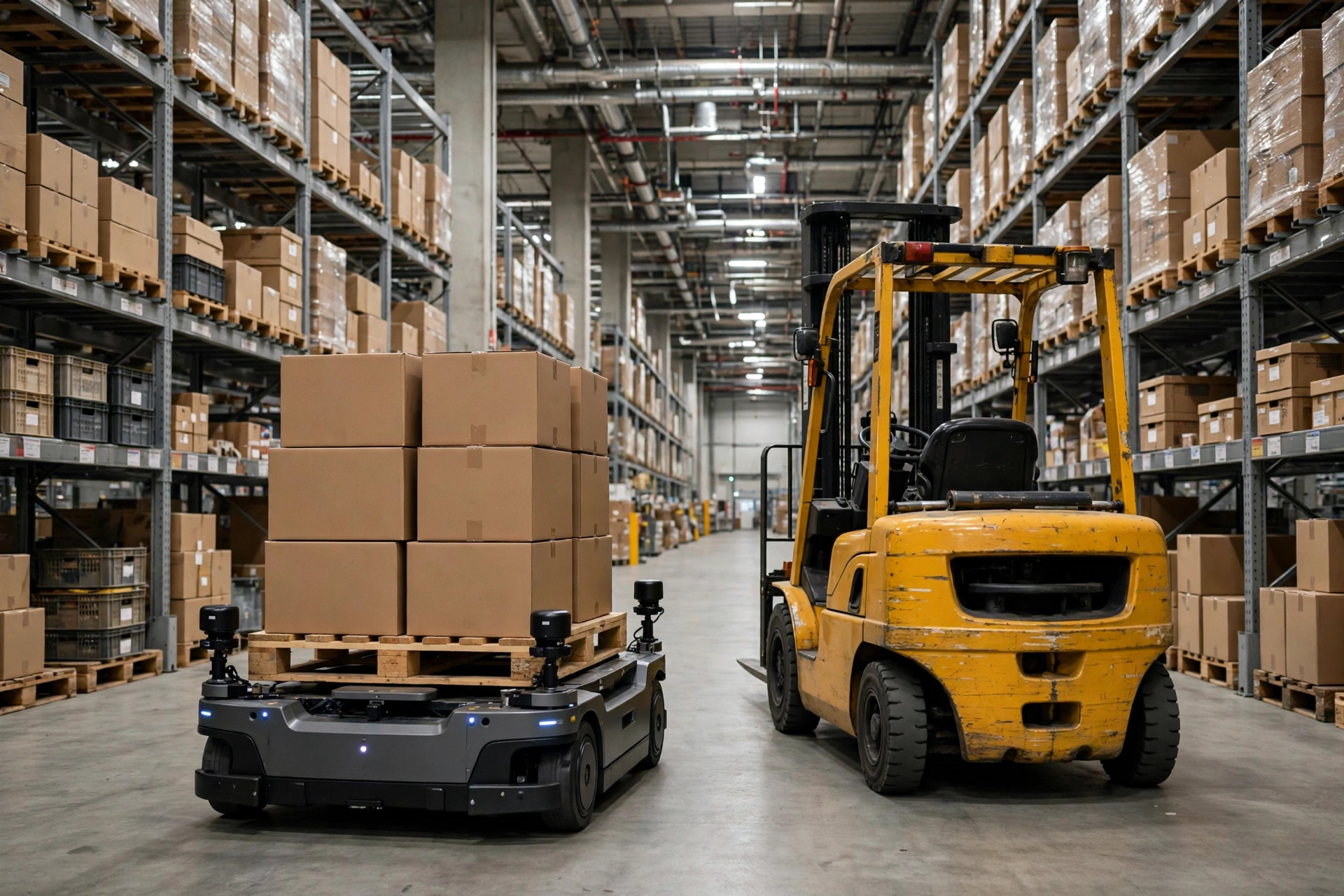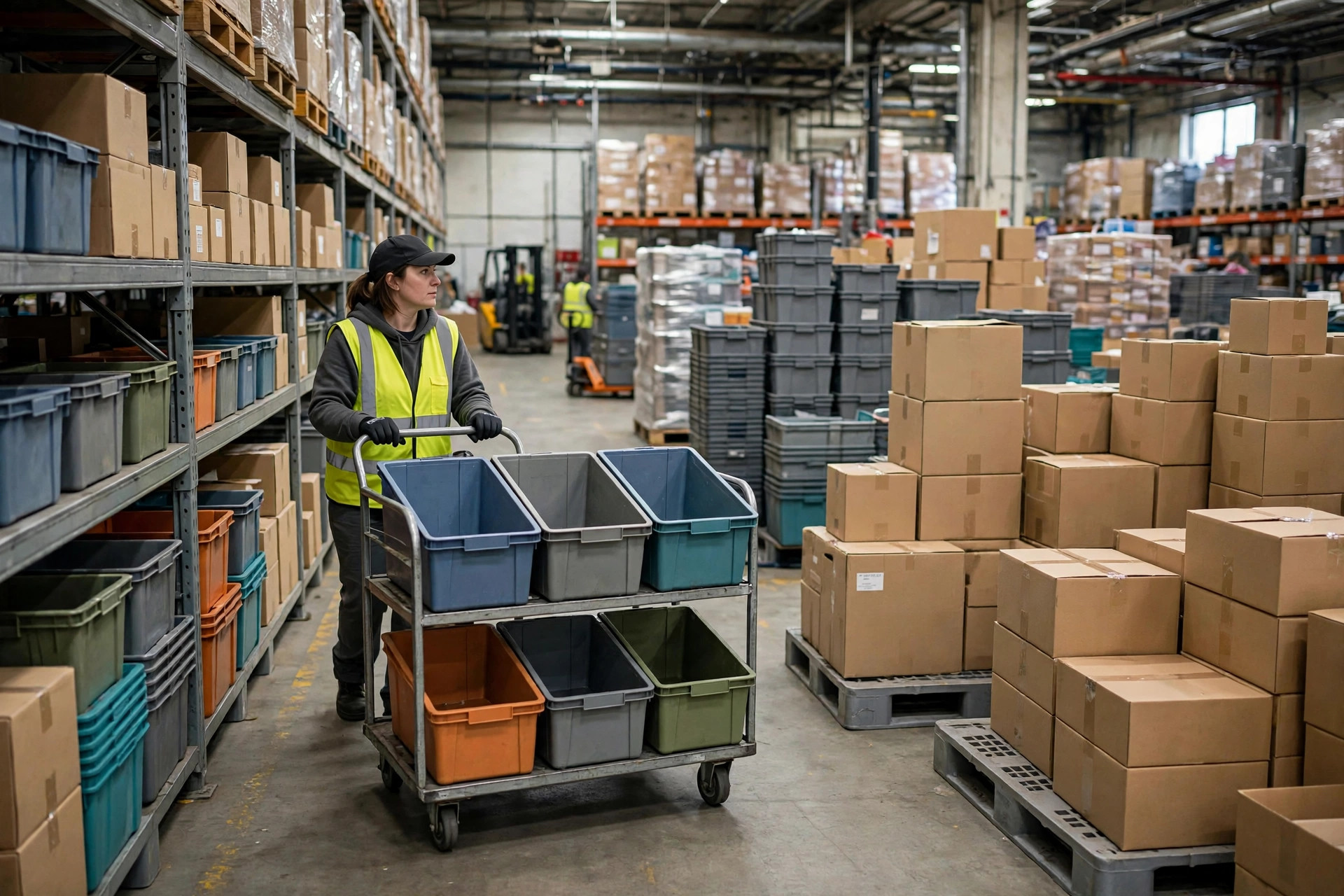
Seventeen orders. Sitting in the wave pool for almost 50 minutes, going nowhere.
That was us at the tail end of last month's big promo — my 3,000-square-meter warehouse, picking zone. Lao Zhang, one of our pickers, wandered over: "Boss, when's this wave dropping? We got enough yet?"
I checked. Nope — 17 orders, and our rule says a wave needs 30. Drop it now and the picker burns a whole trip for 17 orders. Keep waiting and the shipping cutoff keeps ticking closer.
Those 17 orders have a sad little industry nickname: orphan orders.
WES — a warehouse execution system — sounds like big-warehouse toys. A proper implementation costs more than my whole operation, and a small warehouse like ours can't burn that kind of money. But here's the thing: the pain of a half-empty wave hits small warehouses every single day. We just don't have software for it. We do it by hand.
So today, let's talk about what to do when you can't fill a wave — and which parts of the WES playbook a small warehouse can steal for free.
What Is an Orphan Order? The Awkwardness of a Half-Filled Wave
Wave picking is simple: batch a bunch of orders into one wave, release them together, and one picker grabs many orders per trip. Maximum efficiency. Reality, though, never follows the script — at the tail of a promo or right around daily cutoffs, you always end up with a few dozen orders stuck in the "not quite a full wave" zone.
There are basically four ways to deal with them:
- Wait for the next wave — park the orphans and let new orders fill out the batch.
- Force it — loosen the rules, stuff anything in, release when you hit the number.
- Release it anyway — 17 orders is 17 orders, pick them solo.
- Merge waves — combine with another wave to make a full one.
Each option has a price. Waiting risks missing cutoff. Forcing makes pick paths messy. Releasing solo is inefficient. Merging is fiddly. That's exactly why WES has a whole wave-release strategy module — software that makes this agonizing decision for you.
The Four WES Wave-Release Strategies, in Plain English
Don't let the acronym scare you. WES handles orphan orders with four moves. Here's my human translation:
Minimum wave quantity. Set a "cover charge" for a wave — say, at least 20 orders. Below 20? The system holds and keeps collecting. Works great for big warehouses with heavy volume; the wave fills up fast.
Cutoff time. A hard deadline — say, 16:00 daily cutoff. When it hits, everything left in the pool releases, full wave or not. Basically a stop-loss on waiting.
Priority queue-jumping. Some orders can't wait — VIP customers, next-day-delivery promises. The system lets them cut the line: either released as their own mini-wave or stuffed into the wave being built, picked first.
Timeout forced release. Give every order a "patience value" — say, 40 minutes in the pool without making a wave means automatic release. No more waiting. The most ruthless move, and the most practical: better a slightly inefficient pick than orders rotting in the pool.
Fancy as it sounds, all four answer one question: when efficiency and on-time shipping disagree, who wins?
Big Warehouses Have Software; We Have a Whiteboard
We can't afford WES. Can't buy it, can't feed it. But orphan orders plague us just the same, so we built a dirt-cheap workaround that honestly works pretty well.
We call it the wave-merging whiteboard. Yes, an actual whiteboard, hanging by the picking zone.
An hour before daily cutoff, Xiao Li — our wave wrangler — draws boxes on it: how many orders are in the pool, what type (regular / rush / oversized), and how long the oldest one has been waiting. Three rules written across the top:
- Regular orders release at 30; if they can't fill, never wait more than 40 minutes.
- Rush orders get pulled out; 10 of them make their own wave.
- At 16:00 every day, everything left in the pool goes. No exceptions.
See? That's the four WES moves, human edition: minimum wave quantity (30 orders), cutoff time (16:00), priority queue-jumping (rush orders), timeout forced release (40 minutes). What big companies pay six figures to implement, we did with a whiteboard and a phone alarm.
Does it work? True story. During this year's June 18 shopping festival, at night we had 23 orders left in the pool — 7 short of our 30-order standard. Old habit said wait: "Maybe a few more will come in?" I glanced at the clock: 21:40, and the carrier cutoff was 22:30. "Release it," I said. That 23-order wave took two extra picker trips, but all 23 parcels made the truck. If we'd waited for a full 30, those 23 orders would have shipped a day late — the late penalties and angry customers would have cost way more than two extra trips.
Wait or Release? A Decision Framework for Orphan Orders
After a year of the whiteboard, I've boiled it down to a framework. Three questions, in order:
Question one: is anything in there un-waitable?
Check for rush orders, VIPs, anything with a delivery promise. If yes, release immediately, no debate — a missed delivery promise always costs more than an extra picker trip.
Question two: how far are we from cutoff?
- More than an hour: you can wait, but set an alarm — release at 40 minutes whether the wave is full or not.
- Under an hour: stop waiting, release now. The efficiency you save by filling the wave won't cover a missed carrier cutoff.
- Already past cutoff: what are you even asking — release it.
Question three: how likely is the wave to fill?
Look at the same time slot historically. If this hour usually brings 50 orders, waiting 20 minutes to fill the wave is worth it. If it usually brings 10, waiting is pure waste. Don't go by gut feel — check last week's numbers for the same slot. Our little warehouse keeps it all in a spreadsheet; takes 30 seconds to look up.
Answer those three and "wait or release" basically answers itself. Big-warehouse WES does the same thing, except those three questions are parameters: minimum wave quantity, cutoff time, timeout release.
A Counterintuitive Take: The Full-Wave Obsession Is a Money-Saving Illusion
This might offend some peers, but: a lot of warehouses are obsessed with filling waves, convinced it's the economical choice. Run the numbers, and the half hour you spend waiting to top off a wave usually doesn't pay for itself.
Here's our warehouse's real math (magnitudes are real; your numbers will vary): one of our pickers does a 30-order wave in about 25 minutes, and a 17-order wave in about 18. Notice that's not proportional — the walking route is the same route, so 13 fewer orders only saves 7 minutes. "Waiting to fill 30" really only saves you about 7 minutes of labor. Pennies.
But the risk of waiting 30 extra minutes? Miss the carrier cutoff and the late penalties plus lost customers on a single order can cost more than several waves' worth of picking. My take: the closer you are to cutoff, the worse the economics of "filling the wave" get; the smaller your daily volume, the less "filling the wave" matters.
Small warehouses especially shouldn't copy the big guys' big-wave complex. A mega-warehouse doing tens of thousands of orders a day needs full waves. A small warehouse doing a few hundred a day? The marginal gain of those last few orders is genuinely not worth gambling your on-time rate on.
Three Tips for Fellow Small Warehouses
- Set the stop-loss before you talk about filling waves. System or whiteboard, the first thing you need is a maximum wait per order. Ours is 40 minutes; work backwards from your carrier cutoff. With a stop-loss, orphan orders can't rot.
- Always handle rush orders separately. Don't hold them hostage to fill a wave — that's penny-wise. Release them as their own mini-wave. Slightly less efficient, but the customer stays.
- Review your "orphan rate" weekly. What share of orders this week released without a full wave? If it's over 30%, your wave standard is set too high — lower it. Under 10%? Your wave strategy is humming along.
WES sounds expensive and works beautifully, but its core idea — rules instead of gut calls — is something a small warehouse can adopt today. No need to buy the software. Start with a whiteboard.
Small warehouses have their own way of surviving: big warehouses run on system parameters, we run on a whiteboard and an alarm clock, solving the same problem. Don't feel bad about it being low-tech. If it works, it works.
By Xiao Ma, Small Warehouse Owner