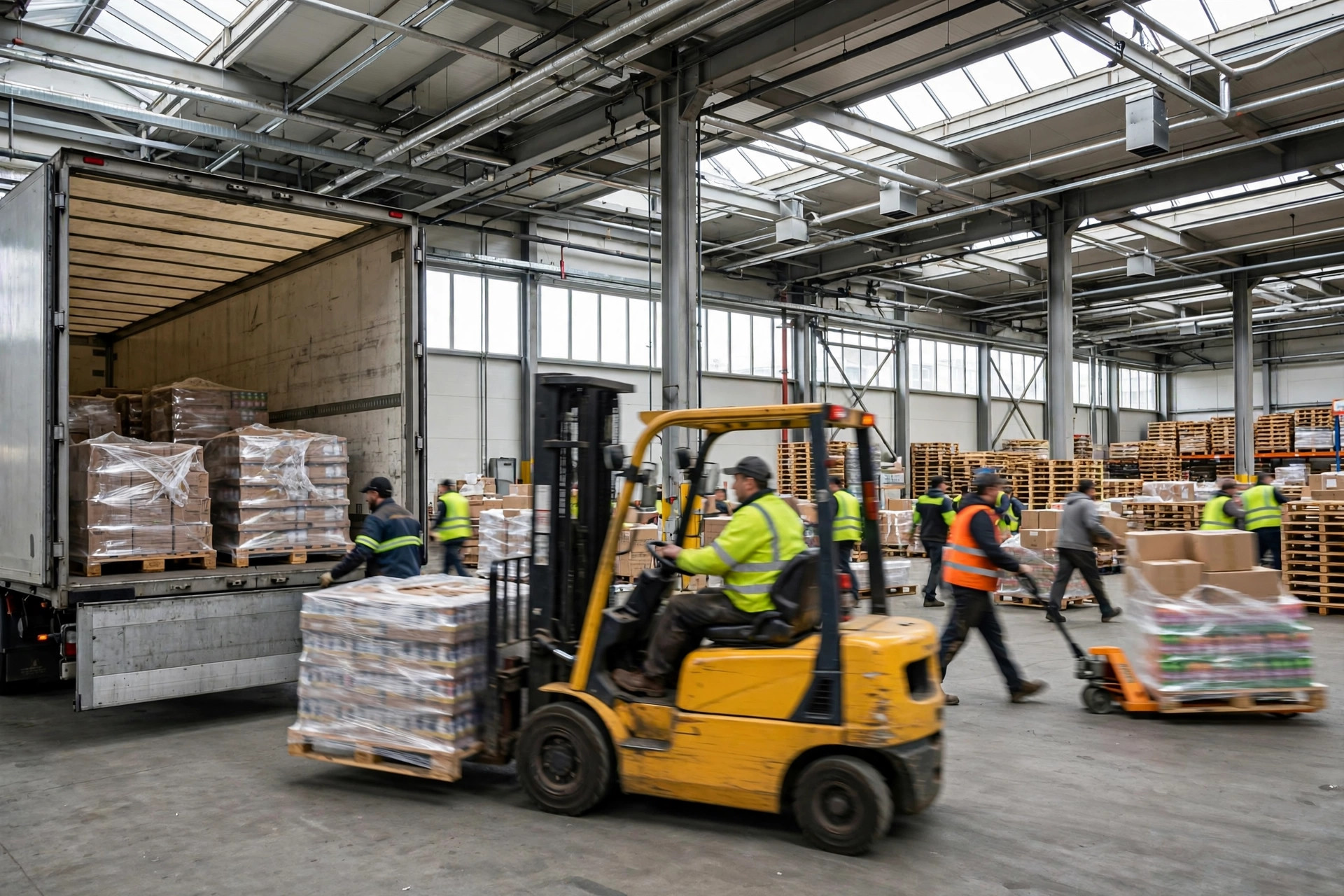
Last peak season I was diagnosing an e-commerce warehouse in Indiana. The supervisor complained to me: with a 4 p.m. parcel cutoff, the floor turned into chaos starting at 3, and working until 7 was routine. I asked him to pull the WES wave release log, and it told the whole story — at 10 a.m., the first wave of 6,000 orders had been released all at once. Pickers finished by 11:30 and then wandered the aisles. The second wave didn't drop until 2 p.m., and by the time pick, audit, and pack were done, the 4 p.m. cutoff was long gone. Same people, same system — get the rhythm wrong and "idle" and "meltdown" can happen on the same day.
Here's my verdict up front: in a WES, whether waves release early or late isn't a question of work ethic. It's a math problem. Releasing too early has a price. Releasing too late has a price. And most warehouses are paying both.
First, the distinction: WMS keeps the books, WES keeps the beat
Plenty of smaller warehouses don't even run a WES — the supervisor releases waves by gut feel inside the WMS. Let's get the concept straight: the WMS owns inventory records and locations; the WES owns "who does what this hour." A wave is the WES cutting orders into batches by carrier cutoff, carrier, and aisle density, and releasing them to pickers on a schedule. Release timing answers one question: what is the latest this batch can start picking and still make the cutoff?
Get it wrong and there are two ways to die.
Released too early: looks diligent, actually burns money
Release a wave too early and the most visible outcome is pickers finishing early and then coasting. This is real life, not a joke: drop 6,000 orders at 10 a.m., assume 120 units per hour per picker, and fifty pickers chew through it in an hour. Then there are no new waves for two hours. Pickers drift through the aisles, chat, check phones — and the supervisor can't say a word, because the work is genuinely done. When the second wave lands at 2 p.m., the crew is cold and needs twenty minutes to warm back up.
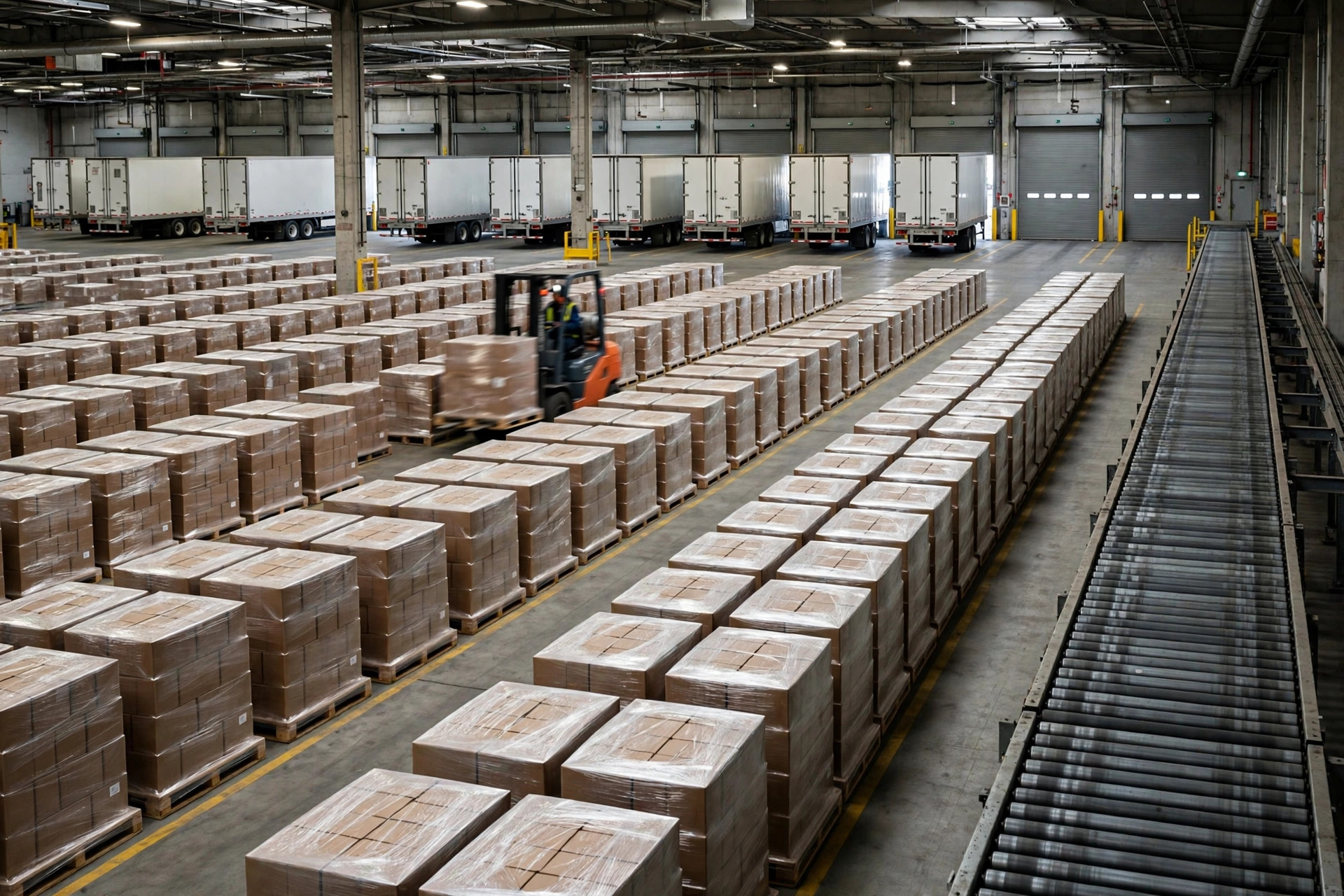
The more expensive damage is in staging. An early wave gets picked and its cartons pile up at audit and pack, waiting. Staging fills up, the next wave finishes picking with nowhere to go, and pickers queue with carts at the pack area door. I've seen a warehouse whose staging was designed for 800 cartons take in 1,500 from an early wave — forklifts couldn't get in, auditors were walled in by boxes, and they ended up renting the neighboring dock to breathe. Staging square footage is fixed. Wave rhythm has to match its throughput.
There's a hidden ledger too: release the wave early and orders keep coming in after it. The wave released at 10 can't include the order placed at 10:30 — it waits for the next wave, which means you've artificially moved the cutoff earlier. A customer who ordered at 11, shippable before the 4 p.m. cutoff, gets pushed to tomorrow. When customer service complaints pile up, operations blames the warehouse for "low efficiency." An unfair rap.
Released too late: overtime, gridlock, missed cutoffs — the triple hit
Late release costs more directly: you miss the cutoff. Carrier cutoffs are carved in stone — 4 p.m. means 4 p.m., and ten minutes late means the whole trailer doesn't go today. Then what? Either pay a late-pickup fee to hold the carrier (not cheap), or roll to tomorrow — which tanks on-time delivery, triggers marketplace penalties, and earns bad reviews. Over a peak season, that bill is uglier than any overtime number.
In between sits a layer most people miss: to beat the cutoff, supervisors water down the audit step. Full scan verification becomes spot checks, and the error rate doubles the same day. A mispick costs five to eight times a clean fulfillment once you count return freight, service time, and lost customers. On-time performance bought by rushing is paid for with accuracy. Bad trade.
Then labor. A late wave means the same order volume crammed into fewer hours — the only lever is overtime. Overtime hours run at seventy to eighty percent of normal productivity and breed errors. A 200-person warehouse adding 1.5 overtime hours a day through peak season burns an extra hundred thousand dollars a month in overtime premiums — money that could have been saved by releasing the wave forty minutes earlier.
Setting the rhythm: work backward, don't guess
The right way is to calculate backward from the cutoff, in three steps.
Step one: know how long each stage really takes. Take a 4 p.m. cutoff: the carrier arrives at 3:45, so audit and pack must wrap by 3:30 at the latest. Figure your real UPH, audit rate, and pack rate — measured, not assumed — divide wave volume by rate, and you get each stage's duration. Subtract from the cutoff and you land on the latest release time for that wave.
Step two: size the waves and set the interval. My rule of thumb: single-wave volume = available pick hours × target UPH × 0.8. The 0.8 is buffer — peak-season exceptions (stockouts, carton changes, system hiccups) always outnumber your estimates. Wave interval = single-wave pick duration + 30 minutes of breathing room. The thirty minutes lets staging "digest" — the previous wave's cartons flow out before the next wave flows in.
Step three: small waves, high frequency. Don't be greedy. Supervisors love "release it all and relax," and that's exactly what produces the idle-then-meltdown pattern. Cut the day's volume into four to six smaller waves, each completable in 1.5 to 2.5 hours — that's the steadiest rhythm. In the WES, preset wave templates with release times, and give the last wave before cutoff its own "cutoff wave" that only contains must-ship-today orders.
A checklist: glance at it before every release
Here's the pre-release checklist I've used for years — the kind you tape to the supervisor's office wall:
Cutoff time: have any carrier cutoffs changed today (holidays and weather move them often)? What is the back-calculated release time for the final wave? Labor: how many pickers actually showed up? How many call-outs? Are the available pick hours enough to chew through this wave? Staging: is the previous wave cleared out? How many cartons remain? Is there room for the next wave? Trailers: what time is today's pickup trailer scheduled? Any delay notices? Exceptions: any SKUs with widespread stockouts? Freeze those orders first — don't send pickers on empty walks. System: are the priority fields in the WES wave template correct? Is the cutoff wave separately flagged?
Five minutes a day with this list saves a full day of chaos.
Wave rhythm, at the end of the day, is common sense: freight has to flow — never jammed, never starved. The WES just moves "how much, when" from the supervisor's head into the system. But the sense of rhythm still comes from doing the math on cutoff, labor, and floor space. Tomorrow morning, go measure your real UPH first — odds are eight in ten that your current wave intervals were set by gut feel.