What happens when you release work faster than your warehouse can digest it? Nothing good. And yet I'd estimate half the WES installations I've walked into are running release rates that were set during go-live and never touched again — sometimes for years.
Task release is the throttle of your warehouse. Too aggressive and the aisles jam with half-finished work; too timid and pickers stand around waiting. Getting it right isn't a one-time configuration. It's a tuning discipline.
Three different jams, three different fixes
When release runs too hot, three things clog up — and most teams can't tell them apart.
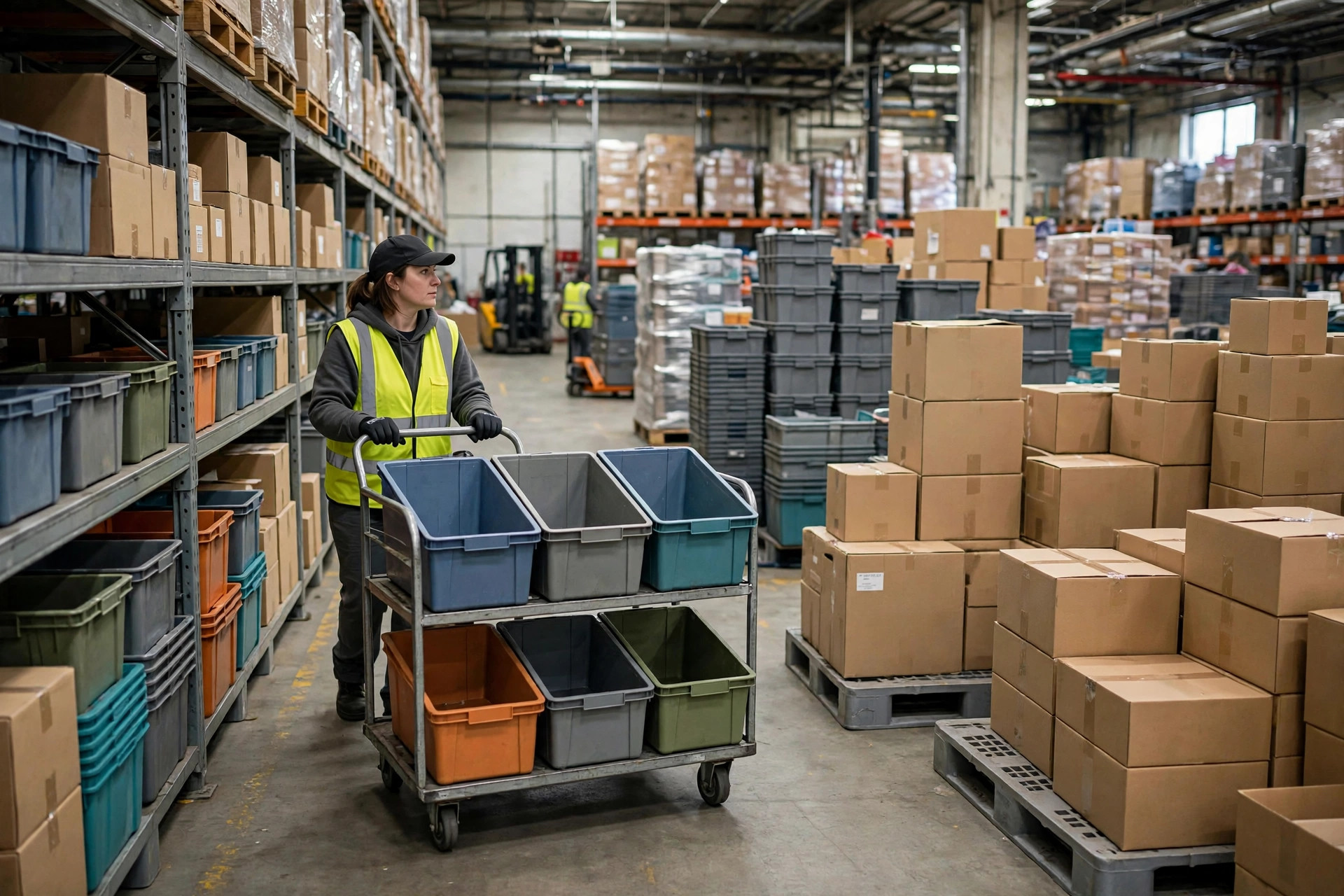
The first is physical aisle capacity. A pick aisle holds only so many carts or pallets before people and equipment start blocking each other. The second is downstream capacity. Picking can outrun pack-out and audit stations, and the backlog piles up at the aisle exits until it pushes back into the pick zone. The third is replenishment pace. Release too fast and replenishment can't keep slots filled — the picker arrives at an empty location while the system swears inventory is there. That's the most demoralizing jam of the three.
Before touching a single parameter, diagnose. When things jam, is it carts queuing at aisle entrances, pallets stacking up at pack-out, or pickers staring at empty slots? Each one points at a different setting. Fix the wrong one and you'll make it worse.
My diagnostic method is gloriously low-tech: stand on the floor for thirty minutes at peak. Watch the aisle entrances, the pack-out queue, and the pick faces. Tally what you see on your phone. Thirty minutes of observation beats a week of staring at dashboards, because the system data will lie to you and the floor won't.
A starting formula for everyday rates
I build everyday release rates from three inputs.
Aisle throughput: count how many pick carts one main aisle holds without conflict — say six — and how long each cart occupies the aisle — say twenty minutes. That aisle's ceiling is eighteen cart cycles an hour. Release must never exceed your narrowest downstream link.
Labor pace: measure what your pickers actually complete per hour — measured, not the vendor's theoretical number — and multiply by headcount on the floor. Set release at 85 to 90 percent of that capacity, keeping a buffer for problem orders.
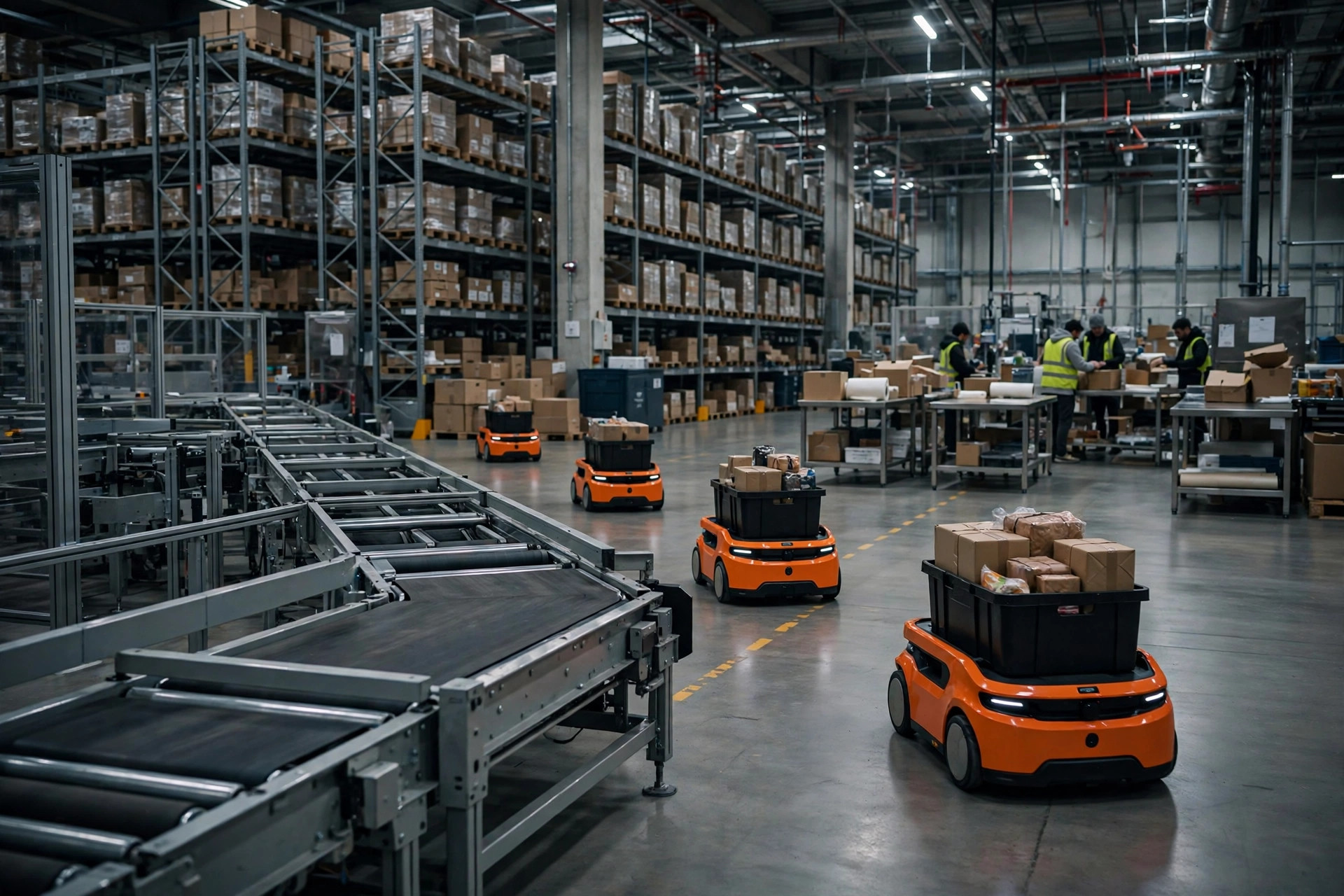
Equipment pace: if you run conveyors, AMRs, or a sorter, the bottleneck often sits with the machines, not the people. A sorter rated at 3,000 units an hour caps your release at that number. Feeding it more just builds a queue it can't eat.

My everyday starting point: release rate = min(aisle ceiling, labor capacity × 0.9, equipment capacity × 0.85). Run it for a week, watch three metrics — aisle jam incidents, picker idle time, on-time shipment rate — then adjust. And revisit quarterly at minimum. When the business changes, the parameters must follow.
A concrete example from an e-commerce site I tuned last year: four main pick aisles, five carts each at fifteen minutes per cart, so eighty cart cycles an hour per aisle; thirty pickers measured at forty-five lines an hour each, so 1,350 lines an hour of labor; pack-out at 1,100 units an hour. We set release at 950 lines an hour — pack-out was the constraint, with a fifteen percent buffer. Aisle jams dropped to zero and picker idle time fell from forty minutes a day per person to under ten. The numbers aren't the point. The "take the minimum" logic is.
Peak season needs a second throttle
Peak season — October through December for most e-commerce — can't run on everyday parameters with a multiplier slapped on. I've watched too many operations melt down in week one of peak because someone decided to "release at 1.5x."
Peak changes the equation. Start with labor: seasonal temps pick at sixty to seventy percent of veteran pace, so your labor capacity number has to be rebuilt from the actual roster. Then watch the bottleneck move. In normal times it might sit in picking; at peak it usually shifts to pack-out and shipping, because the order profile changes toward small, single-line orders.
My approach is two parameter sets — everyday and peak — saved as configuration templates in the WES, switched over two weeks before peak, then fine-tuned after three days of live data. I'm always on site for the switchover day. The odds of something breaking on parameter-change day run an order of magnitude above normal.
One more peak-season essential: an automatic brake. If aisle congestion crosses a threshold — say three or more aisles queuing for fifteen straight minutes — the WES should throttle release down on its own instead of waiting for a human to notice. Machines react faster than people. Let the system hit the brakes where it counts.
The three tuning mistakes I see everywhere
First, treating release rate as a "higher is better" KPI. Releasing faster doesn't mean producing faster — it means pushing more work-in-process onto the floor. Unreleased work waits in a queue; over-released work waits in an aisle. Same wait, worse congestion.
Second, one release rate for every zone. Aisles differ in width, SKU density, and staffing. A single rate lets the narrowest aisle cap everyone. Most WES platforms support per-zone release policies — if you're not using them, you're leaving half the functionality on the table.
Third, tuning without a log. Who changed it, why, what the old value was, what happened after — if you can't answer those four questions, every incident starts from zero. I make clients keep a parameter change log. A shared spreadsheet is fine. What matters is the trail.
Back to that 2 a.m. phone call from Indiana. That 3PL eventually built a change process, pulled release-rate authority back to the operations manager, and stopped calling me at night. Tuning the throttle isn't hard. The hard part is getting everyone in the building to understand: how deep you press the pedal depends on how wide the road is, not how impatient the driver feels. When was the last time anyone in your operation looked at the release settings?