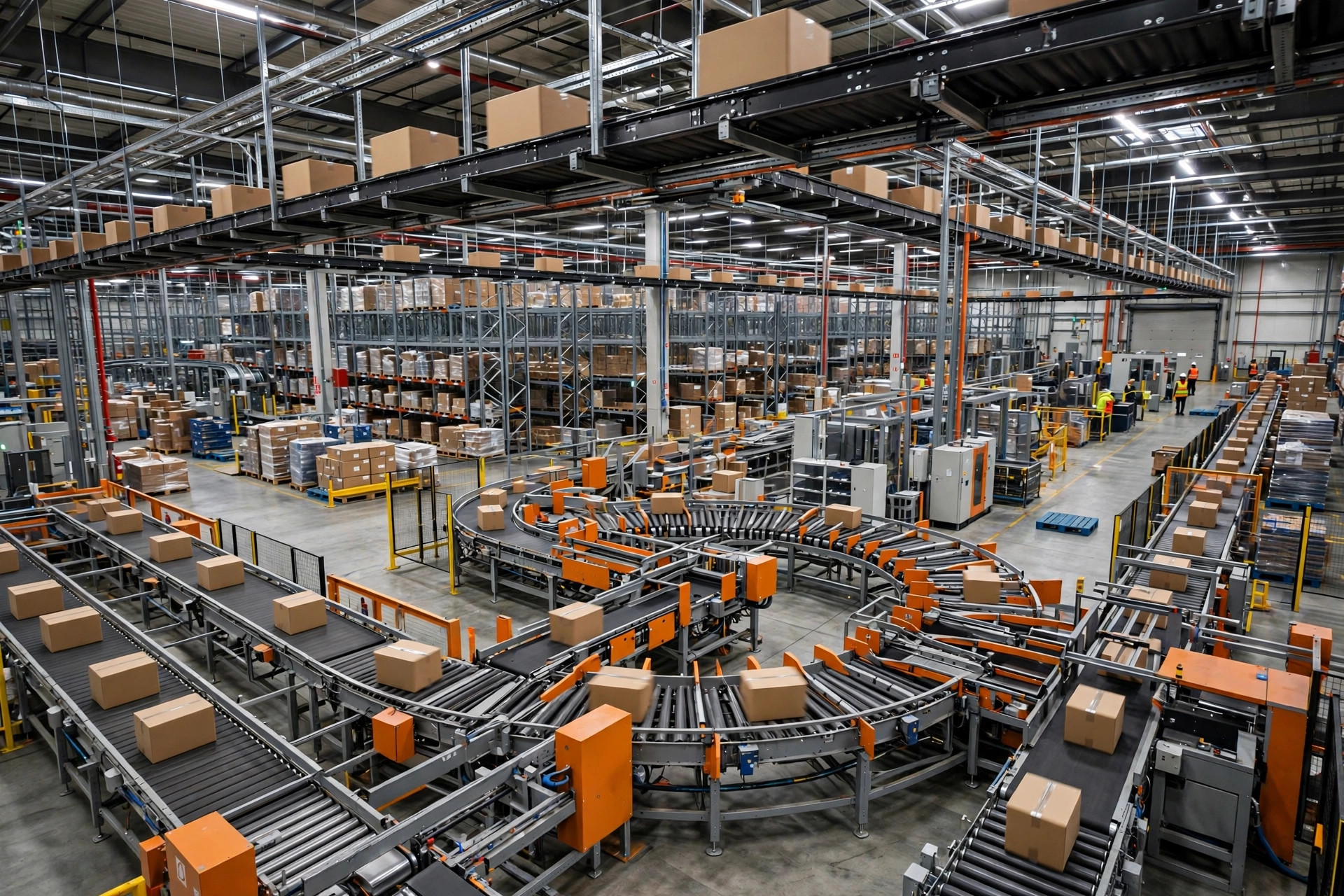
Bottom line first: WES answers "how do we sequence the work," LMS answers "how fast is each person working." The WES vs LMS warehouse difference comes down to this — WES manages the flow of tasks, LMS manages people's output standards. One decides what gets done first and by whom; the other decides what counts as acceptable output and what happens when someone falls short. Use WES as an LMS, or vice versa, and I've seen this exact failure three times. Every time, the money was spent, the system went live, and productivity didn't move an inch.
The confusion is understandable. Both vendors' slide decks look identical: real-time dashboards, "20% labor efficiency gain," and sales reps who all claim "our system manages your people." But once you go live, you discover one system sequences and the other measures — and that's a completely different dimension.
The WES vs LMS Warehouse Difference, in One Table
| Dimension | WES (Warehouse Execution System) | LMS (Labor Management System) |
|---|---|---|
| Core question | Which task first, assigned to whom, how do machines sync | How fast is each person, what counts as standard |
| What it governs | Task flow: waves, tasks, equipment, pack stations | People: engineered time standards, output, incentives |
| Input data | Orders, inventory, locations, equipment status | Time studies, motion breakdowns, attendance |
| Output | Real-time task orchestration, wave release rules | Labor standards, UPH rankings, piece-rate basis |
| Typical features | Task interleaving, priority rules, human-machine coordination | Engineered standards, performance dashboards, incentive calculation |
| Classic symptom of buying wrong | Beautifully sequenced waves — but slow pickers stay slow | Razor-sharp standards — but nobody knows what to do first during peak |
| Signal to implement first | Peak-season task pileups, supervisors assigning by shouting | 2x speed gaps in the same role, overtime creeping up |
The WES vs LMS warehouse difference in plain terms: one is the play-caller, the other is the referee. The play-caller doesn't blow the whistle, and the referee doesn't call the plays.
Two Real Projects: Both Paid Tuition for Buying the Wrong One
Project one, 2023, Dongguan. A 3PL handling small home appliances for export, 90-plus people in the pick zone. The owner was certain: "Picking is too slow. I need WES for task orchestration." Three months after go-live, wave releases looked beautiful and on-time shipment rates improved — but units per hour per picker hadn't budged. The owner was convinced he'd been sold a lemon.
I shadowed two shifts on the floor and found the problem had nothing to do with sequencing. WES could assign tasks brilliantly, but a slow picker is a slow picker: same pick aisle, one person did 170 units an hour, another did 90. No software fixes that gap. It wasn't a sequencing problem. It was a standards problem.
The fix: add LMS. Two weeks of time studies, breaking picking into four motions — travel, scan, pick, verify — to establish engineered standards. Then rebalanced crews against the standards and widened the piece-rate spread. Two months later, average UPH went from roughly 130 to about 170 units per hour. Slow pickers either sped up or got reassigned. The WES wasn't wasted — orchestration sets the floor, LMS raises the ceiling. Each system does its own job.
Project two, 2024, Kunshan. An apparel e-commerce warehouse called me in during peak season. They'd implemented LMS the year before, with standards down to the second for every motion. But on peak day, 300-plus pick tasks sat in the queue while supervisors assigned work over walkie-talkies by gut feel — which wave to release first, which pack station was about to blow up, all experience-based. LMS could tell you afterward who was slow. It couldn't tell you what to do first.
This is the failure I've seen three times, and this was the most textbook case: LMS is the referee. If nobody calls the plays before the game starts, the fairest referee in the world doesn't help.
The fix: WES task orchestration. Three things mattered: wave release rules tied to carrier cutoff times, priority rules letting hot SKUs jump the queue, and pack-station load balancing that rerouted work when any station queued past 15 minutes. By the second peak week, on-time shipment during the two busiest hours went from around 70% to about 95%. The supervisors finally put the walkie-talkies down.

The Counterintuitive Take: LMS First, WES Second
This may be the most counterintuitive line in the whole piece: most warehouses should implement LMS before WES.
Instinct says "sequence the work first." But in my projects, about half the sites that did WES first ended up retrofitting LMS later. The reason is concrete: WES orchestration quality depends on one critical parameter — the standard time per task. And that parameter can only come from LMS time studies. Without engineered standards, WES scheduling is guesswork: it assumes a pick task takes 8 minutes, the slow picker takes 15, and the beautiful sequence collapses on the floor.
LMS first is never wasted: labor standards are management fundamentals. Even if you never buy WES, standards plus piece rates will lift productivity on their own. WES first, then LMS retrofit, means re-tuning all the orchestration logic against real task times — you pay implementation twice.
The trade-off deserves honesty. LMS costs you political capital: once standards go live, fast and slow are visible, crews push back, and the owner has to personally back the rollout. WES costs you cash — software, implementation, equipment integration, typically two to three times an LMS budget — but it doesn't confront anyone directly, so rollout resistance is lower. That's why many owners instinctively pick WES. Not because it's the right answer, but because it hurts less. And that's exactly why I've seen this failure three times.
The Math: a 150-Person Site, LMS First — Does It Pay?
Rough numbers based on a real East China 3PL's scale (order of magnitude, not a quote):
- Site: about 150 people across picking and packing, fully loaded cost around ¥80,000 per person per year — roughly ¥12 million in annual labor.
- LMS investment: software plus implementation, in the hundreds of thousands of RMB one-time, plus two weeks of labor for time studies.
- LMS return: a conservative 15% UPH lift equals roughly 20 headcount saved — about ¥1.6 million a year. Payback measured in months.
- WES investment: software, implementation, and equipment integration — typically 2–3x the LMS number.
- WES return: shows up in on-time rates, overtime reduction, and fewer mispicks — more indirect, but one peak-season meltdown can cost more than the whole investment.
The verdict: LMS is small investment, direct return, fast payback. WES is bigger investment with returns concentrated in peak performance and quality. LMS first, WES second isn't about saving money — it's about making every yuan land where it counts.
Go-Live Eve Checklist: 5 Non-Negotiables
Whichever you implement first, run through these five the night before go-live. They'd have prevented most failures I've witnessed:
- Do you have measured time-study data? Standards set by gut feel get destroyed by the floor in week one. Without LMS measurements, mark every WES task-time parameter "pending calibration" — never run on defaults.
- How big is the fast-slow gap, really? Run two weeks of UPH rankings first. If the fastest and slowest in the same role differ by 2x or more, do LMS first. If the gap is small but peaks are chaotic, do WES first.
- Is the supervisor's assignment logic written down? Before WES go-live, make supervisors articulate "which wave first, when to expedite" as rules. If they can't write it down, the system will sit idle after go-live.
- Has the owner signed off on the incentive plan? LMS without incentives tied to it is an expensive time clock. The piece-rate and reward/penalty scheme must be signed before go-live night.
- Are both systems' data definitions aligned? Is WES's "task complete" the same physical moment as LMS's "labor end"? Misaligned definitions mean two dashboards telling two stories, and the floor will trust neither.
How to Choose: Three Steps
Step one, diagnose your pain: peak task pileups and supervisors shouting means a WES problem; 2x speed gaps in the same role and ever-growing overtime means an LMS problem. If you have both, treat LMS first.
Step two, don't let the slide deck decide: any vendor claiming "one system does both orchestration and labor management" should explain separately where WES gets its task-time parameters and how LMS does its time studies. If they can't separate the two, at least one of those functions is decorative.
Step three, sequence the rollout: LMS (results in 2–3 months) → bank the engineered standards → WES (orchestrate on real task times). I've run this sequence three times. It hasn't failed yet.
By Lin Xiao, WMS Implementation Consultant