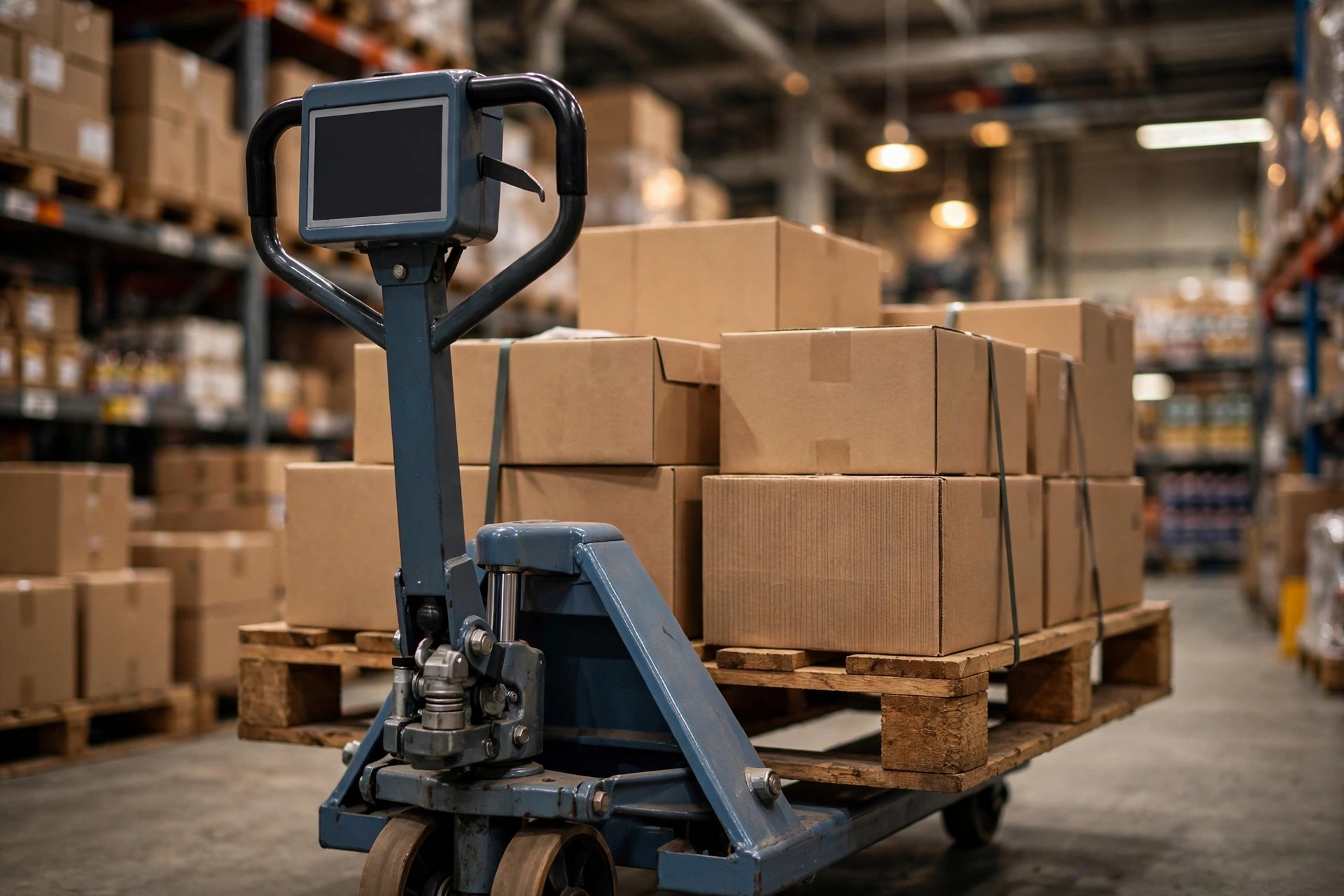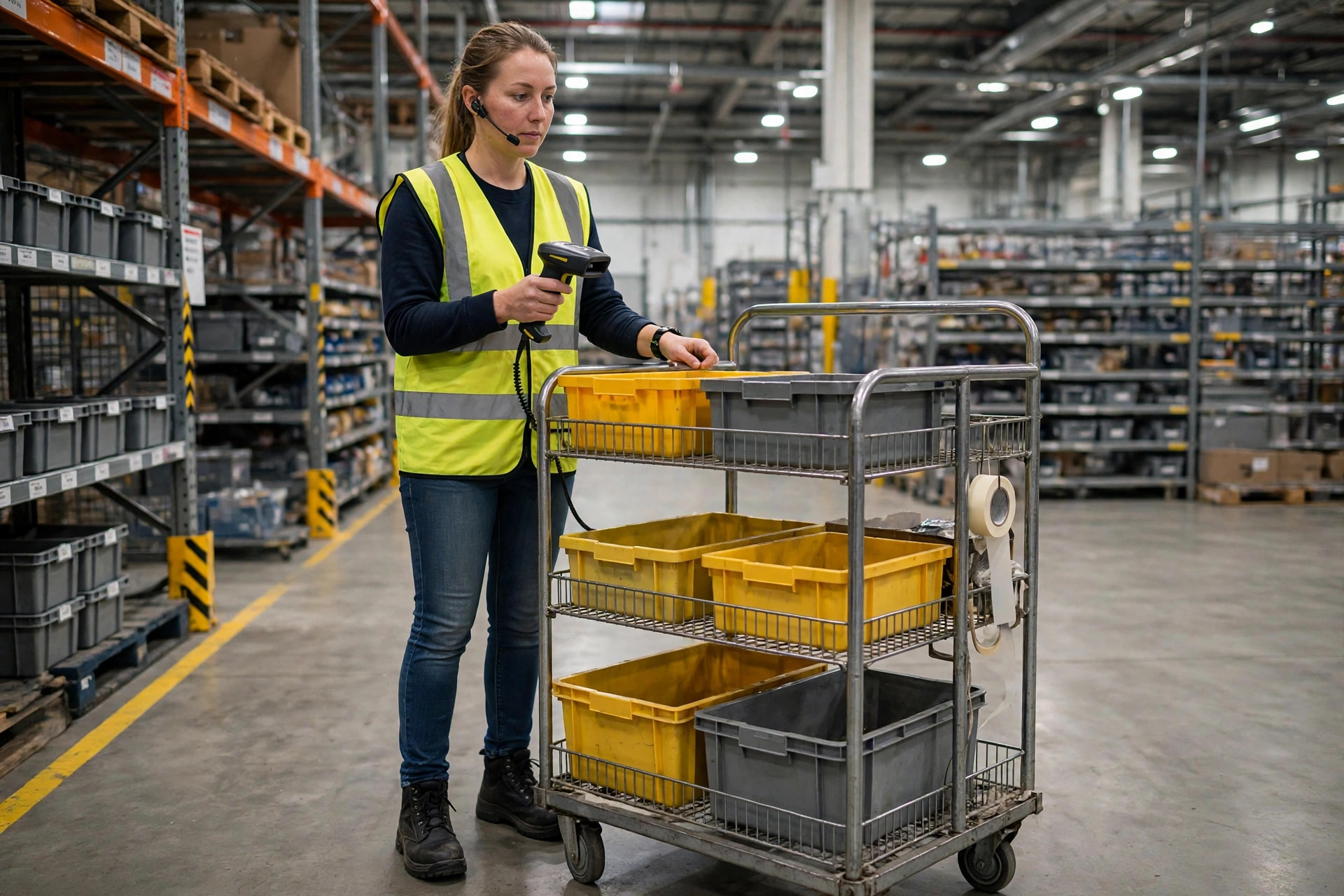
I'll put it plainly: a WES manual picking hybrid transition is not a technology problem. It's an accounting problem. Every day you keep paper pick lists alive next to system-directed dispatch, you pay three taxes — the tax of running two processes, the tax of holding two versions of inventory truth, and the tax on your supervisors' sanity. If you can afford those taxes, and you know the exact date you stop paying them, the hybrid phase is a bridge. If you can't, it's slow poison.
A hybrid transition is a painkiller, not a cure
This cuts both ways. The case for running the hybrid is always practical: peak season is coming and a full cutover might crater throughput; your veterans pick faster with paper than with a scanner, and forcing the switch will make them quit; the WES just went live and the waving logic isn't tuned yet, so keep part of the volume on the old road as insurance. I've heard every one of these. They're all real.
But the cost side has to be on the table first. A WES lives on visibility: how waves get built, how tasks get dispatched, how locations get balanced — all of it assumes inventory data is complete and current. Paper picks that the system doesn't learn about for half a day, sometimes a full day, turn every dispatch in between into a gamble. I've seen too many warehouses where the WES showed nothing after three months and the owner blamed the software, when the software had been optimizing on broken data the whole time.
Here's the counterintuitive call: the most expensive part of a hybrid transition isn't slowness. It's that you never see true inventory. A WES that can't see inventory is worse than no WES at all.
The warehouse where paper and the system fought each other
2019, a 3PL in Ontario, California. They'd just gone live on a WES. The owner's call: A-movers go on system-directed dispatch, B and C movers stay on paper "until things stabilize." Sounds prudent, right?
Three months later I walked the floor. The WES built waves at 6 a.m. off book inventory. By 10 a.m., the paper crew had picked a batch the system still showed as on hand. That afternoon the system dispatched pick tasks to empty slots. Pickers pushed carts to the location, found nothing, came back, and the wave fell apart. Three waves a day, two of them reworked. The supervisor spent nearly two hours every afternoon keying paper pick records into the system by hand, just to make the two sets of numbers agree.
Worse, the algorithm started learning the wrong lessons. It noticed certain locations were "always short" — in reality paper had picked the stock without timely write-back — so it deprioritized those slots and stopped dispatching tasks there. Perfectly good locations got sentenced to death by the system. That's what I mean by fake optimization: garbage in, garbage out, at machine speed.
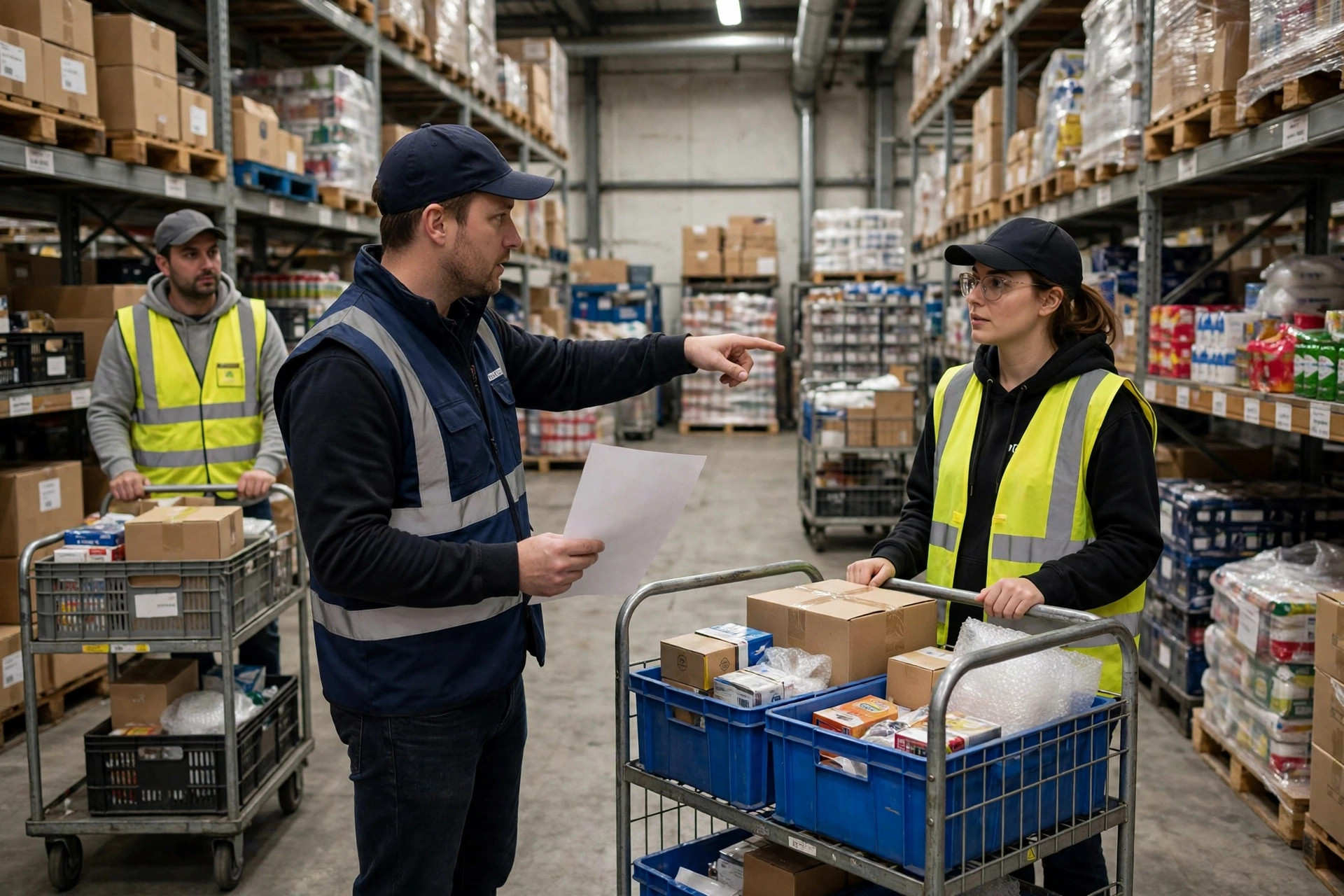
How did they dig out? The owner got ruthless: the paper zone was carved out and physically separated, and every paper record had to be entered into the system before end of shift — nobody clocked out until the numbers reconciled. Two weeks. The data lined up, and only then did the WES start doing real work.
The counterintuitive math of the hybrid transition: paper is faster, and it still loses money
2021, a different building, mostly e-commerce parcels. This time it wasn't the owner hesitating — it was the veterans refusing. Pickers with five, six years on the floor could pick blind off a paper list at 130 to 140 lines an hour; on system-directed dispatch, scanning and confirming every step, they dropped to around 110. One of them told me straight: "Your system is here to slow me down."
On speed alone, they weren't wrong. On paper, an experienced picker runs about 15% to 20% faster — that's a range the industry keeps measuring, and it's roughly the same everywhere.
But this cuts both ways, so I made them do the other half of the math. Paper mis-pick rate at that building: 2.5% to 3%, measured. System-directed with barcode verification: 0.3% to 0.5%. One mis-pick means customer service, a return, a reship, a re-pick — the reverse cost of a bad order runs 5 to 8 times the forward pick cost. Different companies calculate it differently, but the direction is unanimous: errors are expensive. Once you amortize the error cost, the veterans' "speed" was losing money.
I laid the three options out in one table, and the owner decided on the spot:
| All paper | Hybrid (paper + system dispatch) | Full system dispatch | |
|---|---|---|---|
| Veteran pick speed | Fast (baseline) | Polarized — two crews, two speeds | 10–20% slower at first, catches up in ~3 months |
| Mis-pick rate | 2–3% | 2–3% in paper zone, under 0.5% in system zone | Under 0.5% |
| Real-time inventory visibility | None | Half blind | Full |
| Dispatch algorithm quality | N/A | Broken data, fake optimization | The fuller the data, the smarter it gets |
| Management cost | Low (but high hidden error cost) | Highest: two processes plus reconciliation | One-time cutover pain |
See it? The hybrid wins no row in that table. Its only value is time — it buys you a window to make the switch.
Four hard rules for running the hybrid transition
Since a WES manual picking hybrid transition is buying time, run it like you're buying time. Four rules, and none of them are optional.
First, physical separation. System zone and paper zone get separate locations, separate pickers, separate carts. Never "system dispatches this slot in the morning, paper picks it in the afternoon." That's digging your own hole.
Second, paper gets written back the same day. Paper records hit the WES within the day — within two hours if you can manage it. If full barcoding isn't there yet, at minimum capture three fields: what was picked, how much, from which location. That's the floor of a hybrid transition: data may arrive late, but it must arrive.
Third, reconcile daily. Before end of shift, the supervisor matches system inventory against a physical count of the paper zone and chases every variance the same day. Don't let it accumulate — after three days you can't untangle it.
Fourth, write down the exit criteria on day one. Under what conditions does the hybrid end? "System zone accuracy above 99.5% for two straight weeks." "All paper-zone SKUs barcoded." I've seen too many "three-month transitions" turn into three-year transitions, and the cause is always the same: nobody wrote the exit criteria.
And here's my decision framework, free of charge: keep the hybrid to 90 to 180 days. If you can't land it in 90, your preparation was thin — go back and do the homework. If you still can't decide at 180, the problem isn't the system, it's the people — and that's not a transition, that's avoidance.
One piece of advice.
Running system dispatch and paper picking side by side was never about two dispatch methods. It's about whether you can make the call. Every day the data stays incomplete, you're paying a tax for looking prudent.
So don't ask me whether a WES manual picking hybrid transition is good or bad. Ask yourself: did you write down the exit date? If yes, the hybrid is a bridge. If no, it's a pit. What's the date on your piece of paper?
By Lao Mi, Supply Chain Veteran (20 yrs)