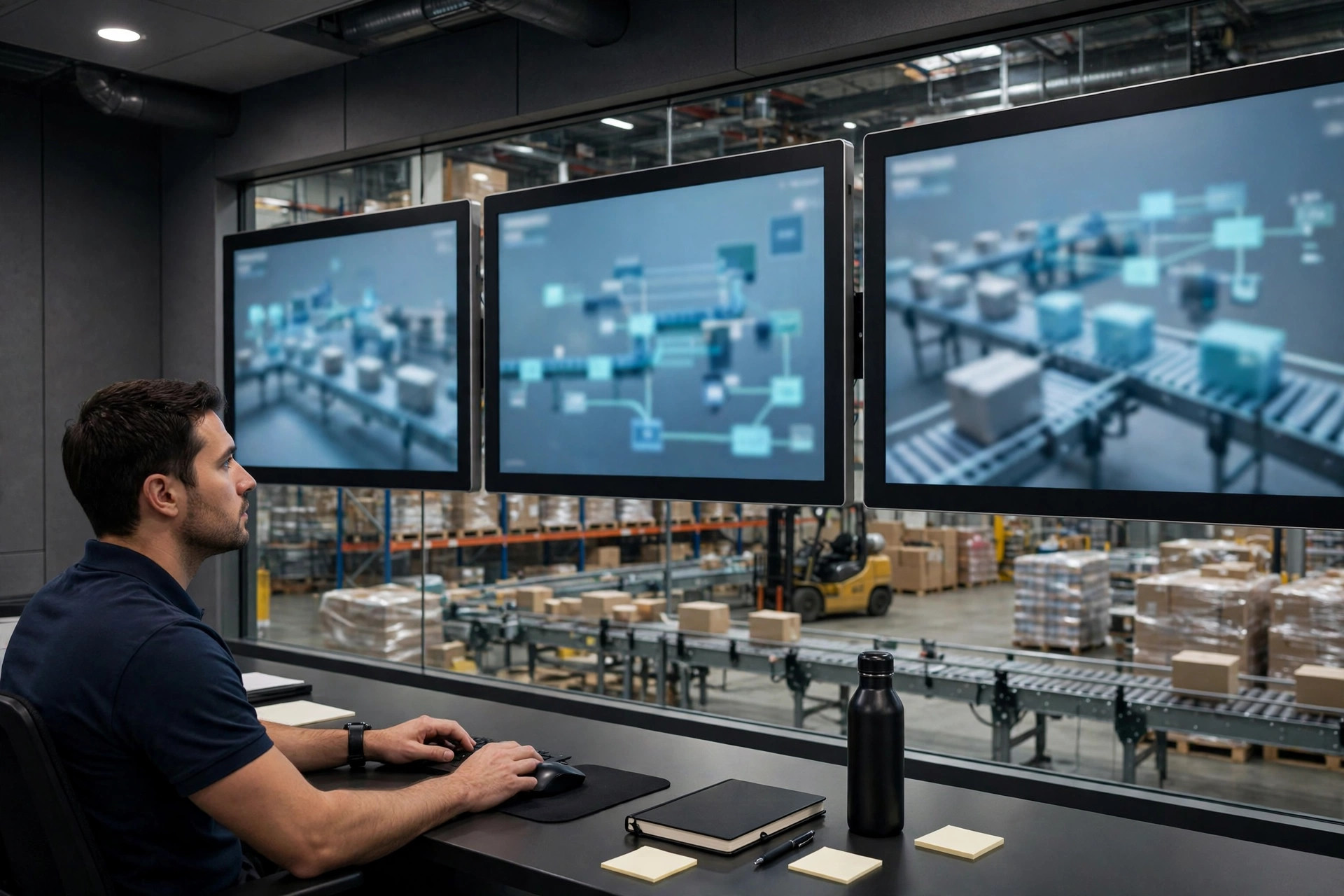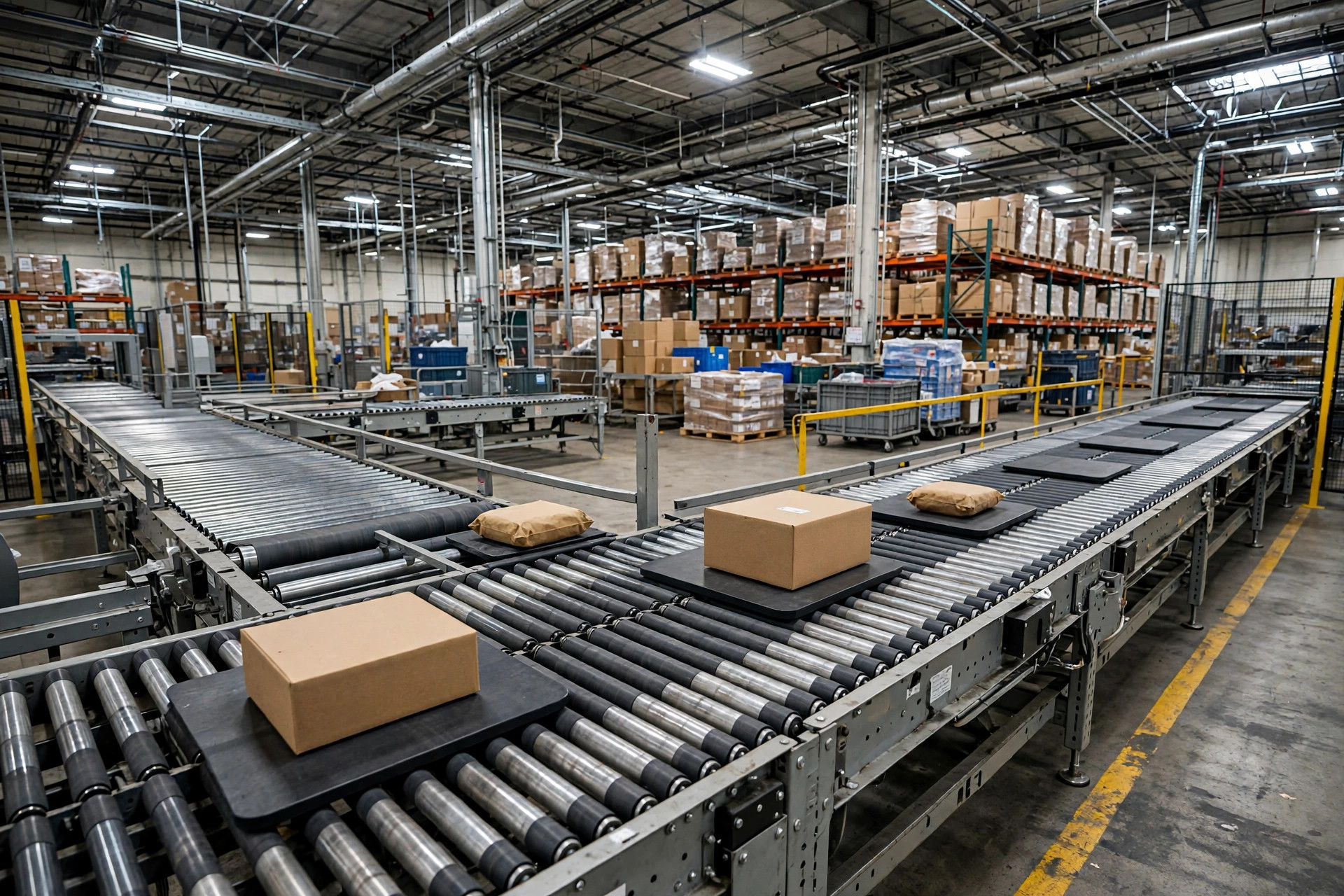
Summer 2024. A 3PL warehouse in California. 1:40 a.m. The network link between the WCS and the upstream WMS dropped. On the monitoring wall, the task queue froze. The conveyors, though, kept running — hundreds of cartons looping around the ring like headless chickens, not a single divert firing. They were down for three and a half hours. The next morning someone did the math: tens of thousands in direct losses, not counting customer claim emails.
Afterward I told their owner: you don't have a hardware problem, you have a missing WCS outage fallback operation plan. Let me break this one wide open.
First: figure out which link actually broke
People say "the WCS is down," but not all "down" is the same. Start with where the WCS sits in the software stack: ERP handles the books, WMS handles inventory and orders, WCS handles equipment execution, PLCs handle motors and cylinders. You can think of it this way: the WMS is the brain, the WCS the cerebellum and spinal cord, the PLCs and equipment the muscles.
So there are two kinds of "break," and the response to each is completely different.
Scenario one: the WCS loses its connection to upstream (WMS/WES). The WCS itself is alive, the equipment is alive — it just stops receiving new tasks. This is the brain going offline while spinal cord and muscles still work — the body finishes what's already in its hands on instinct. The right move here is to let the WCS keep executing from its local task cache and drain the wave that's already been released.
Scenario two: the WCS host itself fails, or the link to the downstream PLCs breaks. That's a severed spinal cord — the muscles get no instructions. Equipment must fall back on local PLC logic into a safe state: conveyors stop section by section, sorters return to home, lifts lock in position. Note the words: safe state, not power-off. Cutting power outright leaves cartons jammed halfway up a lift, and that's a genuine disaster.
If you can't tell these two apart, your fallback plan is scrap paper. I've seen a warehouse write one SOP for both scenarios. On the night it actually happened, operators stared at equipment that was still running and had no idea what to do, then power-cycled equipment that was already down and scrambled the PLC program.
WCS outage fallback, tiered: where L1, L2, and L3 split
Fallback is not a binary choice between "fully automatic" and "fully manual." I run three tiers, each with a hard trigger and a defined set of actions. Print this table and stick it on the control room wall:
| Tier | Trigger | System action | Human action |
|---|---|---|---|
| L1 Local drain | Upstream link down < 30 min, local task queue non-empty | WCS keeps executing from cached tasks, pauses new dispatch | Monitor watches screens, stands by to switch |
| L2 Manual takeover | Link down > 30 min, or local queue drained | WCS holds equipment in standby, opens manual operation screens | Operators induct and sort from printed wave sheets |
| L3 Safe stop | WCS host failure or PLC link loss | PLC local logic takes over, equipment to safe state | Full line stop, troubleshoot hardware, no blind reboots |
Why 30 minutes as the dividing line? That's an experience number, not a standard. My logic: a normal warehouse's WCS local cache typically covers 20–40 minutes of runtime — about one wave. Past that point the cache is dry and the equipment is burning electricity and wear for nothing — switching to manual decisively is actually more productive. Set your own warehouse's line based on your wave size, but set a real number. "When it feels about right" is not a trigger.
Here's the contrarian take: in a WCS outage fallback operation, the bottleneck is never the software — it's the people. I've run fallback drills at three warehouses. The system-side L1 switch-over completed in minutes every time. What jammed was always human: operators who'd never seen the manual interface, a printer out of paper for the wave sheets, a night-shift supervisor who didn't know who had authority to declare L2. Everything the software can automate is already automated. Fallback drills test organizational readiness.
And there's a trade-off you have to face honestly: the deeper you make L1 local drain (more cached logic), the more complex your WCS gets, and the higher the daily maintenance cost. Some integrators will sell you "72 hours of autonomous operation with no network" as a feature. That's a fake requirement, and I'll say it bluntly: how many times a year does your upstream WMS actually go down? Minutes or hours each time? Building a second WMS inside your WCS for a scenario that happens once every few years is money down the drain. My dividing line: local drain should cover roughly twice your typical outage duration, and humans handle the rest. If typical outages are 10 minutes, 20–30 minutes of autonomy is enough. More than that is over-engineering.
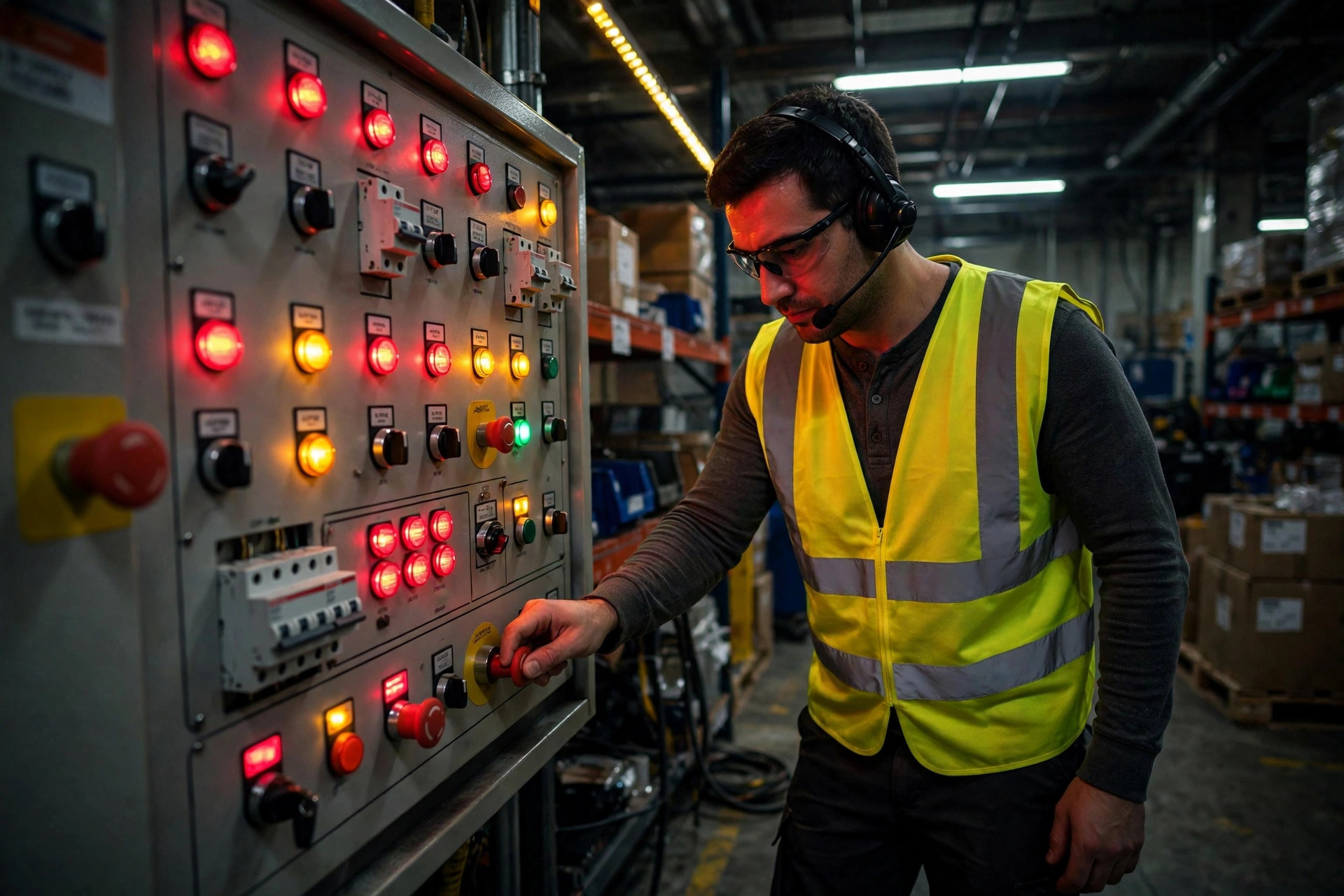
After the link comes back: reconciliation in your WCS outage fallback operation
An outage isn't the scary part. Recovery is. Two real stories.
First, 2023, an e-commerce warehouse on the US East Coast (no names). The WCS lost its WMS link for 40 minutes; L1 local drain chewed through 1,200+ cached orders. The moment the network recovered, the WMS re-dispatched those 40 minutes of tasks — because as far as the WMS knew, they'd never executed. Result: 1,200+ duplicate shipments, and two weeks of returns and angry customer calls. Root cause: the WCS task-status reporting had no idempotency, and the WMS had no dedup for tasks dispatched during a link outage.
Second, 2022, an apparel 3PL. The WCS host died, L3 safe stop, PLCs parked everything. On recovery, the WCS restored task state from its last snapshot — 15 minutes old. Three hundred-plus cartons that had already been sorted in those 15 minutes still showed as "pending" in the system. The crew spent the night reconciling carton by carton against a printed list.
So post-recovery reconciliation is the piece of the fallback plan most likely to be missing. The standard three-part playbook: first, every WCS task state change must carry a globally unique task ID plus timestamp, and the WMS dedups on ID — re-dispatched tasks get dropped on arrival. Second, the WCS state snapshot interval must be no longer than 5 minutes, and snapshots must live on storage independent of the WCS host (a snapshot on the dead host's own disk is no snapshot at all). Third, after link recovery, run a variance report first — anything where the system says "done" but the equipment says otherwise gets flagged red and confirmed by a human before auto-execution resumes. No automatic catch-up.
The maintenance trap: the plan nobody ever drills
Last section, and the one I most want to rant about.
I've asked the maintenance lead at no fewer than ten warehouses: "How often do you drill your outage fallback plan?" The answer is always the same: we tested it once at go-live, never again. The WCS has gone through three upgrades since; the fallback scripts are three years old. The PLC program changed; nobody re-verified the safe-stop interlocks. The new night-shift supervisor has never even seen the L2 manual screen.
It's like buying a fire extinguisher and never checking the gauge for ten years, then discovering it's at zero when the fire starts. My recommended shelf life for a fallback plan: a tabletop walkthrough every quarter, and a real link-down drill every six months (pick a low-volume window — Sunday 2 a.m., pull the cable for 20 minutes). The drill doesn't have to be perfect. The point is drilling the human half — who has authority to declare L2, where the paper sheets print from, where the manual divert map is posted.
One more trap: a lot of warehouses pour their whole redundancy budget into WCS hot standby. Let me be blunt — a WCS host failure is far less likely than a network link failure. Single switch, fiber cut by a forklift, switch overheating because the server room AC died — seven or eight times out of ten, it's the network. If you're spending money, the priority order is: network redundancy (dual uplinks, ring topology) > local fallback logic > WCS hot standby. Spend on the blade's edge, don't let the integrator lead you by the nose.
Is this money well spent? Look at this one number: your cost of one hour of stopped line, multiplied by your total outage hours over the last three years. If that number is bigger than the cost of implementing a fallback plan (including the labor for drills), this project should start today. If the number comes out small, you've been lucky — but luck is not a plan.
By Da Liu, Automation Engineer