Let me tell you straight: warehouse winter dock ice safety sounds like a chapter in a safety manual, but out on a real dock, at four in the morning, it is the sheet of ice under your boots making the decisions. I have driven trucks for fifteen years, and the worst winter mornings I have seen were not the ones with heavy snow falling. They were the mornings after the snow stopped, when the dock looked clean and dry, and then a trailer slid sideways on a strip of refrozen melt that nobody had noticed. Nobody got hurt, luckily. But the whole night's work fell apart anyway, trucks stacked up outside, freight sat unloaded, and the warehouse crew stood at the door with nothing to do. Ice on a dock does not respect an experienced driver. It respects whether you followed the routine.
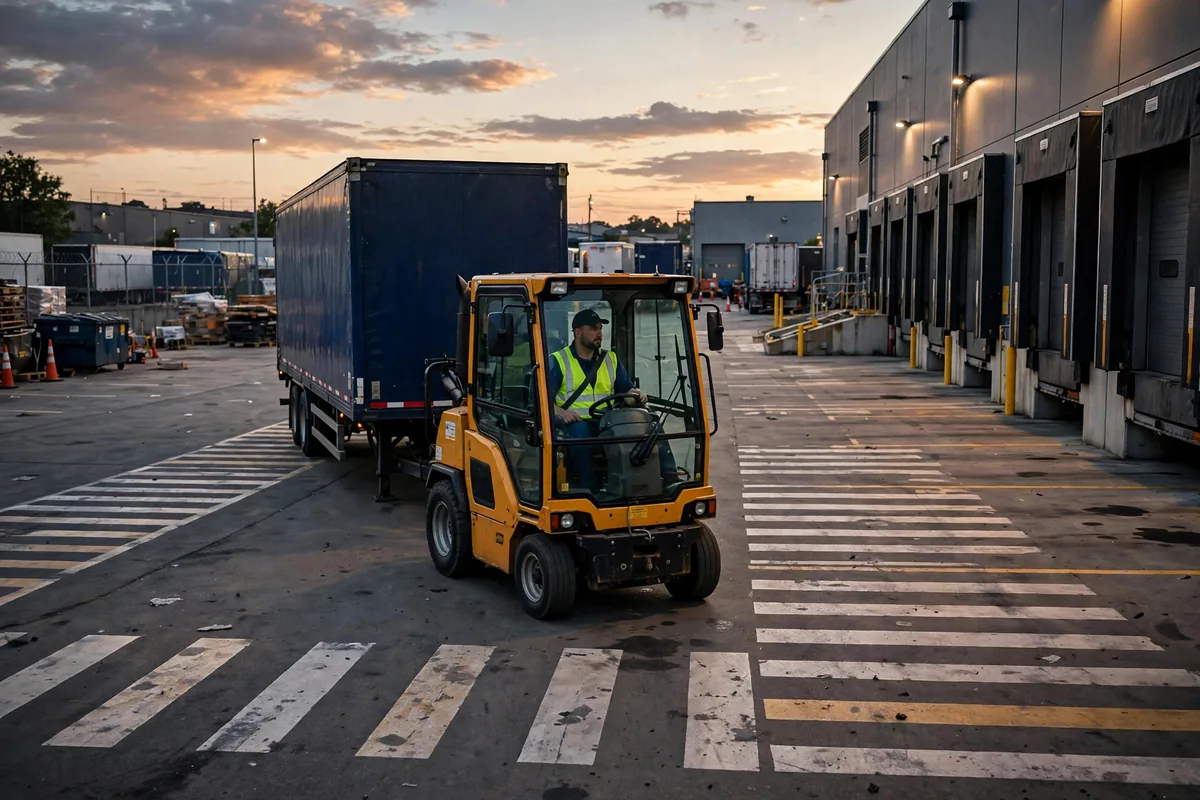
Let me give you the night that taught me this. Last winter, in the small hours at a warehouse in the American Midwest, the crew had cleared the dock before I arrived. It looked fine. I started backing into the door, slowly, the way you are supposed to. Then my trailer wheels hit a band of ice right at the door edge, where meltwater had run off and frozen again, and the back of the trailer swung sideways. I stopped with less than an arm's length to spare from the door frame. When I got out, the story was plain: the middle of the dock apron had been cleared, but the line the wheels actually travel, right along the door edge, had never been touched. Clearing a dock is not about making the middle look tidy. You have to walk the wheel path, the walking path, and the forklift turning path, one by one. Whichever path you skip is the one where something goes wrong.
The warehouse side of the story matters just as much. That same winter, at a different warehouse, a picker came in before dawn to pull an order, carrying a pallet across the slope between the dock and the staging area. The slope had a thin sheet of ice on it. He went down, the pallet went everywhere, and he was off work for days while the freight was recounted, repacked, and shipped late. Afterwards the manager told me they had always known that slope iced up, but they figured people would just walk carefully. Careful walking helps, but it cannot be the plan. A person carrying freight and reading paperwork is not watching their feet. The ground has to be safe first, and then you ask people to be careful. Get that order backwards and you are gambling.
Warehouse winter dock ice safety starts with the de-icing sequence
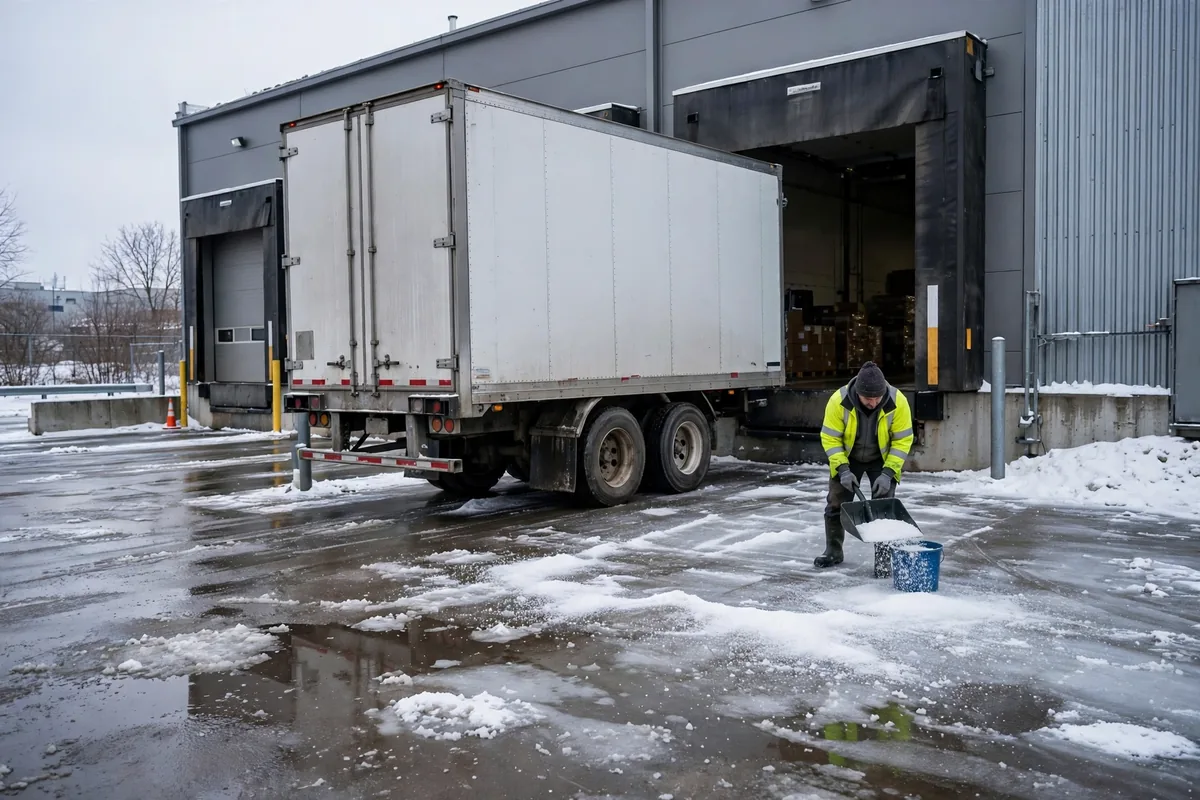
The biggest mistake in de-icing is doing it in whatever order is convenient. When I arrive at a warehouse in winter now, I first ask who is responsible for de-icing, when they started, and in what order. My preferred sequence has three steps, and the order matters. First, clear the ice band at the dock doors and the wheel paths, because trucks need those the moment they arrive. Second, clear the pedestrian walkways and slopes, because every minute those stay icy is another minute someone can fall. Third, clear staging and forklift turning areas, where ice packs down hardest. After each step, someone should step on it and look: swept snow is not treated ice, and a surface that still looks wet after clearing is still a hazard.
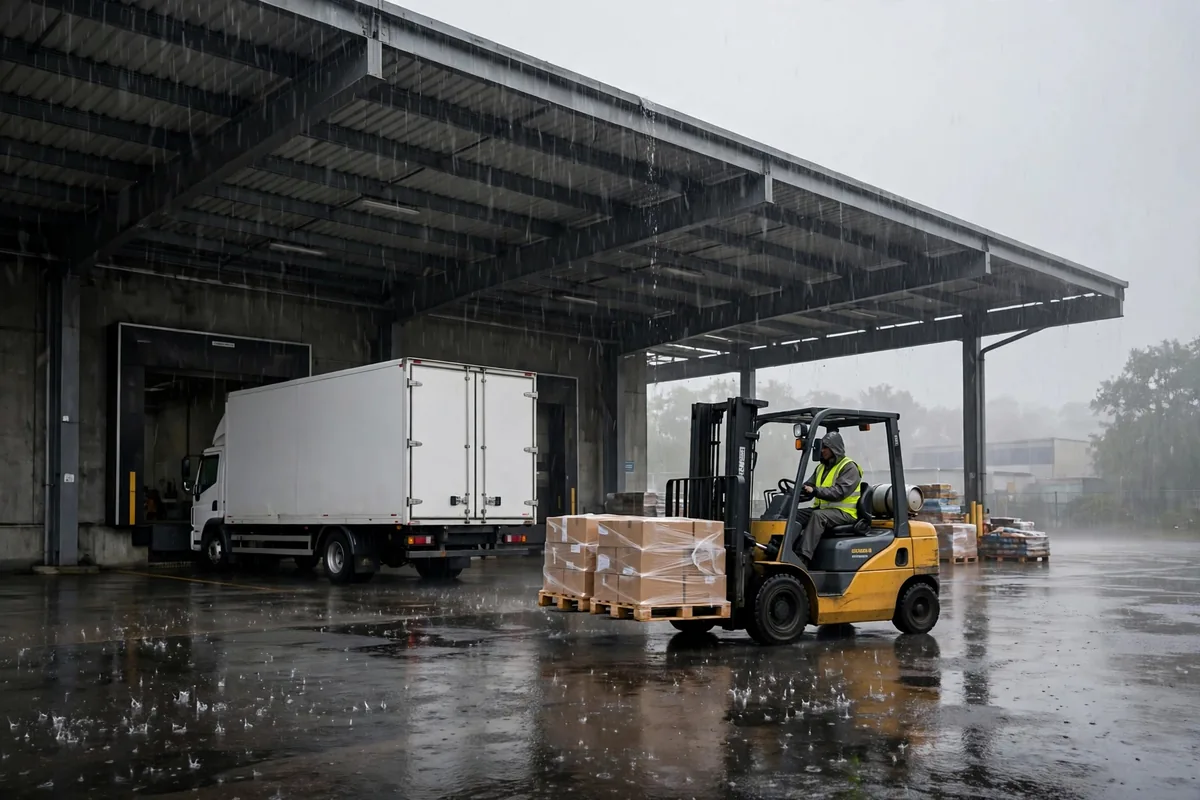
One more thing about de-icing products. More is not better. Too little does nothing, and too much leaves a salty film that makes forklift tires slip and looks terrible on packaging. There is also a cold-weather catch: when it gets really cold, de-icing products work more slowly, and a driver who assumes the surface is treated the second the product goes down will step or drive onto ice that has not softened yet. My rule is to wait until the ice starts to soften and your boot finds some grip before releasing traffic. A truck waiting outside a few extra minutes beats a truck sliding on ice that has not finished working. For exact product rates, check the manufacturer's current guidance, since figures change and guessing is how people get hurt.
Warehouse winter dock ice safety means separating people from trucks
Here is something people get wrong: anti-slip work for people and for trucks is not the same job. Pedestrian routes need mats, handrails where there is a slope, and enough light at night that a person can see which patch of ground is shining, because shine means ice. Truck routes need a different discipline: a light foot on the accelerator when backing on ice, slow steering, and the moment you feel the trailer start to swing, stop and straighten out. Do not try to power your way back into line. On ice, the harder you fight it, the further it goes. Wheel chocks belong on solid ground: a chock on ice slides right along with the wheel.
Now the counterintuitive part, and I say this from years on the road: the most dangerous day is usually not the day of the big snowstorm. On a snow day, everyone is alert, speeds are down, and people watch their step. The dangerous day is the one after, when the sun melts a layer during the day and it freezes again overnight into a thin, nearly invisible sheet. The ground looks clean, people relax, speeds creep up, and then one slide turns into a big one. So my rule is simple. If temperatures dropped to freezing overnight, we work the dock as an ice day no matter how clean it looks in daylight: mats out, backing slow, handover questions asked, no shortcuts. The step you skip is the one that comes back on the busiest night of the week.
The winter handover: drivers and warehouses must talk first
The riskiest few minutes in winter are often the handover itself. The driver has just finished a long, cold run and wants to unload and go; the warehouse is chasing outbound orders and wants the truck in the door. Both sides are in a hurry, and hurried people stop talking clearly. Before I move a truck now, I run through three questions. First, which doors are usable today and which ones still have ice at the edge. Second, does this truck back in now, or wait aside while de-icing finishes. Third, which route does the truck take out afterwards, and has that route been cleared. Three questions, a couple of minutes.
And one plea from the driver's seat: do not rush a driver on ice. The harder you push, the more likely a driver grabs too much throttle on an icy apron, the trailer swings, the door gets blocked, and every truck behind it waits. A half-hour unload turns into an all-night mess. The most efficient winter docks I have worked were the slowest-looking ones: one truck, one door, one set of paperwork at a time, and they still finished first. That is warehouse winter dock ice safety in one line: winter dock work is not measured in speed, but in nothing going wrong.
Here is the three-line defense I carry in my head at every winter dock:
| Line of defense | Do this first | Watch out for | What happens if you skip it | | De-icing sequence | Door-edge ice and wheel paths first, then walkways | Clearing only the middle and ignoring edges and slopes | A truck slides on arrival, the door blocks, and the queue backs up | | People and truck anti-slip | Mats and handrails for people, light throttle and slow steering for trucks | Relying on careful walking while the ground stays untreated | A fall, scattered freight, and shipments pushed back a full day | | Winter handover | Confirm usable doors, backing order, and exit route before moving | Both sides in a hurry, moving before talking | A trailer against a door frame and a night of work undone |
Before closing up, run the short list: who de-iced today and when, whether door edges and slopes were confirmed, whether walkway mats are down and lights are bright enough, whether tomorrow's first trucks have doors assigned, and whether chocks are on solid ground. It looks fussy. But winter dock accidents are rarely caused by one big thing left undone. They are caused by three small things left undone at the same time. There is an old saying among drivers, and it holds truest on ice: slow is fast. The minutes you try to steal on an icy dock are the minutes an accident takes back, with interest, and usually with someone getting hurt. Better to arrive an hour late than to grab one minute you cannot afford.
By Shifu Zhao, Trucking Veteran (15 yrs)