Here is the thing about warehouse water outage contingency: everybody has a power-outage plan, but almost nobody has a water-outage plan. Water feels too cheap and too ordinary to plan for — until the tap runs dry. Then half a day without water can throw a whole warehouse off its rhythm.
Let me be straight with you: a water outage does not start as an operations problem. It starts as a people problem.
The night shift that taught us: peak season, and the water just stopped
It was a Tuesday night in peak season. The night shift had barely clocked in when the shift lead came running over: "Feng, the restrooms have no water." I figured the industrial park was fixing a pipe again. I made a few calls: the city crew was repairing a burst main, fixed by morning, they said — but could not say what time.
We had more than a hundred people on nights, and another two hundred coming in for days. The drinking water was still fine — the coolers had stock — but nobody wanted to drink freely, because what if the outage lasted until noon? Worse, the restrooms could not flush. Give that a few hours with a full shift on the floor, and you no longer have a warehouse. You have a morale problem with forklifts in it.
That night we settled on a rule that has stuck since: people first, throughput second. Work can slow down. Basic human needs cannot. If you remember only one line from this article, make it that one.
Warehouse water outage contingency starts with three lines, not one plan
When the water goes out, do not just ask, "Can we still work?" Split the impact into three lines, and give each line its own owner. That way nobody fights over the same bucket of water, or assumes someone else handles the scary part.
Line one is sanitation and drinking water. People need to drink, wash their hands, and use the restroom. That is the floor, not a nice-to-have. Without flushing restrooms, a shift becomes unworkable within hours. Without handwashing, any food or pharma area cannot run its work properly at all. If this line breaks, you slow down on purpose rather than pushing through.
Line two is fire-suppression water. Whether your sprinkler system depends on the municipal supply, and how long any backup tank lasts, varies from building to building — so do not guess. The moment an outage is confirmed, call the property manager and the local fire authority, find out the current status of fire water supply, and follow their instructions on hot work and high-risk tasks. Specific requirements are subject to the latest official rules, and the people on the floor should not be inventing their own standard in the middle of an outage.
Line three is operations water. Washing pallets, hosing down floors, cleaning equipment, dust control — all of it can mostly wait. The jobs that can wait go to the back of the queue. The jobs that cannot — say, a pre-shift wash for a food client — get backup water, a changed shift, or an honest conversation with the client. What you never do is quietly skip a required wash and hope nobody notices.
Splitting the three lines has one big payoff: when water gets scarce, nobody raids the drinking supply to mop a floor, and nobody touches fire water for cleaning.
What we actually tried: backup water, staggered work, and chasing the repair
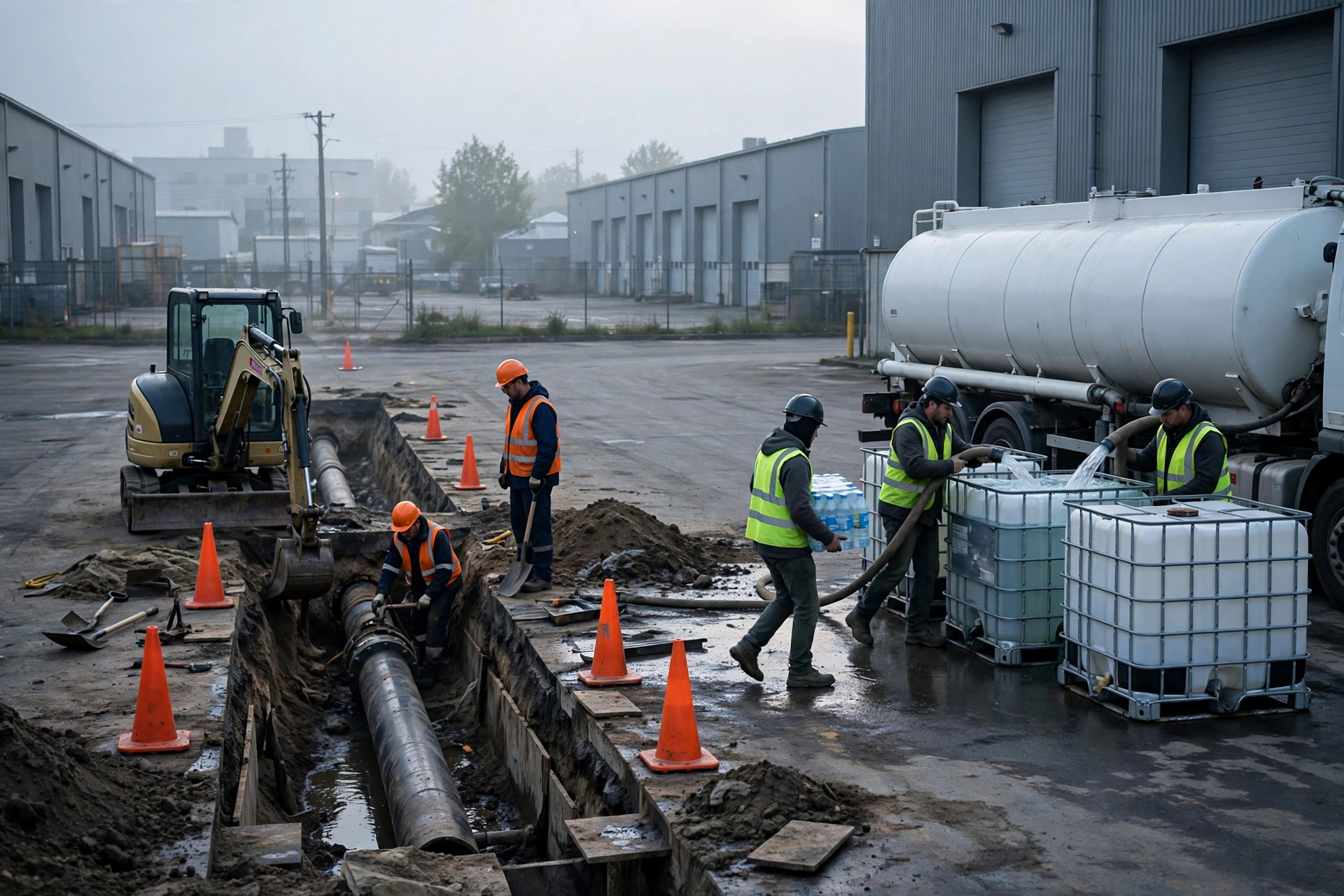
Let us talk backup water, because most warehouses get this wrong. They stock drinking water — case after case of bottled water — and call that a plan. We made that mistake once. The drinking water lasted fine, but the restrooms were unusable within two hours. Lesson learned: the biggest share of backup water is not for drinking. It is for flushing and handwashing.
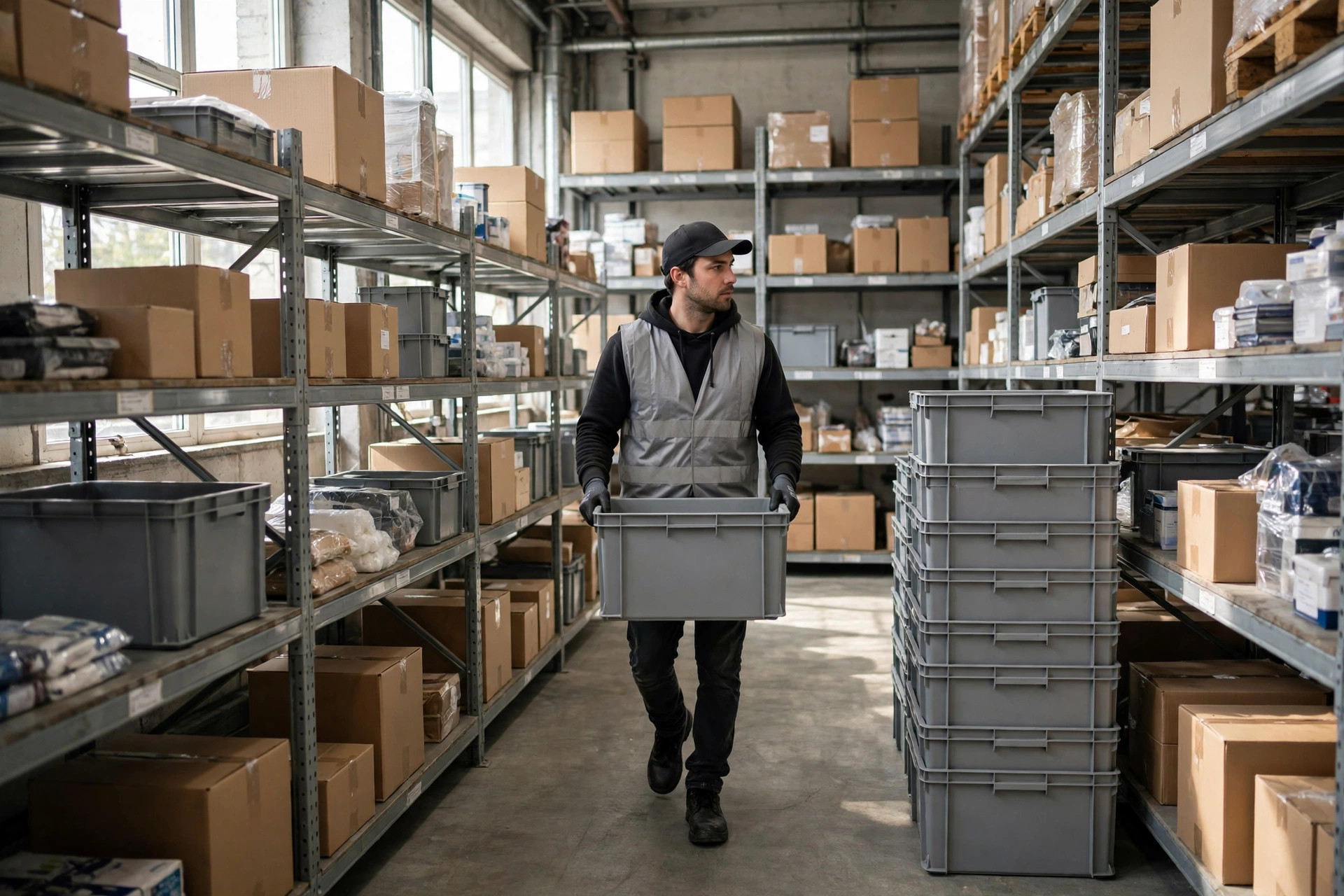
So now we keep two separate counts: drinking water by headcount, and sanitation water on top, plus roughly half a shift extra as buffer. Bottled water, storage drums, and a mobile tank all count. The key is that everything sits in a fixed spot, labeled, so nobody is hunting around the building in the middle of an outage.
Next, stagger work on purpose. When water is out, the schedule comes down deliberately. We cut washing and rinsing jobs first, then non-urgent changeovers and tidying, and only then touch outbound work. Nights are easier — fewer people, so move the water-hungry jobs to after restoration. Days are harder — more people, so split shifts and stagger restroom peaks. The shift lead should hold a simple sheet: what stops, what waits, what keeps going. No debating it fresh every time.
And chase the repair like it is your job, because it is. Once an outage is confirmed, get three answers in writing in the shift group chat: who is fixing it, how long it will take, and whether they will notify you before restoration. Update every half hour. Tell clients early if outbound timing might slip. An early heads-up beats a late apology every time.
A second story: a daytime burst pipe, when cleaning and fire alarms went off together. One Thursday morning, a pipe burst in the park, water pooled on the road, and the wash bay lost pressure. At the same time, the fire system flagged a supply abnormality. That day we had a food client's goods due for a pre-shift wash. No wash, no shipment.
The lesson was to keep the two problems in separate hands. Production handled the schedule and the backup water. Safety handled the property manager and the fire authority, paused hot work as instructed, and stepped up patrols. One more thing from that day: an experienced hand suggested borrowing water from the fire tank to wash the floor. I stopped that on the spot. New hires hear that story on day one.
Warehouse water outage contingency decision table: act by duration and line
Here is the table posted on our shift-lead office wall. When water goes out, we follow it instead of calling a meeting.
| Situation | Sanitation and drinking | Fire water | Operations water | Work pace |
|---|---|---|---|---|
| Out for a few hours | Use backup water, stagger restroom use | Confirm status with property manager, pause hot work | Cut washing jobs | Slow down, do not stop |
| Out for half a day to a full day | Add backup water, arrange temporary sanitation | Follow authority instructions, increase patrols | Only essential washing | Reduce output, protect outbound |
| Out for more than a day | Arrange external water support, adjust shifts | Follow authority instructions strictly, stop work if required | Pause all of it, catch up after restoration | Stop, or run only jobs that need no water |
Here is the counterintuitive part: an outage does not break outbound volume first. It breaks sanitation and morale first. People who cannot use a restroom or wash their hands slow down, get frustrated, and start making mistakes. So the first money and the first attention in any water plan should go to people, not to protecting throughput. That ordering feels backwards until you have lived through it once.
Restoration day: do not rush back to full speed
Water back does not mean work back. Our fixed routine after restoration: check first, restart second. Flush lines for a while, confirm water runs clear with no odd smell or sediment, then restore drinking and handwashing. Test restrooms and wash points one by one for normal pressure. Only when the shift lead signs off does the full schedule resume.
If water quality is uncertain, do not push through. For food or pharma areas, how to confirm quality and who confirms it should be settled in advance and written into the plan. When in doubt, follow the latest official guidance or wait for a clear notice from the property manager or water supplier. An hour late is cheap. Contaminated wash water is not.
And debrief every outage, no exceptions. Write down when it started, when it ended, which line broke first, and whether backup water was enough. That debrief sheet is what turns a bad day into next time's plan.
So here is my reminder to fellow managers: a water outage is not scary when prepared, and chaos when not. Keep backup water stocked, name an owner for each of the three lines, and put the decision table on the wall. The worst version of this story is not "we had no water." It is "we had no water, no plan, and nobody to ask."
By Chen Feng, Warehouse Operations Manager