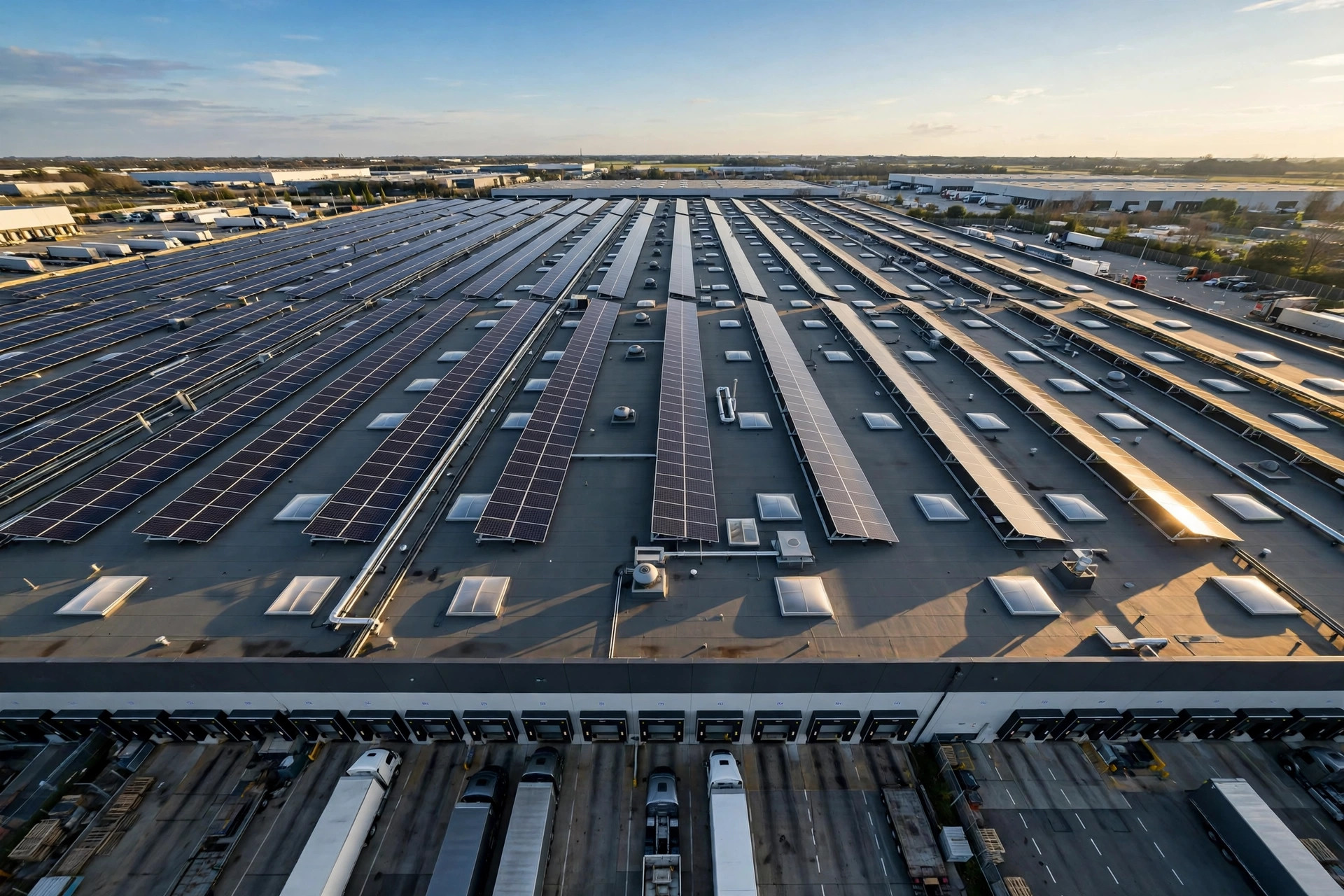
Warehouse rooftop solar is a good idea that goes wrong in the same three places, and generation is the last of them. I will put my conclusion up front: if the lease, the roof, and the grid connection are not settled first, the panels become a liability with a nice payback chart attached. I have seen too many operators fall for the sales sheet first and read the lease second, when the order should be the other way around.
Let me be blunt about the cost side before the benefit side, because that is where this decision actually lives. A sales proposal will show you panel counts, annual output, and a payback year, all in neat columns. What it will not show you is who owns the roof, who keeps the savings, and who pays when the roof needs work halfway through the life of the system. Those are the lines that decide whether the project makes money or makes trouble.
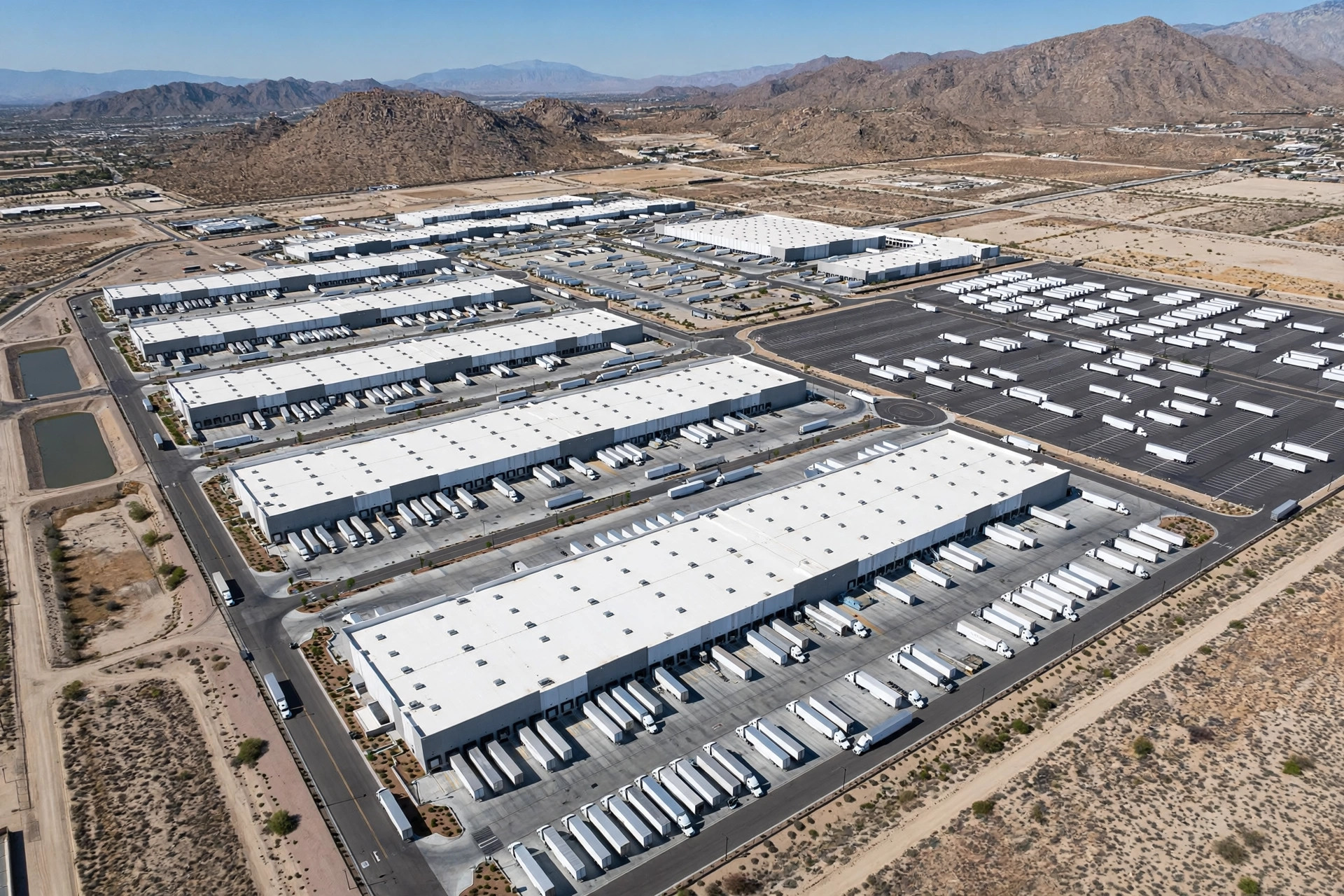
In 2023 I walked a warehouse in California's Inland Empire, roughly 120,000 square feet, running e-commerce fulfillment with a power bill that was hard to ignore. The landlord came to the tenant with a friendly pitch: the roof was sitting empty, why not put it to work and split the benefit. The tenant liked the sound of it. After all, the tenant paid the power bill, so cheaper power sounded like a straight win. Then the lease showed up. It was a triple-net lease. The tenant paid the power bill, but the landlord owned the roof. If the tenant paid for the system, the panels would stay with the building when the tenant left. The landlord would collect roof rent in the meantime and end up with a more valuable building, without putting money in. Nobody was cheating anybody. The lease was written exactly that way. The tenant just had not asked who pays, who benefits, and what happens at move-out before getting excited.
The roof itself made things worse. The waterproofing membrane had less than ten years of life left, while the panels were meant to last twenty-plus. Somewhere in the middle, the membrane would need replacement, which meant taking panels down and putting them back up, and the contract said nothing about who would pay for that round trip. A structural engineer also flagged the load question. An older roof does not automatically carry a full field of panels plus maintenance walkways, and the engineering review and any reinforcement were nowhere in the quoted price. Then came the grid queue. The system went up, but the meter change and interconnection approval took the better part of a year, and for months the tenant paid rent and loan payments while the panels sat in the sun producing nothing it could use. None of that appeared on the sales sheet either.
Warehouse Rooftop Solar Is a Lease Question First
Under a triple-net lease, the split incentive is the whole problem in one sentence. The roof belongs to the landlord and the power bill belongs to the tenant, so cost and benefit naturally land on different people. A tenant who funds the system is effectively renovating somebody else's asset. A landlord who funds it has little reason to bother, because the savings show up on the tenant's bill, not theirs. This is not a technology problem. It is an alignment problem, and no panel efficiency figure fixes it.
Before talking about output, I settle three questions in writing. How many years are left on the lease, and does the system life fit inside the lease plus a realistic renewal. Who owns the system at expiry, and who pays to remove it and restore the roof. Who absorbs lost output and repair costs when the roof leaks, needs maintenance, or gets replaced. If those three cannot be answered cleanly, the generation math does not matter yet.
I saw the mirror image of this in 2024. A tenant signed a twenty-year power purchase agreement while holding only eight years of lease term, with renewal still unnegotiated. The power deal outlived the tenancy by more than a decade. Moving out would mean paying to exit the agreement or finding a successor tenant willing to take the same price, and a successor is under no obligation to like that price. Cheap power, locked in the wrong shape, turned into a weight the tenant could not move.
Smaller lease points become big arguments later: whether roof rights are exclusive, whether the landlord can add other equipment on the same roof, and whether future rooftop units will clash with the panel layout. Settle them now, while everyone is still friendly.
The Roof and the Grid Set the Real Timeline
The roof and the grid decide when a project actually starts paying. On the roof, I look at three things: remaining membrane life, structural load, and warranty terms. Drilling mounts into a membrane still under warranty can void that warranty on the spot, turning a later leak into a three-way argument between the roofer and the installer, with the tenant stuck in the middle. Get the roofing manufacturer to confirm the mounting method and warranty continuation in writing before work starts. If the load does not check out, shrink the field or pay for reinforcement, and agree who pays before crews arrive.
The grid queue is the other clock nobody controls. Application, review, transformer capacity, and meter replacement each run on their own schedule, and the utility will not speed up because your lease is short. Start the interconnection inquiry before signing, at least far enough to get a capacity response before fixing the system size. Oversize the field and you may face a transformer upgrade; undersize it and you waste good roof. Peak generation and peak warehouse load do not always line up, and surplus power is not automatically credited at the full retail rate, so that treatment has to be written into the deal, not assumed. On tax credits and incentives, I give no current percentage here, because policies change and yesterday's figure is how payback charts go stale; check the official source for the latest policy before you run any numbers.
Warehouse Rooftop Solar: Own It, PPA, or Lease the Roof
There are two sides to every route here, savings on one side and a different risk on the other, and the right choice depends on what you hold and what you lack. Owning the system gives the best long-term economics, but it demands capital up front, a lease long enough to enjoy it, and full exposure to roof and interconnection risk. It fits an owner-occupied building or a tenant with a decade-plus term. A power purchase agreement needs no capital from the tenant, who buys power by the kilowatt-hour at a price usually below the grid, but the term is long, exit is expensive, and moving becomes complicated. It fits a stable tenancy that wants no maintenance burden. Leasing the roof to a developer is the easiest path: the developer funds, builds, and maintains the system, and the landlord or tenant collects rent, but the generation income is not yours, and the roof is committed to someone else for twenty years, which limits your own future plans.
| Route | Who funds it | Who saves on power | Who carries the risk | Best fit |
|---|---|---|---|---|
| Own it | Tenant or landlord | The owner | Owner carries roof and grid risk | Owned building or long lease |
| Power purchase agreement | Developer | Tenant at the agreed price | Tenant carries long-term and move risk | Stable lease, no maintenance appetite |
| Lease the roof | Developer | Nobody on site directly | Landlord carries roof commitment risk | Rent income only, no generation role |
Here is the counterintuitive judgment: the biggest system is often not the most profitable one. A full roof looks impressive, but every extra row adds load, waterproofing exposure, interconnection pressure, and surplus power that may be credited poorly. A smaller field that respects the load limit, avoids the oldest membrane sections, leaves maintenance access, and matches the building's actual load curve can produce less power and still keep more money. The cheapest kilowatt-hour on a proposal is not the same as the cheapest kilowatt-hour that survives the roof, the lease, and the queue.
My closing line is one sentence: panels are cheap, confusion is expensive, so settle the lease, the roof, and the grid before you sign.
By Lao Mi, Supply Chain Veteran (20 yrs)