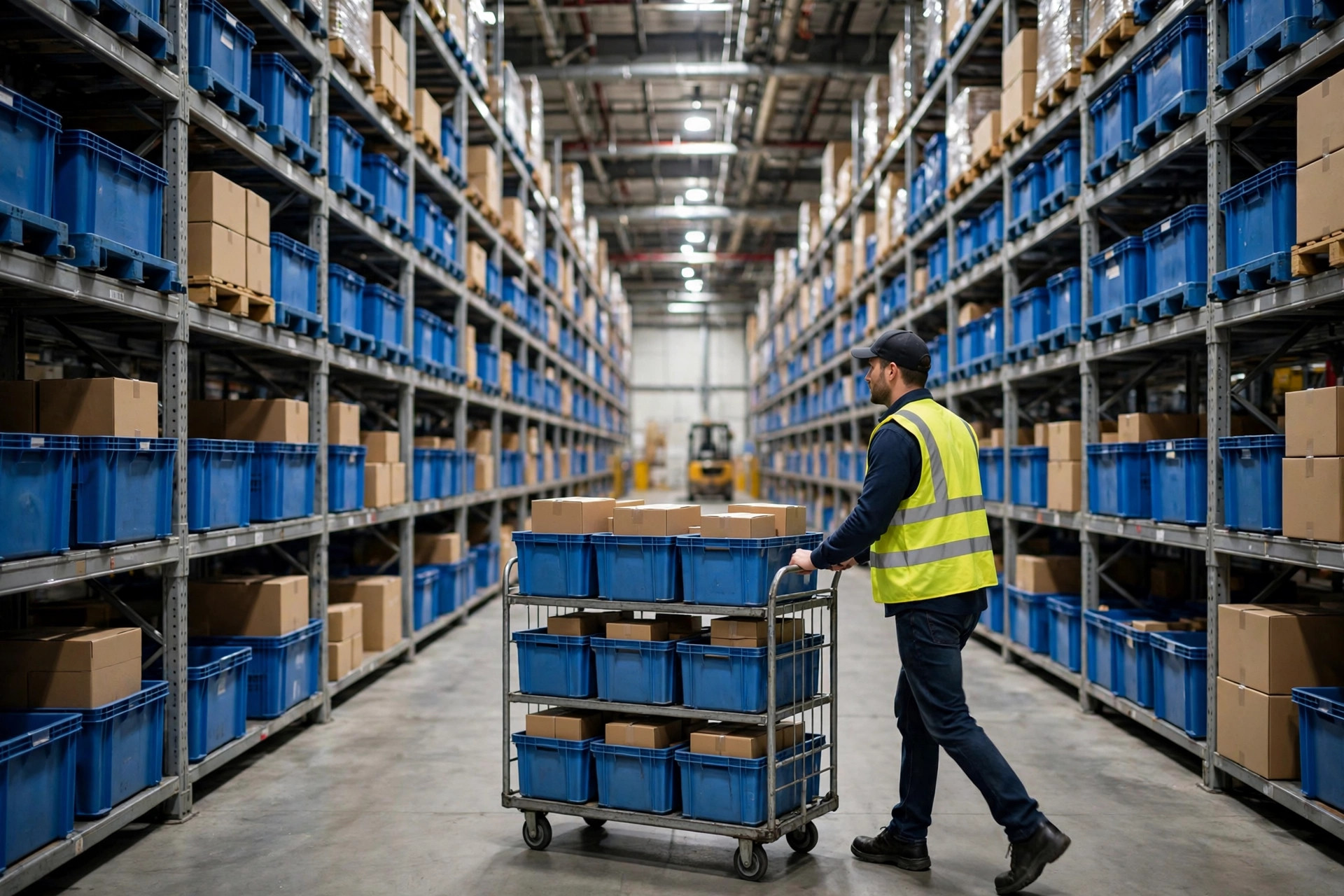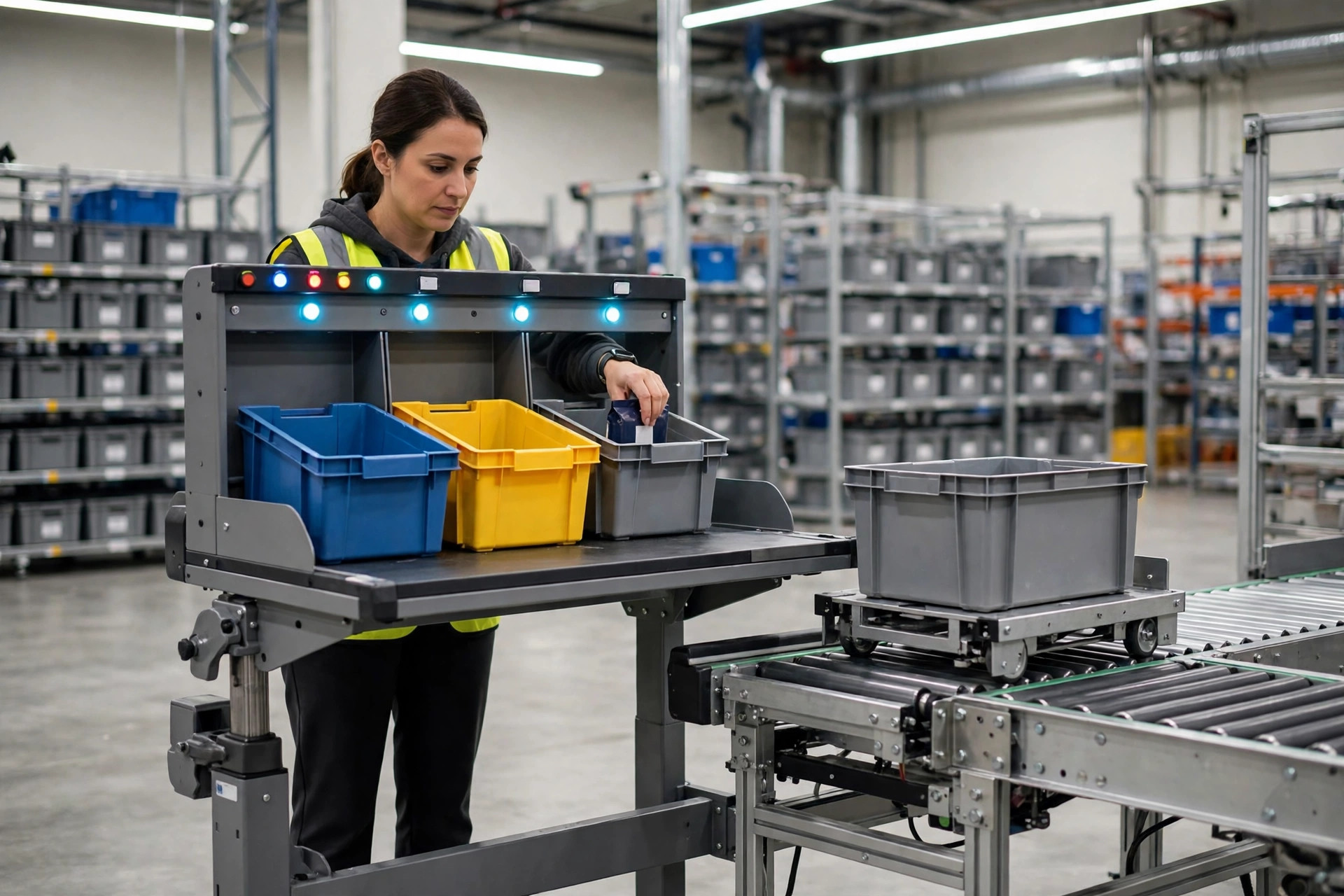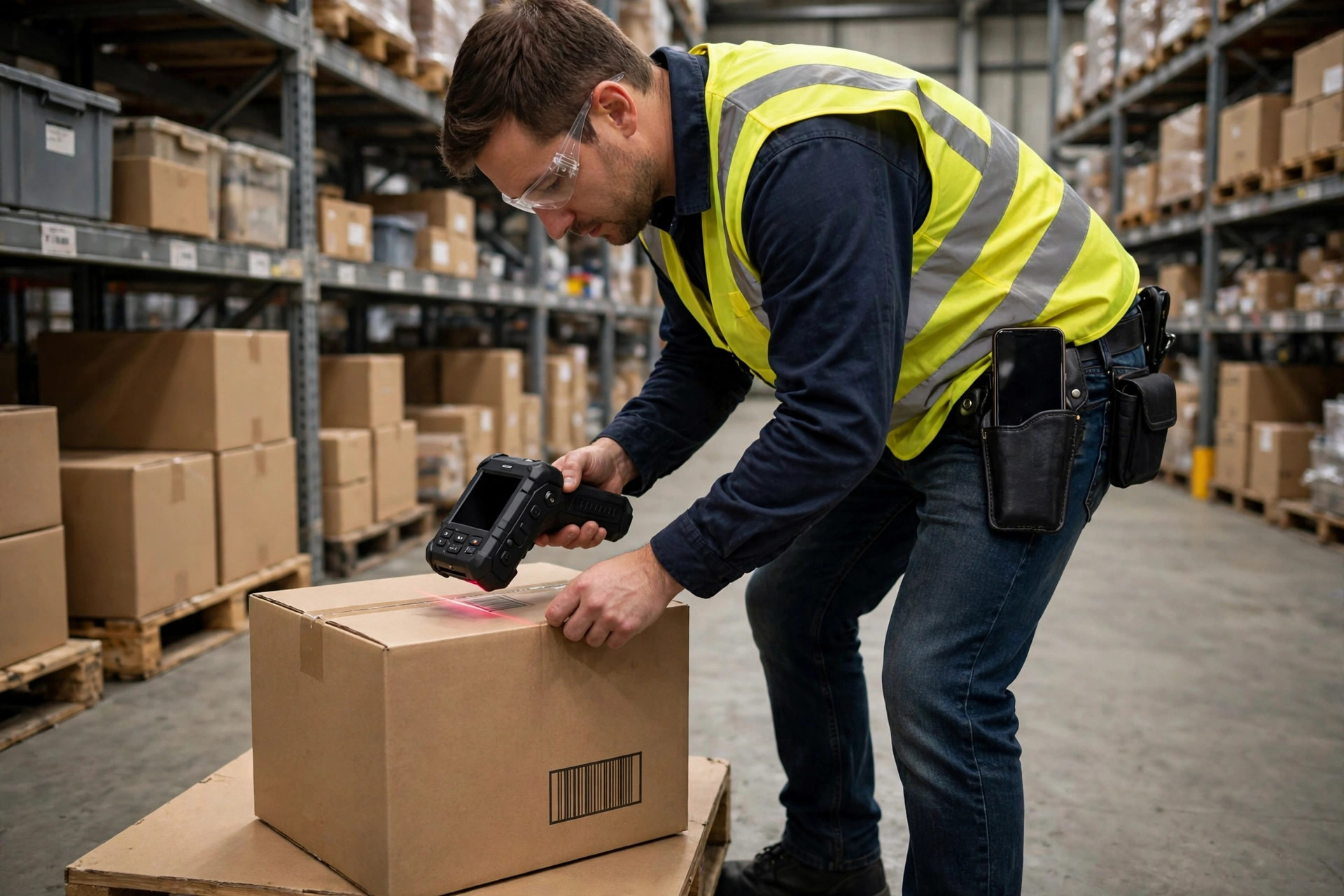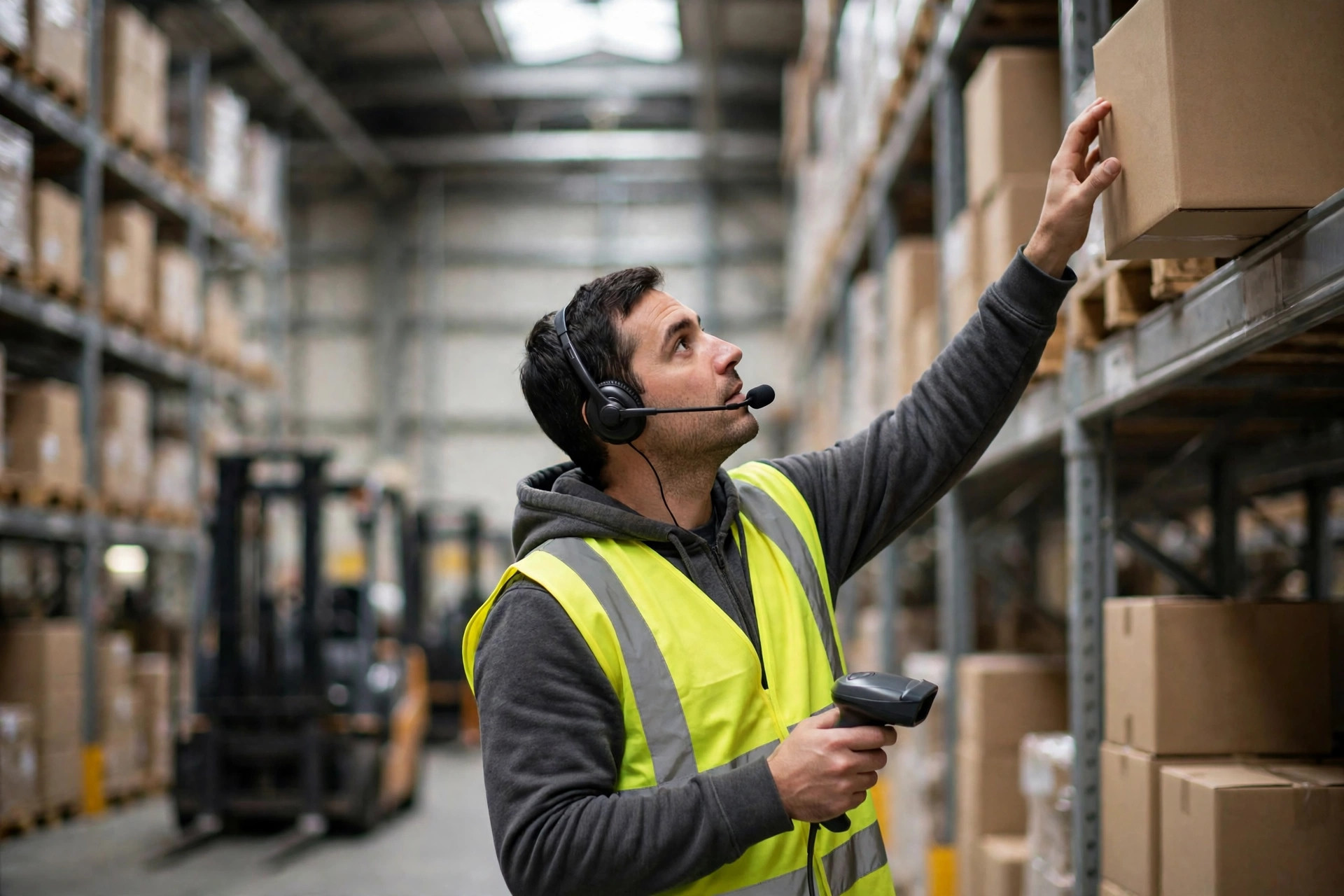
Let me be blunt: warehouse voice picking headset selection is where a lot of voice projects quietly fail. Not in the software demo, not in the integration meeting, but on the head of the picker at hour six of a shift. I have watched warehouses spend serious money on a voice system, only to see pickers slip the headset off after three days and go back to paper, because the thing on their head hurt, missed words, or kept picking up the conveyor next to them.
Think of it this way: voice picking gives each picker a partner who talks in their ear all shift. The system calls out a location and a quantity, the picker grabs the goods and talks back a confirmation, and their hands never have to stop to flip a page or tap a screen. You can understand it as driving with voice navigation: eyes on the road, hands on the wheel, the next turn in your ear. Hearing every word over wind and road noise is the hard part, and a warehouse is no different. Fans, conveyors, and forklift alarms all pile into the same air, and if the headset cannot cut through that, the picker asks twice and the pace collapses.
How Warehouse Voice Picking Headset Selection Actually Works: Ears Free, Hands Free
Strip it down and there are only three layers. First, hearing clearly: the headset must deliver the system voice while keeping shop noise out. Second, speaking clearly: the microphone must catch only the picker's voice, not the conveyor beside them, or the system will keep mishearing quantities. Third, wearing it all day: eight to ten hours on, pinching, pressure, or sweat will break concentration long before the shift ends. My field test is deliberately crude. I hand a new model to two pickers for a full shift each, one in a quiet zone and one near the outbound dock, then ask three questions: could you hear clearly, did the system understand you, and did your ears hurt? If any answer is no, that model is out, however good the spec sheet looks.
People usually start by comparing battery life and weight, and that is not wrong, just in the wrong order. My order is microphone noise rejection first, wearing comfort second, and battery life and ruggedness third. A short battery can be fixed at lunch with a swap or a spare unit. A microphone that hears dirty audio will drag down the recognition rate of the entire system, and no clever software can fully rescue that. It is like fitting glasses: the lightest frame is useless if the prescription is wrong.
The Dividing Line in Warehouse Voice Picking Headset Selection: Three Warehouses, Three Answers
There is no universal best headset, only a headset that fits your building. I draw the line by noise and by how hard the work is. The first group is the quiet warehouse: small, light items, modest daily volume, picking zones set well back from conveyors. Noise is low, so a light single-ear model is plenty. It is light, it costs less, and the picker keeps one ear open to the floor, which is actually safer. The second group is the noisy warehouse: conveyors, pack stations, and fans all running, where people on the floor basically have to shout. A single-ear model is a decoration here. The picker cannot hear, keeps asking for repeats, and the rework costs more than the better headset would have. That building needs a dual-ear noise-reducing model, full stop. The third group is the cold store or the multi-shift, high-intensity operation. Cold makes plastic brittle and drains batteries faster, and shift work means one headset may be worn by two or three people in a day. Here the deciding factors are cold tolerance, easy cleaning, and replaceable ear pads and headbands, not a few grams of weight.
Two illustrative examples show the scale of the trade-off. These figures are worked examples for planning, not published vendor test results. The first is a consumer-goods warehouse in eastern China that went live with voice picking in the autumn of 2024, handling roughly three thousand orders a day at peak. The picking area itself was not very loud, so they started with cheap single-ear models, but the dozen or so pickers near the packing line kept reporting missed words, and rechecks piled up until the packing-line zone was switched to dual-ear noise-reducing models and the problem settled. The second is an auto-parts warehouse in northern China where pickers climb high and reach deep into racks. A corded headset kept snagging on racking, so they moved to wireless and the snagging pauses largely disappeared. The price was a new end-of-shift charging routine, which the supervisor first hated, then kept, because the minutes saved beat the ten minutes spent charging. Both stories point the same way: check your noise, movements, and shift pattern before the price tag.
| Warehouse type | First choice | Metric that matters most | Cost people forget |
|---|---|---|---|
| Quiet, light items | Light single-ear model | Wearing comfort and weight | How often ear pads are replaced |
| Noisy, conveyor-heavy | Dual-ear noise-reducing model | Microphone noise rejection | How many spares you need |
| Cold store, multi-shift | Cold-tolerant model with replaceable parts | Battery performance in the cold, easy cleaning | Charging management and hygiene supplies |
That table is a decision framework, not an order form. Put your warehouse in one row first, then compare specs inside that row. If a salesperson quotes battery hours and grams but never asks how loud your floor is, assume they have spent little time on a live floor.
Maintenance Traps That Kill a Good Voice Picking Headset
Maintenance traps are quieter than selection mistakes, and they do more damage over time. The first is hygiene. A shared headset with pads that are never changed or wiped turns sour within two weeks in summer, and pickers will quietly bring their own earbuds rather than wear the shared unit, which defeats the whole system. My fix is boring and cheap: ear pads are assigned per person, and headbands get wiped weekly. It costs little and protects adoption. The second trap is charging. Wireless units left tossed on a table at the end of a shift will greet the morning crew half dead. The fix that works is to put the charging rack where the pre-shift meeting happens, so the supervisor checks charge while calling roll, and anyone short on power swaps to a spare. Nobody starts on half a battery. The third trap is treating the headset as a one-time purchase. Cables, pads, and headbands are consumables. A loose connector or a cracked cable jacket should be replaced early, not nursed until it snaps during peak, because one failure at peak costs more than a whole set of spares.
Here is a counterintuitive judgment that surprises a lot of buyers: stronger noise reduction is not always better. In zones where pickers must hear a forklift warning or a colleague shouting, heavy isolation can block the safety sound along with the noise, and a single-ear model or a design that lets ambient sound through is the safer choice. More features are not better either. Touch controls, voice assistants, and phone answering sound complete on a brochure, but a picker in a warehouse really uses two actions: hearing the instruction and confirming it. Extra features mostly add accidental touches and failure points. I am blunt about pseudo-needs: any feature your pickers will not use on the floor should be crossed off at purchase, no matter how good it looks in the spec sheet. Check the manufacturer's latest spec before you commit on any headline number, because models and ratings change and a brochure from last year is not a promise.
Finally, do the full cost math, not just the unit price. The true cost of a headset is its price plus spares, pad supplies, charging management, and downtime for repairs. A cheap unit looks good until lower recognition, extra rework, and pickers refusing to wear it eat the saving within a month. An expensive unit whose specs your floor never uses is waste in the other direction. So here is my closing test: after the same crew wears the new headset, do their picked lines per hour genuinely rise, and does that rise cover everything you paid? If yes, the money was well spent. If no, it was expensive, however good it looked in the box.
By Da Liu, Automation Engineer