A wearable ring scanner first caught my eye after an embarrassing week last winter. One of our pickers stood frozen in front of a shelf, holding a carton in one arm, a handheld gun in the other hand, and a pick slip clenched between his teeth. The slip fell. The carton nearly followed it. Nobody was lazy. We simply did not have enough hands for the job we were asking people to do.
Our small warehouse problem: not enough hands
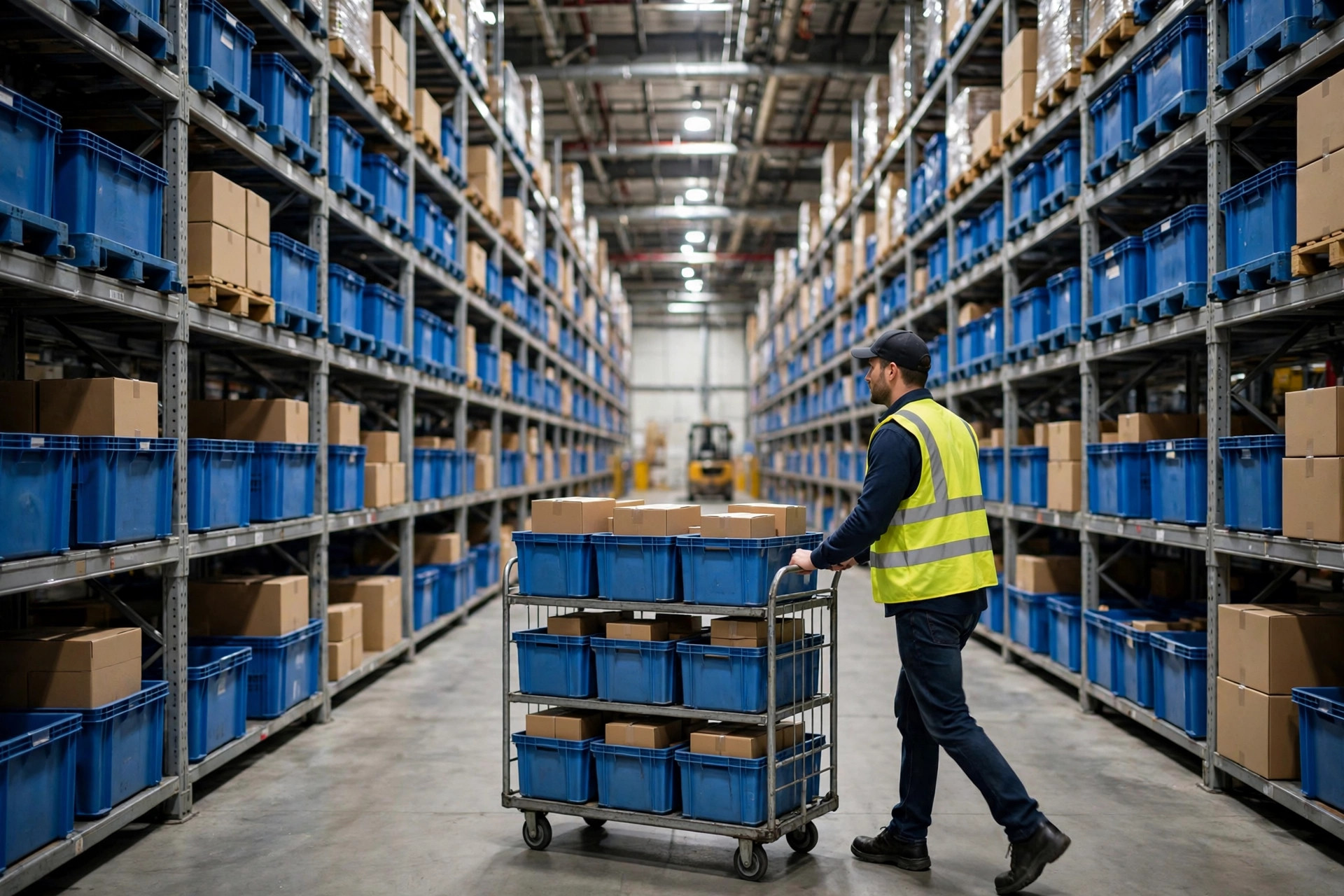
Our warehouse is about 3,000 square meters, and the picking crew, including me, is only about ten people. On a normal day the routine sounds simple: read the order, find the shelf, scan the barcode, grab the item, put it in the carton, and scan again to confirm. In practice, the handheld gun keeps getting in the way. After a scan, where does it go? In a pocket, it digs into your leg. On top of a carton, it slides off. On a shelf, it gets forgotten.
Mistakes hurt even more. With small items, a picker holding a carton and a gun at the same time keeps flicking his eyes between the slip and the shelf. One wrong scan and a whole carton has to be opened, checked, and repacked. During a promotion in November last year, we reworked more than forty cartons in three days, paid extra freight and labor, and still got two customer complaints about wrong items. I started wondering whether we could keep both hands on the work and stop wrestling with the scanner itself.
What a wearable ring scanner actually is
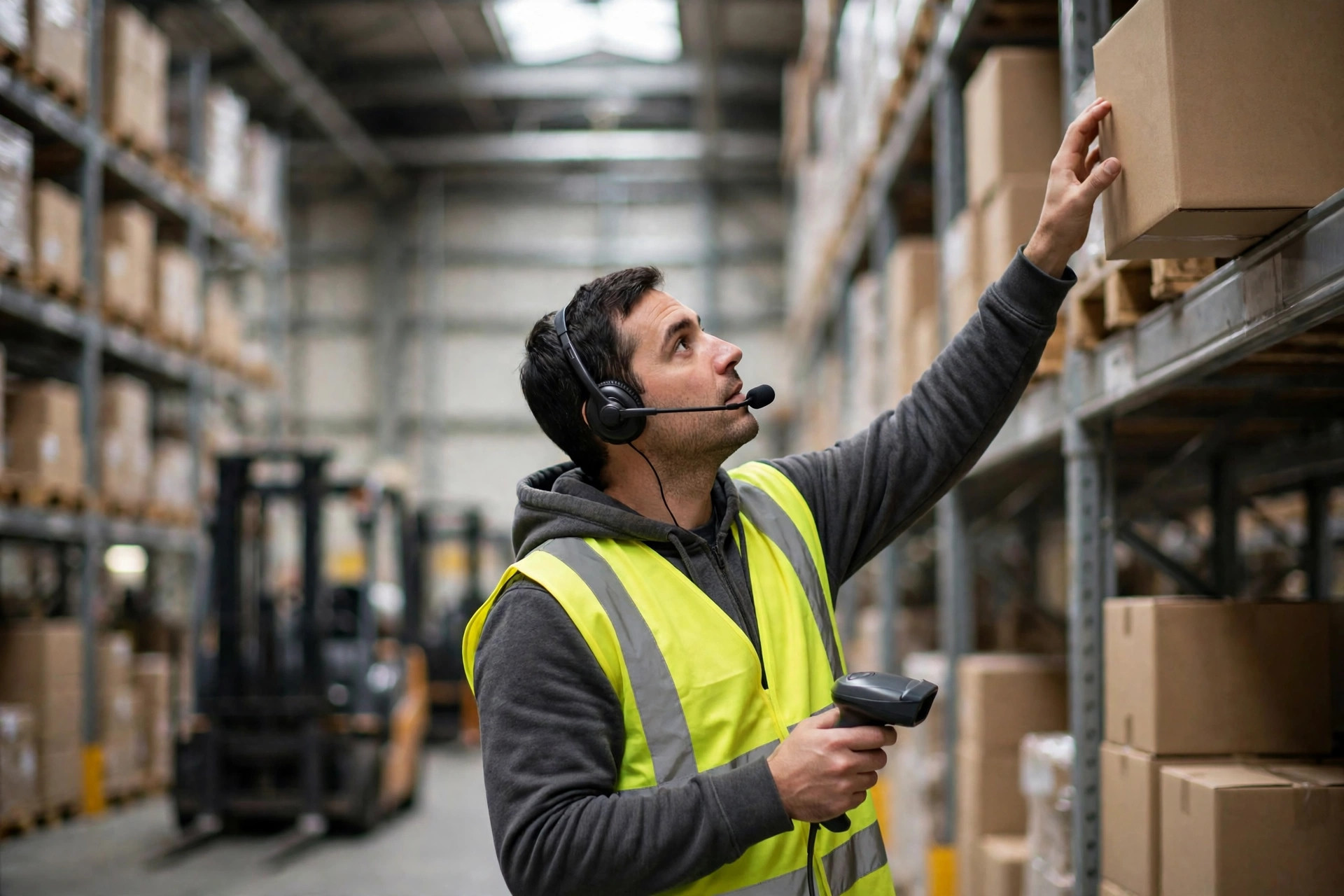
The scan engine becomes a small module worn on a finger, paired with a wrist unit or a phone or tablet. Point your finger at a barcode, hear the beep, and keep moving. The other hand stays free the whole time to lift cartons, open boxes, and stick labels on.
That change of position matters more than any fancy feature. The scan range is usually shorter than a handheld gun, so it suits close work on shelves you can reach by hand. That happens to match most small warehouses, where aisles are narrow and shelves are within arm's reach. It is a poor fit for high racks and long-distance scanning, and any seller who tells you otherwise is selling, not advising.
There are two common setups. One pairs the finger module with a wrist host: steadier, longer battery life, built for a full picking shift. The other is a lighter version that connects to a phone: cheaper, easier to start with, and a sensible choice for a small warehouse that wants to test before committing. Our rule was simple from the start. We cannot afford to burn money on this kind of kit, so we rent before we buy and borrow before we rent.
Wearable ring scanner vs glove vs handheld gun: the cost table
Feelings do not settle this argument, so here is the comparison I built from our own trial and from asking other small operators. The figures are ranges from real small warehouses, not brochure numbers, and any exact specification should be checked against the manufacturer's current spec sheet.
| Factor | Ring | Glove | Handheld gun |
|---|---|---|---|
| Unit cost | Mid-range, typically a few thousand yuan per set | Higher than ring | Lowest entry cost |
| Hands free | Both hands mostly free | Both hands free, but hot | One hand tied up |
| Picking speed change | About 10%-25% faster on small-item, high-volume work | Similar to ring, drops fast in summer heat | Baseline |
| Error change | Fewer reworks, eyes stay on the goods | Similar to ring | Worst when rushed |
| Wearing comfort | Light, can pinch after long wear | Sweaty, needs washing | Nothing to wear, but you grip it all day |
| Charging and upkeep | Daily collection, charging, and pairing | Same upkeep, plus glove laundry | Grab and go, least upkeep |
| Best for | Small items, many SKUs, close-range picking | Same small-item work | Large items, long range, occasional scans |
The row most buyers skip is charging and upkeep. A handheld gun with a dead battery just gets a fresh battery. A ring setup has to be collected at the end of the shift, charged overnight, handed out again in the morning, and checked for pairing problems. In a ten-person warehouse, that takes one person roughly ten to fifteen minutes a day. If nobody owns that job, a dead ring in the middle of a shift is worse than a gun ever was.
Two warehouses, two ledgers, and my verdict
Our own trial started in January 2026. I rented eight ring sets for three months. Spread across the rental period, the monthly cost came to less than the price of one handheld gun per month, which felt like a survivable mistake if it failed. We put the sets on two jobs only: small-item picking and pack-out checking. After the first month, pickers on the small-item job went from around 40 orders per person per hour to around 48, and reworked cartons fell from more than ten a week to three or four. Pack-out barely changed, because checkers already stand at a bench where a gun works fine, so we pulled the sets from that job and kept them where they paid.
A friend's warehouse in Jiaxing tells the other side of the story. His operation is bigger, with more than thirty pickers handling household goods, and in September 2025 he bought forty ring sets outright without a trial. Within the first week, half his crew complained the rings pinched, and the larger finger sleeves slipped. Several workers with sweaty hands found the scanner sliding and needing a second aim. Worse, part of his stock is large appliances with barcodes printed far from the handler, and reaching in close with a ring was slower than pointing a gun from a distance. In the end only about half the sets stayed in use for small items.
The device is not good or bad on its own. It is good for the wrong warehouse only when nobody checks the goods, the order profile, and the shift pattern first. The same kit is a lifesaver in a small-item warehouse and a nuisance in a large-item one.
Here is the counterintuitive part: the real gain is not speed, it is attention. A 10%-25% speed gain can also come from adding a person or fixing a bad travel path. What you cannot buy as easily is a picker whose eyes and hands stay on the goods instead of hunting for a gun, setting it down, and picking it up again. For a small warehouse, one wrong order costs more than one slow order. A rework plus a complaint can wipe out several days of equipment rental.
My advice to warehouses like ours follows the order I learned it in. Ask the vendor for a rental or a two-week trial, and measure only two numbers during that trial: orders per person per hour and reworked cartons per week. If neither number improves, stop talking. Give the kit only to the jobs that fit it: small items, high volume, close barcodes. Keep the gun for large items, long scans, and occasional work. Mixing tools is not a sign of failure. When you do the full costing, include charging time, replacement finger sleeves, and pairing support, not just the unit price. And write down who collects the kit, who charges it, and who fixes it when it breaks. That rule matters more than buying a fancier model.
One honest boundary closes the case. If your warehouse ships fewer than two or three hundred orders a day, you probably do not need this at all. A handheld gun and a well-laid-out pick slip will do the job. This kind of kit is for warehouses that are too busy to keep juggling a gun, not for warehouses that want to look advanced. We small operators cannot afford to burn money. Every yuan has to buy fewer mistakes, faster orders, or an earlier finish for the crew.
Small warehouses have their own way of surviving. We do not need to match a big corporation's equipment list. If mistakes fall, orders move faster, and the crew gets home earlier, that is a good tool, whatever it is called.
By Xiao Ma, Small Warehouse Owner