It was a Tuesday morning last November, just after 8:40, and the day's first visitor management problem was already calling me. Old Zhang from the gatehouse was on the line.
"Boss, two people from the customer side are here to look at their goods. Their car's already at the gate."
I told him to have them wait in the gatehouse, that I'd be right there. When I walked over, the gatehouse was empty. Zhang was standing at the mouth of the picking aisle, looking helpless, pointing inside. "I turned around to answer a call," he said, "and they walked in on their own. Said they knew the way."
The picking area was at full tilt. Two forklifts were turning in the main aisle, pickers pushing carts back and forth. Two people in suits, no hard hats, stood between the racks looking up at location numbers. My stomach dropped. In that minute I wasn't thinking about procedures. I was thinking about what happens if a pallet slides off a high bay right then, and how I would explain it to their company.
We got them out, they saw their goods, and the customers were gracious about it. But I knew the truth of it. This wasn't a case of "no harm done." It was a case of "luckily, no harm done." Our warehouse visitor management at that point was a sign-in book. A visitor wrote a name and a phone number, the guard nodded, and in they went. And the fuller that book got, the less I trusted it, because nobody ever went back to check whether the people in it had actually left, or where they had been, or how long they had stayed.
Visitor Management Is Not a Form, It's Keeping Eyes on People
After that morning I sat down with the gatehouse lead and the safety supervisor and went through six months of sign-in books. Here's what we found: roughly a third of the entries had a name but no entry time, and on several pages the exit column was simply blank. You could not tell from the book whether a person had left the building.
Drivers are the hardest group, and also the most common. A driver waiting two hours for a load gets restless. He wants a smoke, he needs a restroom, he wants to see how his loading is going, and his legs carry him inside on their own. One winter night shift, a driver who had waited nearly two hours slipped along a fire corridor toward our chemical storage area. Luckily that door is normally kept locked. He pushed it twice, gave up, and walked back. The night supervisor only found out from the cameras. If that door had happened to be unlocked that night, I don't want to think about what follows.
So here is how I see it now. The sign-in sheet is dead paper; the people are alive. What you actually have to control is three things: who this person is, where they are allowed to go, and who is walking with them. If any one of those three is missing, the prettiest sign-in book in the world is decoration.
Three Kinds of Visitors, Three Different Rules
We stopped sorting visitors by which company they came from and started sorting them by what they came to do. Different jobs mean different zones and different escorts.
| Visitor type | Areas allowed | Escort rule |
|---|---|---|
| Customer inspecting goods or touring | Reception, designated tour route, inspection zone | Escorted the whole time, fixed route, no entry into working aisles |
| Driver picking up or delivering | Dock, driver waiting area | Waits in the waiting area until called, no entry into picking or storage zones |
| Maintenance or contractor | Work site and the direct route to it | Accompanied by the job owner; hot work and work at height need separate approval |
That table is posted on the gatehouse wall and in the driver waiting area. Drivers pushed back at first. They said they used to be able to walk in and check on their freight. I told them straight: this isn't about trusting you, it's about the fact that a forklift driver can't see you. That main picking aisle carries hundreds of forklift movements a day. A person in street clothes standing in it is invisible from a forklift seat. If something happens, neither of us can carry it. Once I put it that way, most of them got it. For the ones who still wanted to see their goods, I let them watch from the tour route. They can see the freight; they just can't stand in the aisle.
Then there is the group everyone forgets: the job candidate, the person dropping off documents, the supplier popping in with a sample for ten minutes. Because the visit is short, people think it doesn't need the process. To be honest, those short visits are the riskiest kind, because nobody escorts them and nobody records them, and ten unaccounted minutes is plenty of time to wander somewhere you shouldn't be. In our warehouse now, short visitors sign in and get a badge too. The host at reception can walk with them, but their range is limited to the reception area.
The Three Leaks in Visitor Management
The first leak is lunch and shift change. For about half an hour while the gate team hands over, the new guard hasn't got the picture yet and the old one already has one foot in the canteen. That is when someone slips through. Our fix is simple: during handover, every incoming visitor waits in the gatehouse until the handover is signed off in the log. Five minutes slower beats one person unaccounted for.
The second leak is the familiar face. The regular driver, the regular supplier, they know the guards by name, they wave, and they walk in. Familiar faces are the hardest to stop, and here is the uncomfortable part: they are also the ones who know which door is usually unlocked and which corridor nobody watches. I made a rule for the gate team, and it applies to everyone equally: familiarity changes nothing. Regulars follow the same process, precisely because they know the building well enough to get around it.
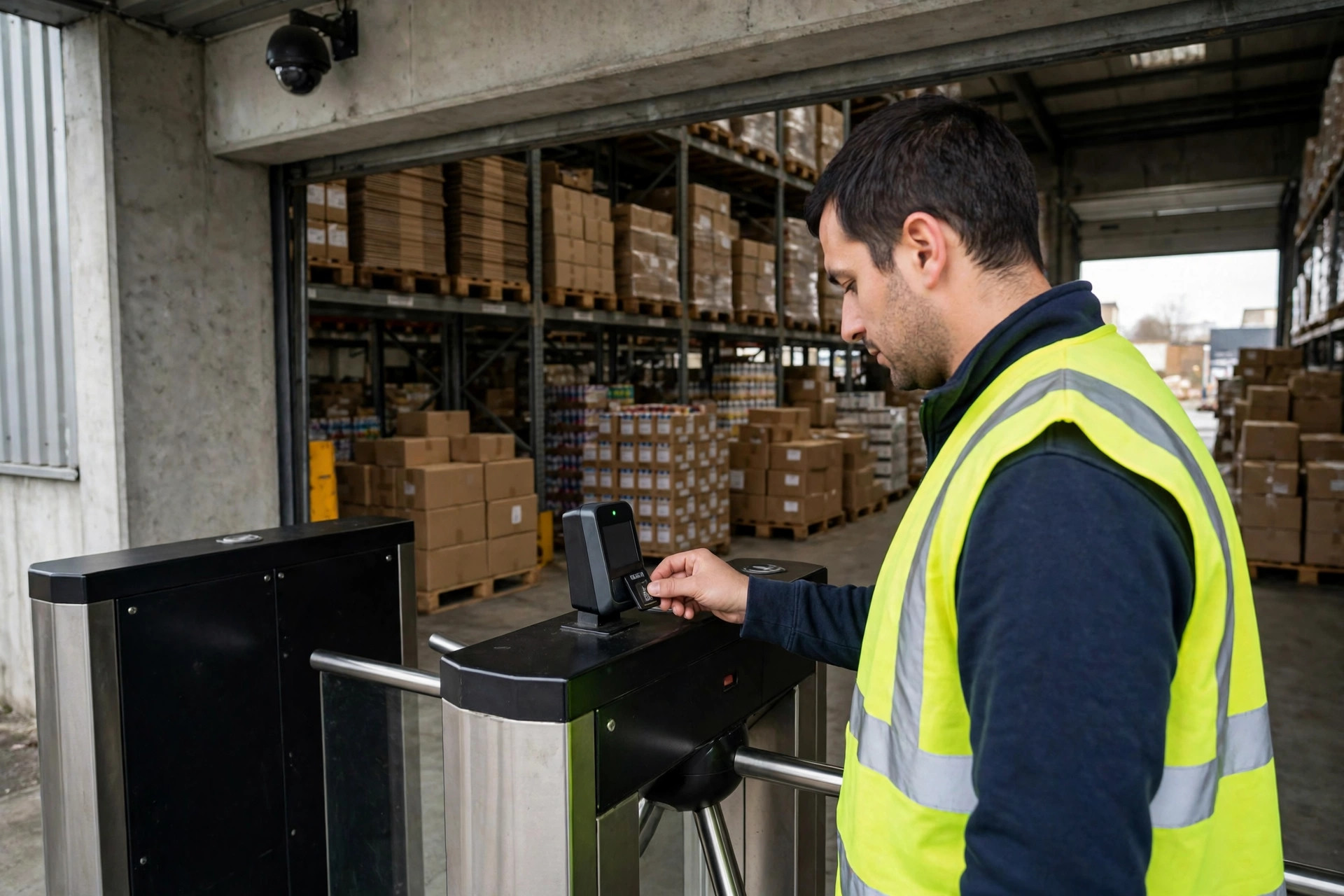
The third leak is the exit. Plenty of warehouses control entry and ignore exit. A badge gets issued, and nobody collects it, nobody counts heads. We flipped that around. Badges are color-coded by zone, and the guard collects them at the gate and counts people out. If the count doesn't match, nobody leaves until we know why. It sounds fussy, but it caught something real once: a tour group came in with six people and counted out five. We found the sixth on the phone in the sample area. He walked out a minute later, no harm done. But that day convinced me the exit check is not optional.
How We Do It Now in Our Warehouse
Here is the routine we run today, and you can lift it as-is.
One gate, and only one. Every other door stays locked except in an emergency. People complained about convenience at first. But more doors mean guards spread thin, and spread thin means someone gets missed. One gate, two people, and the job is actually doable.
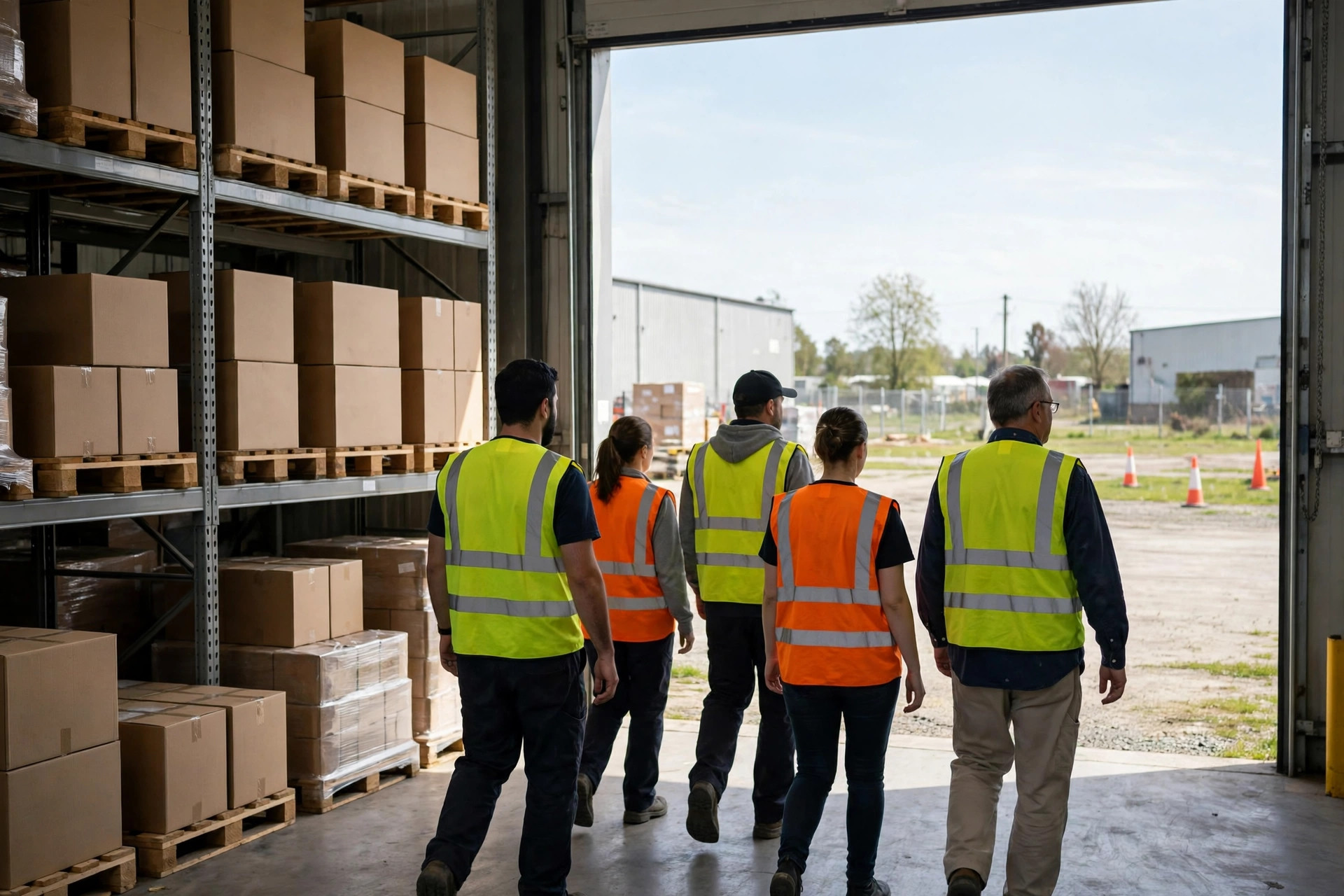
Gear before entry. Hard hat, hi-vis vest, visitor badge, all three, no exceptions. Customers in suits get the same treatment.
One named host per visitor. Whoever receives a customer walks with them the whole visit. No handing the visitor off to someone else, no "have a look around while I take this call." If the host has to leave, the visitor goes back to reception and waits.
A headcount before close. Every day before the warehouse shuts, the gate team checks the day's log: are all badges back, has everyone left? Anyone unaccounted for gets a phone call. It is the dullest measure we have, and also the most reliable.
And one last thing for anyone running a warehouse: the warmer the welcome at the gate, the easier it is to let someone slip past. That sounds backwards, but it is true. You hand over the tea, you exchange pleasantries for ten minutes, and then you feel rude stopping the person when they turn toward the warehouse. Keep the warmth in the reception area. At the gate itself, be polite, be firm, and follow the rule. Once the rule holds, customers actually relax, because they can see this is a warehouse that has itself under control.
Visitor management, in the end, is about people and habits. Change the habits and the process runs itself. Leave the habits alone and no amount of policy on the wall will save you.
By Chen Feng, Warehouse Operations Manager