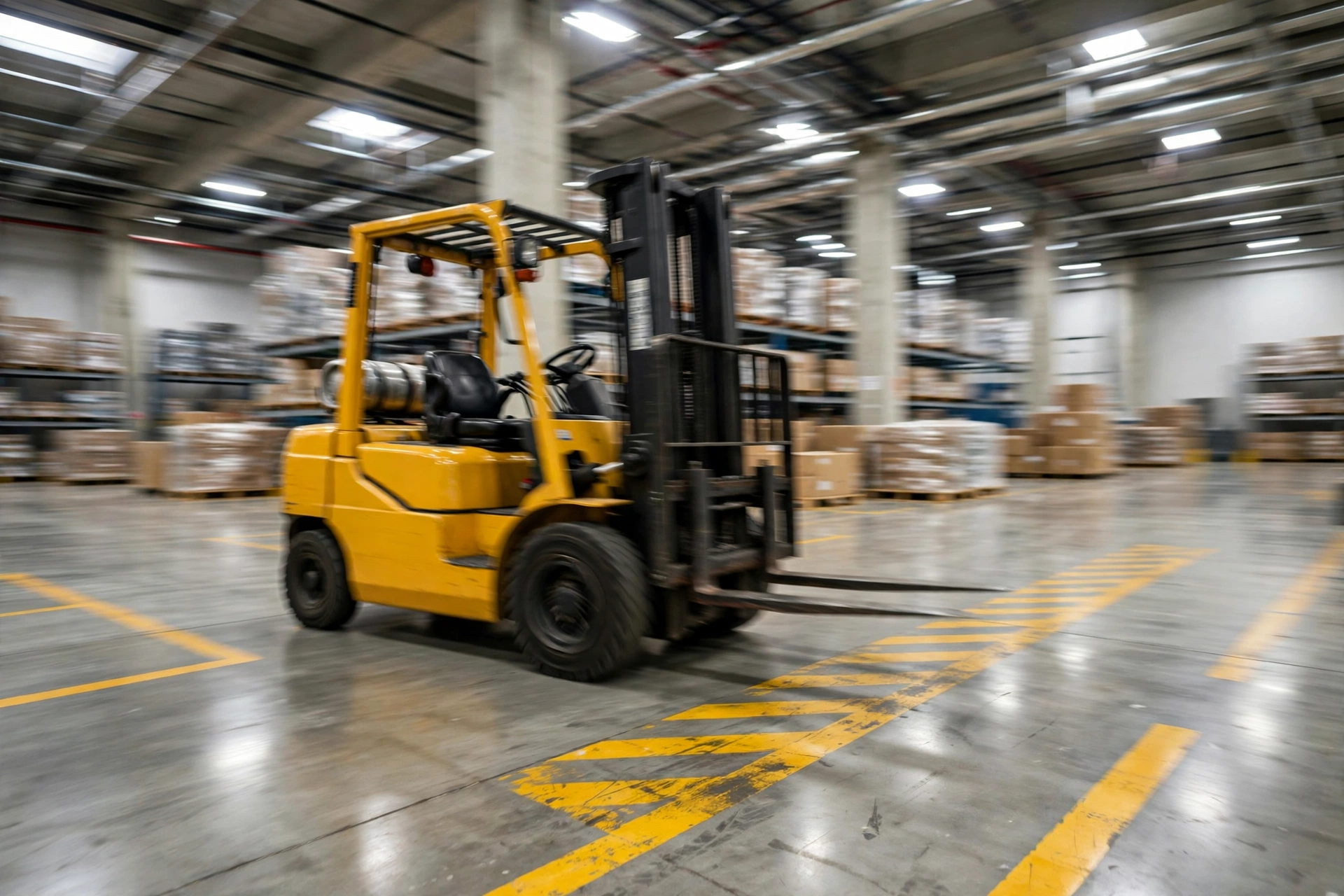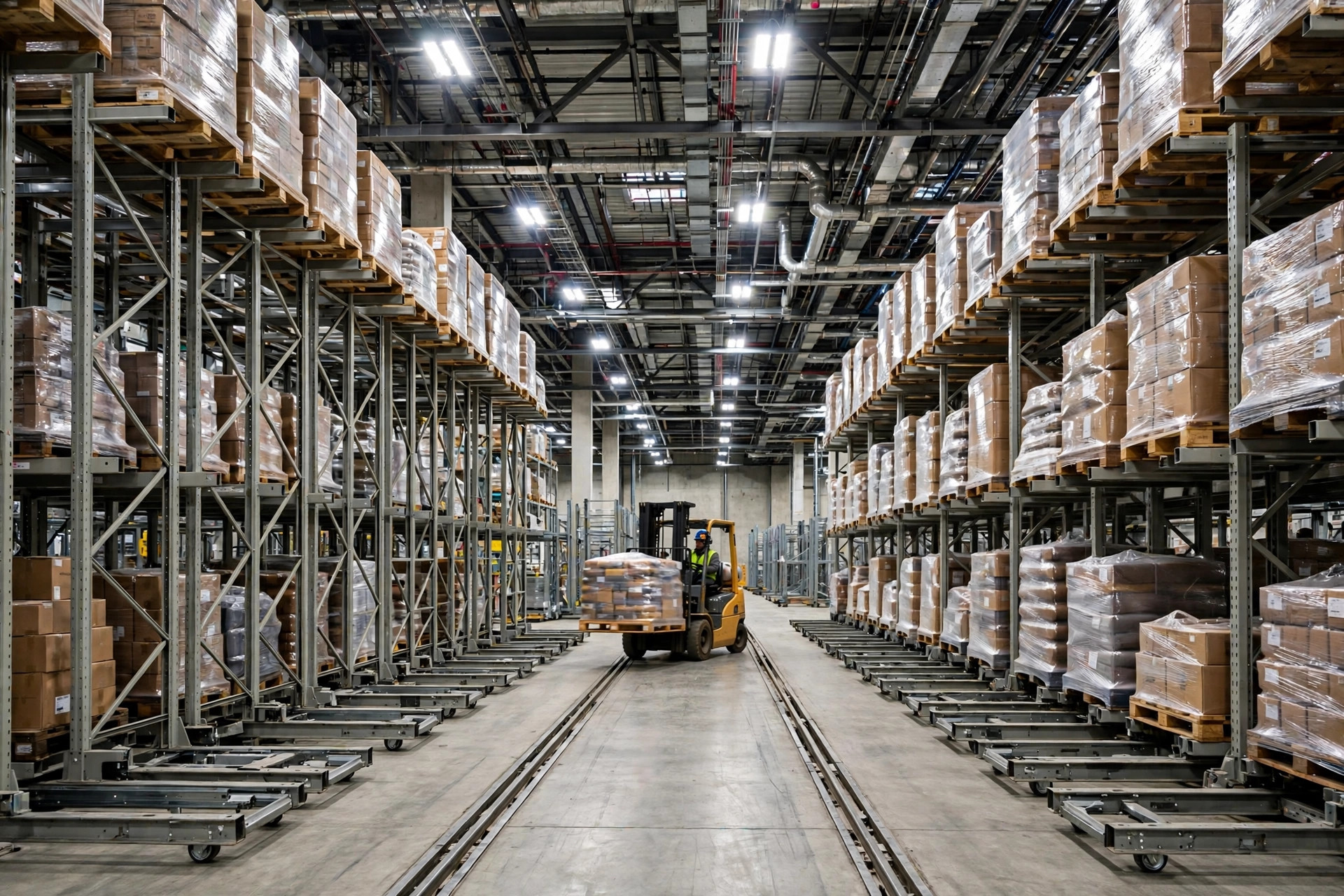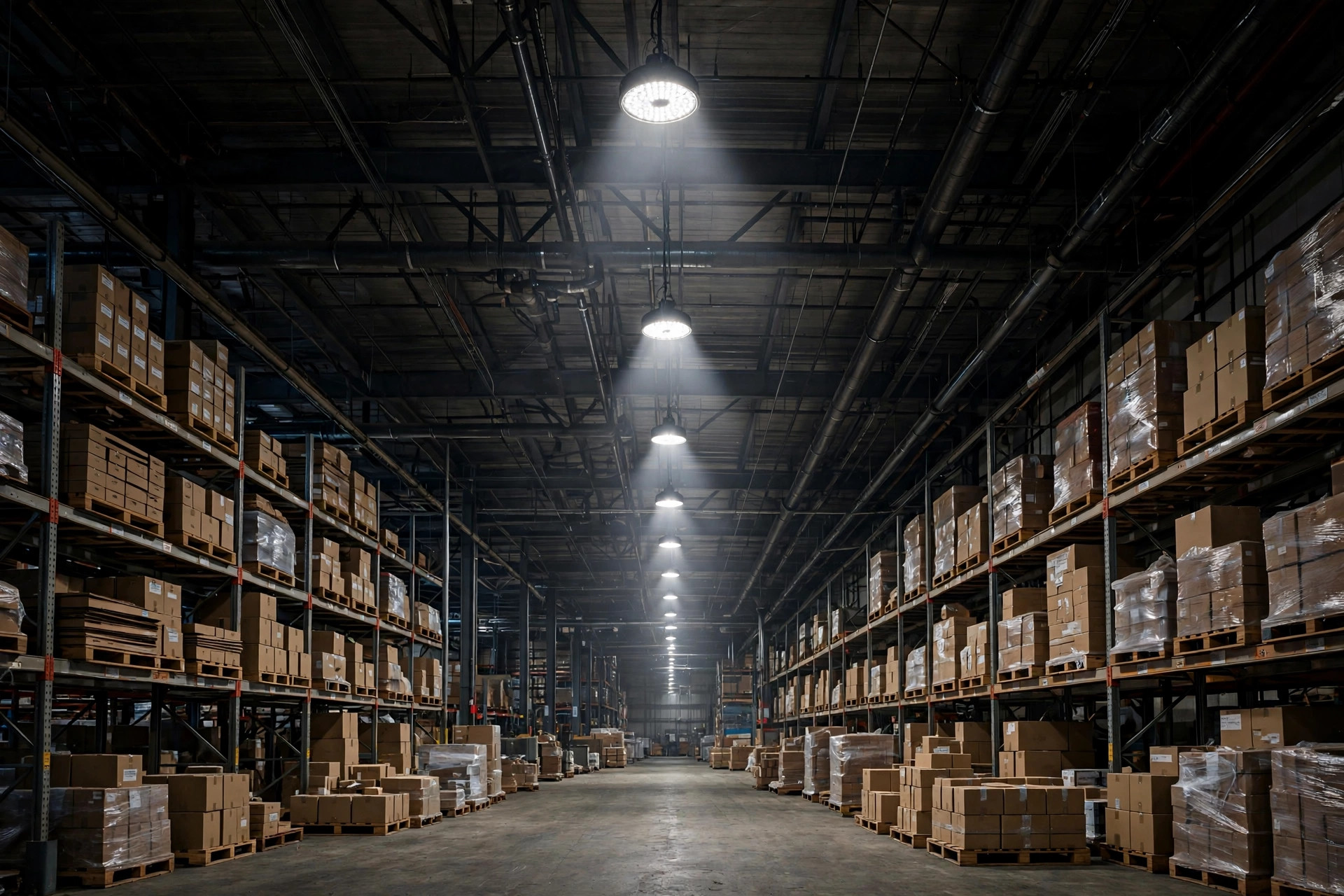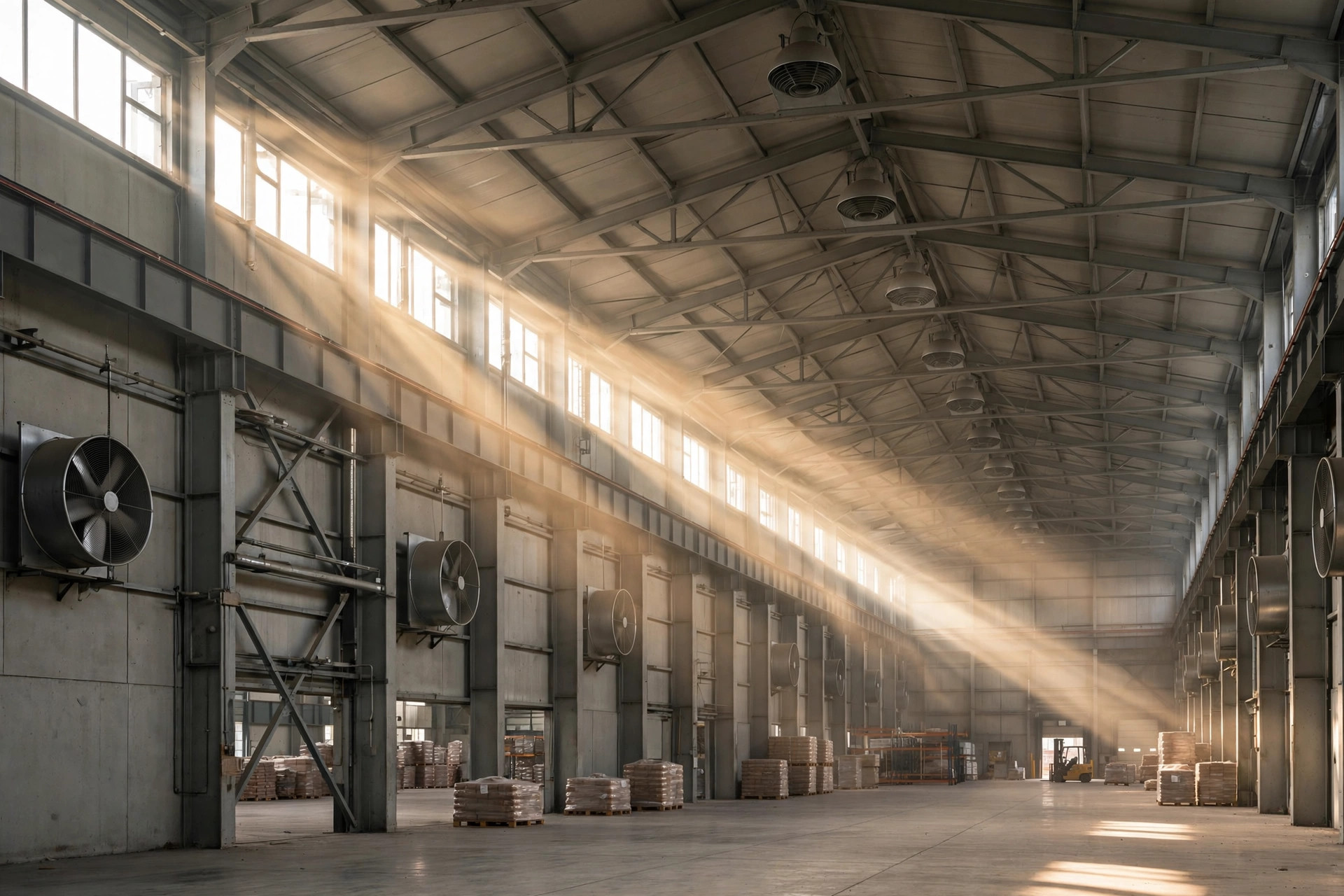
We had a client who leased a 200,000-square-foot warehouse in Southern China for FMCG distribution. One July afternoon, the manager called: the wall thermometer read 42°C, two pickers had gone to the clinic with heatstroke, and HR had forwarded a formal heat complaint to headquarters. The client's boss called me and said, "Susan, you told us 9-meter ceilings meant great natural ventilation. Why is it an oven?"
All I could do was laugh. We toured that building in March, with a spring breeze in the air. Tenants have a chronic habit: they tour warehouses on sunny days, and sunny days never reveal what July will do. Ventilation is one of those things you never ask about during the tour — and after you sign, it's your problem.
That client later spent roughly $60,000 on a ventilation retrofit, and indoor temperatures dropped 8–10°C. Let me break the math open: the three accounts every tenant needs to settle on warehouse ventilation requirements, where the money should go, and the three questions to ask a landlord before signing. Years on the 3PL side of the table taught me these contract clauses better than most landlords know them.
Account #1: Heat — Getting Warehouse Ventilation Right
Here's a contrarian take: for a big warehouse, cooling with air conditioning is a dead end. Ventilation is the answer. A 200,000-square-foot building with 9-meter ceilings holds around 6.4 million cubic feet of air. Central AC for that volume would eat a year's warehousing margin — and cold air pools uselessly at the roof while the people on the floor keep sweating.
What works is a three-part combo. First, roof ventilators: hot air rises, so give it an exit. Our client installed 60-plus turbine vents at a few hundred dollars each — the best value in the whole project. Without an outlet, heat builds a thermal blanket under the roof that slowly bakes the building.
Second, negative-pressure exhaust fans plus cooling pads. One 46-inch fan moves roughly 100,000–140,000 cubic feet per hour; a dozen deliver 4–6 air changes per hour (ACH). Air changes are the key sizing metric: 4–6 ACH for plain storage, 8–10 ACH for zones with heat-generating equipment or dense labor. Below 4 ACH you've installed decoration; above 10 you're burning electricity.
Third — cheapest, most commonly missed: open the intakes. I've seen warehouses with beautiful fans where every window was sealed shut. The building goes negative, doors get hard to open, airflow collapses. First law of warehouse ventilation: every exhaust needs an intake, at least 1.2× the exhaust area. Costs nothing. Nine out of ten warehouses get it wrong.
Post-retrofit, the work zone dropped from 42°C to about 32°C. Still hot, but workable — complaints went to zero. Amortized over three years, barely a thousand dollars a month. Far cheaper than one workers' comp case.
Account #2: Forklift Fumes — Diesel and Electric Are Two Different Worlds
Another client runs auto parts out of California with 20-plus forklifts, split between diesel and LPG. In 2023 they got an employee complaint: headaches after a morning in receiving. EHS found carbon monoxide near the docks approaching local exposure limits at peak hours — OSHA's 8-hour CO limit is 50 ppm in the US, though exact numbers vary by jurisdiction, so always check local regulations. Either way: combustion forklifts in an enclosed space are a ticking clock.
Here's the insider detail: many 3PL quotes list forklifts as "configured as needed," and clients pick diesel to save a few thousand a month on paper. What nobody mentions is that diesel ventilation costs extra. Combustion-forklift zones need 8–10 ACH by design, plus CO detectors mounted low — exhaust gas is hot and rises, so a detector mounted too high is decoration. Stack those hidden costs and the diesel "savings" evaporate.
Our advice is now a straight decision table:
| Option | Sticker cost | Hidden ventilation cost | Best for | | Diesel / LPG forklifts | Cheaper, more torque | 8–10 ACH + CO alarms + testing; pricey retrofit | Outdoor / semi-open yards | | Electric forklifts | 20–30% pricier, needs charging area | Standard 4–6 ACH; charging zone needs hydrogen venting | Enclosed warehouses |
In an enclosed warehouse, electric forklifts look expensive until you add the ventilation math — then they're cheaper. No exhaust means no complaints and one fewer EHS audit headache. First-time tenants never see this trade-off coming; by the time fumes surface, the forklift contract is signed and the termination penalty exceeds the retrofit.
One more detail: electric charging areas. Lead-acid batteries release hydrogen while charging, and hydrogen rises — the charging zone needs dedicated exhaust at the roofline. Most small operators have no idea. When we tour a building, exhaust over the charging area is a mandatory checklist item.
Account #3: Dust — Get This Wrong and People Get Hurt
The scariest story. A client doing metal polishing in an 80,000-square-foot warehouse kept a grinding zone in one corner. Metal dust with poor ventilation brings two risks: long-term worker health damage, and combustible-dust explosion risk at high concentrations. The client figured "an open window is fine" — until the fire inspector issued a correction notice, and they came to us panicking.
Dust plays by different rules. Heat and fumes are about whole-building air changes; dust is about capture at the source — local exhaust hoods at the dust point, pulling particles out before they spread, then filtering through a dust collector. Not a line item to cheap out on, and the design needs a specialist firm. We flag it and refer vendors; we don't pretend to engineer it ourselves.
But one account is clear: dust ventilation looks expensive until you price a shutdown. Two weeks of halted production after a correction order — lost orders and penalties would buy ten dust-collection systems. Clients budget the capex and ignore the risk. Somebody on the 3PL side has to do that math.
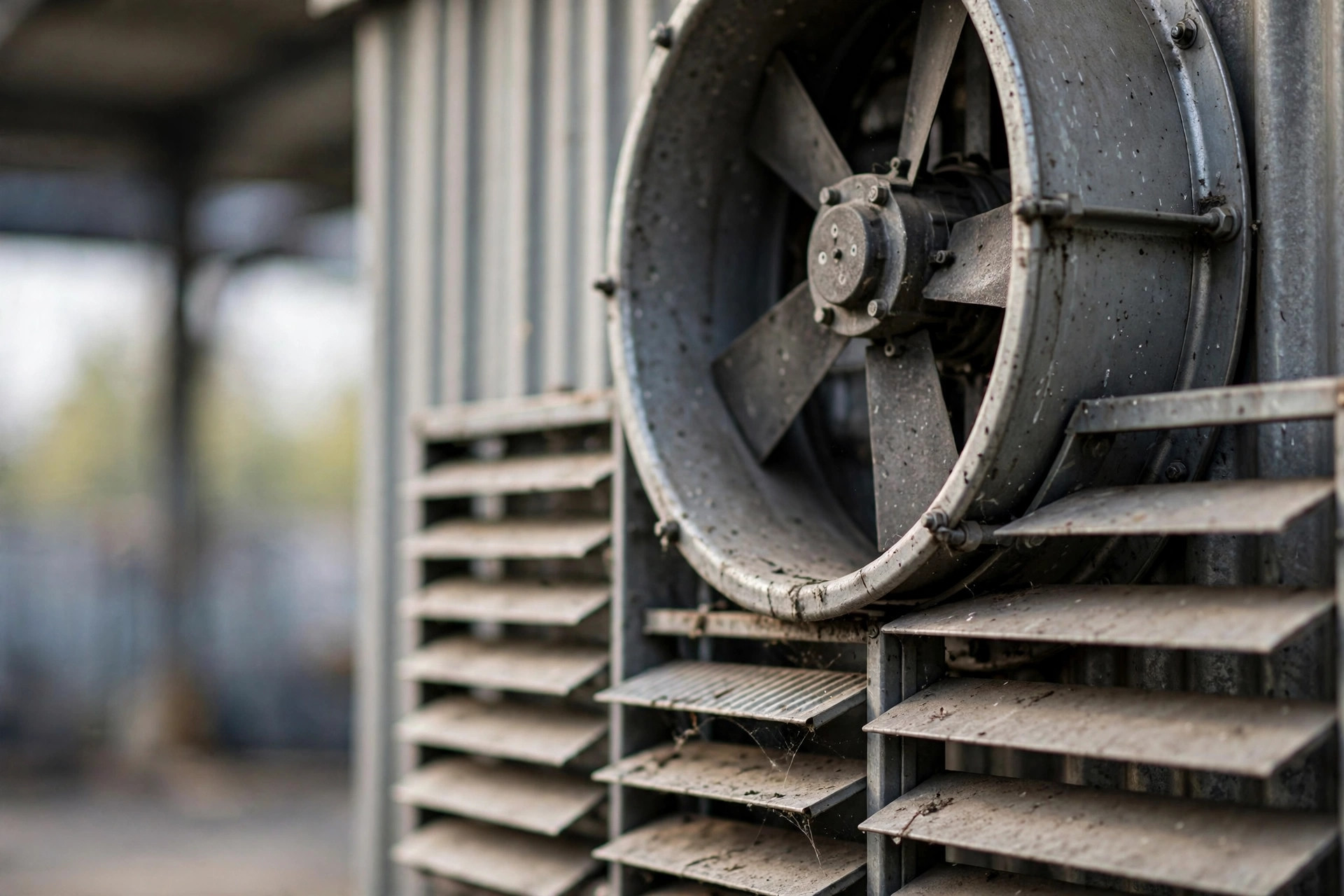
The retrofit ROI, all in one place. Three stories told; here's the consolidated ledger for a 200,000-square-foot building:
- Basic (roof vents + tune-up): ~$7,000–15,000. Fixes stuffiness, drops 3–5°C. Fine for pure storage.
- Standard (+ exhaust fans + cooling pads): ~$40,000–70,000. 4–6 ACH, drops 8–10°C. Right for pick/pack-heavy operations.
- Enhanced (+ dust capture / charging-zone exhaust / CO monitoring): another $20,000–40,000, stacked by operation type.
Payback comes in three buckets. Labor stability — recruiting and training one experienced picker costs more than several fans. Compliance risk — one EHS fine or shutdown starts in the six figures. Product damage — heat and humidity losses on food, cosmetics, electronics; most clients learn this one the hard way. Our Southern China client wrote ventilation clauses into their renewal. People who've paid the tuition get it.
Next Time You Negotiate a Warehouse Ventilation Contract, Ask These Three Questions
Ventilation sounds like engineering, but it's really commercial. Equipment has standard answers; who pays and who bears risk live in the contract. Unnegotiated at signing, the retrofit is 100% your money. Negotiated well, the landlord carries a big share. Ask these three questions:
Question 1: Can we cut openings in the roof — and who pays? Roof vents and fans need holes in the building envelope, and many leases forbid "structural alterations." Settle it before signing: permission to cut, restoration at exit, cost split. Well-negotiated tenants get landlords to cover 50%+ of the retrofit; the rest pay full price — then pay again to restore the roof at move-out.
Question 2: Any commitment on summer indoor temperature — and who's responsible if breached? Almost no contract mentions indoor temperature. Push for a clause: if the work zone exceeds, say, 35°C in summer, the landlord cooperates on upgrades or grants rent relief. They'll likely refuse a hard number — but once asked, they'll steer you away from the oven buildings during site selection. Worth asking.
Question 3: Equipment I pay to install — whose is it at move-out? You spend $60,000 on fans and pads, the lease ends — take it or gift it to the landlord? Unaddressed, it defaults to the landlord as a fixture improvement. You just donated. The smart play: agree a depreciation schedule (say five years); early exit means the landlord buys out the remainder or offsets rent. Landlords usually agree — a ventilated building leases faster to the next tenant.
Ventilation sounds like engineering. The equipment has right answers. But the money and liability live in the contract — and that's my home turf. Next tour, don't just check ceiling height and dock doors. Look up: vents on the roof? Look down: do the forklifts burn fuel or run on batteries? Then hit the landlord with my three questions. A landlord who can answer them usually isn't leasing you a bad building.
By Susan, 3PL Sales Director