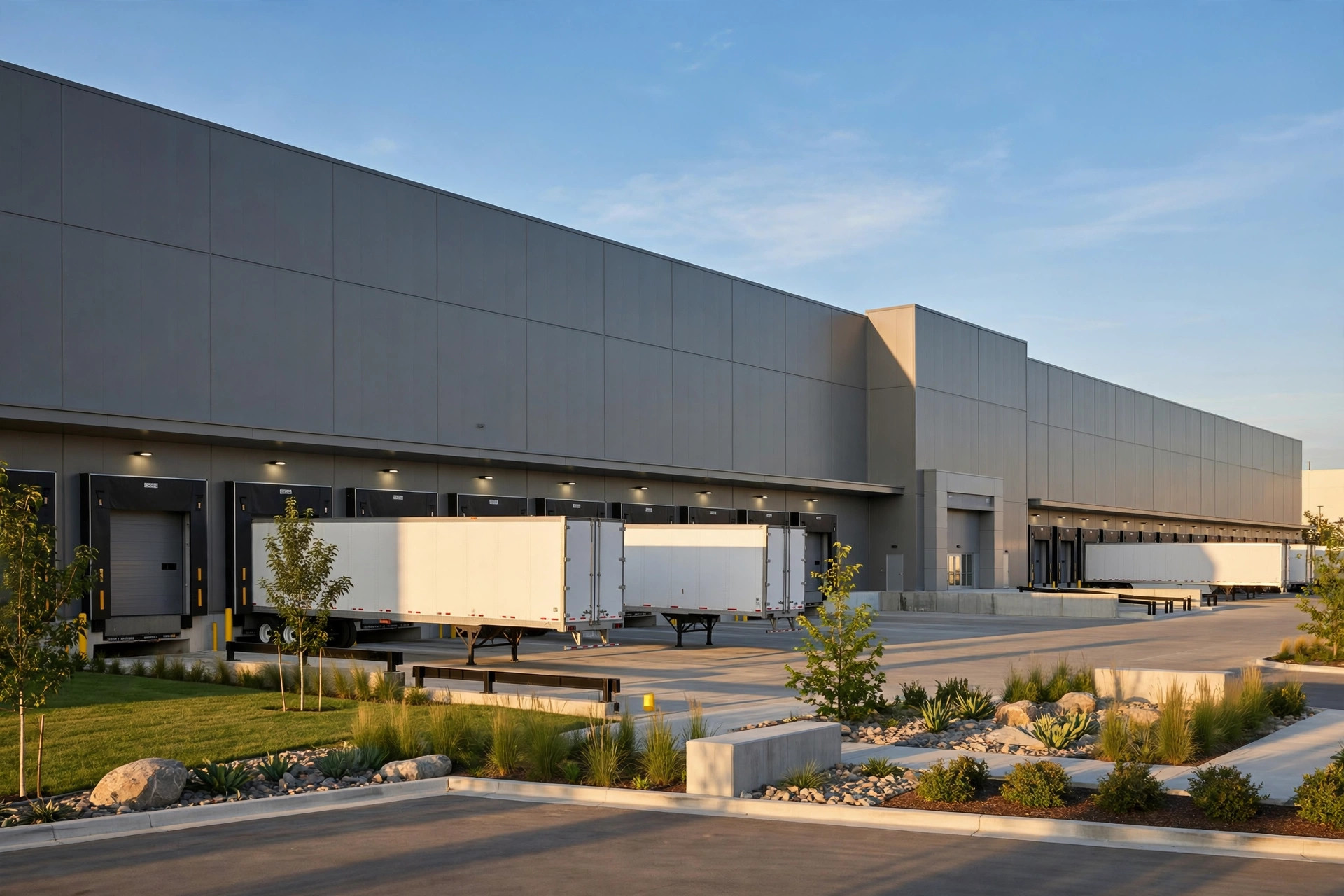
Let's start with the math, because everything else is commentary. Your warehouse holds $5 million in inventory. Your property policy carries a $3 million limit. A fire destroys $1 million of stock. How much does insurance pay?
Not $1 million. Under the coinsurance clause buried in your policy, you will most likely collect about $725,000 and eat the remaining $275,000 yourself. That money is gone unfairly — but legally. The clause was in the policy you signed; you just didn't read it closely.
Here is the calculation, step by step, no shortcuts:
- Coinsurance requirement: 80% (U.S. commercial property policies commonly use 80, 90, or 100 — check your own policy wording)
- Required coverage = $5M × 80% = $4M
- Coverage carried: $3M → $3M ÷ $4M = 75%
- Payment = $1M × 75% = $750,000, minus the deductible (say $25,000) → $725,000 net
- Out of pocket: $1M − $725,000 = $275,000
Memorize the formula: Payment = (carried ÷ required) × loss − deductible. Note the order of operations: the deductible comes off after the coinsurance haircut, not before.
The Peak-Season Trap: Covered in March, Exposed in December
In 2023, a 3PL warehouse in California's Inland Empire insured to its off-season inventory value of $3.2 million and bought a $3 million limit. Fine — until Thanksgiving, when clients flooded the building with holiday stock and on-hand value surged to $4.8 million. In December, an electrical fire destroyed $900,000 of goods. With a 90% coinsurance clause, the adjuster's math ran like this:
- Required coverage = $4.8M × 90% = $4.32M
- Coverage carried: $3M → $3M ÷ $4.32M ≈ 69.4%
- Payment = $900,000 × 69.4% = $625,000, minus a $20,000 deductible → $605,000 net
- Out of pocket: $900,000 − $605,000 = $295,000
"Adequate in the off-season, exposed at peak" — the most common way underinsurance kills. The inventory value that matters is the value at the moment of loss, not the number you reported when you bought the policy. The figure from January may be fiction by December.

Cost Structure: Premium Saved vs. Hole Gambled
| Item | Amount |
|---|---|
| Annual premium ($3M limit) | ~$45,000 |
| Extra annual premium for peak-adequate limit ($4.32M) | ~$20,000 |
| Out-of-pocket gap on one claim | $295,000 |
| Payback multiple | One claim ≈ 15 years of premium difference |
Read that again: you save $20,000 a year in premium to gamble on a $295,000 hole. The actuaries have run this trade. The insurer wins it every time.
Three counterintuitive facts most operators hear for the first time here:
First, the haircut applies even when the loss is far below your limit. "I bought $3 million of coverage and only lost $900,000 — why not full payment?" Because the coinsurance clause measures carried ÷ required, not loss ÷ limit. The penalty triggers on the coverage gap, regardless of claim size.
Second, a total loss is not penalized. Total losses pay up to the policy limit; the coinsurance penalty only hits partial losses. And industry data shows more than 95% of commercial property claims are partial losses — the penalty lands exactly on the most frequent scenario.
Third, the value basis is replacement cost, not book cost. With recent inflation, replacement cost has crept up; the limit you set against purchase prices three years ago is measured against a required amount that has quietly grown.
What Your Broker Won't Volunteer: The Reporting Form
For warehouses whose inventory swings hard — 3PLs, importers, holiday-driven e-commerce — there is a policy structure built exactly for this problem: the value reporting form (sometimes called monthly reporting). Instead of fixing one limit for the year, you report your actual inventory value each month, and the premium is calculated on the average reported values, with a final adjustment at year-end. Your limit still needs to cover the peak, but you stop paying peak premium for off-season months, and — critically — the reported values keep you inside the coinsurance requirement all year.
The catch, and it is a real one: miss a monthly report and most forms default your coverage to the last reported value, which re-creates the gap you were trying to close. It is a discipline product. If your operation can't produce a reliable inventory valuation on the 15th of every month, don't buy it — you'll pay for the form and still eat the haircut.
Run the numbers on the Inland Empire 3PL. Say monthly values average $3.6M against a $4.8M peak limit. Premium on a reporting form tracks the $3.6M average rather than a flat $4.8M limit — the year-end adjustment typically lands somewhere between the flat-peak premium and the old underinsured premium, while the coinsurance math stays clean every single month. You pay for accuracy instead of gambling on it.
Three Fixes: Close the Hole
| Fix | Cost | Coverage | Effort | Best for |
|---|---|---|---|---|
| Insure to peak inventory value | Higher premium | No gaps, all year | Low | Warehouses with big seasonal swings |
| Inflation guard / peak-season endorsement | Small premium bump | Automatic seasonal uplift | Medium | Strongly seasonal inventory |
| Quarterly limit review | Near zero | Depends on discipline | Medium | Steadily growing inventory |
| Agreed Value endorsement (suspends coinsurance) | Higher premium | Penalty eliminated outright | Low | Operators who'd rather pay than fuss |
Endorsement names and wording vary — get the actual clause language from your broker before you buy, not a verbal promise. The laziest effective option is the fourth: agree a value with the carrier up front, the coinsurance clause is suspended, and losses pay against the agreed figure. It costs more premium. That is the entire trade.
The 10-Minute Renewal Checklist
Before every renewal, answer four questions: What is the actual inventory value right now — at replacement cost, not book cost? Where will the peak land in the next 12 months? What is the coinsurance percentage on the policy — 80, 90, or 100? And does the current limit cover peak × coinsurance? If you can't answer one of them, don't sign yet. Most warehouse limits were set years ago; inflation has been quietly growing the required number ever since. Numbers grow on their own. Limits don't.
The Calculable Conclusion
The extra annual premium ΔP is a bet against "probability of loss × average haircut." Your self-check is one line:
(Required − carried) ÷ required × your expected average single loss = the money you gamble every year
Run the 3PL warehouse through it: ($4.32M − $3M) ÷ $4.32M × $900,000 ≈ $275,000 — gambled against a $20,000 premium difference. The conclusion needs no elaboration.
Insurance is bought so a loss doesn't hurt, not so the premium looks cheap. Before your next renewal, walk the floor, count what's actually in the racks, and then decide what number goes on the limit line. Ten minutes of work. Worth $275,000.
By Lao Zhou, Logistics Cost Analyst