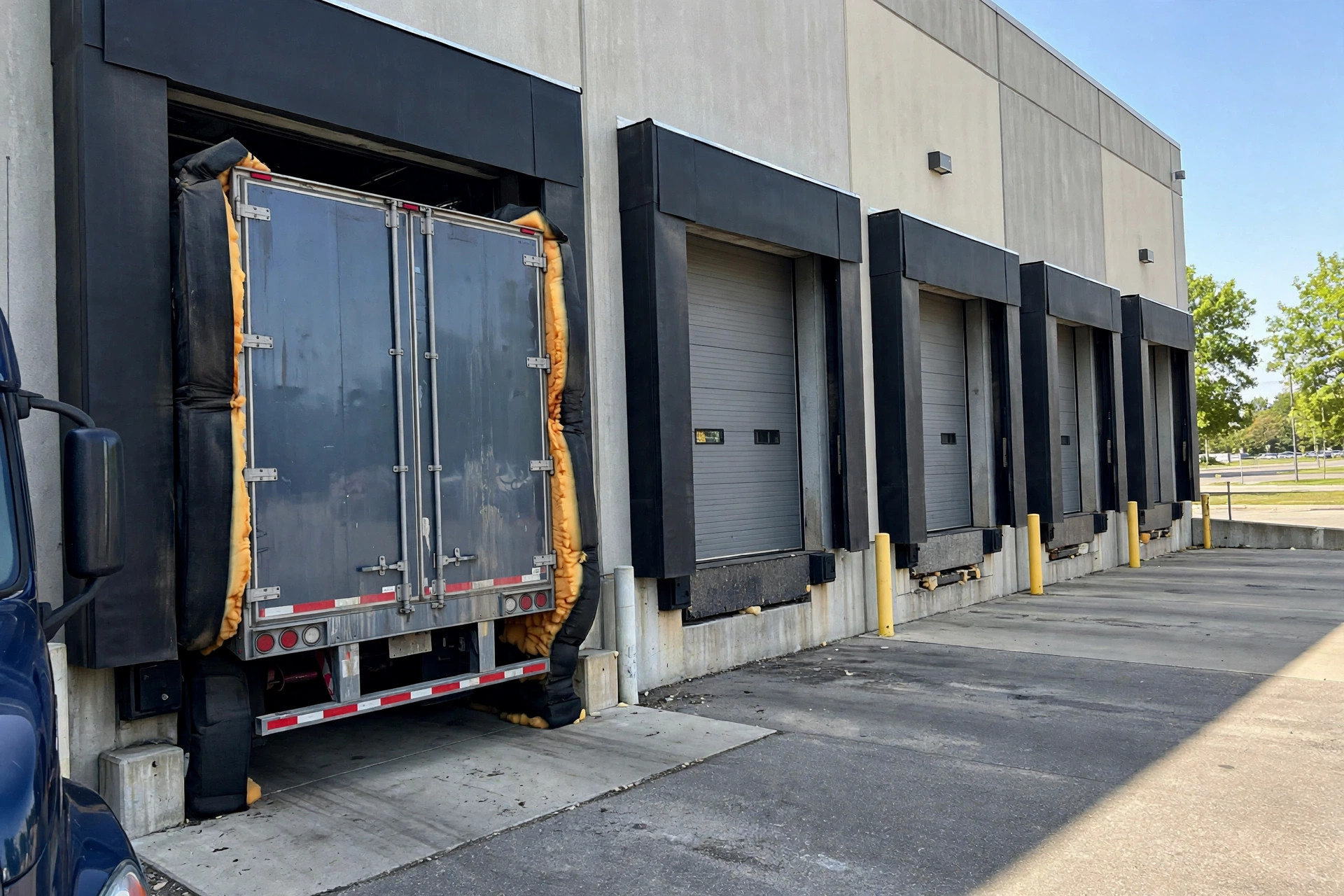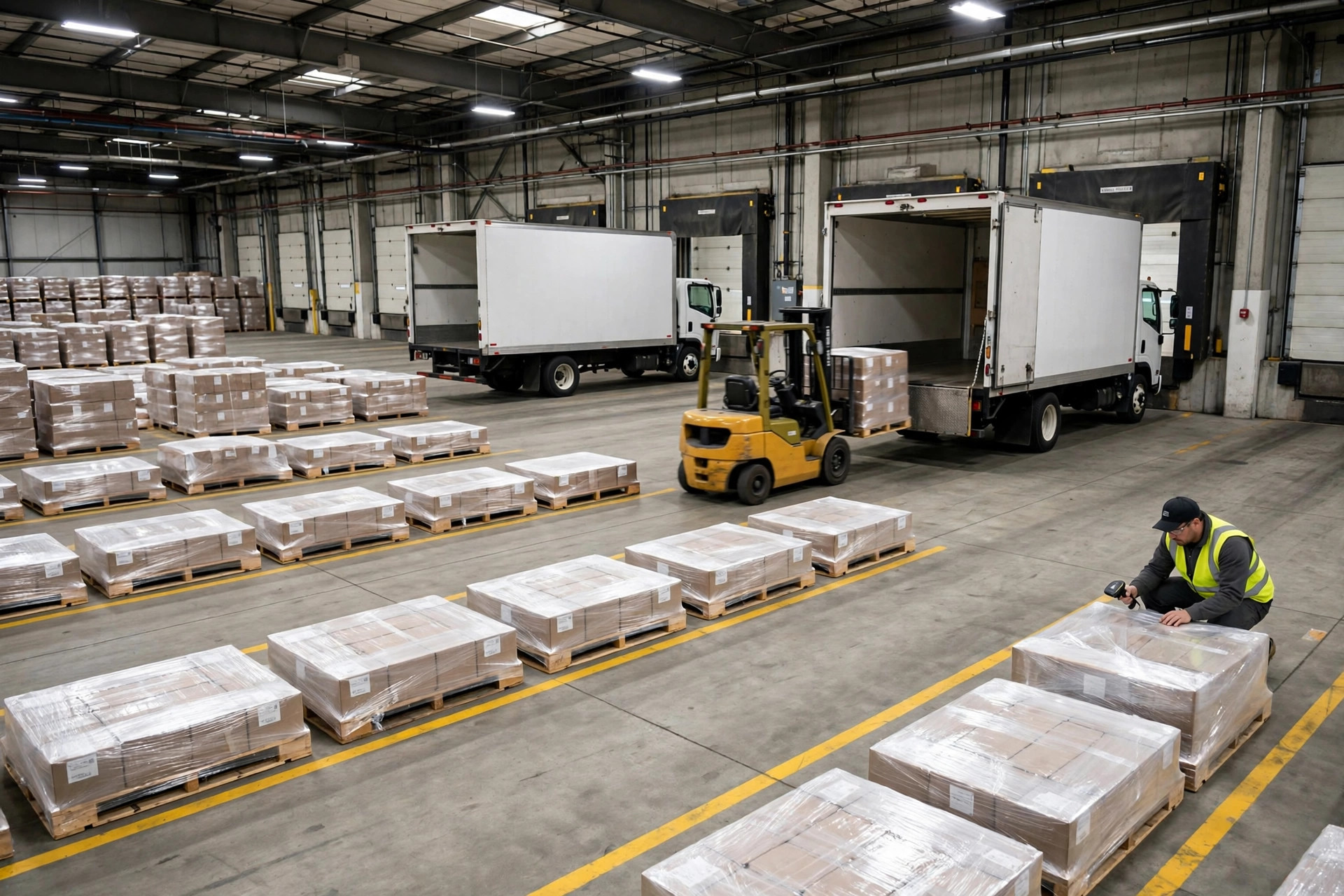
At 5:30 one morning I walked into our warehouse truck parking yard and my radio went off. The guard was shouting that the entrance was blocked: two drop trailers sat sideways across the access road, a delivery truck behind them could not get in, and a pickup truck ahead of them could not get out. Drivers stood beside their cabs, one of them already leaning on the horn. When I got there, the open ground in front of the docks was packed solid, truck noses pointing in every direction, like a hand of cards someone had shuffled and dropped. That morning I finally admitted something to myself: our warehouse truck parking layout had never actually been planned.
Here is the honest truth: parking looks small until it jams, and then it is everything. Trucks that cannot get in leave docks idle. Trucks that cannot get out blow drivers' schedules. Drivers get frustrated, the crew on the ground gets tense, and that is when scrapes and near-misses happen. That day it took us nearly an hour to clear the access road, two dock loadings slipped behind schedule, and a delivery driver got back late and caught grief from his customer. From that day on, I treated truck parking as a real job, not something whoever happened to be near the gate would sort out with hand signals.
Warehouse Truck Parking Layout Starts With Flow, Not Stall Count
Most people, when they hear warehouse truck parking layout, think about painting stalls and counting how many trucks fit. I used to think that way too, and I was wrong. You can paint all the stalls you want, but if the circulation is dead, the yard still jams. Our old yard proved it: one single road served both directions, inbound trucks and outbound trucks on the same strip, and at the morning peak they met head-on and everything stopped.
The first thing we changed was separating in from out. Inbound traffic uses the east gate, outbound uses the west gate, and bollards mark a one-way loop between them. Every truck nose points the same way, and nobody does a U-turn in the middle of the yard. That change cost very little — some bollards, some ground paint, one extra hand signal from the guard — and the effect was immediate. Drivers no longer had to guess whether something was coming the other way, and the guard no longer had to stand in the middle of the road shouting. I have a rule of thumb now: judge a warehouse truck parking layout by whether a truck can enter, park, start up, and leave without reversing and without asking someone else to move. Any design that needs someone else to move will collect its debt at peak hour.
One more thing that gets missed: different trucks need different thinking. Drop trailers, full truckloads, and small box vans differ in length and turning radius. Mix long trucks with short ones in the same zone and the small-truck drivers freeze while the long-truck drivers cannot turn. We split the yard into a large-truck zone and a small-truck zone, gave the big zone real turning room, and put the small zone near the docks for fast pickups. Scrapes dropped noticeably after that, and drivers parked faster.
Three Zones: Dock Apron, Staging Lane, and Driver Area
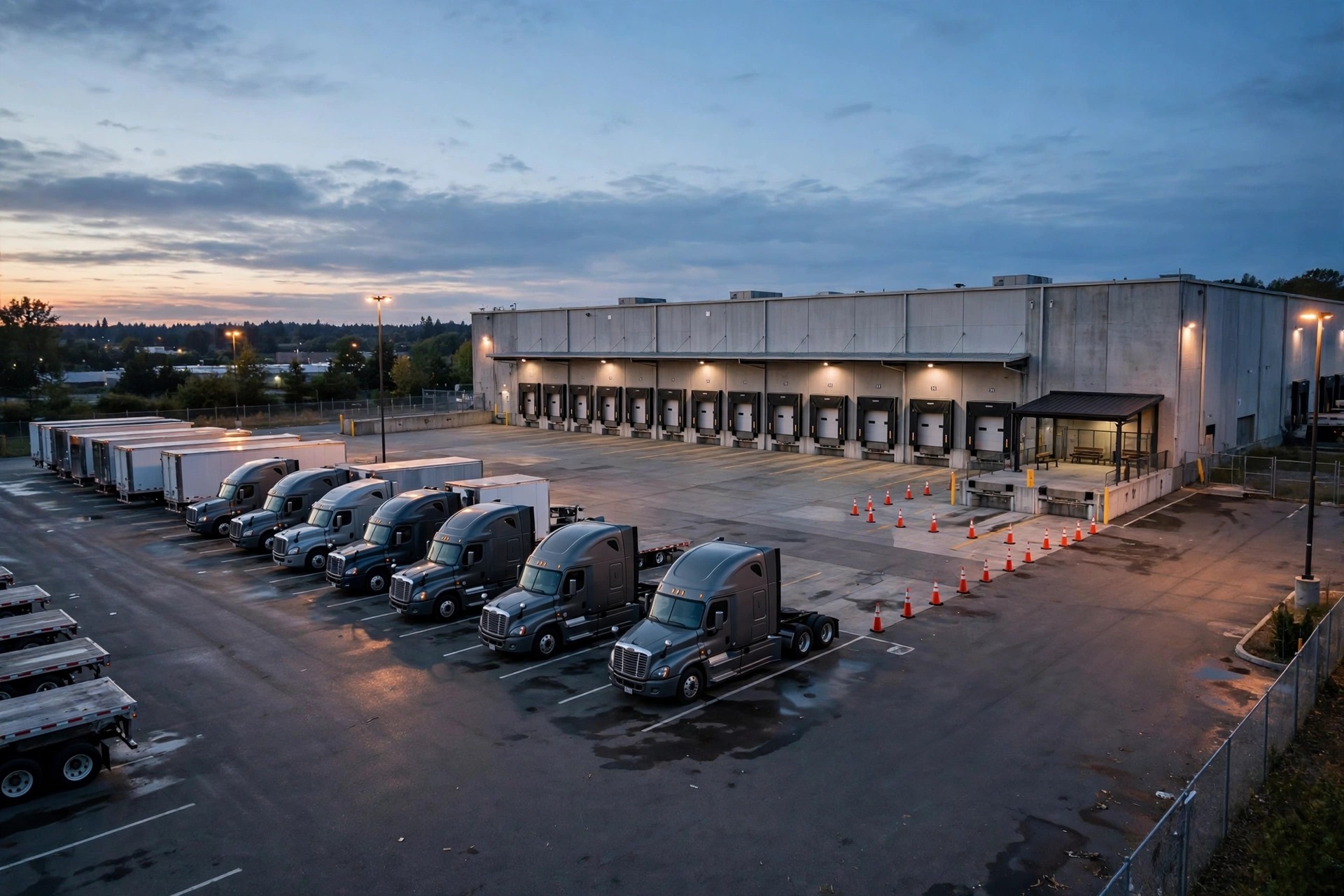
These days our yard has three zones, each with its own rules, and nobody is allowed to borrow space from another zone. The first is the dock apron, for trucks actively loading or unloading only: once the work is done, the truck leaves, no overnight stays, no drivers sleeping in the cab there. The second is the staging lane, for trucks that arrived early and are waiting for their dock slot, lined up in appointment order, with the guard holding a simple sheet that shows arrival time, appointment time, and queue position. The third is the driver waiting area, where trucks sit on the outer edge and people can come inside.
I set this up only after learning the hard way. Without a staging lane, early trucks parked right at the dock doors, blocking trucks that actually had appointments, and the whole appointment schedule fell apart. With a staging lane, the dock apron holds only trucks being worked, the access road stays open, and so does the fire lane. Where the staging lane sits matters too: it cannot be too far from the docks, or calling a truck means shouting across the yard, and it cannot be too close, or engine noise and exhaust drift straight into the warehouse.
When we review the yard each month, we score each zone separately, because each zone fails differently. The dock apron is about turnaround, the staging lane is about waiting, and the driver area is about people. This is the table we use:
| Zone | The one number to watch | What it means when it blows up | Our practical fix | | Dock apron | Hours one truck occupies a dock | Loading is slow, or the truck was called before freight was ready | Never call a truck until freight is ready, and keep a dock open for it | | Staging lane | Queue length at peak | Appointments bunched together, or dock output lagging | Stagger appointments across morning and afternoon | | Driver area | Complaints and dwell time | Drivers have nowhere to go, so they wander into traffic lanes | Shelter, water, and charging sorted before anything else |
It looks crude, but it works. We used to track only total truck capacity. Now we track where the bottleneck actually sits, and the problem shows itself at a glance.
Driver Waiting Areas Complete the Warehouse Truck Parking Layout
Honestly, the driver waiting area was the last lesson I learned, and the most valuable one. We used to assume drivers would just wait in their cabs. In summer the cab bakes, in winter it freezes, and a driver who cannot stand it gets out and walks the yard, or moves the truck into the shade, and the circulation breaks again. So we put up a simple shelter at the edge of the yard with a water dispenser, benches, a phone charging strip, and a call board on the wall showing the dock queue. It was not big and it did not cost much, but drivers started waiting inside, and the random foot traffic across the yard dropped off fast.
Calling trucks changed too. The old way was the guard walking out to shout, and when shouting failed, horns, until the whole yard sounded like a traffic jam. Now the call board in the shelter flashes the last digits of a plate, and the driver walks out to the truck on their own. It sounds minor, but the yard got quieter, and drivers stopped sitting in their cabs staring at the dock for fear of missing a call. Managing a yard comes down to managing people in the end. When people are comfortable, trucks move smoothly.
Night shift is its own test. A driver arriving at night needs to sleep, not be woken at 2 a.m. to move the truck. Our rule now: night arrivals go straight to the outer staging lane, never into the dock apron, and get called in appointment order at dawn. Since we set that rule, the night guard's workload roughly halved, and drivers start the day rested.
Looking back, there is no single fix for truck parking. Circulation, zoning, call boards, and a decent waiting area each solve only a part; together they make the yard work. My advice: before you think about expanding the yard, re-divide the ground you already have, sort out the in-and-out flow, and fix up the place where drivers wait. Often the yard is not short of space. It is short of clear rules.
Next time your gate jams, before blaming the drivers, stand at the entrance and watch for ten minutes: where trucks come in, where they get stuck, and where drivers walk after they step down. Those ten minutes will tell you what your parking layout actually needs.
By Chen Feng, Warehouse Operations Manager