Our warehouse is just over 3,000 square meters, seven people including me, one real forklift and one hand pallet jack that counts as half a forklift on a good day. When people ask me about bulk storage vs racking, I usually laugh first, because the advice I get from big-warehouse friends always starts with automated systems and shuttle racks, and none of that survives contact with our budget. We cannot burn that kind of money. A big company's flowchart does nothing for us on the floor. After a few expensive lessons, I stopped asking which system is better in general and started asking a smaller question: what does this particular batch of goods deserve from us, in money, space, and labor?
Bulk Storage vs Racking: The Math Nobody Shows You
When we moved in, in September 2023, the warehouse held more than forty different products at once: daily goods in cartons, hardware in woven bags, and a few oddly shaped home items that refused to sit neatly anywhere. The daily goods moved fast, two or three truckloads a week. The hardware moved slowly, maybe once a month. The home items sold whenever the season felt like it. To keep things simple, I floor-stacked everything at first, pallets piled high, aisles kept narrow to save space. Within the first month it blew up in my face. A batch of daily goods ended up at the bottom of a tall stack, and on the day a customer needed it, four of us spent nearly two hours digging it out. A dozen cartons came out crushed, and I had to absorb the loss myself. The crushed goods were not worth much. The digging, the delayed shipment, and the wasted afternoon cost far more than the goods did.
That loss pushed me to buy two rows of light racking, just for the slow, crushable items. Racking looks tidy, but it has a temper. Everything you put up has to come back down, and the aisles between racks cannot be used for anything else. Before long I stumbled on a conclusion that runs against every textbook I had read: the faster a product moves, the less it should be racked. A fast product goes in and out every day, and putting it on a rack means you carry it up and down twice a day for no reason. Slow goods are the ones that earn a rack, because they sit still, and for them neatness matters more than speed. It sounds backwards. In a small warehouse, it is simply true.
When Bulk Storage vs Racking Stops Being About Money
In March 2024, just as the weather turned warm, a regular customer dropped off more than six hundred cartons of seasonal home goods and told me they would sit until May, when they would ship out all at once. Space was tight, and I had two choices. Floor-stack the lot for free, or buy more racking, pay for installation, and give up aisle space. I did a rough calculation on the back of an order sheet. Floor stacking meant stacking three high and using under a hundred square meters, at zero extra cost. Racking meant spending tens of thousands before a single carton moved. So I picked the scrappy middle path: floor-stack everything, but only two high, with a gap wide enough to walk between stacks, and big handwritten labels on the side of each stack showing the product name and the date it arrived.
When May came and the whole batch shipped out over three days, that scrappy setup paid off. Nobody climbed anything, nobody hunted for a rack location, and the crew just worked through the stacks in order. Not one carton was crushed. Meanwhile, some of the slow goods I had proudly racked earlier turned out to be too tall for the rack height I had chosen, and we had to move them back to the floor anyway, wasting a whole afternoon. That week gave me our dividing line: if a product will ship out within a month, it stays on the floor. If it will sit for more than a month, it earns a rack. And if it is fragile, damp-sensitive, or high value, it gets a rack no matter how fast it moves. It is not a fancy rule, but it is the only rule in our warehouse that reality has never embarrassed.
| Comparison | Floor stacking | Light racking |
|---|---|---|
| Upfront cost | Almost nothing, pallets we already own | Racks plus installation, a visible bill |
| Picking speed | Fast goods flow straight in and out | Slow goods are easy to find, fast goods gain an extra step |
| Damage risk | High stacks and long storage crush cartons | Separate levels protect fragile goods |
| Stock counting | Stacks get mixed up and must be dug through | Locations make counting faster and errors rarer |
| Best for | Fast, sturdy, crush-resistant goods | Slow, fragile, small, or high-value goods |
The table is not a universal answer, because every warehouse has different numbers. The direction holds, though. Floor stacking saves money and motion. Racking buys order and protection. The right question is never which one you buy first. It is what this batch is afraid of, and how many times you will have to touch it before it leaves.
The Line We Drew in Our Warehouse
There was one more lesson, in the summer of 2024, that tightened the rule further. A new customer sent in a batch of home items in very thin cartons. They were not expensive, but the boxes dented if you so much as looked at them wrong. By turnover alone they belonged on the floor. I hesitated, then put them on the racks anyway, even though it cost us half a day of labor. I am glad I did, because that batch sat for nearly two months before it shipped. If it had been floor-stacked at the bottom, dozens of cartons would have come out dented, and compensating the customer would have cost far more than that half day of labor. So our rule for bulk storage vs racking gained a footnote: a cheap product that crushes easily must be treated like a fragile product, not like a fast product.
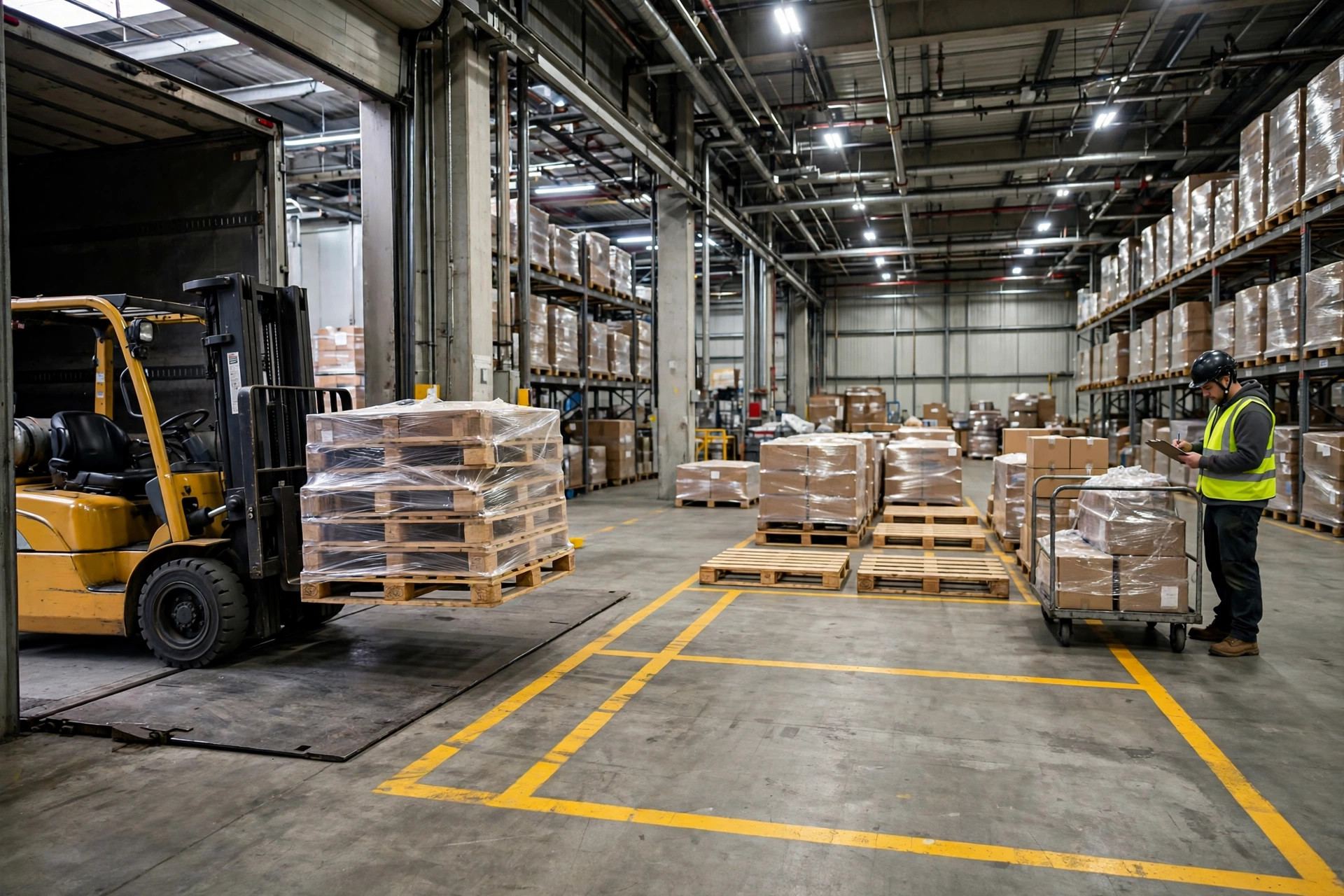
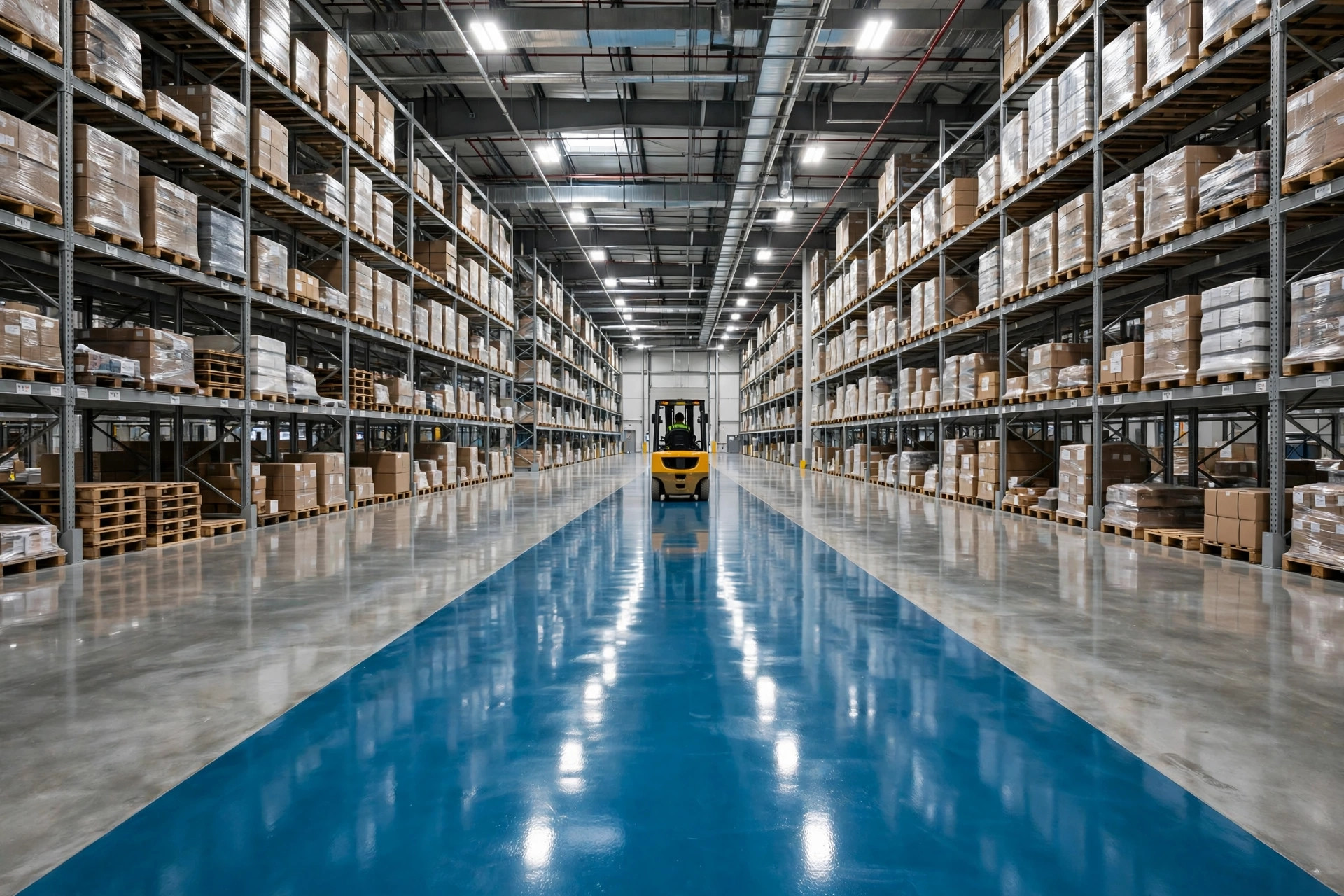
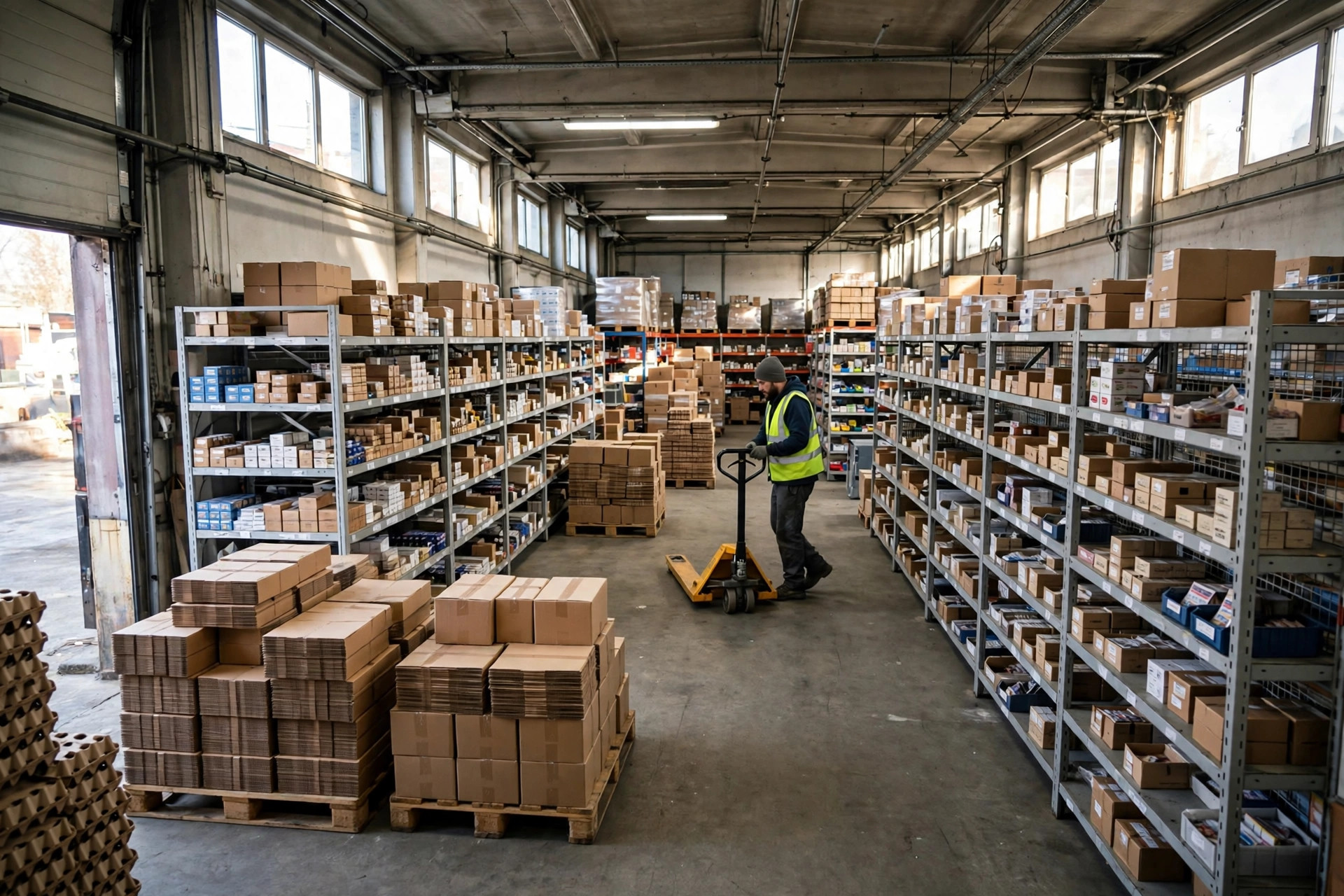
Today our layout looks messy to an outsider and obvious to anyone who works here. Near the door is the floor area, full of fast goods, stacked two high, labels facing out, so a forklift can take a pallet without a search. Along the walls sit two rows of racks for the slow goods, the fragile items, and the high-value pieces. Down the middle runs one main aisle that never, ever gets blocked, no matter how tight space becomes. Every evening the floor team spends ten minutes tidying the floor area, clearing empty pallets and straightening crooked labels. That small habit does more for us than any software dashboard ever has.
The payoff is plain to see. Fast goods ship without digging. Fragile goods almost never come out damaged anymore. Stock counting, which used to eat a whole weekend of digging through stacks, now takes our seven people about half a day, because fast goods face outward and slow goods sit at numbered rack spots. A visitor once asked why we did not rack the whole warehouse, and I told him straight: buying racks is easy, living with them is expensive, in aisle space, in labor, and in headroom. A small warehouse should spend its money where it hurts most, which is on the goods that truly crush and truly sit still. The rest of the money is better kept for wages and for surviving the slow season.
What I'd Tell Another Small Warehouse
If you run a warehouse our size, here is my advice, and it costs nothing to try. First, split your goods by how fast they move, not by product category. Second, let fast goods live on the floor without guilt, and let slow goods earn their rack honestly. Third, never cut corners on two unglamorous things: a clear main aisle and labels big enough to read from three steps away. A small warehouse has its own way of surviving: ship on time, lose little, and spend only where spending actually saves you more than it costs.
By Xiao Ma, Small Warehouse Owner