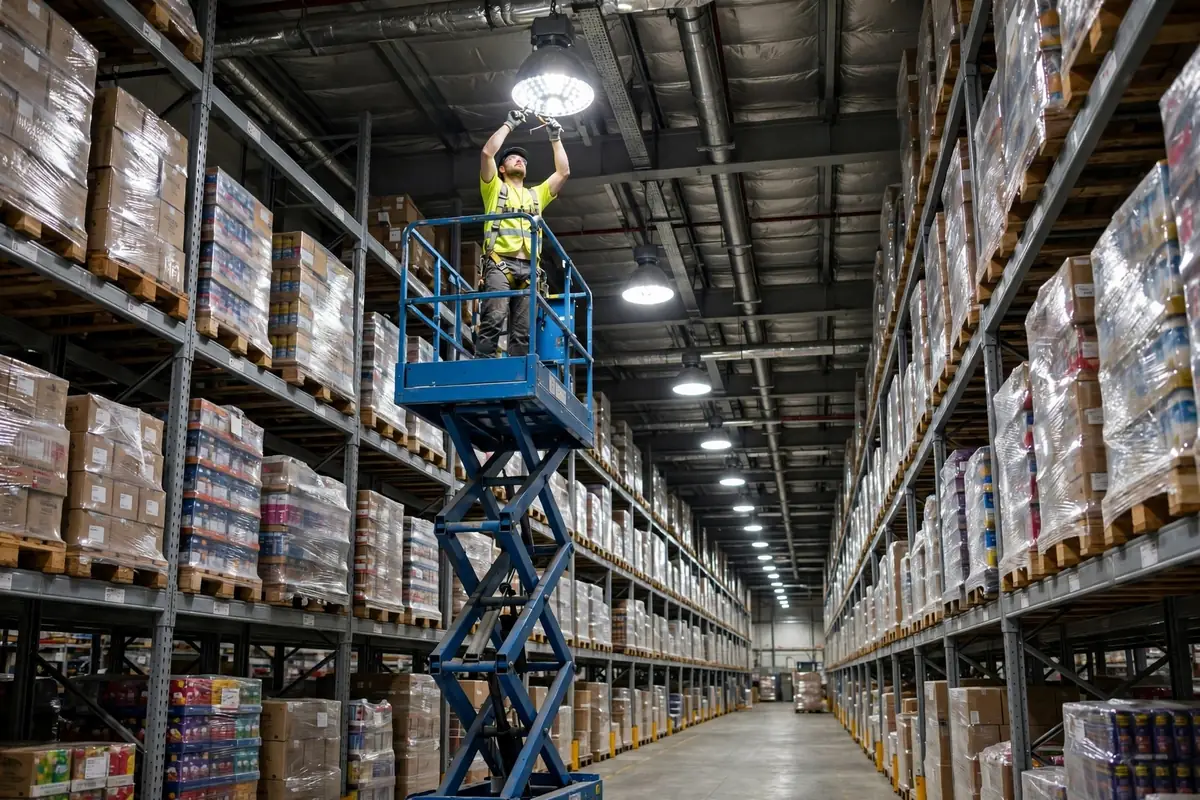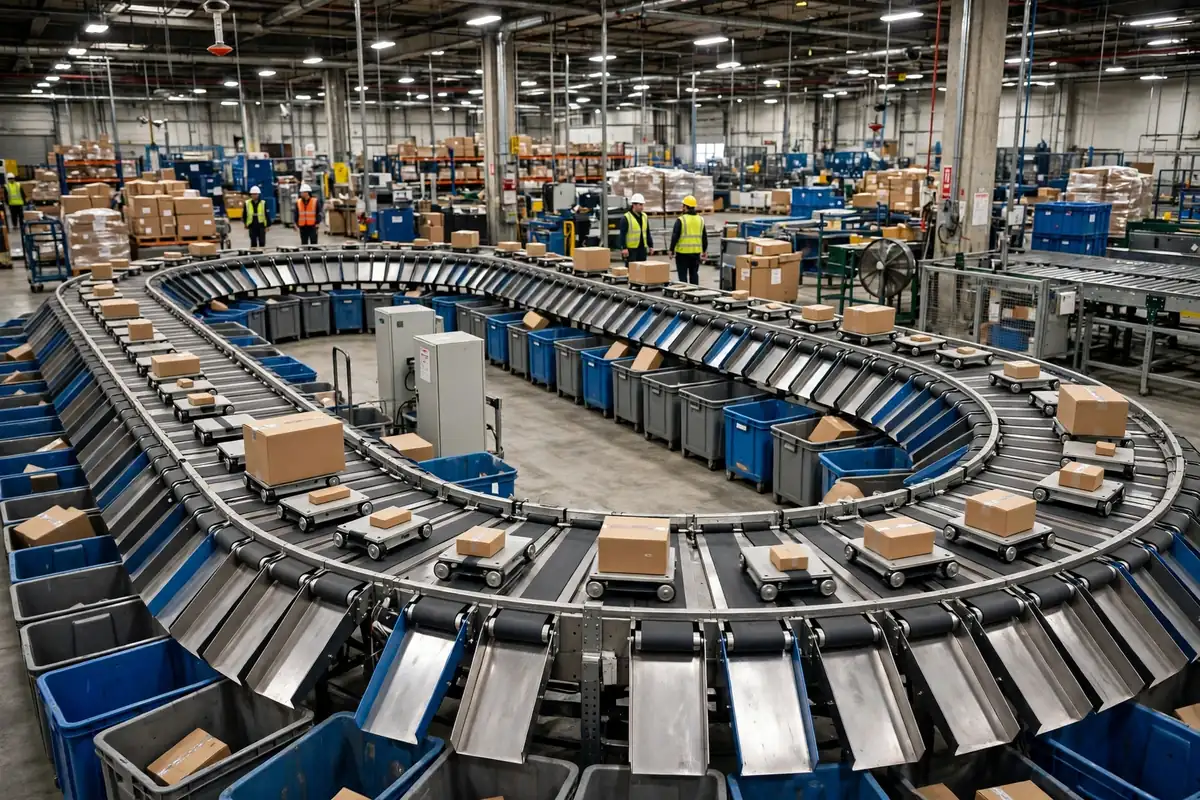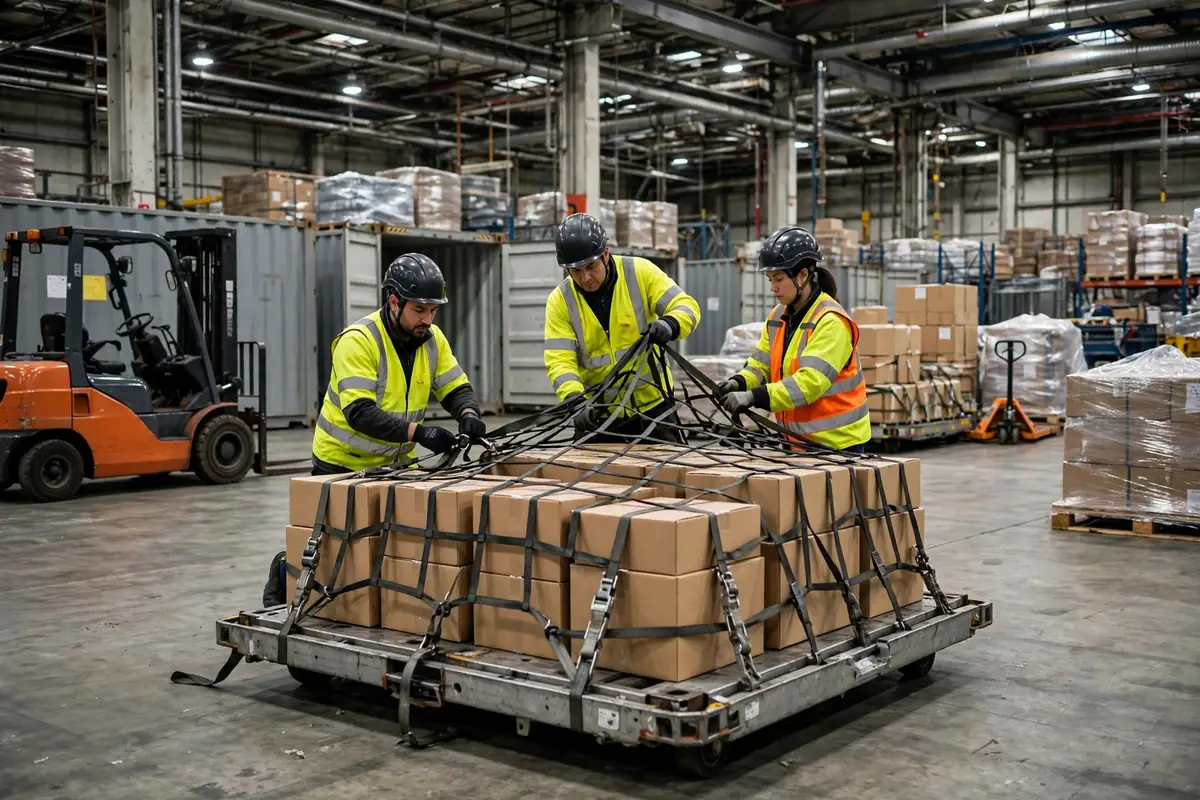
Start with the bill. Illustrative example: one truck, 26 pallets, three delivery stops. Loading took 40 minutes. At the first stop, the driver found the freight for that stop buried behind eight pallets that belonged to later stops, so he moved all eight out, pulled his pallets, and put the eight back. He did the same dance at the second stop. Unloading took three hours. The 20 minutes saved at the dock came back with interest on the road, and nobody at the warehouse ever saw the invoice. That is the whole story of a warehouse truck loading sequence: the dock saves minutes, the road charges hours.
Most people treat loading a truck as muscle work. Forklift in, pallets in, door shut, done. I treat it as a cost sheet, and the loading sequence is the order the costs arrive in. Get the sequence right and the trip is quiet. Get it wrong and every mistake turns into money at a delivery dock, a weigh station, or on a claim form.
Where a Bad Warehouse Truck Loading Sequence Leaks Money
The first leak is unloading time. Load in reverse delivery order: last stop in first, first stop in last, right by the door. Break that rule and the driver becomes a material handler at every stop, shifting pallets that should never have moved. One shift is labor hours. Two shifts are overtime. Three stops loaded backwards and half the day's delivery plan collapses. The worst part is that the money buys nothing. Those shifted pallets did not need to move at all.
The second leak is crush damage. Heavy at the bottom, light on top — that is not a slogan, it is physics. A pallet weighing several hundred kilos sitting on top of cartons for hundreds of kilometers turns every brake application into a squeeze. Illustrative scenario: a pallet of bottled goods rides on top of boxed goods, the truck bounces down the highway all day, and at delivery the bottom layer comes out with a crushed corner. The goods cannot be delivered at full price, so now it is a discount, a replacement, or a claim. And the damage is usually found last, buried deepest in the trailer, when the whole truck is already unloaded and nobody can agree whose fault it was.
The third leak is axle weight. On US Interstate highways the federal limits are 20,000 pounds on a single axle, 34,000 pounds on a tandem axle group, and 80,000 pounds gross vehicle weight, under 23 USC §127 and 23 CFR 658.17 — and the federal Bridge Formula can push the allowed number lower still. Limits differ by country and by state, so never treat these figures as a global standard. Stack all the heavy pallets at the rear and the truck can be under gross weight while the drive tandem is already over. The scale catches it, and then it is either reload on the spot or a fine plus detention. Reloading at a scale house is the expensive part: the truck sits, the driver waits, the forklift waits, and every delivery stop behind it waits too.
The fourth leak is the most expensive and the easiest to ignore: center of gravity. A high center of gravity makes the trailer sway more under braking and in turns, and rollover risk climbs with it. The US Federal Motor Carrier Safety Administration's cargo securement rules (49 CFR 393 Subpart I) require the securement system to withstand forces equal to 0.8 times the cargo weight forward, 0.5 times rearward, and 0.5 times sideways, with the combined working load limit of the tiedowns at least half the cargo weight — and the driver must inspect the securement within the first 50 miles. Those are minimums, not advice. Put heavy freight up high and even perfect tiedowns are just paying for the original mistake.
Four Rules, and a Counterintuitive One
First, load in reverse delivery order. The delivery schedule, read backwards, is the loading sequence. If the delivery order is wrong on paper, everything after it is wasted effort.
Second, layer by weight. Heavy freight on the floor, light freight on top, lighter as you go up. The lower the center of gravity, the steadier the truck. Within a layer, keep the heavy pallets toward the middle and balance the two sides so one side of the trailer is not visibly carrying more than the other.
Third, spread the axle load. Never bunch the heavy pallets at the nose or the tail. Before loading, look at the weight distribution across the pallets and spread the heaviest few so every axle group stays inside its limit. A warehouse without a floor scale can still do the arithmetic by hand from pallet weights. Guessing is not a method.
Fourth, leave room for the forklift and for securement. A trailer is not better for being packed solid. The forklift needs room to work, and straps, load bars, and airbags need anchor points. Tight between cartons is fine. No anchor point is not. Securement has no "close enough" — it is either tied down or it is not.
Here is the counterintuitive part: a full trailer is not a well-loaded trailer. A truck packed to the last gap looks efficient on a utilization report, and then the first delivery stop requires tearing half of it apart. A truck loaded with two gaps left for securement and the sequence in the right order gives up a couple of points of cube utilization and cuts total unloading time in half. Cube utilization is the warehouse's vanity metric. Total trip cost is the company's metric. People who optimize for a full truck are doing the warehouse's accounting. People who optimize for the whole trip are doing the company's accounting.
A Warehouse Truck Loading Sequence Plan Your Dock Can Actually Use
A load plan does not need to be complicated. One load sheet per truck. Before the forklift moves, the loader fills in three things: delivery order, weight layers, and axle distribution. Then loading starts. Illustrative example — the same load, two ways, and the difference is the value of planning:
| Cost item | Sequence planned right | Sequence planned wrong |
|---|---|---|
| Total unloading time | Straight off, stop by stop, no rehandling | Rehandle pallets at every stop, hours added |
| Crush damage risk | Heavy low, light high, bottom layer intact | Heavy on light, bottom layer crushed, discount or claim |
| Axle compliance | Weight spread, every axle group inside limits | Heavy freight bunched, one axle group over first |
| Driving safety | Low, centered gravity, securement in place | High, rear-biased gravity, more sway in braking and turns |
| Extra spend | None | Rehandle labor, fines, detention, and claims stacked together |
Before the door closes, run this checklist and tick every line. Is the delivery order reversed correctly on the load sheet? Are the heaviest pallets on the floor and centered? Has somebody done the arithmetic on weight per axle group? Is the light freight all on top? Are the straps, load bars, and airbags actually fastened, not just present? Does the driver hold the load sheet and know which pallet comes off first? Six yeses and the truck rolls. One no and you spend 15 minutes reworking the load now rather than letting the driver pay for it on the road.
Those 15 minutes are the conclusion, and like everything in this piece it is a calculation. Illustrative example: 15 extra minutes of planning per truck buys no rehandling at the stops, no axle violation, and no crush claim. Across 20 trucks a month, five hours spent on load planning buys back one reload at a scale house, one damage claim, or the overtime stacked up across several delivery stops. A warehouse truck loading sequence is not the forklift driver's muscle work. It is the cheapest cost control a warehouse owns. Whether that money is well spent — run the numbers above and decide for yourself.
By Lao Zhou, Logistics Cost Analyst