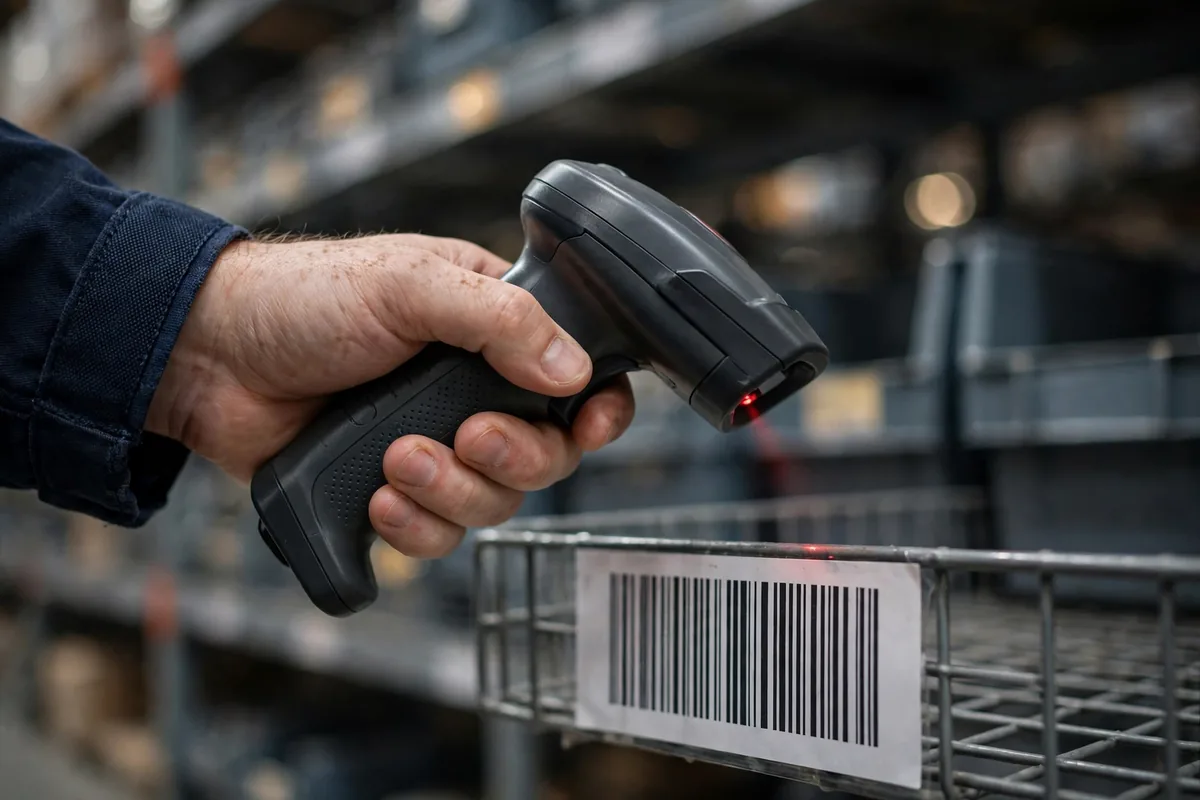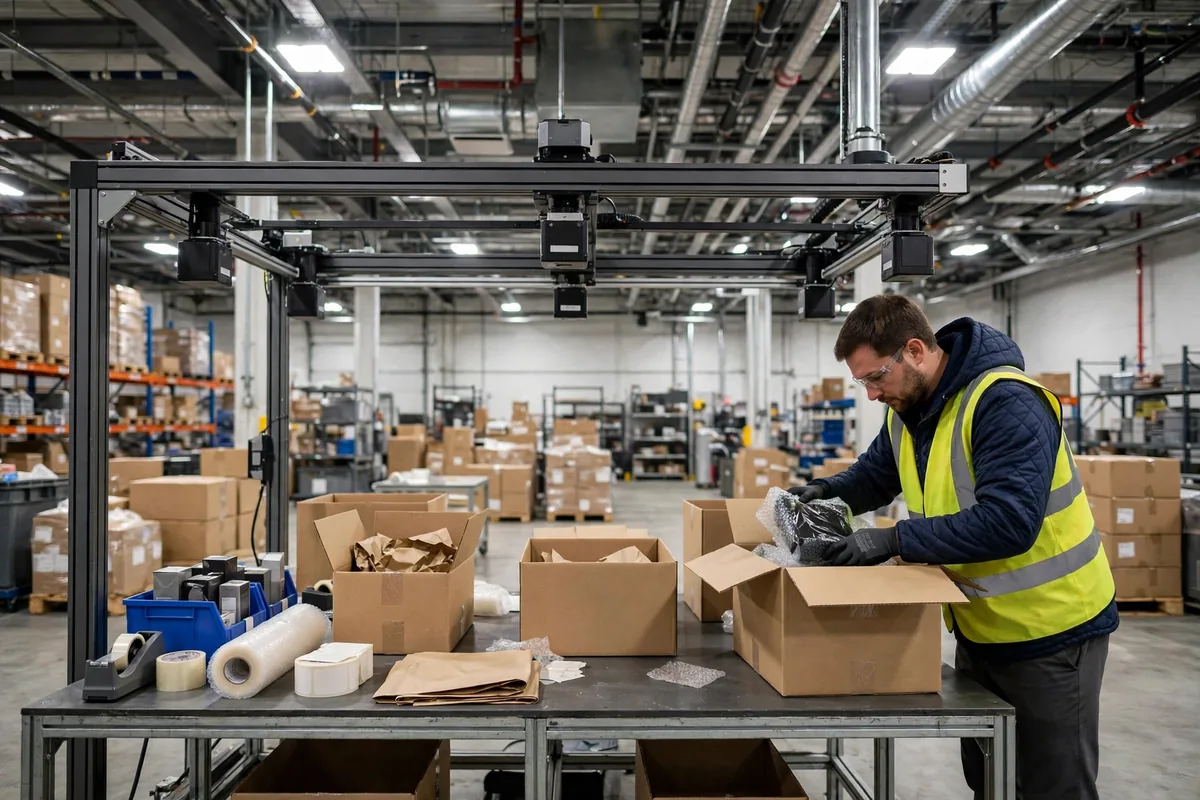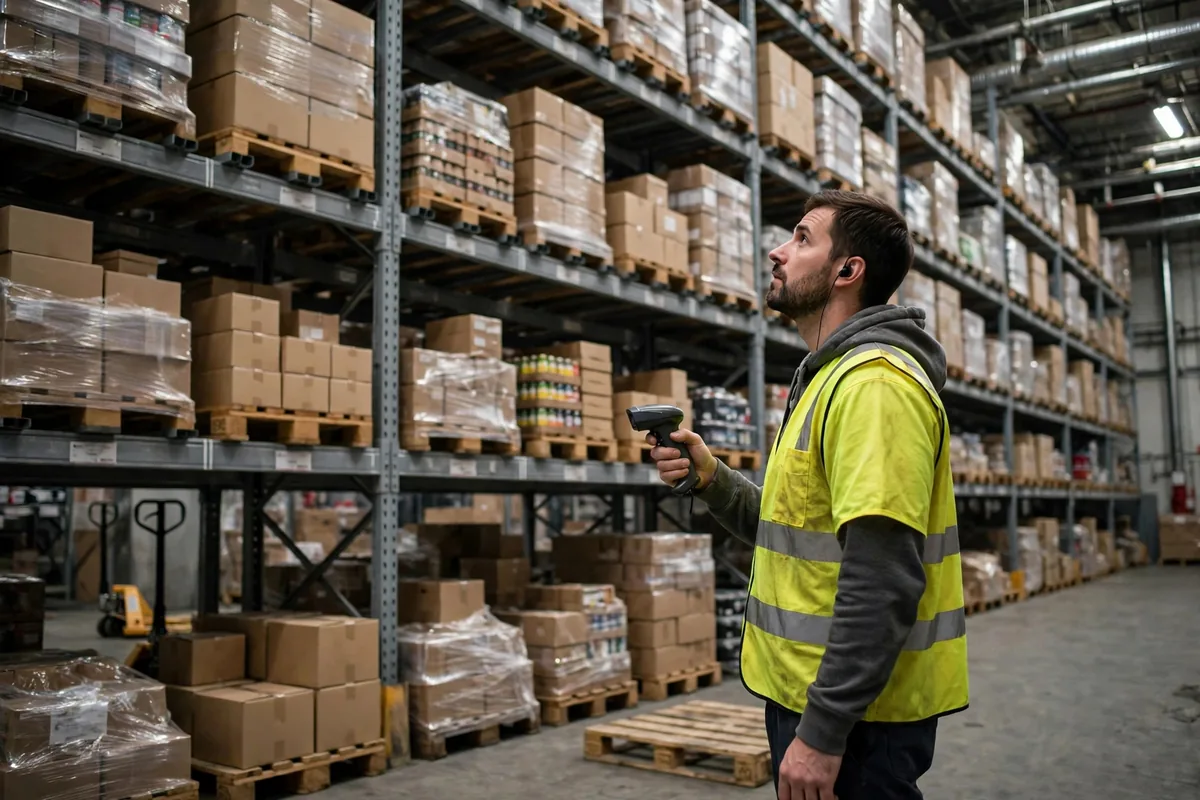
Here is the conclusion up front: warehouse slotting mistakes do not start with a slow picker. They start the moment a product is put in the wrong place. Heavy goods stored high, incompatible products stored side by side, and fast movers buried deep in the aisle — any one of these in your warehouse guarantees double picking and rework. I have seen this trap three times. Each time the floor blamed something different: short staffing, a big order wave, a system glitch. Each time the investigation ended in the same place: nobody had taken slotting seriously enough at putaway.
After more than 30 WMS go-lives, I have learned one uncomfortable lesson. The system gets the applause on launch day. Slotting gets the blame in the weeks after. The software can assign tasks perfectly, but if the product is not where the system thinks it is, the picker still pays for it. The picker arrives, finds the item out of reach, unsafe to take, or blocked behind other stock, and has to go back a second time. That is repicking. One pick becomes two, and the second trip usually drags recounts, task changes, and stock moves along with it.
What Warehouse Slotting Mistakes Actually Look Like
The first pattern is heavy goods stored high. In November 2023, at a 3PL warehouse in Ningbo handling small appliances, I watched a picker fetch a 22-kilogram carton from the third level. It took a step ladder and two people to bring it down safely. When I asked why it was up there, the answer was simple: that slot was empty when the goods arrived. In the second week after go-live, that product shipped more than 40 orders, and every single one needed the ladder and the second person. The picking supervisor came to me directly: this job could not be scheduled like the others, because one order consumed the time of three.
The second pattern is incompatible products stored next to each other. In April 2024, at a personal-care warehouse in Hangzhou, scented products sat one slot away from food-grade packaging. Nothing was damaged badly enough to scrap, but the customer detected the odor during inspection and demanded repacking for 120 cartons. Repacking was not just a new box. It meant opening, inspecting, changing packaging, relabeling, and rechecking every carton. One carton of rework consumed roughly three times the labor of a normal outbound carton. Walking two extra steps on putaway day would have prevented all of it.
The third pattern is a fast mover buried deep. In June 2024, at an e-commerce warehouse in Guangzhou, a product shipping about 300 orders a day was stored at the far end of an aisle, because that slot was large enough to hold extra stock. When the promotion hit, pickers queued in the aisle every day. The front orders could not finish, so the carts behind could not get in. The fastest-moving product in the building had become the biggest bottleneck. The team moved more than 800 cartons overnight, and that emergency move was itself another round of rework.
Three different stories, one shared bill: put a product in the wrong place once, and every order after that pays for it.
Why Warehouse Slotting Mistakes Only Surface After Go-Live
Because on putaway day nobody does the math, and on picking day everybody has to.
The putaway crew thinks in terms of clearing the dock. The truck is here, the dock is full, find an empty slot and move on. That logic is hard to argue with during a receiving peak. The problem is that "just put it somewhere for now" becomes a formal location in the system, and from then on the WMS believes the product lives there. When the picking task arrives, the picker discovers that the slot is hard to reach, unsafe to use, or impossible to exit with a full cart.
Another common cause is slotting by volume alone, without weight and travel distance. Rack capacity, aisle width, pick height, and distance to the packing bench can all look right on paper and fail on the floor. I have seen a slotting plan that looked beautiful in a drawing, while the real picker had to make two detours because a middle aisle was blocked by pallets. The drawing was not wrong. The plan was wrong because nobody had walked the route before go-live.
Here is the counterintuitive part: a warehouse that looks full is not necessarily efficient. Many managers treat empty slots as waste. In practice, a warehouse with no spare slots has nowhere to go when a fast mover changes with the season, so the whole building gets reshuffled. Keeping about 10% of the good locations open costs far less than a full reshuffle later. Space utilization and picking efficiency pull in opposite directions, and the picker's daily walking distance is the most expensive line in that trade-off.
The Night-Before-Go-Live Checklist: Six Steps to Lock Slotting
This is the checklist I run the night before every go-live. Follow it, and you avoid the three patterns above.
- Slot by weight, not by convenience. Any item over 15 kilograms goes on the first level or the lower half of the second level. High slots are for light goods only. The check is concrete: rank every product by weight, take the top 20 heaviest, and open each location in the system to verify its level.
- Slot by velocity. The top 20 products by daily orders sit closest to the packing bench and the shipping door, in aisles that are never dead ends. Re-rank that top 20 whenever the season changes.
- Separate incompatible products with a hard rule. Food, scented personal care, chemicals, and high-value goods stay apart, and the rule lives in the system, not in a verbal reminder. If a putaway task violates the rule, the task should not be assignable at all.
- One location, one product. Mixed locations look space-efficient, but they raise the odds of picking the wrong item. The space saved by mixing never covers the cost of one wrong shipment, its recheck, and its replacement.
- Walk the route yourself. With the checklist done, take a real picking task and walk it: from receiving to the location to the packing bench. If the route dead-ends, requires a ladder for a heavy item, or forces a detour, fix it that night, not after go-live.
- Keep relocation space. Reserve roughly 10% of slots in each zone for seasonal fast movers and temporary transfers. Empty slots are not waste. They are the reason your next reshuffle does not become rework.
Pricing the Rework: One Order, Worked Out in Full
Take the Ningbo heavy-goods product and work the numbers. A normal pick took about 4 minutes: walk to the location, take the carton, scan it, and deliver it to the packing bench. Stored high, the same order took about 11 minutes: ladder work, two-person handling, a floor transfer, and an extra weight check at the bench. Across more than 40 orders, the extra labor exceeded four and a half hours — more than half a shift for one picker, spent on a single product's bad location.
| Step | Normal pick | After a slotting mistake |
|---|---|---|
| Retrieval | One person, ground level | Ladder work, two people |
| Transport | Direct to packing bench | Floor transfer, then a second move |
| Checking | Scan and pass | Extra weight check and visual inspection |
| Time per order | About 4 minutes | About 11 minutes |
That table only covers the first layer. The second layer is wrong shipments, repacking, customer complaints, and expedited replacements. The Hangzhou repacking job took three times the labor of normal outbound work for 120 cartons, before counting packaging and label waste. A slotting mistake never costs just a few extra steps. One bad location charges you again at checking, packing, customer service, and replacement, one fee at each stop.
My judgment has not changed across these projects: slotting is not a form you fill in before go-live. It is the line between a warehouse that saves money every day and one that burns money every day. Get the locations right, and even an ordinary system runs smoothly. Get them wrong, and a faster system only makes mistakes faster.
Run these six steps the night before go-live, and check each one off. The step you cannot check off is the one that will blow up in your first week. I have seen this trap three times. I do not want to see it a fourth time in your warehouse.
By Lin Xiao, WMS Implementation Consultant