My phone rang at 2 AM. Another warehouse shift handover checklist failure — one missing line, one expensive night.
The night-shift lead was trying to keep his voice down: "Feng, we've got a problem. Forklift No. 3 died right in the middle of the receiving lane. Three trucks are lined up outside, and the drivers have been yelling for twenty minutes."
"Was that truck running fine when day shift left?" I asked.
Two seconds of silence. "Day shift... I don't think they said anything was wrong with it."
Let me be straight with you: everybody in warehousing thinks shift handover is simple. Day shift leaves, night shift arrives, a wave at the gate, "nothing much today," done. Then something blows up, and you realize the thing nobody handed over is always the thing everyone thought went without saying.
No big theories today. Just how our warehouse went from "a word at the gate" to a fixed 15-minute handover routine — and the tuition we paid along the way so you don't have to.
Two incidents, one root cause
The forklift first. Last August, peak season, our Fontana warehouse — 120,000 square feet, two shifts.
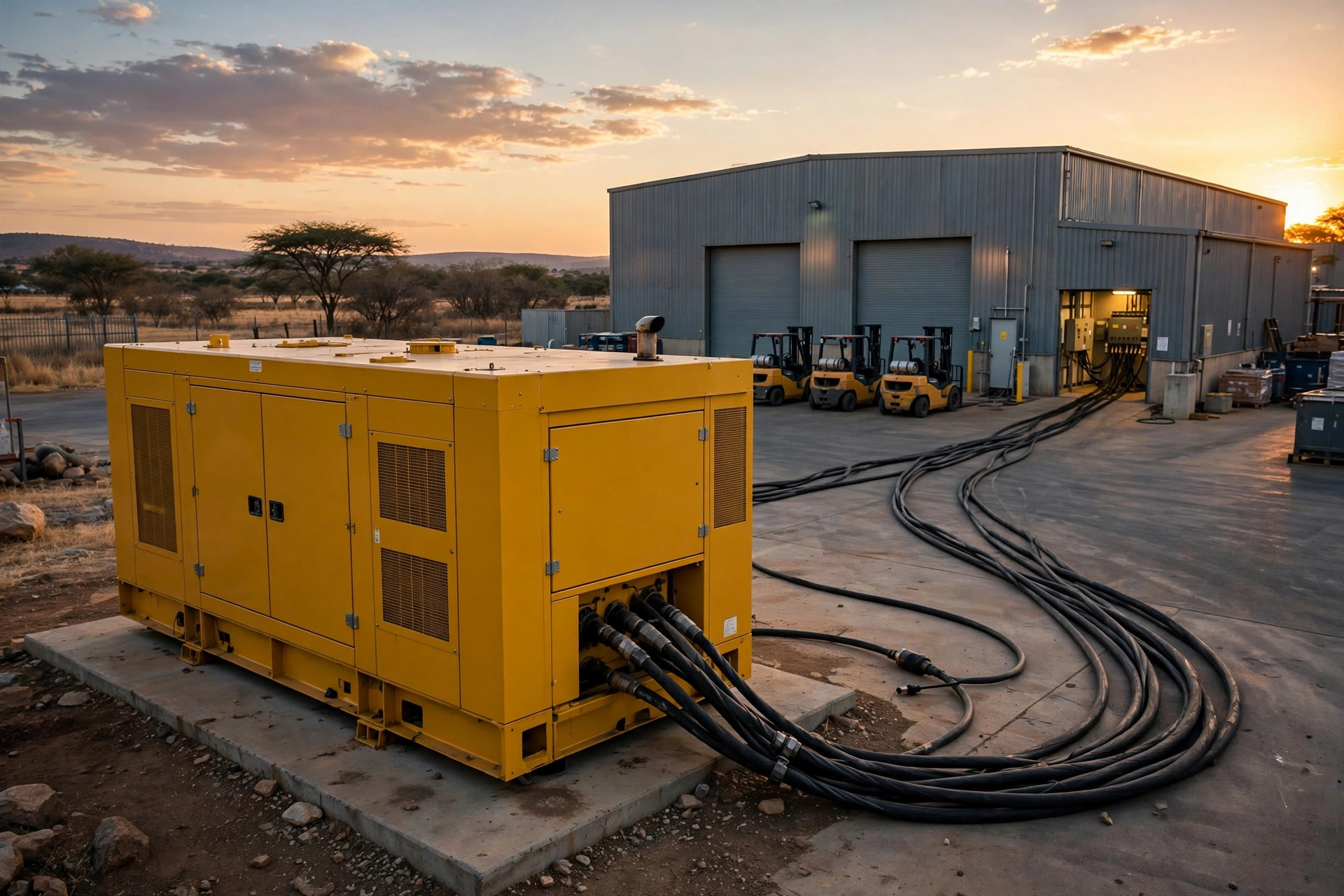
Around 11 PM, the night driver took electric forklift No. 3 down to the receiving lane. Two hundred meters out, it lost power. The steering went heavy, then it died completely — crosswise, right in the middle of the receiving lane. A 53-foot dry van had just backed in behind it. Nothing moving in either direction.
The night lead got people to push. It wouldn't budge. The tech lived far away — 40 minutes out. Three trucks queued at the gate. The first driver climbed down and yelled for a solid half hour.
Here's what we found later: the battery had been throwing warnings all through day shift, range clearly off. The day driver mentioned it casually to the lead, the lead got busy, never wrote it down, never said a word at handover. The night driver saw the truck parked there, assumed it was fine, and drove off.
Forty minutes. Three trucks. The whole receiving plan wrecked. And the part that stings: five minutes would have prevented it — one sentence at handover: "No. 3's battery is shot, don't touch it." After that night I made it iron law: equipment status is item one on the handover, and a dead truck gets pointed at in person. Writing it on paper isn't enough.
Then the mystery half-pallet. If the forklift was a visible loss, this one was invisible — and hurt worse.
November, two years back, same warehouse. Night shift got a big order: 400 cases for a retail customer. By 4 AM they'd picked 250 and hit the wall. They built a half-pallet of the 250, staged it, figured day shift would finish the job.
The problem: no tag, no location on the paperwork, and at handover just one line — "there's a half-pallet from last night in staging."
Day shift walked into staging and found seven or eight pallets of all sizes. Which one was "last night's"? Nobody could say. They re-picked the whole thing from the order. Two-plus hours, eight people, 250 cases picked twice. And the scary part: they nearly shipped the night's 250 as part of a different order. If that had gone out, the customer gets 250 cases that don't match, and the chargebacks and returns would have been ugly.
Since then we have a saying on the floor: work-in-progress that isn't handed over is work that never happened. A half-pallet with no location is a time bomb.
Three methods we tried — all crashed
After those two, I decided handover needed real rules. Honestly, the first three approaches all crashed, each one educational in its own way.
Verbal handover. The veterans hated the idea of writing anything down: "Ten years on the job and I need to write a handover?" What gets remembered is the big stuff; what gets forgotten is the small stuff that kills you. And when something goes wrong, there's nothing to check — "I told you" versus "no you didn't," and nobody wins that argument.
Voice messages in the group chat. Sounds modern — sixty-second clips back to back. But the next day, finding what night shift actually said means listening to dozens of clips end to end. When you're in a hurry, who has time for that?
A casual sheet of paper. We printed a form. First two days, people filled it out carefully. Day three: "nothing today," four words, done. A month later nobody knew where the forms went.
Three rounds, one lesson: when handover doesn't stick, it's not a people problem, it's a method problem. Wrong method, and even the most responsible crew won't keep it up.
Our warehouse shift handover checklist: 10 items, 15 minutes
Today our handover is two things: a 10-item warehouse shift handover checklist, and a "5-5-5" fifteen-minute routine. Two years running, zero handover incidents since.
The ten items first. A checklist isn't better longer — past ten, nobody reads it. Ours was bought with those two incidents; every line has tuition behind it:
- Work in progress: unfinished orders, half-pallets — order number and exact location, down to "staging, row B, third pallet"
- Equipment: which forklift is dead, which is charging, whether there are enough pallet jacks — dead equipment gets pointed at in person
- Exceptions: damage, quantity variances, problem orders — every order number written out
- People: who's out, how many temps showed, who's covering which position — night shift's nightmare is a staffing gap nobody knows about
- The shift's plan: how many trucks today, rush orders, carrier cutoff times
- Locked areas: cycle-count zones, QA hold areas — don't touch, don't ship
- Safety: oil or water on the floor, dead lights in which aisle, which door won't latch
- Customer specifics: this order needs photos before shipping, that one must be palletized
- Systems: any WMS errors, printers and scanners working or not
- Signatures: outgoing lead, incoming lead, time — in writing, so when something happens you know who to ask
Then the "5-5-5." First five minutes: the outgoing lead fills out the checklist before clocking out — not when the next crew arrives, because recalling on the spot always misses things. Second five: both leads walk the floor together — paperwork first, then the freight, then the equipment. The point is walking it, not doing it in the office; "equipment OK" on paper is worth less than one look with your eyes. Last five: the incoming lead asks questions, the outgoing lead fills gaps, both sign.
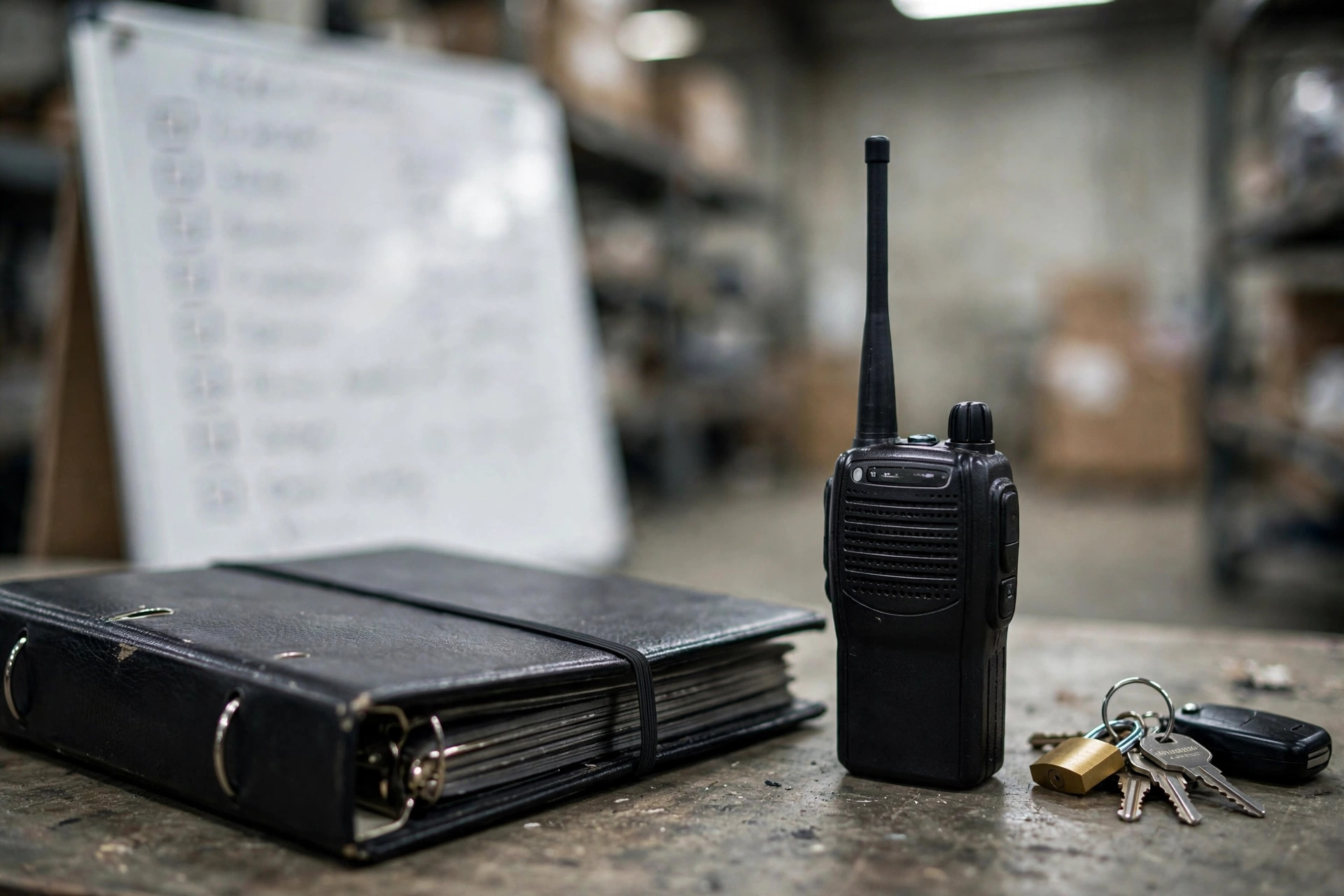
One detail: dead equipment must be "pointed at in person." Writing "No. 3 is down" isn't enough — both leads walk over and look at No. 3 together. A line on paper is forgotten by the time you turn around; seeing it together sticks. That rule was bought by the forklift incident.
Whiteboard or WMS: two ways to run the checklist
Checklist in hand, how do you actually run it? We've done both. Honestly, each has real trade-offs.
A big warehouse with WMS can use the handover module or a task board: exceptions pull in automatically, WIP locations are in the system, nothing gets lost. The upside is completeness; the downside is too much completeness — dozens of lines on one screen, the incoming lead can't read them all, and it becomes "select all, mark read." Which is the same as no handover.
A smaller warehouse without WMS does better with a whiteboard plus a photo in the group chat. Board by the office door, the ten items printed beside it, wiped and rewritten daily, photo dropped in the crew chat. Thirty seconds standing there and you see everything. The downside: ugly handwriting, photos sink in the chat history, digging up old ones is painful.
We do a hybrid: whiteboard, photo each shift, print and bind the photos at month end. Primitive? Yes. Works? Yes. The tool is secondary. What matters is three things: somebody writes it daily, somebody reads it daily, somebody signs it daily. Get those three and you could write it on a napkin. Miss them and the most expensive system won't save you.
The uncomfortable truth
Years in this business, and here's something that won't make me popular: when handover fails, don't blame the incoming crew. Blame the outgoing one.
What decides handover quality isn't the fifteen minutes after the shift — it's the thirty minutes before it ends. An outgoing lead who cleans up the floor, stages the WIP, and writes up the exceptions clearly can hand over in five minutes. One who clocks out and leaves a mess behind can't hand over in an hour — because even they can't say what the floor looks like.
So now we evaluate the outgoing lead: before signing, the incoming lead can make them fill in what's vague and put away what's out of place. The veterans grumbled at first — felt like nitpicking. A month in, everyone saw it: the better you close out your shift, the easier your own next shift is when someone hands over to you. It cuts both ways.
And one more: the checklist isn't for the veterans. It's for the temp covering a shift. Veterans skip the "obvious" stuff — "does that even need saying?" — and the obvious stuff is exactly what the new person doesn't know. What blows up is always the thing that went without saying.
Go look at your handover log. When was the last time someone filled it out properly? If it's collecting dust, don't wait for an incident to make rules. Work one full night shift, follow one full handover, and you'll know exactly which ten items belong on your list.
By Chen Feng, Warehouse Operations Manager