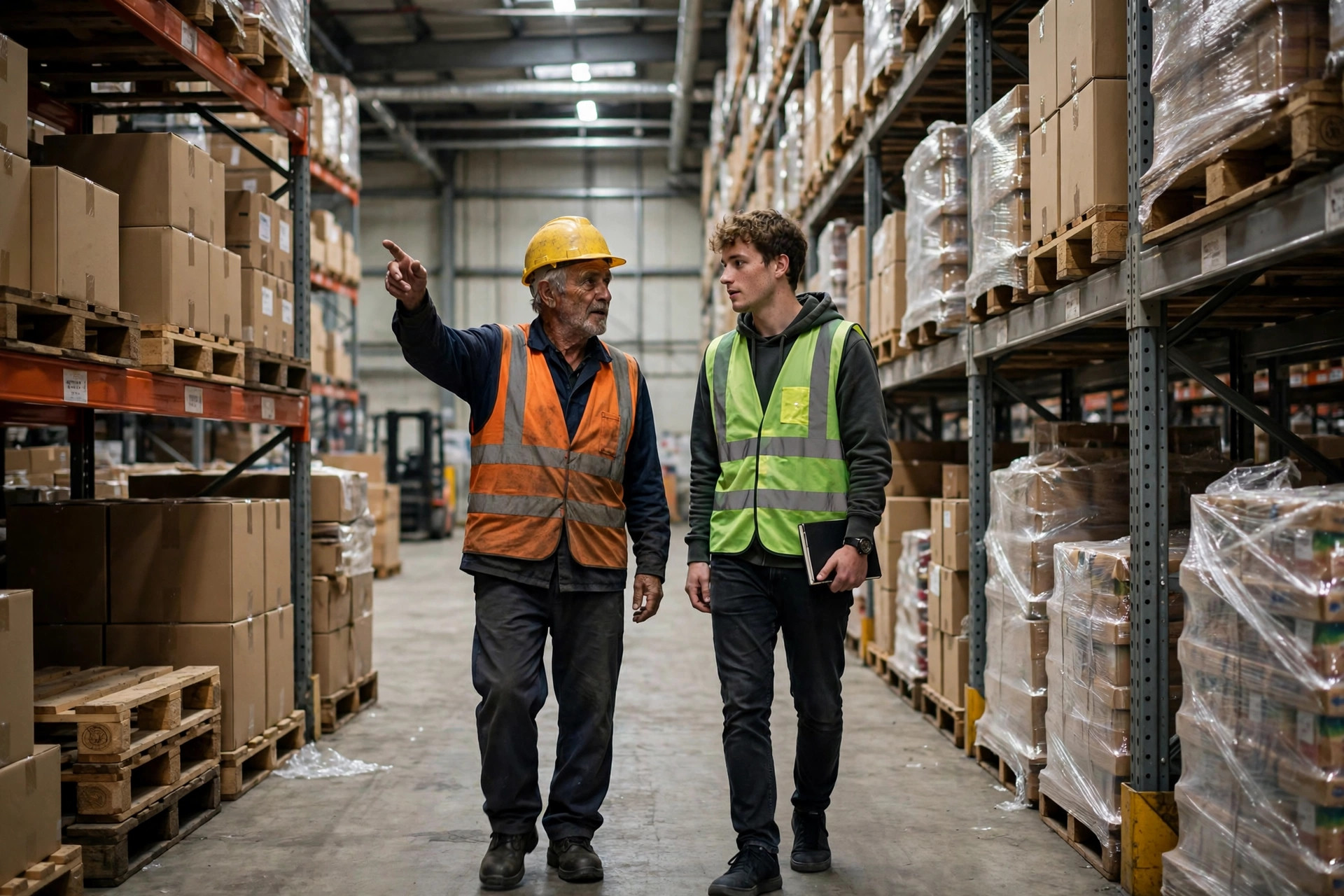
What happened in our warehouse last month pretty much sums up gen z warehouse workforce management in one scene.
7:00 AM, April 2026. Morning huddle at our 20,000-square-meter e-commerce warehouse in Kunshan. I call roll — three Gen Z pickers call in sick, all with the same "not feeling well." I know exactly what's going on. The day before, to clear a promo backlog, the shift lead told everyone they'd be working 12 straight days with one day off. The night before, in their dorm group chat, one of them wrote: "This job treats people like mules."
Here's the honest truth: in 2025, Gen Z made up 12% of our floor staff. By this April, it's 34% — and they're now the backbone of the operation. But the old management playbook flat-out doesn't work on them. You can't yell — chew one out in front of the crew and he's gone the next day. You can't dock pay — dock 50 yuan for being a minute late and he'll go ask the labor bureau about it. And overtime money doesn't buy them anymore: "Keep your overtime pay, I want my rest."
This January we ran an anonymous survey of 63 Gen Z floor workers. The question: besides money, what do you care about most? Their top four answers:
First, respect. "You can criticize me, just not in front of people." Second, transparent pay math. "If I can't read my pay slip, it's the same as not getting paid." Third, schedule certainty. "I can work overtime, but tell me in advance — I need to know which days this month I get off." Fourth, growth and their phones. "I want to learn something — forklift, systems, anything. And don't take my phone during the 20-minute lunch break."
See the pattern? What this generation wants is basically what we wanted back in the day but never dared to ask for. We changed three things in how we manage, and every one of them drew blood.
Change One: Scheduling — From "You're Notified" to "You Choose"
September 2025, peak season. Xiao Zhao, a picker born in 2002, worked 11 straight days. On night 12, at 3 AM, he put his scanner down on the table, told the shift lead "I'm done," and walked out. That week, three more Gen Z workers in his group called in sick. That was the old way: the lead makes the roster, overtime is announced verbally, no cap on consecutive days.
Here's what we do now, locked in as routine. Four rules.
First, next month's roster goes up on the 25th, and shifts are self-selected. Night shifts with the premium go first-come, first-served — they get grabbed faster than anything. Second, two tracks: a fixed five-on-two-off track for people who want stability, and a voluntary-overtime track for people who want to earn more. Peak-season overtime is sign-up only, premium doubled, no assignments forced on anyone. Third, no more than 6 consecutive workdays per month — a hard line, locked in the scheduling system, the lead can't override it even if he wants to. Fourth, shift swaps are self-initiated in a mini-app; the lead just taps approve. No written leave request, no made-up excuses.
The metric, stated clearly: voluntary attrition of Gen Z hires within 90 days of joining. Second half of 2025: 55% (38 hired, 21 left). First half of 2026: 23% (43 hired, 10 left).
Change Two: Communication — Criticize One-on-One, Praise in Public
November 2025. A shift lead chewed out Xiao Chen, an intern born in 2003, in front of 20-plus people on the dock — because he mislabeled two parcels. The next day Xiao Chen didn't show up. His resignation letter went straight into the work group chat, and he took the classmate who'd joined with him along. The lead felt wronged: "That's how I was trained." I told him: you got yelled at and kept working. He just leaves. That's the generation gap.
Three new rules, posted on every team's board. One: criticism is one-on-one only, never in front of the crew. Two: praise is always public — name names at the morning huddle, and be specific about what they did. Three: same-day rewards. We call them instant red packets — spot someone with a zero-error picking day, and the lead sends 20 yuan over WeChat on the spot. Five zero-error days in a row, 50 yuan.
The veterans grumbled we were spoiling them. The numbers: our pick error rate (QA sampling) fell from 0.31% in Q4 2025 to 0.18% in Q2 2026 — measured in our own warehouse. The money wasn't wasted.

Change Three: Incentives — Replace Fines With Instant Payouts
Gen Z is allergic to fines. We used to dock 50 yuan for one minute late; their reaction wasn't "I'll come earlier" — it was "let me check with the labor bureau." So we scrapped every deduction and replaced them with instant rewards. Three moves.
First, a daily earnings board. After each shift, workers scan a code and see exactly what they did today — pieces picked, money earned, every line item spelled out. A monthly pay slip is ancient history; they want today's money settled today.
Second, mentor bonuses. Since March 2026: a mentor gets 500 yuan when their apprentice is up to speed within 30 days, plus another 300 if the apprentice is still here at 90 days. Veterans used to hoard their know-how — "teach them and they'll replace you." Now they compete for apprentices. In 2025 we mentored 12 and 5 made it through. In the first half of 2026: 18 mentored, 15 made it.
Third, certification reimbursement. The forklift license exam costs 800 yuan — the warehouse pays. Pass it and you get a 200 yuan monthly skill allowance. Six Gen Z workers got certified in the first half of this year. They don't refuse to learn; nobody ever gave them the chance before.
The Math: Old Way vs. New Way
| Metric (measured in our warehouse) | Old way (H2 2025) | New way (H1 2026) |
|---|---|---|
| Gen Z 90-day attrition | 55% (38 in, 21 out) | 23% (43 in, 10 out) |
| Half-year hiring spend to keep 120 Gen Z on the floor | ~32,000 yuan (21 replacements × ~1,500 yuan each) | ~15,000 yuan (10 replacements × ~1,500 yuan each) |
| Pick error rate (QA sampling) | 0.31% | 0.18% |
| Monthly error rework pieces | ~620 | ~360 |
| Reform spend (instant rewards + mentor bonuses + certifications) | 0 | ~22,000 yuan per half year |
On the cost basis: hiring one picker costs about 1,500 yuan — agency fee, medical check, and three days of mentored onboarding converted to labor cost. Reworking one error costs about 8 yuan (re-pick plus customer service). The reform costs an extra 22,000 yuan per half year, saves 17,000 in hiring and roughly 12,000 in rework (260 fewer pieces × 6 months × 8 yuan) — and that doesn't count the efficiency gain from having more experienced hands on the floor. This is our warehouse's gen z warehouse workforce management ledger for the half year, and it balances.
Now the counterintuitive part: this generation is not afraid of hard work. Last Singles' Day, with double night-shift premium and voluntary sign-up, Gen Z signed up more eagerly than the millennials — some pulled 8 night shifts straight. Because "the pay is right, and it's my choice." What they can't stomach is meaningless suffering: overtime with no explanation, overtime pay they can't verify, getting chewed out without knowing what they did wrong. And here's the one that really surprised me: the looser we managed, the lower attrition went. Twenty minutes of phone time at lunch (outside safety zones), one earbud allowed in the picking aisles (safety permitting) — and slacking complaints went down. Treat people like thieves and they'll treat you like a stranger.
Three Reminders for Fellow Operators
First, don't compete with Gen Z on who endures more — compete on transparent math. Lay it out line by line: money, days off, growth.
Second, change the team leads before you change the rules. Gen Z is managed by millennial leads — if they don't change, your memos are just paper. We sat down with all four leads one by one first.
Third, the cheapest retention strategy is not losing people in the first place. Hiring one picker costs 1,500 yuan; 500 keeps one. At tonight's huddle, try just one thing: praise in public. Zero cost. You'll see the difference tomorrow.
Gen Z in the warehouse isn't a flood to fear. What they want is what we wanted but never dared to ask for. Three changes in management — and what changed wasn't them. It was us.
By Chen Feng, Warehouse Operations Manager