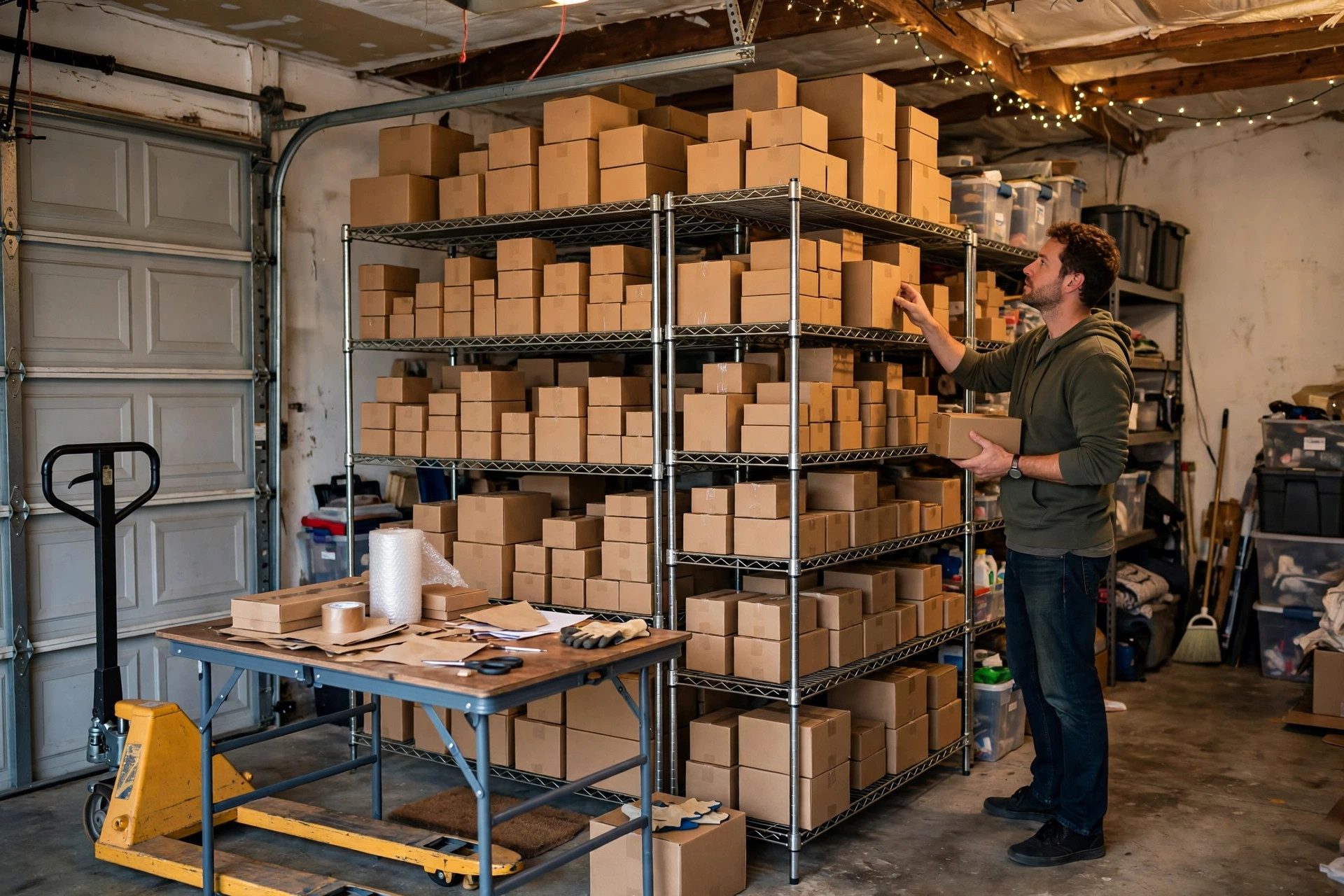
On the third morning after last year's peak-season sale, I walked into the warehouse and found three rows of returned parcels stacked in the picking aisle. The night shift had simply run out of room, so the returns went up against the racking that held good stock. That day we shipped more than 40 wrong orders, and customer service spent the whole shift on the phone. Let me be straight with you: a returns area feels like a small thing until it isn't. Get it wrong and it will slowly strangle your pick area.
The first time we got burned: one pallet between returns and good stock
This was about three years ago, not long after I took over this warehouse. Returns were light back then, a few dozen pieces a day, so we did what seemed sensible: we marked two pallet positions at the end of the pick area and called it the returns area. Returns went on top, and we dealt with them when the pile got big enough. It looked reasonable. It was not.
It went wrong on a Friday afternoon. A customer returned a batch of Bluetooth earphones. They looked exactly like good stock, only the boxes had been opened. Our quality checker was off sick that day, and the temp covering for him didn't look closely. A dozen or so opened boxes went straight into the pick face. That week we shipped more than 20 of them. Complaints came in one after another: opened boxes, one unit that wouldn't even power on. We refunded every order, paid for the return shipping, and lost the trust of one of our bigger accounts.
That was the day I learned the lesson: the gap between your returns area and your good stock can't be one pallet. It has to be a real wall, even if that wall is just yellow floor tape. And physical separation isn't enough. In the system, a return has to land in a frozen location the moment it arrives, locked so nobody can pick it by mistake.
When the returns area overflows, the pick area chokes first
The incident that finally forced us to redesign the layout happened during last year's peak. Returns were coming back at more than a thousand pieces a day, and our returns area was about 30 square metres. It filled up by day three. And when it filled up, where did the overflow go? Into the pick area. First it took the aisles, and pickers had to turn sideways to push their carts through. Then it took the staging area, so outbound orders ended up stacked on the floor. By the end of the week there were cartons near the fire exit, and the safety officer wrote us up on the spot.
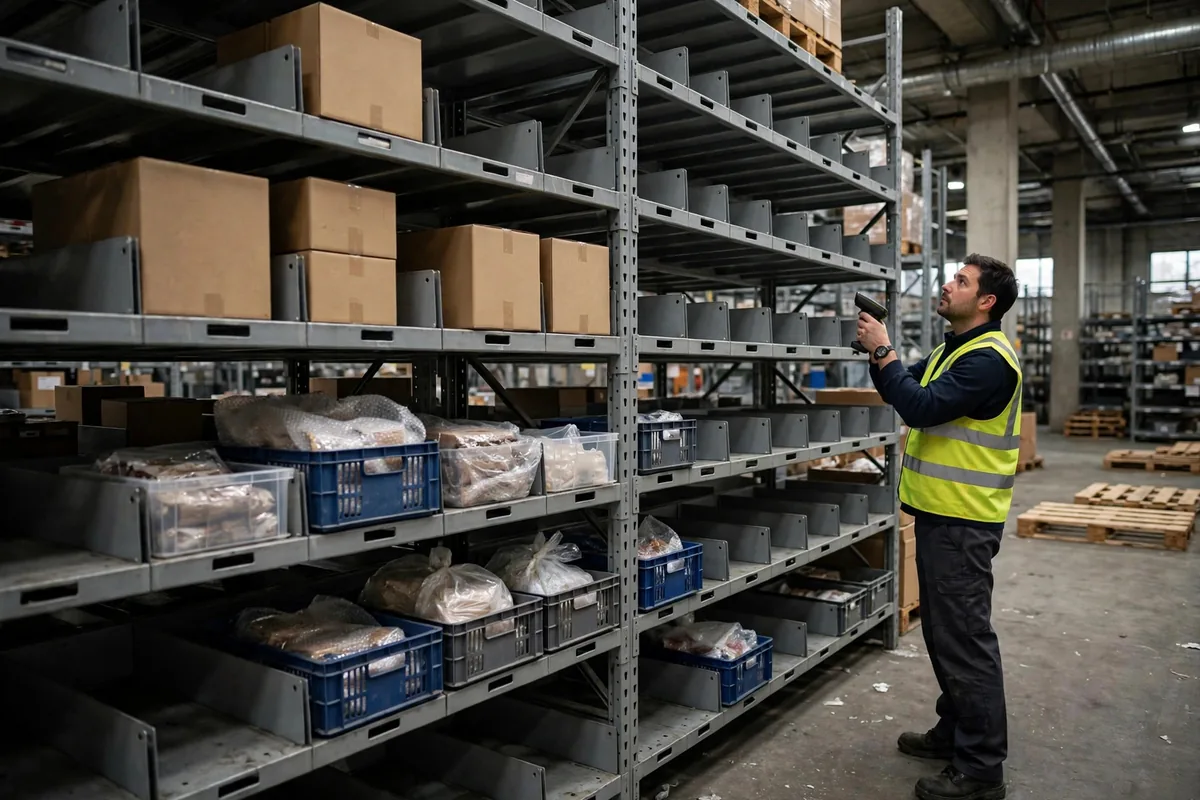
I still remember the numbers from those days. Picks per person per hour fell by close to a third. Nobody was slacking off. The routes were just blocked, and every detour came out of working time. Worse was the cycle count. With returns mixed into good stock, the counters couldn't tell which cartons were awaiting inspection and which were sellable. One count came back with more than 60 items out of balance, and finance wanted answers the same day.
Here's the thing, folks: returns themselves aren't the problem. Returns with nowhere to go are the problem. Peak-season return volumes can run two or three times the normal level. If you size your returns area for a normal Tuesday, it will blow up on day one of peak.
How we run it now: the returns area in three zones
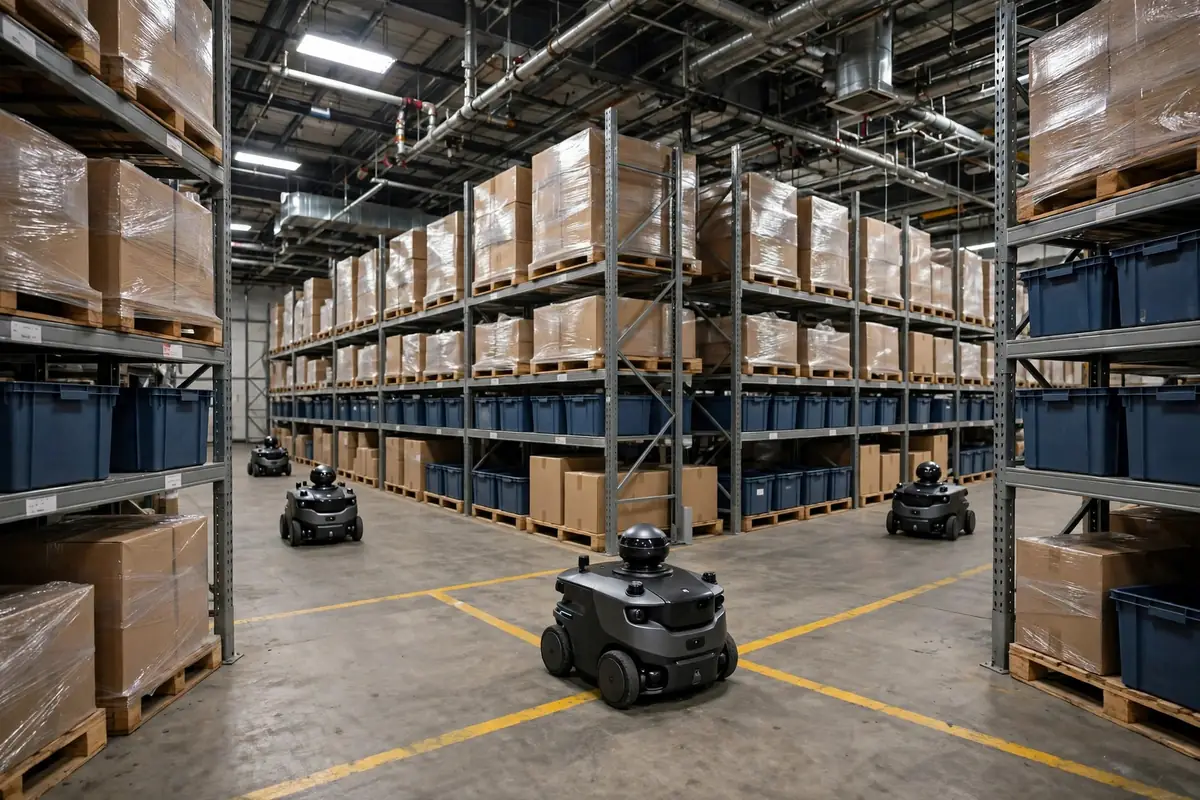
After trying a few approaches, we settled on splitting the returns area into three zones, each with its own job, and none of them sharing space with the others.
Zone one is receiving hold. Returns get unloaded here, right next to the receiving dock. One job only: count them, stick a returns label on, and freeze them in the system. It doesn't need to be big, but it has to sit next to the dock so returned cartons never travel through the warehouse looking for a home.
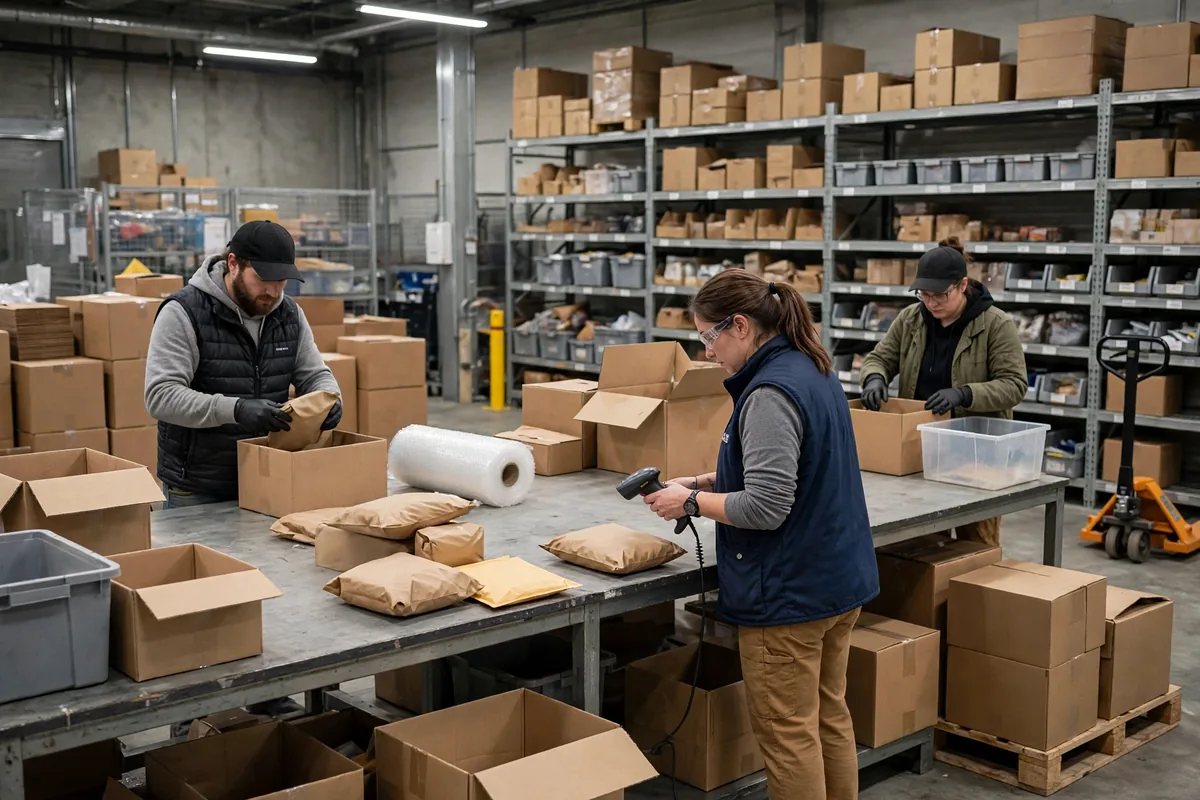
Zone two is inspection and sorting, the heart of the returns area. Inspectors work bench by bench. Resellable items get repacked and go back to good stock through a green channel. Items needing repair go to a repair hold. Scrap goes straight into the scrap cage. The rule is simple: every bench must be cleared the same day. Nothing stays overnight, because an uncleared bench is where mixing starts all over again.
Zone three is pending-decision hold, for goods waiting on a supplier call or a customer confirmation. This zone is the one that runs away from you if you let it, so we put a hard rule on it: every location carries a card stating whose goods they are, what decision is pending, and the latest date for an answer. Anything past its date gets named in the morning meeting, and the delay belongs to a specific person.
The three zones are divided by yellow floor lines, with big painted words on the ground: INSPECT, REPAIR, SCRAP. Big enough to read from the far side of the aisle. On a new hire's first day, a veteran walks them around, points at the floor, and explains it once. That beats ten pages of procedure.
Let me put numbers on the change. The redesign cost us one weekend, moving about a dozen racks, mostly overtime for two shifts. After that, during the next peak returns week, picking productivity barely moved, our mis-ship rate stayed at its normal level, and count variances fell back to the usual small range. Honestly, two avoided complaint refunds would have paid for the whole job.
| Practice | Before | Now |
|---|---|---|
| Where returns sit | Two pallet spots at the end of the pick area | A dedicated three-zone returns area |
| System status | Returns pickable alongside good stock | Frozen on arrival, locked from picking |
| Inspection | Dealt with when the pile got big | Benches cleared the same day |
| Peak picking output | Down close to a third | Barely affected |
| Count variances | 60+ items off in one count | Back to normal range |
And here is the counterintuitive part: a lot of people think a bigger returns area is always better, that you should give returns half the warehouse. I disagree. Give returns too much room and goods settle in there. Inspection slows down, decisions drag, and your returns area turns into a second dead-stock zone. What a returns area needs is fast flow, not floor space. Enough space is enough. What matters is clearing it daily and putting a deadline on every batch. Every extra day a return sits in your building is another day of tied-up cash and another chance for a mistake.
One warning for fellow operators
If your returns are still sharing aisles and racking with good stock, or if a return can be picked by the system the moment it arrives, don't wait for peak season to fix it. Peak won't give you time to redesign. It will just detonate every corner you've been putting up with.
Do three things first. They cost the least and pay back the fastest. One: freeze every return in the system on arrival and keep it physically separate from good stock. Two: clear the inspection benches the same day, no overnight piles. Three: put a latest-decision date on every pending batch, and name the overdue ones in the morning meeting. Get those three right and your returns will never crush your pick area again.
By Chen Feng, Warehouse Operations Manager