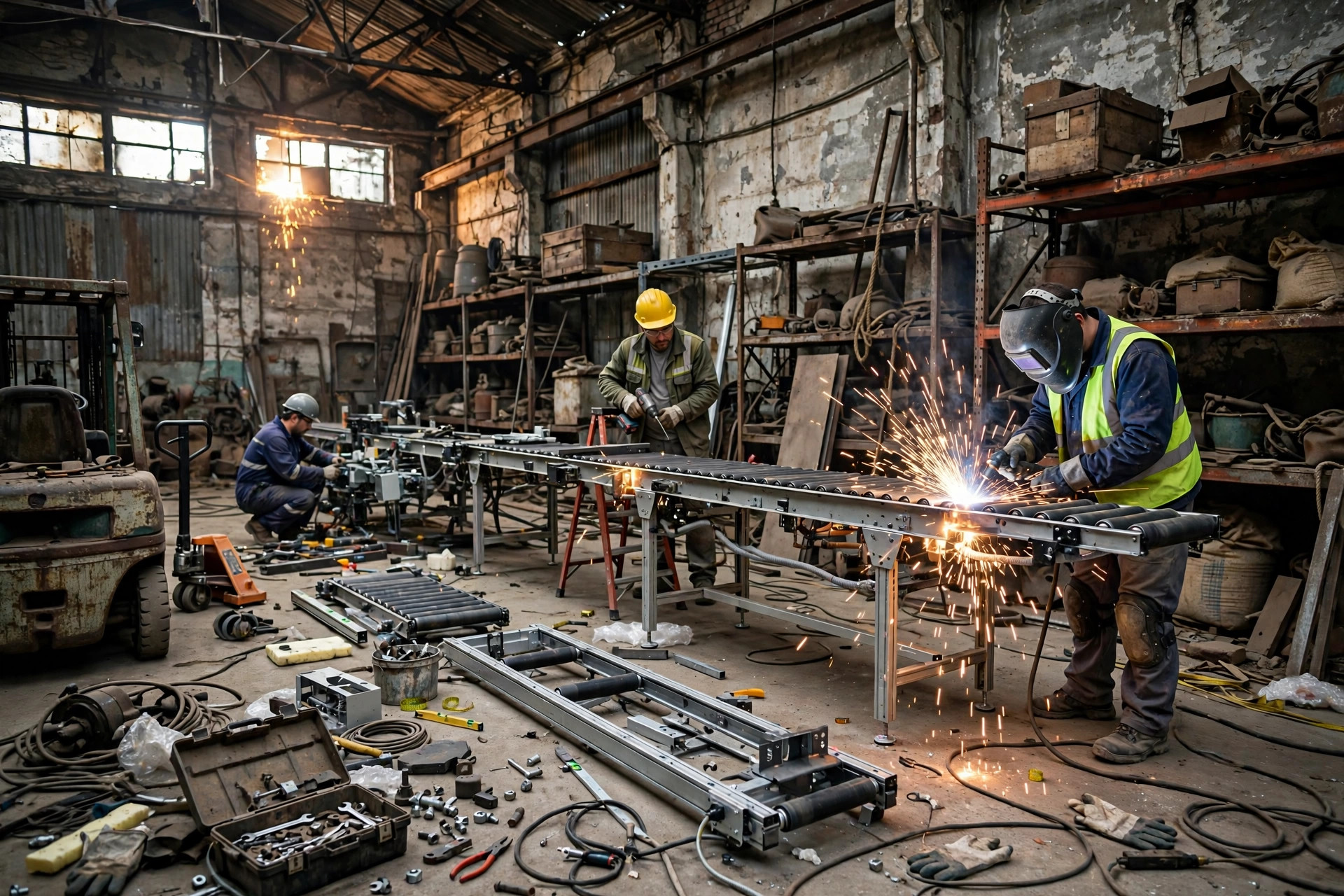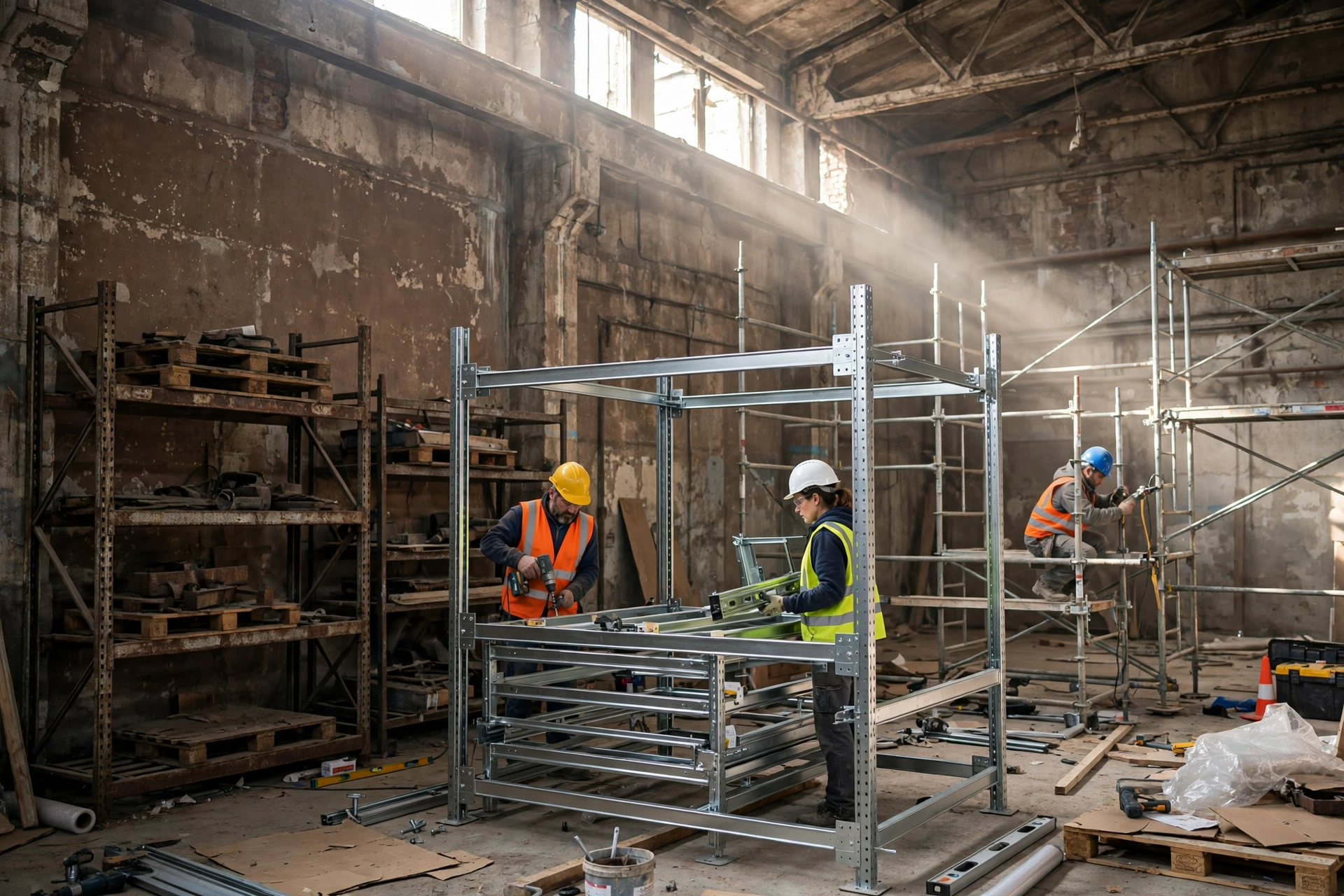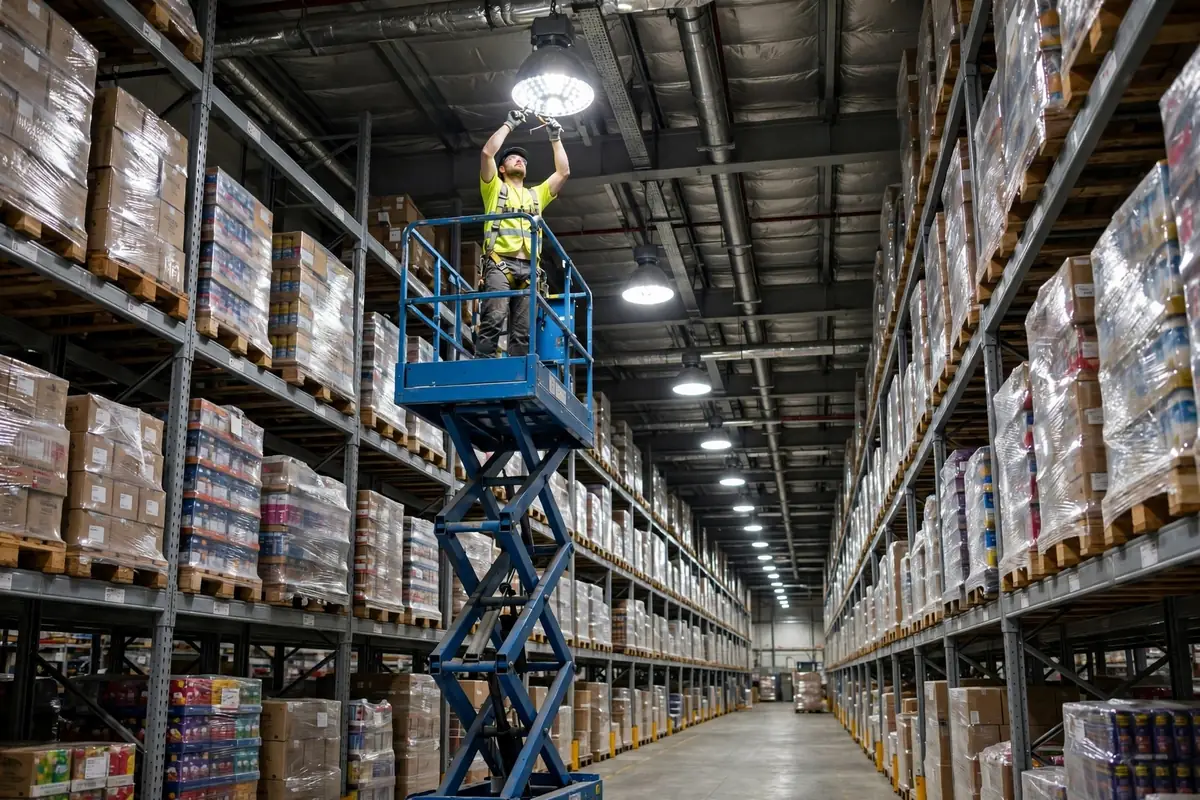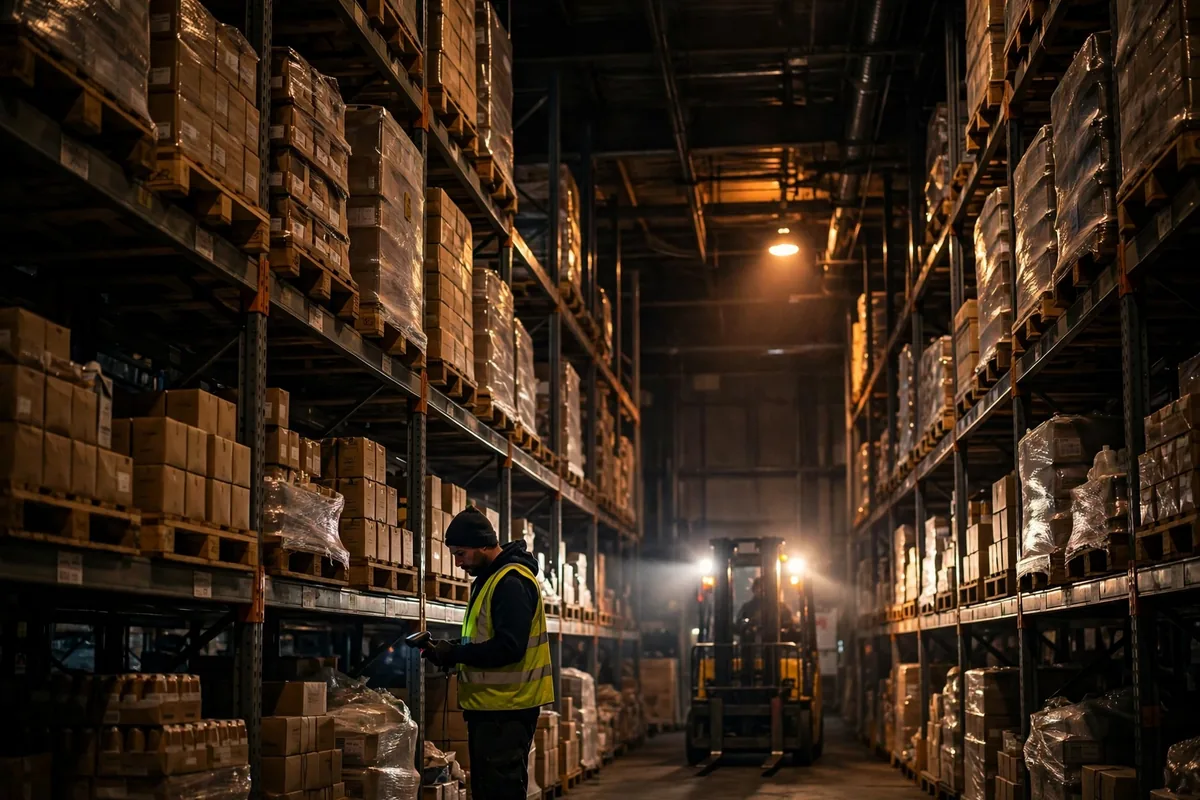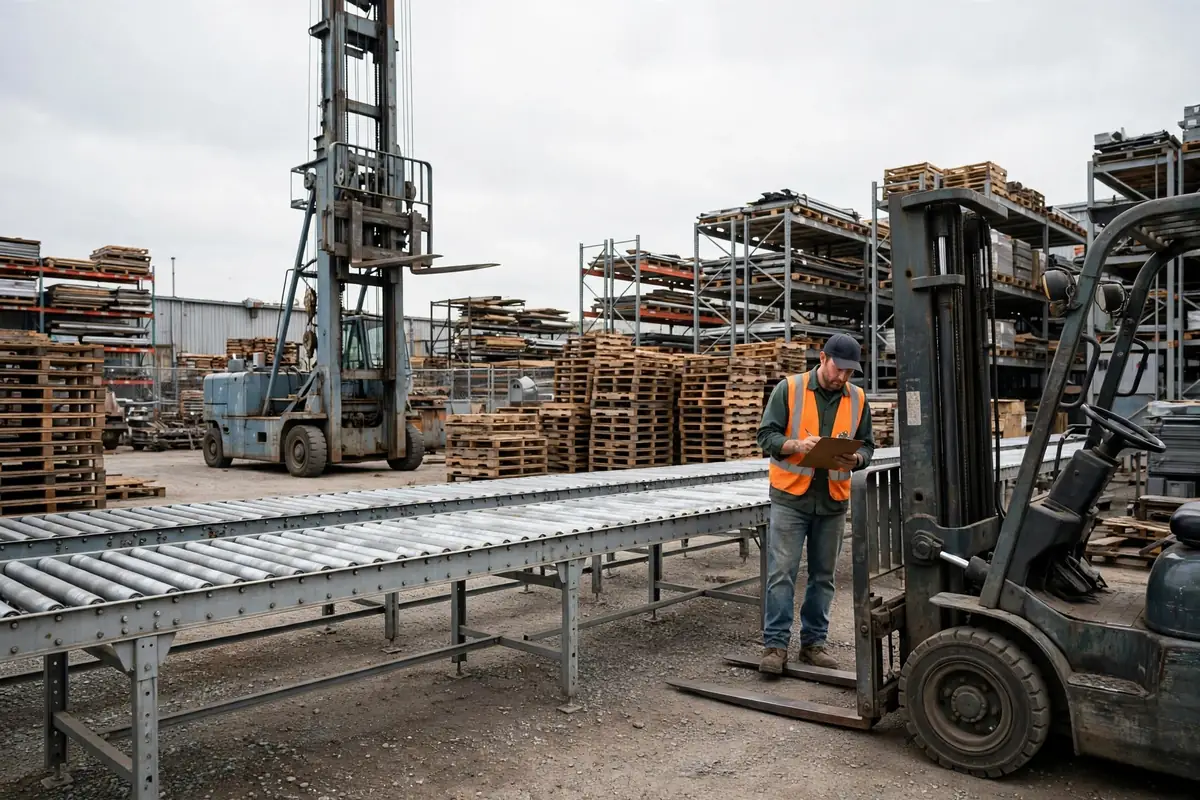
An 8,000-square-meter warehouse with a leaking roof, racking that stops short of the ceiling, and forklifts weaving around columns all day. The owner asked me one question: retrofit, relocate, or build new — which is cheapest?
I could not answer on the spot. A retrofit warehouse decision made from the construction quote alone is almost always wrong. I have watched too many operators nod at the refit quote, then spend the next three years paying back the moving costs they thought they had saved — with interest, in wasted labor.
The numbers below are an illustrative model, not any real warehouse's quote: an 8,000-square-meter site with six years left on the lease, costed over ten years for all three options. The figures are made up. The structure is real. Plug in your own rent, labor, and volume, and the answer will show itself.
Stop Comparing Retrofit Warehouse Quotes. Compare Ten-Year Total Cost
The three quotes look nothing alike. To compare them honestly, force them onto the same basis: ten-year total cost — one-off investment, plus ten years of rent, plus ten years of operating-cost drag, plus downtime and switchover losses. Compare only the first item and a refit always wins. Count all four and a refit often loses.
| Cost item (10-year basis, illustrative model) | Retrofit | Relocate | Build new |
|---|---|---|---|
| One-off investment | Low: structural work, equipment, fire-code fixes | Medium: move, fit-out, equipment transfer | High: construction, equipment, permitting time |
| Ten years of rent | Old rent on renewal, increase depends on negotiation | New rent usually higher, but rent-free periods are negotiable | No rent on owned land, replaced by cost of capital |
| Operating-cost drag | Extra columns and low ceilings mean longer pick paths | Redesigned flow can lift productivity | Best flow, but a long bedding-in period |
| Downtime and switchover | Phased work, smallest disruption | Move weekend plus switchover, losses concentrated | Old site runs during construction, one switchover |
The table makes the trade visible. A refit is cheap because you do not move. Relocation and new build are expensive because you are buying a redesigned flow. If your problem is flow and ceiling height, the money a refit saves on moving gets eaten, day by day, by extra walking and extra headcount. Whether that money was wasted depends entirely on where your problem actually lives.
Take an auto-parts warehouse as an illustrative example: columns every 6 meters, each forklift turn costing an extra half minute, 400 turns a day — that is 200 minutes, roughly half a worker. Over ten years, that half a worker costs more than the refit quote saved. That is how the math has to be done.
Where Refit Money Really Goes: Three Layers
Refit quotes hide costs because they stack in three layers: the equipment you can see, the structure you cannot, and the compliance bill that arrives last.
Layer one is equipment: racking, conveyors, forklift charging. The most transparent part, the easiest to price-compare, and the hardest place to save serious money.
Layer two is structure: can the floor take high-bay racking? Can columns move? Can the roof go higher? If any answer is no, retrofit cost jumps. A food warehouse wanted to raise a 9-meter ceiling to 12 meters for a high-bay system; the roof could not take the load, and the reinforcement cost more than the racking itself. That is a refit's hard limit — you spend the money and the ceiling is still 9 meters.
Layer three is compliance: fire compartments, sprinklers, escape routes. An old warehouse's fire approval dates from a decade ago; move the racking and the fire case gets reopened. Quotes often carry this line as "to be confirmed at cost." The day it settles is the day the owner's face changes color.
My rule for clients: if structure and fire items on a refit quote are marked "provisional" or "at cost," multiply the total by 1.3 before comparing. Not pessimism — I have seen too many provisionals turn into real invoices. Relocation and new-build quotes are cleaner in this respect: a new building's fire and structure are done once, to current standards, with no historical debt.
One related note: if you do choose to refit, the question becomes how to rebuild without stopping operations — the sequencing and no-shutdown approach in the brownfield warehouse automation retrofit guide is worth reading first. That guide covers how to refit; this piece covers whether to refit. Together they make one complete decision.
Three Numbers That Draw the Retrofit Line
Do not choose by feel. Three numbers, and any one of them can flip the answer.
First: remaining lease. Under three years left, a big retrofit investment has too few years to amortize — usually not worth it. Over six years, retrofit has room to pay back. Three to six years is the grey zone; check the second number.
Second: structural and fire cost as a share of equipment spend. If reinforcement plus fire work exceeds 40% of the equipment budget, the refit's value collapses — over 40 cents in every dollar is paying off the old building's debts, not buying efficiency. Relocation usually wins then, because every dollar in a new building buys efficiency.
Third: flow loss. Measure one thing: how much extra distance pickers walk after retrofit. In the illustrative model, one extra kilometer per picker per day, ten pickers, is 2,600 kilometers of labor a year. Converted to hours and headcount over ten years, it is not small. If the retrofitted flow still loops around columns, relocation and new build suddenly look cheap.
The counterintuitive part: a refit looks cheapest because it hides cost in the future. Relocation looks most expensive because it stacks all its cost up front. The honest comparison is ten-year total cost, not this year's cash flow. Choosing a refit when cash is tight is reasonable — but be clear-eyed that you chose "pay later," not "cheaper."
One trade-off people miss: relocation and new build let you redo site selection. The old site's location was chosen a decade ago; customers and suppliers have moved since, and the freight profile has changed with them. A refit locks you into the old address, and ten years of extra transport spend can exceed the cost of moving. That line never appears on a construction quote. It appears on the monthly freight invoice.
The Formula You Can Run Yourself
There is no standard answer, only one formula:
Ten-year total cost = one-off investment × 1.3 (retrofit warehouse only, for provisional structure and fire items) + ten years of rent + ten years of flow-loss labor + downtime losses.
Run all three options through it and pick the smallest number. Under three years of lease left, structural costs above 40% of equipment spend, and a flow that still loops — meet two of those three and the refit is out; choose between relocation and new build. Meet none of them and a refit is the cheapest route.
My advice: spend two weeks measuring those three numbers properly before talking quotes. If you cannot measure them, do not sign a refit contract yet. Every dollar signed on "roughly right" is a dollar spent on a feeling.
By Lao Zhou, Logistics Cost Analyst