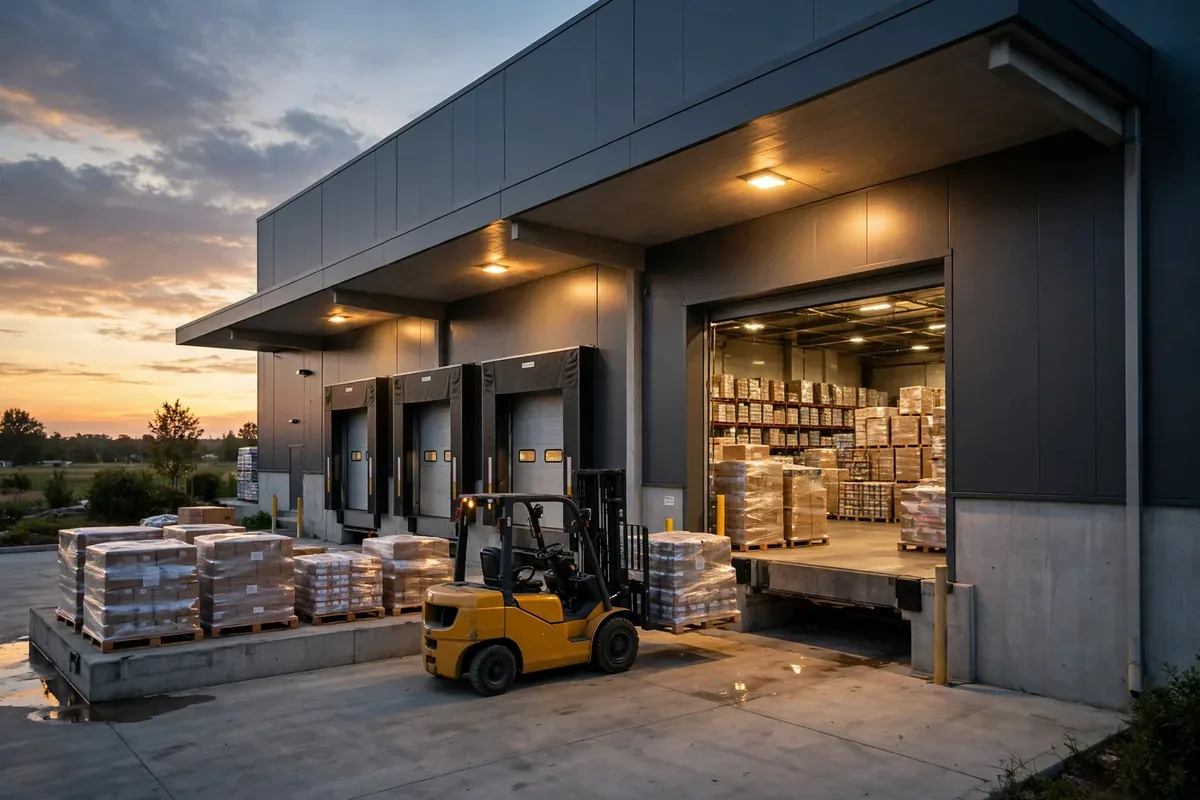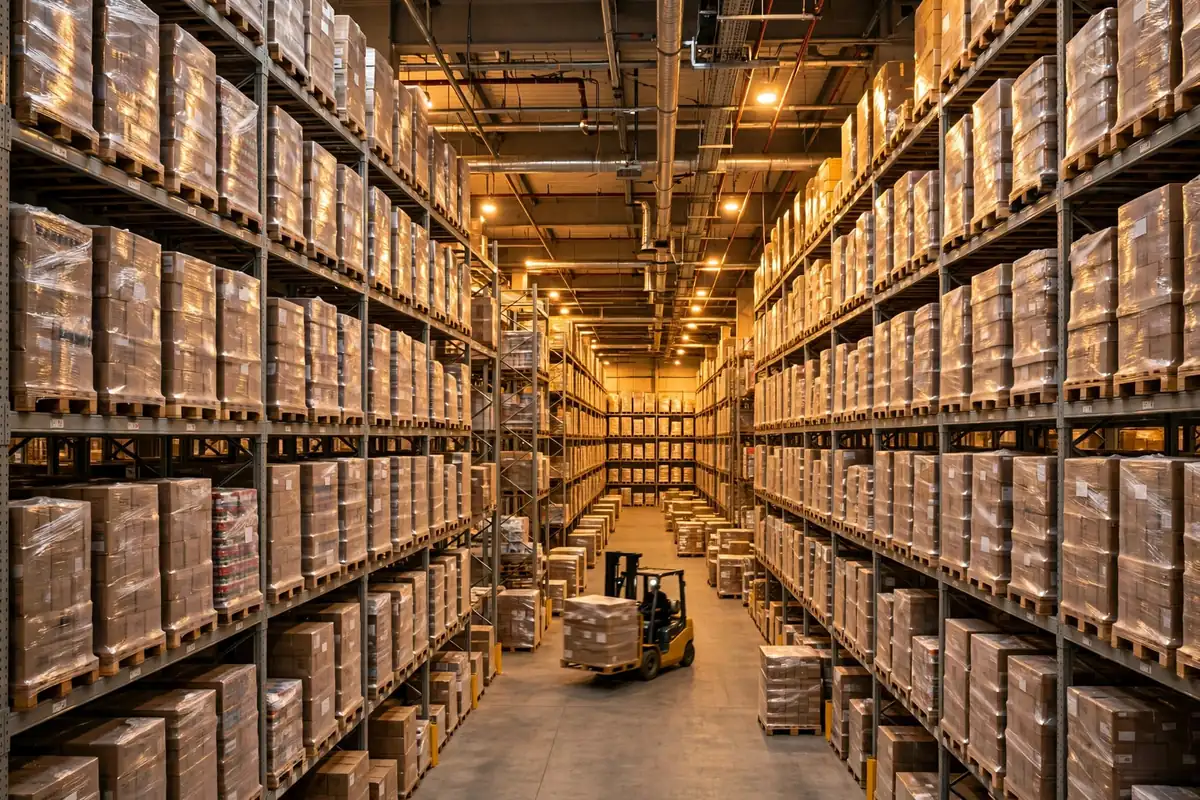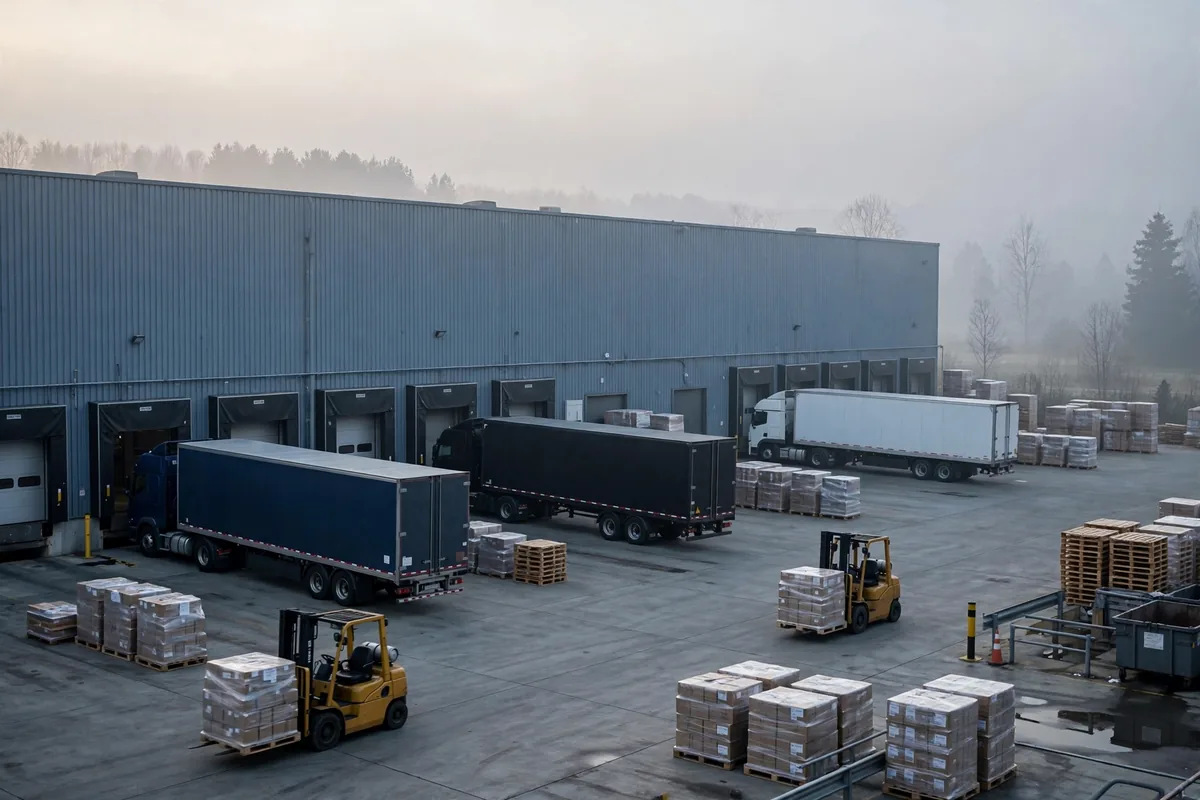
We had a client, a small-appliance exporter running an 8,000-square-meter warehouse in Dongguan. Last summer a storm flooded the ground floor, and the damage to stock and equipment came to just under 2 million yuan. The boss was calm about it. He had 12 million in coverage, he said. Then the claim came back at barely 1.3 million, and the rest came out of his own pocket. He was stunned: my policy says 12 million, so why did I only get 1.3?
The answer sits in how the coverage amount is calculated. Your coverage amount is not a promise to pay that number. Insure too little, and the payout gets scaled down proportionally. Insure too much, and the extra premium buys you nothing. Warehouse property insurance coverage is a Goldilocks problem: too low wastes your money, too high wastes it just as surely, and the right number is the one in the middle.
Replacement Cost vs. Book Value: What Your Coverage Amount Is Really Based On
Start with the Dongguan client's mistake. His 12 million was built from book values: inventory at purchase cost, racking at depreciated net value, forklifts at three-year-old residual value. Sounds honest, right? But when a claim is settled, the insurer looks at what it would cost to buy everything again at the moment of the loss, which is replacement cost.
Run the numbers for this warehouse and the gap shows up fast. The racking originally cost 1.8 million, sat at 900,000 on the books after depreciation, and would cost 2 million to buy and install again. Three forklifts carried a combined book value of 400,000 and would cost 750,000 new. Inventory was booked at 8 million, but the flood hit during peak-season stocking, when the warehouse actually held 11 million worth of goods. Add it up and replacement cost was heading toward 15 million, while the policy covered 12 million. Apply proportional settlement and the 1.3 million payout stops looking mysterious.
Here is the contrarian point: book value feels like the honest number, and it is the most common source of underinsurance. Financial statements are written for tax and shareholders. Insurance needs the "start over from scratch" number. In a normal year those two figures can sit 20 to 30 percent apart. Before you negotiate coverage, get the warehouse team and finance in one room and re-price racking, equipment, and inventory at "what it costs to buy today." That figure is the real foundation of your coverage amount.
Another client went the opposite way. A Shenzhen 3PL handling home goods, afraid of coming up short, insured at its historical peak inventory value of 26 million for the entire year. The catch: that 26 million only existed for three months, October through December. The rest of the year the warehouse held around 14 million. The extra coverage cost roughly 40 percent more premium all year, for nothing. Anyone on the selling side will tell you, quietly: the higher your coverage amount, the happier the insurer, because a claim still pays actual loss, and the extra coverage never pays out extra.
Peak-Season Inventory and Your Coverage Amount
Warehouse stock does not move in a straight line. It moves in waves. Peak-season stocking, year-end promotions, one big unexpected order, and inventory can double in six weeks. A single fixed coverage amount is either too small in peak season or wasteful in the off season.
The approach we usually recommend has two layers. Set a baseline coverage amount for normal months, covering everyday inventory plus equipment replacement cost. Then negotiate a separate peak-season uplift. The Shenzhen client later switched to a 15 million baseline with an uplift to 26 million from October through January, and the premium came in nearly 30 percent below the old all-year peak policy, with peak-season losses still fully covered.
Here is an insider detail worth knowing: many policies carry an "automatic increase" clause or a "floating declaration" clause. They sound like freebies. In practice they are mechanisms where you declare inventory monthly and the coverage amount adjusts with it. For a warehouse with big swings, that beats a flat policy. But it has a condition: you have to actually file the declaration every month. Miss a month, and a claim still gets scaled down. This is exactly where the buying side tends to slip. Everyone nods at signing, and then nobody owns the monthly filing.
One more thing to check: goods in transit zones and staging areas. One client's stock caught fire while sitting in a staging area, scanned in but not yet put away. The insurer initially tried to exclude part of it as "not yet stored." It took receiving scan records and location photos to get it recognized. The lesson is plain: your coverage amount should cover every zone in the building, including staging, returns, and inspection areas. Get the contract to say so, and do not leave room for a "racking stock only" limitation.
Deductibles vs. Premiums: The Trade-Off Nobody Explains
Most people negotiate coverage by staring at the premium line and trying to push it down. The number that actually deserves the argument is the deductible, and the math runs in the opposite direction from what you would expect.
Take a mid-sized warehouse as a worked example. At 15 million in coverage, a 50,000 deductible might carry an annual premium around 90,000. Raise the deductible to 200,000 and the premium might drop to just over 60,000. Saving 30,000 a year sounds great. But small incidents happen two or three times a year as a matter of routine: a leak ruins a pallet worth 80,000, a forklift takes out a racking row worth 120,000. With a 200,000 deductible, all of that comes out of your pocket. Over three years, the small losses you absorb can easily exceed the premium you saved.
My judgment: the deductible should not be as low as possible or as high as possible. It should match the small loss you can absorb without flinching, two or three times a year. Keep the small stuff yourself and hand the insurer the losses that would actually hurt. That is what insurance is for. Push the deductible down to 10,000 or 20,000 and you pay a fat premium for what amounts to a small-repairs reimbursement service. That is the wrong purchase.
One clause people skip: the definition of a single occurrence. Three days of continuous rainstorm, is that one incident or three? The policy wording on "each occurrence" decides whether the deductible is applied once or three times, and the difference can run into hundreds of thousands. Pull that sentence out and ask about it before you sign.
Before You Sign, Ask These Three Questions
So here is the close. Next time you negotiate a warehouse property insurance coverage amount, do not start with "what is the annual premium?" Start with these three questions.
First, is the coverage amount based on replacement cost? Have inventory, racking, and equipment each been priced at what it costs to buy them today, and is that breakdown written down separately?
Second, how are peak-season inventory spikes covered? Is it a flat all-year peak figure, a baseline plus a seasonal uplift, or a monthly floating declaration? And what does each option cost?
Third, how are the deductible and "each occurrence" defined? How many small incidents do you realistically expect in a year, and can you comfortably absorb that deductible that many times?
Ask those three questions and the insurer will know they are dealing with someone who has done the homework. The proposal that comes back will be noticeably more honest. There is no standard answer for a coverage amount. There is only an answer you have actually done the math on. Do the math first, then sign, and the premium you pay will be money genuinely well spent.
By Susan, 3PL Sales Director