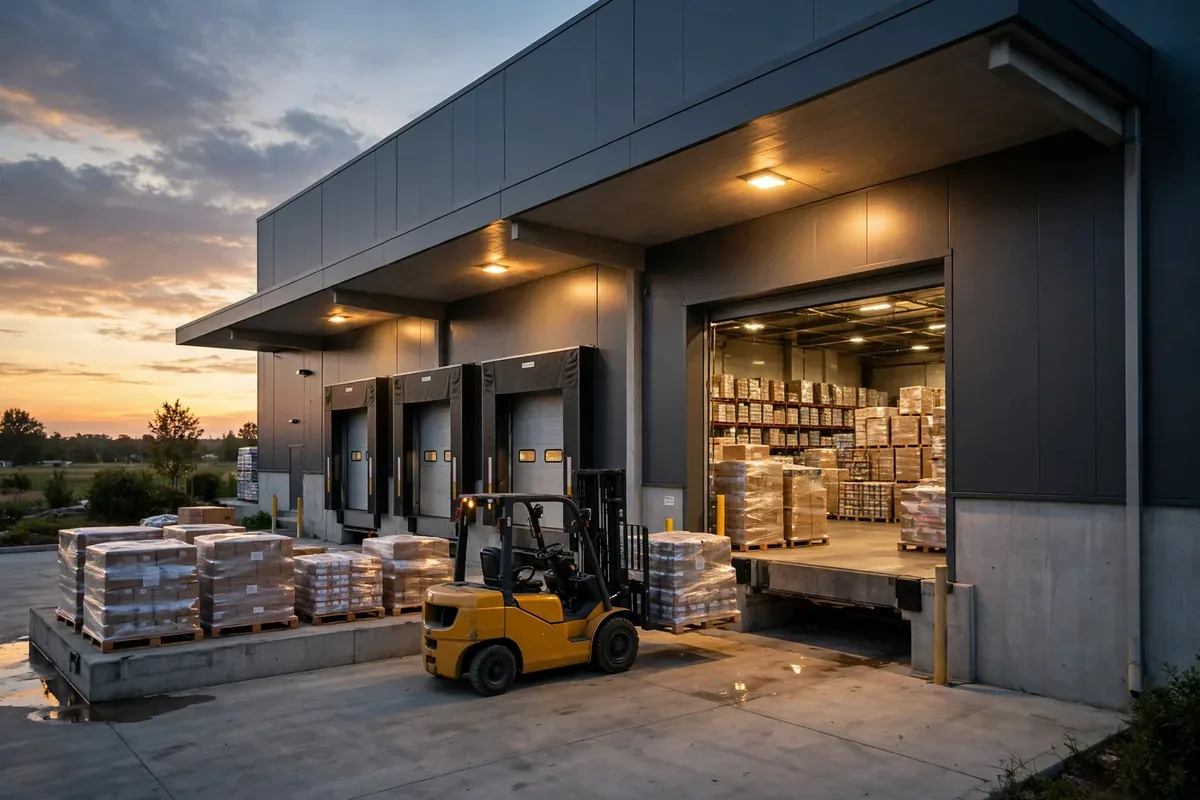
We had a client last November who leased an 80,000-square-foot warehouse in Ontario, California, moving home goods for importers. When we signed the contract he was proud of his insurance setup. The warehouse property insurance coverage amount was settled, the premium under $20,000 a year, way cheaper than the warehouse next door. I did not think much of it at the time. Everybody likes a cheap premium.
Then he called me this March, and his voice was shaking. A fire sprinkler went off by itself in the middle of the night. Water poured down three levels of racking and soaked two full rows of goods. When they finished counting, the damage came to roughly $400,000 in inventory and equipment repairs. The insurer sent an adjuster, looked around, and offered a little over $200,000. Less than sixty percent of the loss. He asked me on the phone whether he had bought fake insurance.
He had not. His warehouse property insurance coverage amount was simply set too low.
The limit on his policy was set three years earlier, when the warehouse first opened, based on the inventory and equipment values back then. In three years his business had doubled. Peak-season inventory was far above opening levels, and he had added racking and forklifts along the way. But the number on the policy had never moved. When the claim came in, the coinsurance clause kicked in: because the insured amount covered only part of the real value, the payout was cut by the same proportion. The insurer was not being shady. It was written in the contract in plain language, and he had signed it without reading that page.
I have seen this more than once. In third-party logistics, your client's goods, your own equipment, and a leased building all sit under one roof, and the coverage amount is the easiest line item to treat as a formality. A lower premium gets the contract signed faster, so nobody stops to argue about one page of the policy. But when something actually happens, the premium you saved does not even cover a fraction of the shortfall.
Where a Low Coverage Amount Hurts
The first place it hurts is inventory. Most owners report their average inventory. But warehouse inventory is a peak, not an average. A warehouse holding $2 million in stock most of the year can hit $3.5 million during peak-season buildup. Fires, floods, and theft do not wait for a slow month. They are most likely to hit during peak season, when the building is fullest, the team is busiest, and the equipment is running around the clock. Insure the average and your peak-season stock is effectively uninsured.
The second place is equipment. Racking, forklifts, conveyors, sorters — what they cost when you bought them and what it costs to replace them now are two different numbers. A forklift bought five years ago for $30,000 costs well over $40,000 to replace with the same model today. Insure at purchase price and the equipment side is short from day one. And that is before counting the equipment added since the policy was written. A lot of it never makes it onto the schedule at all.
The third place is business interruption. That Ontario client lost two full weeks of normal shipping while the damaged zone was cleaned up. Rent kept coming. Wages kept coming. A few big customers moved their orders elsewhere. He had no business interruption coverage, so not a cent of those two weeks was recoverable. The goods were paid at half value, and the shutdown loss was entirely his. Many people count goods and equipment when they set a limit and forget that a warehouse standing still for a day can burn more money than the goods themselves.
How to Set Your Warehouse Property Insurance Coverage Amount
These days I ask clients to work from three lists before they talk numbers with a broker.
The first is a peak inventory list. Do not report the average. Report the highest month of the past year, in inventory value, and add a little headroom for this year's growth. Peak-season stock is the number you actually need to insure.
The second is an equipment replacement list. Price every piece of equipment in the building at what it would cost to buy new today, not its depreciated book value. Forklifts, racking, chargers, IT gear, line by line. Most clients are shocked when they finish the list, because the replacement value runs far above the number on their policy.
The third is a business interruption list. One week shut down: what are the fixed costs, and roughly how much business walks out the door? It does not need to be precise to the dollar. The order of magnitude is enough. It tells you whether to add business interruption coverage, and for how many months. Three months of cover versus six months is not a big difference in premium, but it is a very big difference at claim time.
Those three lists added together are what your warehouse property insurance coverage amount should look like. Any one of them on its own leaves a hole.
Here is the counterintuitive part: the cheapest limit is not the best deal, and the highest is not either. Over-insure and you pay extra premium for nothing, because the insurer pays actual loss, and the extra cover never pays back a dollar. Under-insure and the premium you save is small while the proportional cut at claim time is large. The sweet spot is always full value, where the insured amount matches the real value. It sounds obvious. I have signed well over a hundred warehouse contracts, and I can count the fully insured clients on one hand.
Three Questions for Your Insurance Broker
Next renewal, or the next time you sign a new policy, do not just ask what the premium is. Take these three questions to your broker.
First, is this coverage amount based on replacement cost or actual cash value? The two methods can pay out very differently. Replacement cost pays what it costs to buy new. Actual cash value deducts depreciation. For equipment, you need to know exactly which basis you are on.
Second, what is the coinsurance percentage, and at what point does under-insurance trigger a proportional payout? This clause hides in the fine print, and you need your broker to explain it in plain words before you sign. Most clients first hear about coinsurance when they file a claim.
Third, how do we report peak inventory, and can we add temporary cover before peak season? Some policies allow a peak-season declaration and a temporary increase. Some do not. If your business is seasonal, this one question can save you serious money and recover a lot more when a loss happens.
Ask those three, then look at the quote. Cheap or expensive only means something once you know the coverage amount is adequate. A policy that costs twenty percent less but covers only sixty percent of real value is not a bargain. It is the most expensive policy you will ever buy.
That Ontario client renewed with the limits recalculated from the three lists, and his premium went up by less than forty percent. He told me he finally sleeps well. I told him if he had paid for that peace of mind two years earlier, the March flood would have paid back well over a hundred thousand dollars more. Insurance feels expensive when you buy it. It feels cheap the day you need it.
Next time you sit down to talk contract, remember those three questions.
By Susan, 3PL Sales Director