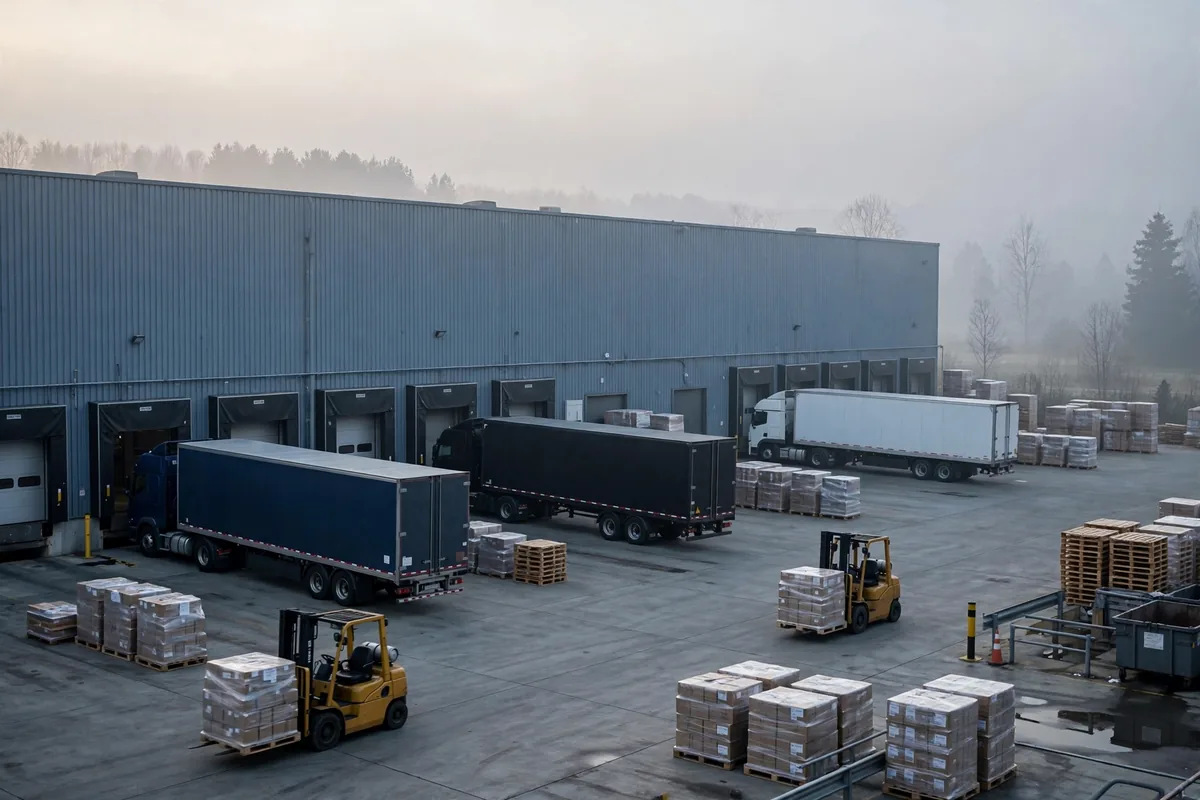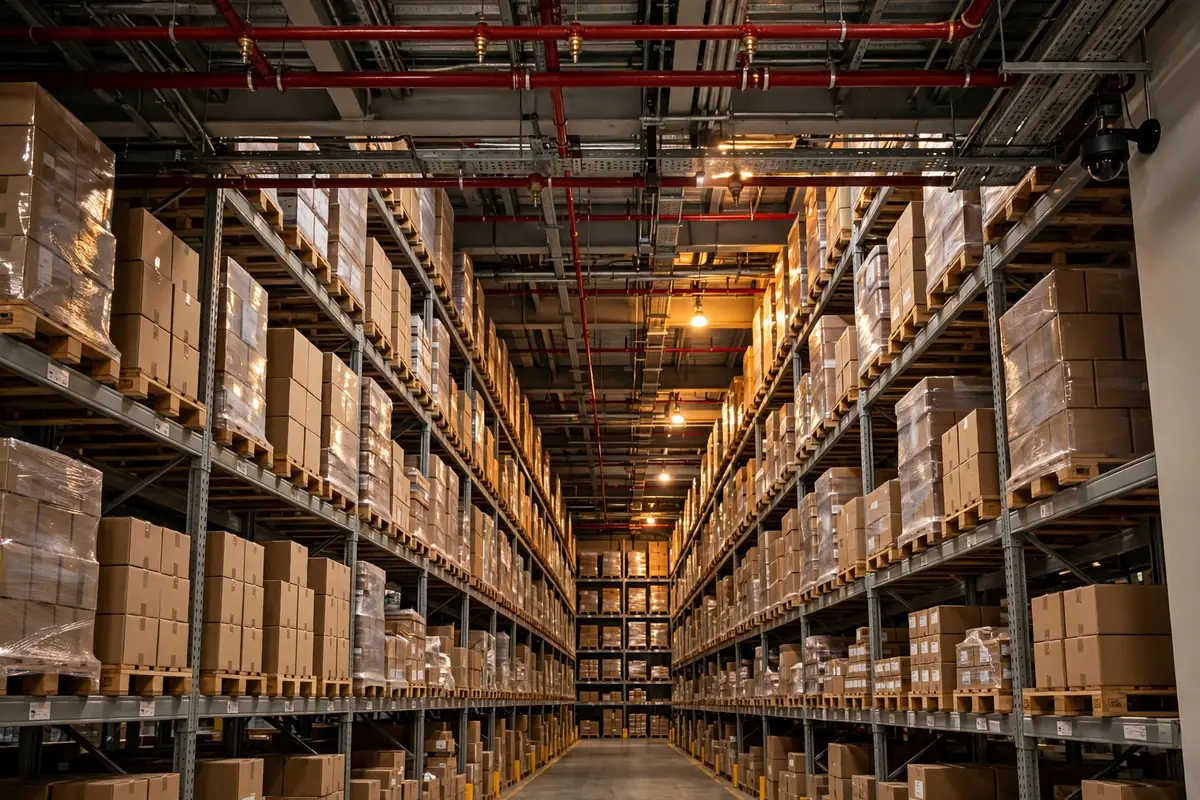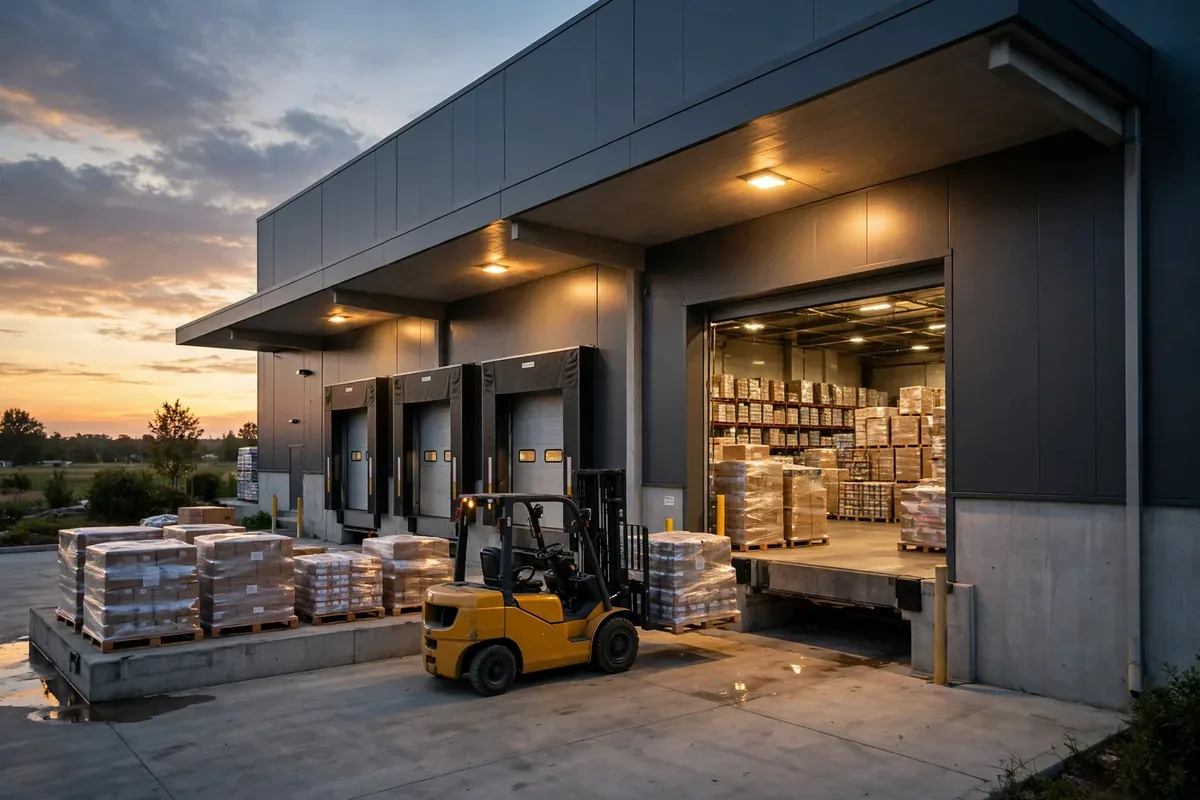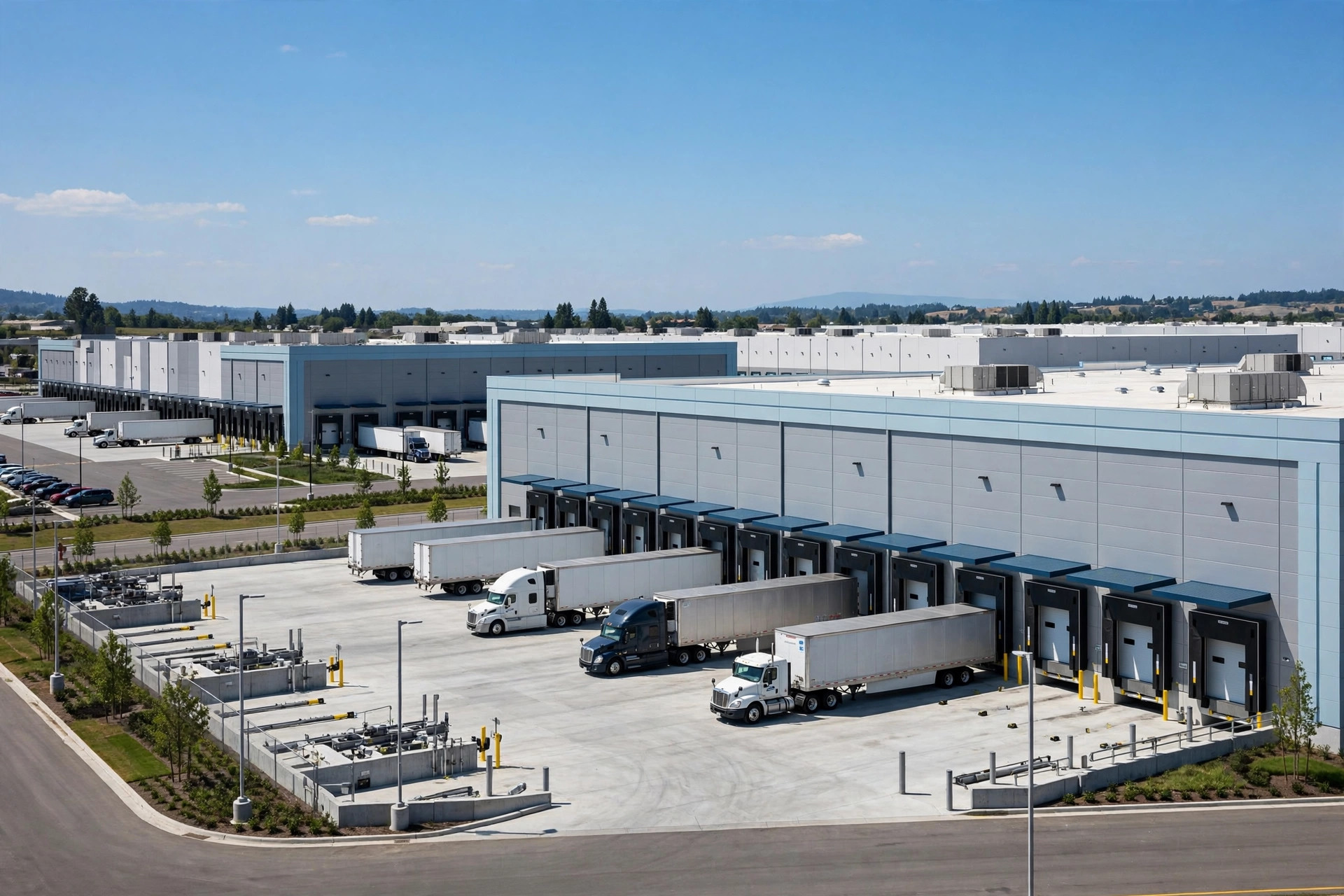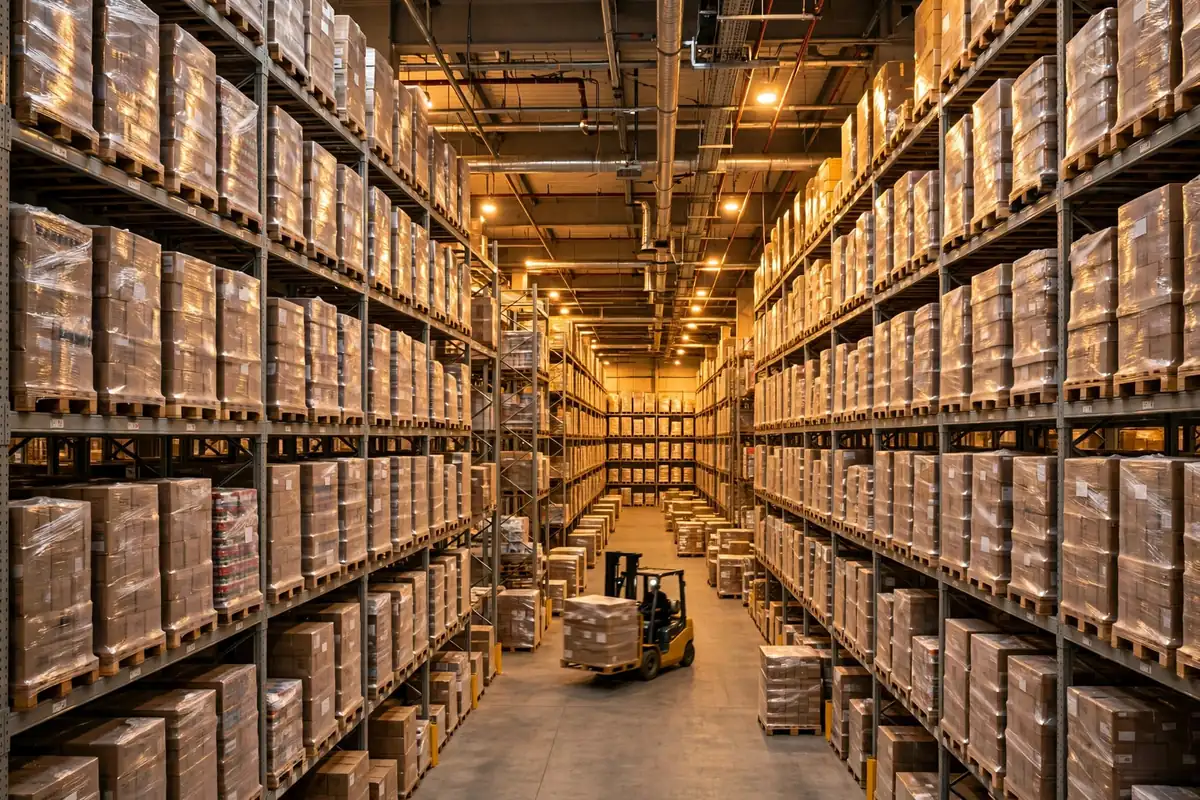
Late last year a client who sells home goods asked me to look at his numbers. He leases a 40,000-square-foot warehouse, carries $3 million in warehouse property insurance coverage, and pays close to $20,000 a year in premiums. I walked the floor, priced the inventory and the equipment, and found his real exposure was under $1.8 million at replacement cost. The extra premium was paying for a number somebody typed into an application three years ago and nobody has recalculated since.
That is how most warehouses get warehouse property insurance coverage wrong. The coverage limit is not a number you guess. It is a calculation, and it deserves to be redone every year.
What warehouse property insurance coverage actually covers
Start by separating the pieces. A warehouse property insurance policy covers two buckets: the building and the property inside it. If you lease, the building is usually the landlord's problem. Your policy covers leasehold improvements, racking, equipment, and inventory. People lump all four into one number on the application, then discover at claim time that the policy has separate sub-limits for each.
The bigger distinction is how value is measured. Replacement cost is what it would take to buy the same thing again at today's prices. Actual cash value is replacement cost minus depreciation. A six-year-old forklift might cost $40,000 to replace and be worth barely $10,000 on an actual cash value basis. Which basis you choose changes the premium and, more importantly, changes what lands in your account after a loss.
My rule is straightforward. Racking, forklifts, and conveyors you intend to keep using should be insured at replacement cost. Equipment on its way out can go on actual cash value. Inventory is always valued at cost, never at retail price. A fire destroys what you paid for the goods, not the margin you had not earned yet. Insuring inventory at retail value is the most common way to overpay.
Underinsure and the coinsurance clause discounts your claim
The coinsurance clause is the one term in this article worth memorizing. Most property policies require your coverage limit to reach a stated percentage of the property's actual value, commonly 80% or 90%, with the exact percentage set by the policy terms. Fall short, and the insurer pays claims proportionally rather than in full.
Run the math. Suppose your inventory and equipment are actually worth $2 million, and the policy requires 80% coinsurance, so the coverage limit needs to be at least $1.6 million. You insured $1 million. A small fire destroys $400,000 of stock. The insurer does not pay $400,000. It pays $400,000 multiplied by $1 million divided by $1.6 million, which comes to $250,000. You lost $400,000 and recovered $250,000. The $150,000 gap is the premium you thought you were saving.
The math works in the other direction too. Insuring above actual value buys nothing, because a claim can never pay more than the actual loss. The correct coverage limit sits in a band: the floor is the coinsurance requirement, the ceiling is the true replacement value of the property. Below the floor, claims get discounted. Above the ceiling, premium is wasted.
The deductible is the other lever in the same calculation. Raising a deductible from $2,500 to $10,000 usually brings the premium down, with the exact amount depending on the insurer's quote. My test is your own small-loss history. If you have filed two or three small claims a year for forklift scrapes and bent racking, each worth a few thousand dollars, a low deductible may still pay. If you have gone three years without a small claim, a high deductible is a discount you collect every year. A deductible is not better when it is lower; it is a trade where you keep small risks in exchange for cheaper premiums.
Peak-season inventory needs a property insurance limit that moves
Inventory is not a flat line. A warehouse handling seasonal goods can hold two to three times as much stock in peak season as in the slow months. Many policies set the inventory limit on an annual average, which means the real stock on the floor exceeds the limit for a quarter of the year. A loss in that window is an underinsurance loss.
In October 2023 I ran the numbers for a client selling holiday decorations. His slow-season inventory at cost ran about $600,000. From September through December, as he stocked up, it climbed to $1.9 million. His policy carried a $1.2 million inventory limit all year. For four months a year, more than half his stock was effectively uninsured. The fix was a peak-season inventory floater that raised the limit automatically during the stocking period, with the added premium set by the insurer's quote. That year he paid a few thousand dollars more in premium and covered $700,000 of additional exposure.
One more number gets missed: goods belonging to other people. A 3PL warehouse holds client freight, and who bears the loss depends on the contract. Some contracts cap the 3PL's liability per pallet, some say nothing at all. Whether bailment coverage belongs in your limit, and for how much, starts with reading the contract, not with a guess.
This is the framework I use with clients to set the limit. Fill in all four rows and the number rarely comes out absurd:
| Property class | Valuation basis | How to get the number | Notes |
|---|---|---|---|
| Inventory | Cost | Use the peak-season high, not the annual average | Add a floater for seasonal operations |
| Racking and equipment | Replacement cost | Re-price at current purchase prices | Older equipment can switch to actual cash value |
| Improvements | Replacement cost | Use the construction contract value | Tenants may still need to insure their own build-out |
| Goods held for others | Per contract liability | Use the liability cap in the contract | Fix the contract first if it says nothing |
Refill this table before every renewal. Inventory mix changes, new equipment arrives, new clients bring consigned stock, and the limit has to move with them. When the insurer asks whether to roll over last year's numbers, the cheapest answer is to ask for a week to recalculate.
The premium question is really a loss-ratio question
Here is the counterintuitive part: a cheap premium is not necessarily a good deal, and an expensive one is not necessarily bad. Cheap policies tend to shrink in three places: low sub-limits, deductible wording that switches between per-occurrence and aggregate, and quietly dropped extensions such as water damage or civil commotion. When a loss happens, the premium saved does not cover a single deductible.
The reverse is also true. A high premium can simply mean a poor loss record: five claims in five years, and any insurer will charge for it. The fix is not to shop around for a kinder underwriter. It is to cut controllable losses first — rack guards, fire inspections, keeping flammables in a separate zone. A clean loss record is the only durable negotiating leverage at renewal.
There is one more calculation most operators never make: self-insurance. A small warehouse whose inventory value stays modest can pay several thousand dollars a year in premiums and hand over more in a decade than the expected value of one medium fire. In that case, raising the deductible, insuring only for catastrophic loss, and carrying the rest yourself can be the rational choice. That judgment has to rest on an expected-loss calculation, not on confidence.
There is no standard answer for how much warehouse property insurance coverage is enough. There is only a standard routine: revalue the property at replacement cost before every renewal, recheck inventory at its peak-season high, test the floor against the coinsurance percentage, and test the ceiling against actual value. Once the numbers are clear, you will know whether you are overpaying or underinsured — and by how much.
By Lao Zhou, Logistics Cost Analyst