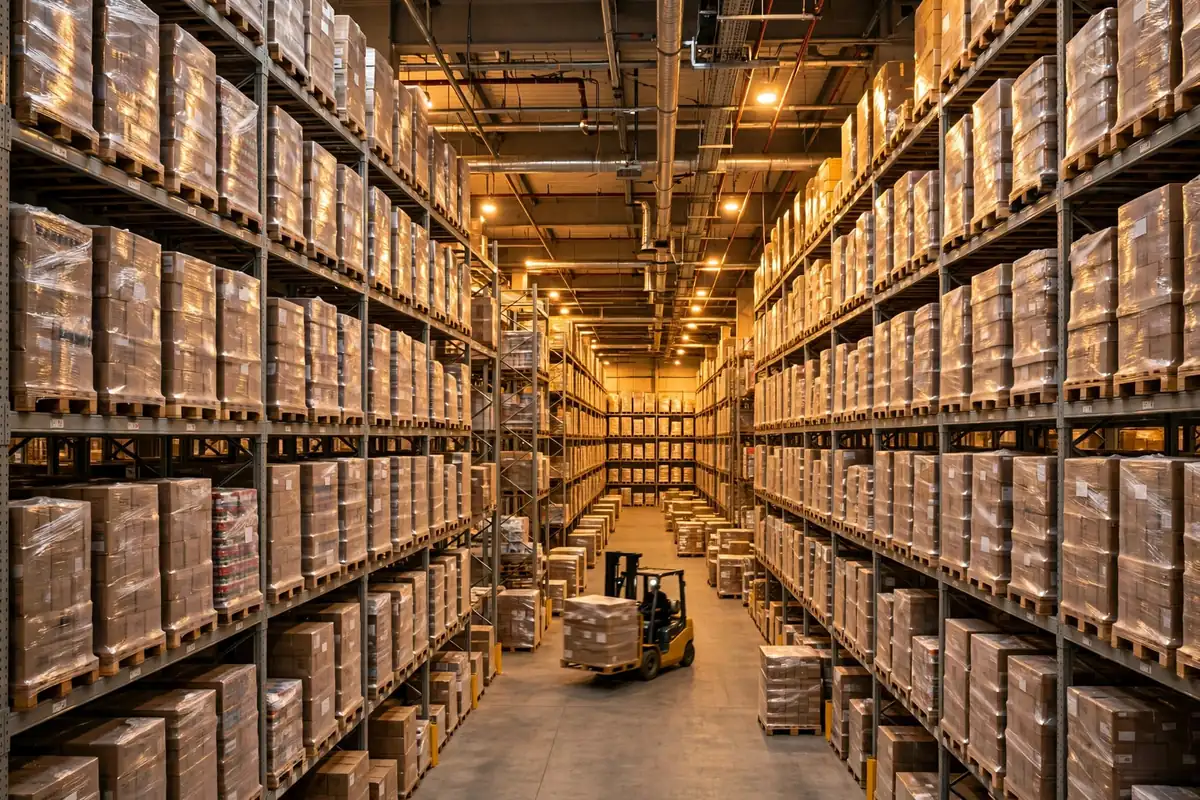
In July 2021 I was hauling a load toward Zhengzhou when the highway shut down. I spent two days stuck at a rest stop, watching the water rise on my phone. A friend who runs a warehouse sent me a photo, and it showed exactly what happens without a warehouse natural disaster emergency preparedness plan: water up to his knees inside the building, cartons soaked through on the bottom racks, a forklift sitting dead in the flood. That night he told me something I still remember: "It wasn't that the water was too big. It's that we had prepared for nothing."
Fifteen years behind the wheel taught me this. A warehouse natural disaster emergency preparedness plan is not about stopping the disaster. You can't. It's about not being caught with your pants down when it shows up. Do ten things before it arrives, and the worst case is losing money. Skip them, and the worst case is losing the warehouse.
People First, Then Freight
The first thing is making sure someone knows the minute something goes wrong, even at 2 a.m. One winter night in 2023, I was waiting to load outside a warehouse in Nevada when the night-shift guy came out and told me the building down the street was on fire. A fire that starts at night gets a head start. By the time the fire trucks arrived, half the building was gone. The National Fire Protection Association's 2020–2024 warehouse fire report sticks in my head: 1,544 fires a year in the US, about $314 million in direct property damage annually. Fires between midnight and 6 a.m. were only 18 percent of the total, but they caused 40 percent of the damage. Why? Nobody is there to catch it early. A daytime fire gets shouted about; a night fire burns half an hour before anyone notices.
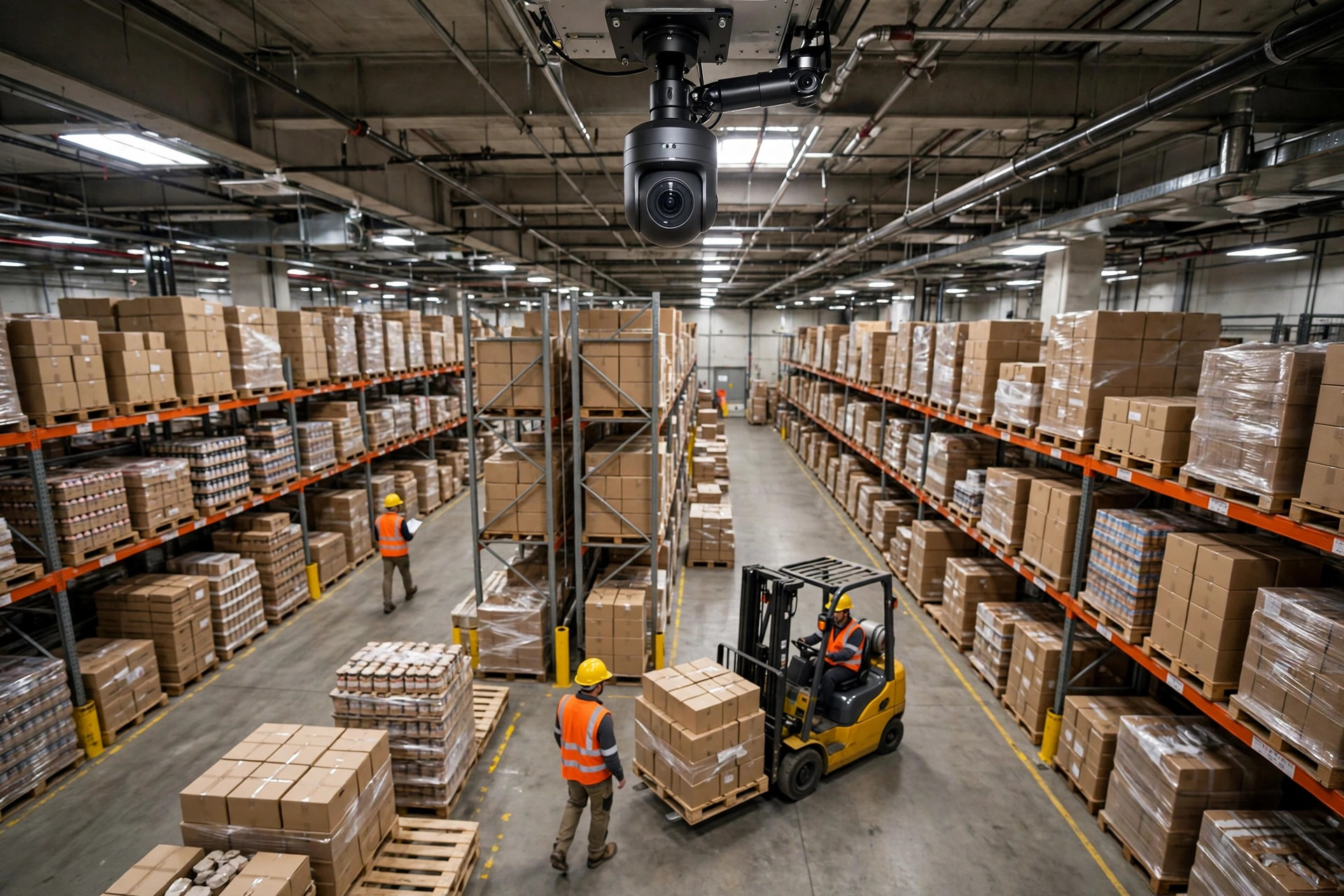
So put smoke, heat, and water sensors where the risk is: the rack aisles, the charging area, the electrical room, not just the office. And the alarm has to reach three phones at once: the person on duty, the boss, and the warehouse manager. I've seen a warehouse whose alarm only rang in the guard room, and the guard was home sick that night.
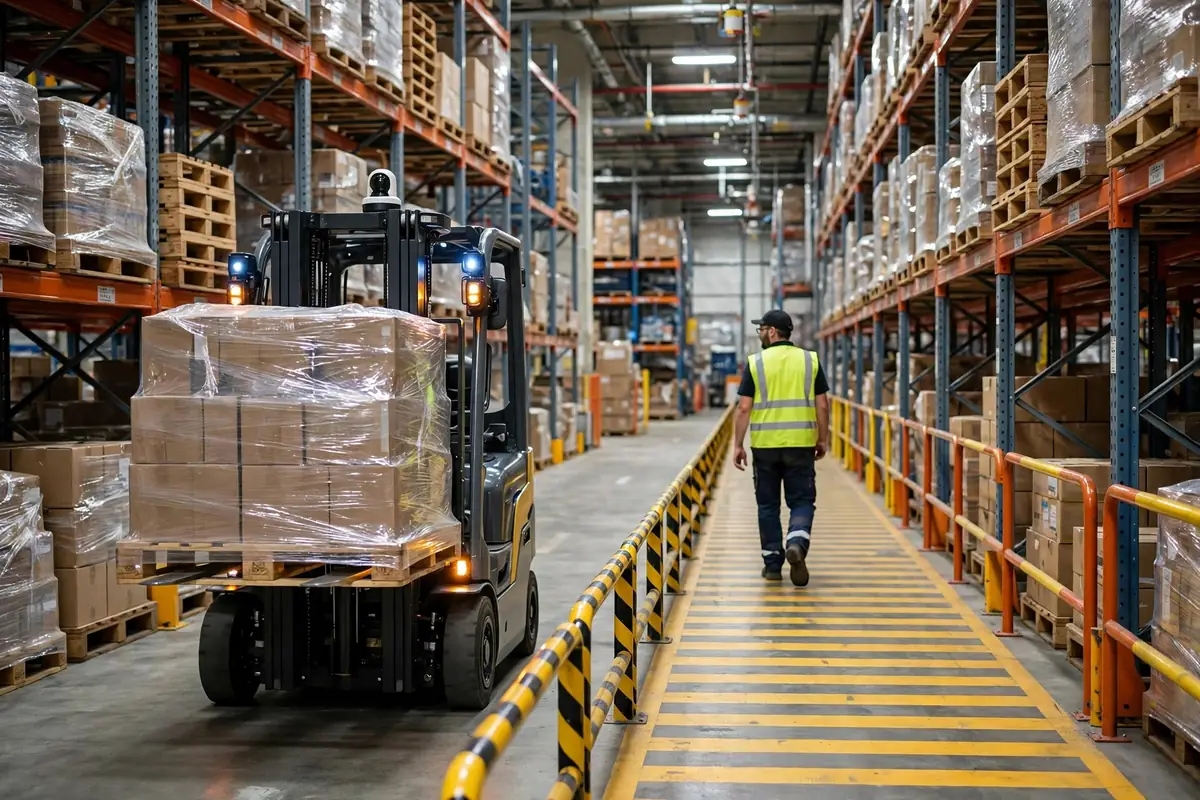
Second, paint the evacuation routes on the floor, not just on the wall. In smoke, nobody can read a poster. Fluorescent arrows on the ground, a muster point for each zone, and one person in charge of the headcount, written on a card posted at every workstation. Don't put the muster point at the parking lot exit: fire trucks need in, trucks need out, and people standing there are in the way.
Third, stock 72 hours of supplies. The US Federal Emergency Management Agency recommends being able to rely on yourself for at least 72 hours after a major disaster, and ideally up to two weeks. Drinking water: at least one gallon per person per day, for at least three days. Water, flashlights, a first-aid kit, power banks. It sounds trivial until the power and water are out. Keep it up high and where hands can reach it, not locked in the farthest cabinet.
When the Water Comes, Freight Goes Up
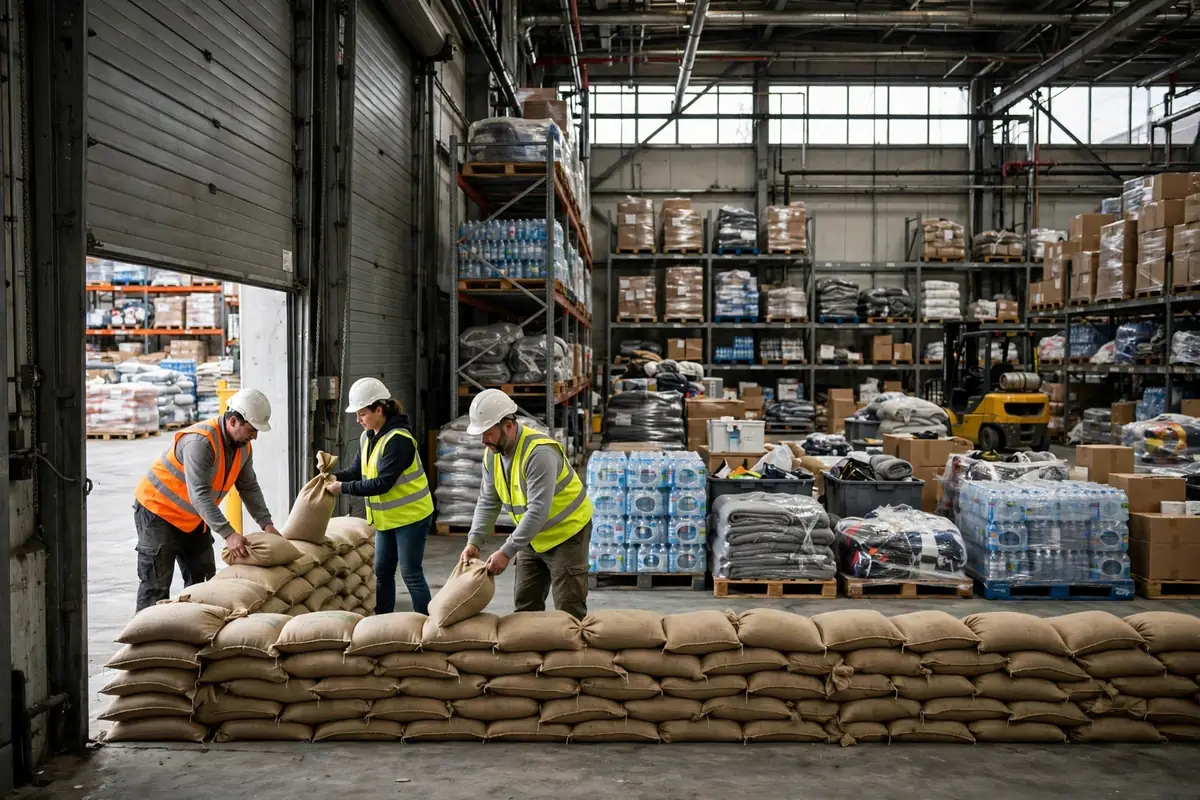
Fourth, keep flood boards and sandbags where you can grab them. Buying them after the warning goes out is a joke. When a storm warning hits, every sandbag in town sells out within an hour. Fit flood boards at the low doorways, stack sandbags by the dock, and run the sump pump once a month. Buy sandbags after the warning and you will find every one in town sold out within an hour. A pump unused for six months will fail you nine times out of ten.
Fifth, keep the valuable and water-sensitive freight off the bottom rack. Cartons, fabric, electronics: raise the lowest level at least 15 centimeters off the floor, 30 if you can. Don't re-slot the whole warehouse. Just move the few product types water kills up one level. When my friend in Zhengzhou did his review afterward, the cartons weren't what hurt most. It was a batch of customer samples on the bottom rack, one of a kind, impossible to replace.
Sixth, know your ground. Does the road outside flood? Which way does the rainwater run? Does the basement level back up? Ask the old warehouse next door; they know. In a low-lying building, electrical panels and server cabinets sit high, and everyone must know where the main power shutoff is. When water reaches the electrical room, cut the power before you save the freight. Get that order wrong and someone gets hurt.
Fire and Quakes Are Decided on Ordinary Days
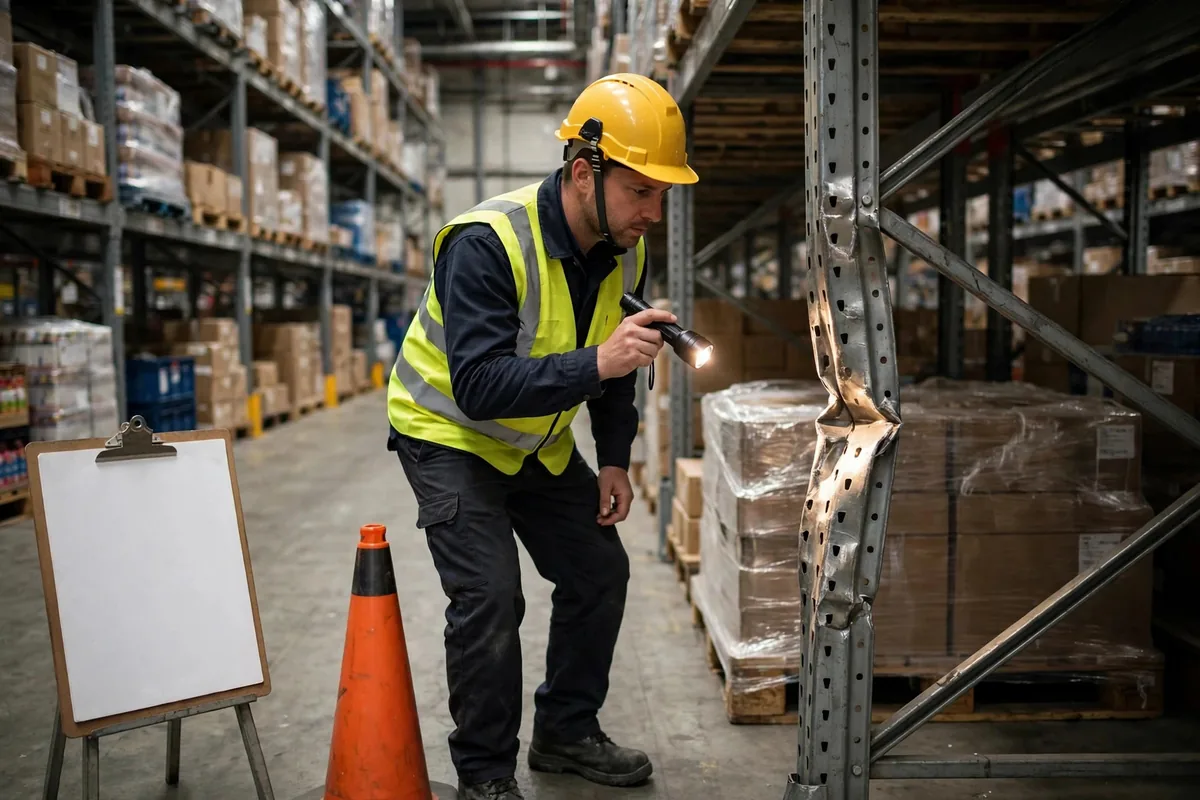
Seventh, anchor the racks. When a quake hits, it isn't the freight that falls, it's the whole rack row. In California this is a hard rule, and everywhere else it should be treated like one. Check the anchor bolts once a year. Tighten what is loose. Don't wait for the shaking to find out.
Eighth, don't only think about sprinklers and extinguishers on inspection day. Nothing stacked in front of a sprinkler head. Check the extinguisher pressure gauge every month, and swap out the expired ones. The same NFPA report shows that warehouses with sprinklers lose far less in a fire. A sprinkler system is the only thing working for you at night when nobody is there.
Ninth, buy the right insurance and back up the paperwork. Plenty of owners think a property policy covers everything, then find out at claim time that flood and earthquake are often separate add-ons, not in the main policy. Pull the policy out and check line by line: flood covered, quake covered, business interruption covered. If something is missing, add it. And keep the inventory list, customer contracts, and insurance papers in two places: one paper copy in a safe, one digital copy in the cloud. If the warehouse burns and the papers burn with it, what do you hand the claims adjuster?
Tenth, run a drill. It beats ten pages of plan. Twice a year at least, once in the daytime and once at night. The night drill matters most, because night is when the warehouse is most fragile. After the drill, hold a short meeting: which door wouldn't open, which phone didn't answer, who couldn't find the muster point. Write it down and fix it on the spot.
A Warehouse Natural Disaster Emergency Preparedness Plan That Fits on One Page
People always ask me what all this costs. Here is a hypothetical example, just to show the scale, for a mid-size warehouse of about 5,000 square meters:
| Item | One-time cost (hypothetical example) | Notes |
|---|---|---|
| Flood boards, sandbags, sump pump | about 20,000–40,000 yuan | Depends on door count and pump size |
| Alarm upgrades and backup power | about 30,000–50,000 yuan | Smoke, water sensors, alerts to phones |
| Rack anchoring inspection and reinforcement | about 10,000–20,000 yuan | Depends on rack rows and age |
| 72-hour emergency supplies | about 5,000–10,000 yuan | Water, flashlights, first aid, power banks |
| Flood and quake insurance add-ons | a few thousand to tens of thousands per year | Per the insurer's latest quote |
| Total | about 70,000–120,000 yuan | Spread over years, a small annual cost |
Now flip it around. One flood half a meter deep: bottom-rack freight ruined, a forklift flooded, a week of downtime. That is hundreds of thousands of yuan before you even count the customers you lose. The money you spend preparing and the money you lose in a disaster are not in the same league.
Here is the counterintuitive part, and plenty of people don't want to hear it: insurance pays money, it does not pay back customers. The insurer covers the value of the soaked freight, but your customer's production line stopped, their delivery slipped, and next time they may not trust you with their freight. The real goal of disaster prep is not to lose less money. It is to not shut down. One day of shutdown can cost you more customers than the freight you lost.
Testing Your Warehouse Natural Disaster Emergency Preparedness Plan
A plan nobody has tested is a wish. After the drill, ask three questions: did the alarm reach a human in under five minutes, did everyone reach the muster point without crossing the truck lanes, and could one person find the shutoffs and the paperwork in the dark? If any answer is no, the plan isn't done yet. Fix it, drill again, and write the date on the plan itself so the next person knows when it was last proven, not just written.
Driving taught me to check the weather before I roll out. A warehouse is no different. The forecast says heavy rain tomorrow, so today you set out the sandbags, move the freight up a level, and test the pump. You can't dodge the disaster, but the prepared warehouse loses a bit of money, and the unprepared one can lose everything. Ten things. Do them before you go to sleep.
By Shifu Zhao, Trucking Veteran (15 yrs)