Let me start with a morning I will not forget. At 6:30 a.m., just as I walked into the warehouse, the night-shift lead handed me an order sheet. Brothers, he said, a big customer opened a shipment last night and found two wrong items inside. To be blunt, that phone call is the hardest kind to take. It is not only about paying for a return. It is about whether that customer will trust us with the next order. That morning, we sat down and reworked our whole warehouse picking verification stage.
The problem did not appear out of nowhere, and it is exactly what the warehouse picking verification stage is supposed to catch before a shipment leaves. When peak season arrived, order volume rose, and so did the number of new hires. Experienced staff knew from memory which locations caused trouble: two similar specifications stored near each other, two batches placed on the wrong levels. New hires did not know that. They just followed the words on the pick sheet. When volume was low, a team lead standing near the packing bench could glance over most orders and catch the mistakes. When volume surged, no lead could watch everything, and errors started slipping out through packing. Our first reaction was simple and, frankly, panicked: check everything. Do not let another wrong shipment leave the building, even if we slow down. That lasted less than two weeks, and it nearly broke the operation.
Those two weeks of full checking are still vivid to me. A queue built up behind the packing benches. Pickers waited for checkers. Checkers waited for orders. The whole rhythm fell apart. We had pulled experienced people off picking to do checking, so picking itself was short-staffed, and new hires had nobody coaching them, so they made even more mistakes. Morale dropped too. The checkers stared at similar products until late at night, and tired eyes still missed things. That was when I learned the lesson properly: a checking rule that cannot be sustained in real work is the same as having no rule at all.
Warehouse Picking Verification Is Not Stricter-Is-Better
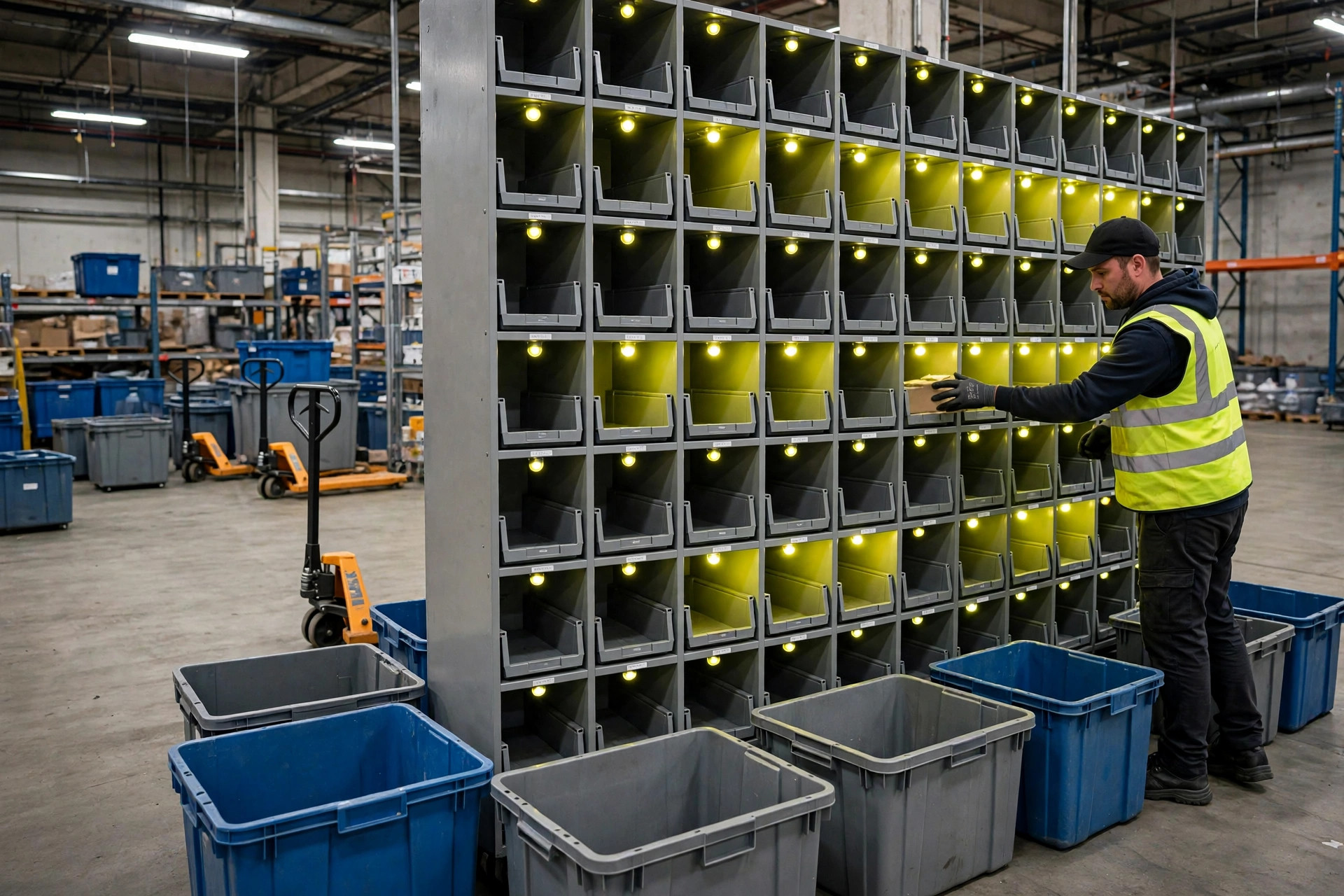
So we changed the approach. We graded orders by type instead of applying one rule to everything. High-value orders, orders mixing many items for one customer, and orders with similar-looking specifications get a full check. Ordinary multi-item orders get a sample check. Single-item standard products from long-running, low-error lines do not get a separate manual check at all; they rely on barcode matching at packing. Once we split the work this way, checking labor concentrated where errors actually happen, instead of being spread thinly across every order.
Scheduling changed with it. In the past, whenever a shift was short, we pulled people from checking. Now we do the opposite. Checking posts are fixed, staffed first with experienced workers, and specifically with people who are careful and willing to push back. Coaching new hires also got a practical anchor. For their first two weeks, new hires pick only fixed product categories. Every day before they leave, an experienced checker spends ten minutes walking them through that day's near-misses: what went wrong, why it went wrong, and how to recognize it next time. After two months of that routine, the variety of new-hire errors narrowed sharply. They stopped making a different mistake every day and started avoiding the same few known traps.
Our Warehouse Picking Verification Stage Today
This is how our warehouse does it now, and the rules are written on the whiteboard at the morning meeting so everyone can see them. Tier one is a full check for high-value, multi-item mixed, and similar-specification orders, with the checker verifying item by item and signing off. Tier two is a sample check for ordinary multi-item orders: if a sampled order fails, the whole order goes back for rework, no exceptions. Tier three is barcode matching for single-item standard products: if the scan does not match, the system locks the order and it does not ship, with no manual override at the bench.
| Tier | Applies to | Method | Labor demand |
|---|---|---|---|
| Full check | High-value, mixed multi-item, similar specs | Item-by-item check and sign-off | Highest, reserved for risky orders |
| Sample check | Ordinary multi-item orders | Sample proportion; failure means full rework | Medium, broad coverage |
| Barcode match | Single-item standard products | Scan mismatch locks the order | Lowest, mostly system-driven |
The cost math has to be honest about real work, not just headcount on paper. Under full checking, checking posts took nearly a third of our labor, and orders still backed up. After grading, checking headcount came down, yet risky orders are checked more rigorously, because checkers are no longer exhausted and their attention goes to the places where errors concentrate. Here is a counterintuitive point worth stating plainly: sample checking can deter errors more effectively than full checking, because pickers know that a failed sample means full rework, so they pick more carefully. Under full checking, some pickers quietly relied on the checker to catch them, and that safety-net mindset itself created errors.
How We Staff Shifts With Many New Hires
For peak-season shifts with many new hires, we have one hard rule: new hires do not start on similar-specification picking lines. They start with fixed categories, an experienced worker coaches them nearby, and the checking post gets one extra experienced person for that shift. It looks like extra labor, and on a spreadsheet it is. In practice, it saves rework and customer complaints, which cost far more labor later. At the end of each shift, the shift lead records two numbers: how many wrong picks checking caught today, and which product categories they came from. The next morning meeting covers exactly those categories. No big speeches. Just those orders, and how they went wrong.
There is one more case that shows why getting the warehouse picking verification stage right matters more than simply adding more checkers. Two specifications differing by a single letter sat in adjacent locations, and a new hire picked the left-hand item. An experienced checker spotted the small print on the packaging and stopped the order before packing. Under the old full-check routine, that order might well have slipped through, because a tired checker facing hundreds of items late at night cannot stay sharp. Grading meant the checker that day was only watching risky orders, and watched them properly.
My reminder to fellow managers is this: do not start by asking what tier other warehouses use. Start with your own order mix. The messier your orders, and the more similar products you carry, the earlier and more focused your checking needs to be. The more standard and uniform your orders, the later you can place checking, and the more you can rely on system barcode matching. And one more practical warning: do not change the system on the first day of peak season. Get the grading, the staffing, and the rework rules practiced two weeks before peak, or you will end up with a new system and a new workforce arriving in the same chaos. A rule only counts as a rule if the team can actually carry it out on a busy night.
By Chen Feng, Warehouse Operations Manager