When big warehouses talk about warehouse picking cart design batch picking, they mean robots and automation. A small warehouse like mine cannot burn that kind of money. Our operation is about 3,000 square meters, and the humble picking cart is our automation. Pick the wrong cart and your team walks extra miles, hurts their backs, and still misses dispatch.
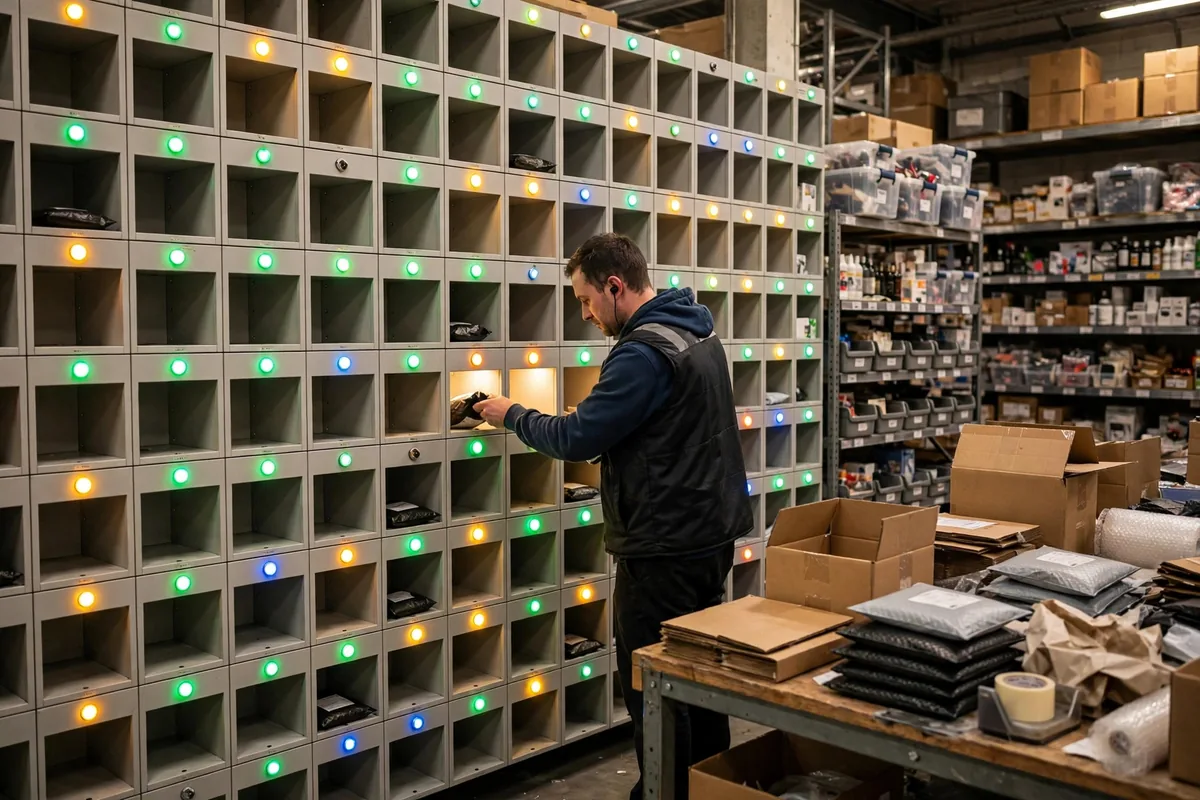
Our assortment is daily goods plus small hardware. A typical order has only a few items, but a wave can release dozens of orders at once. We started, embarrassingly, with supermarket shopping carts. Zero compartments. Dozens of orders piled into one heap, then sorted again at the packing bench until our eyes blurred. That was lesson one: in batch picking, a cart's job is not to carry the most. Its job is to keep orders separated while you move.
Warehouse picking cart design batch picking: match compartments to your order structure first
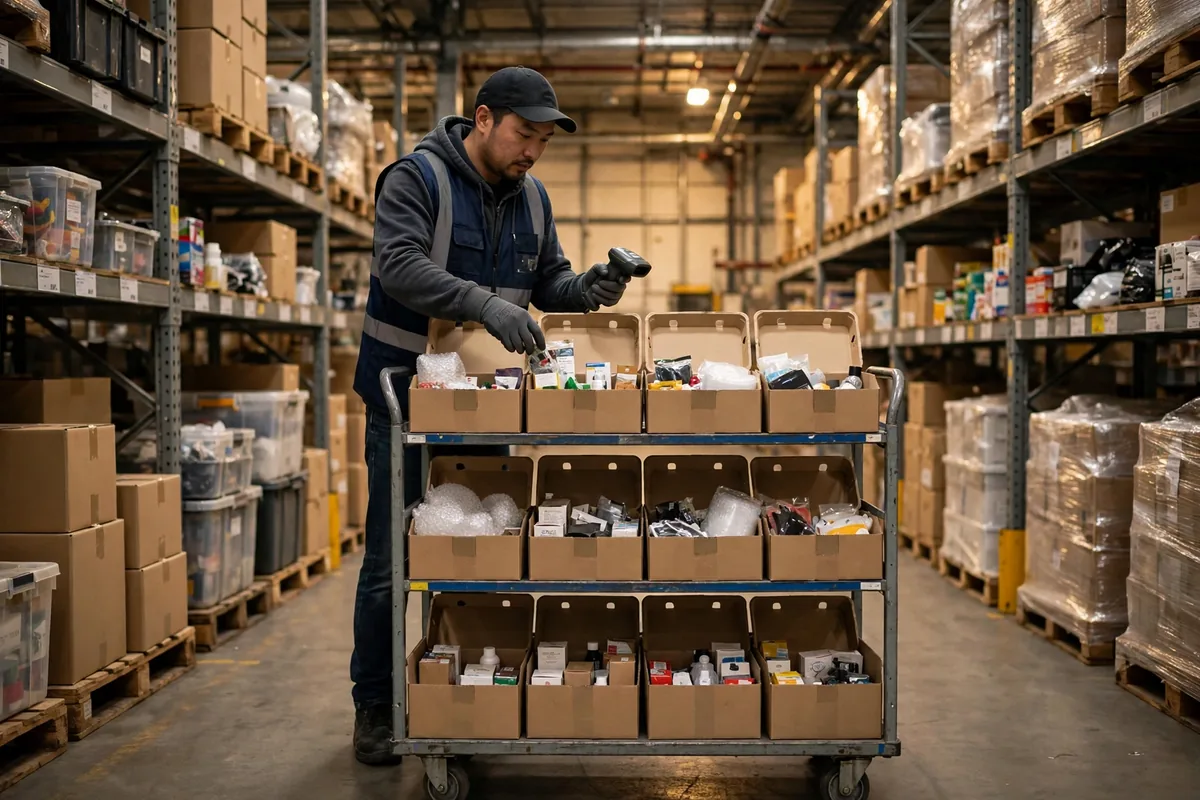
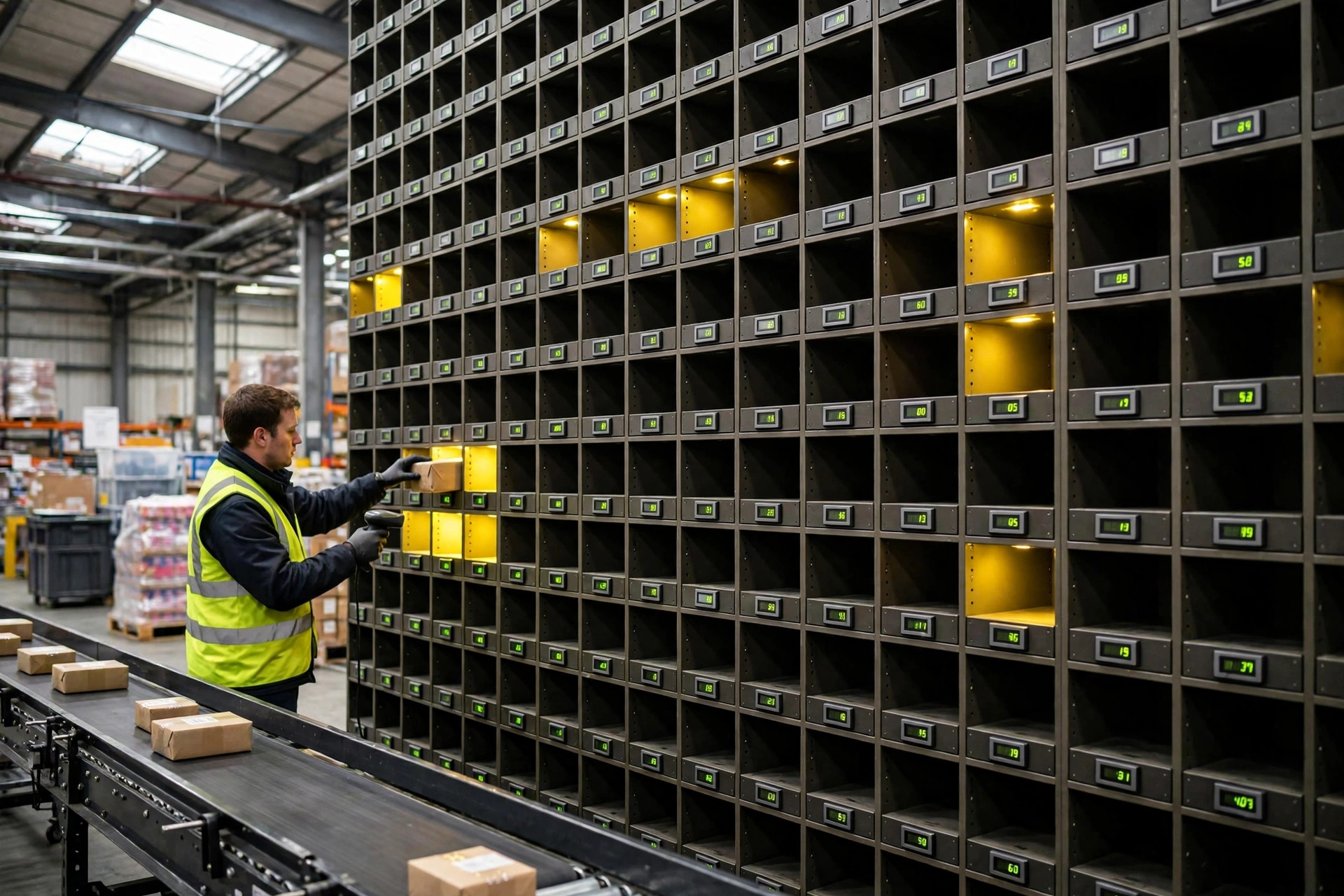
Most buyers start with cart dimensions. I say start with your orders. The number of compartments must match your wave size, items per order, and item sizes. Too few compartments and orders get stacked together. Too many and the cart becomes a tank nobody wants to push.
We learned this in 2022. We bought carts with a very large number of compartments, hoping to fit an entire big wave in one trip. The carts were too wide for our older aisles, top-heavy when full, and so awkward that pickers preferred two trips with a small cart. Our expensive flagship cart spent half a year collecting dust in a corner.
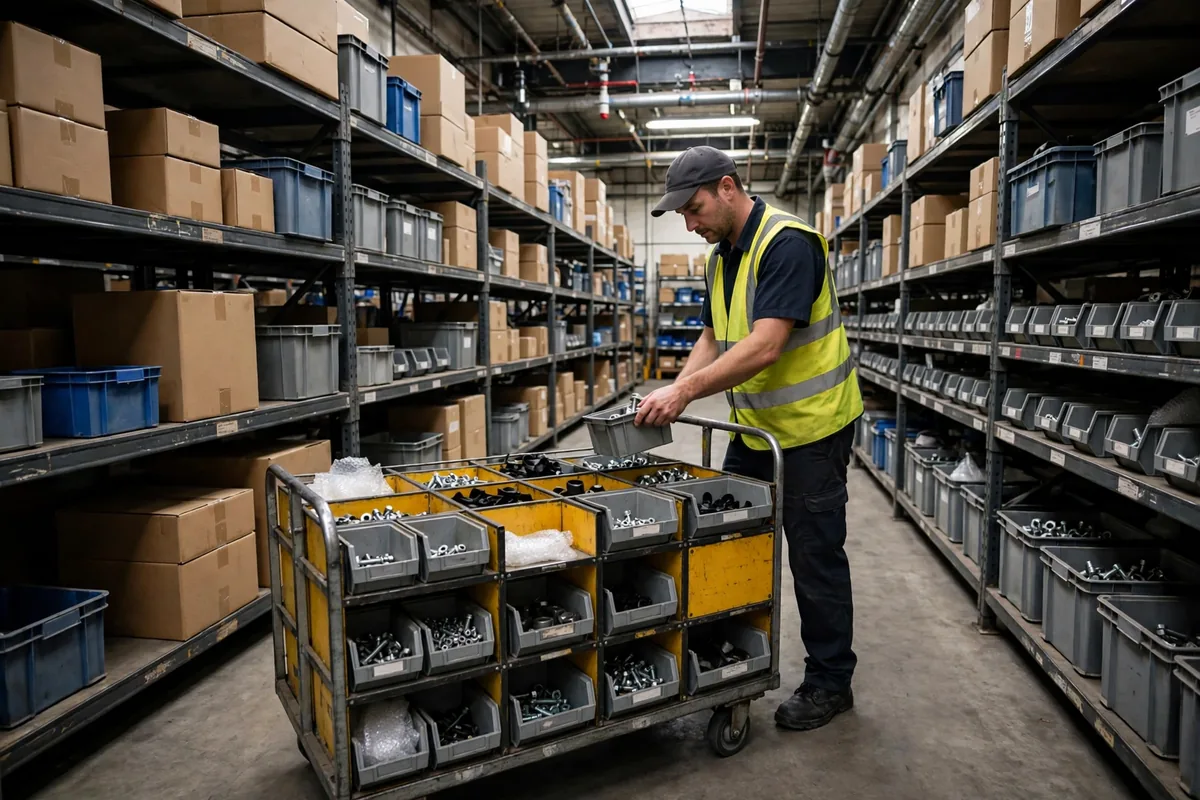
Now we do the homework first. We pull a week of wave data: average orders per wave, average items per order, and the size of the largest common items. Then we size the cart. As a hypothetical worked example, if most waves are in the low teens of orders with two or three small items each, a mid-size cart with a similar number of compartments works best. If bulky orders appear regularly, reserve two or three large compartments for flexibility instead of making every compartment identical. Uniform compartments look tidy. Order-shaped compartments pick fast.
Here is the counterintuitive part: empty compartments are a cost too. Every extra bank of compartments adds weight, turning radius, and visual search time as pickers hunt for the right slot. Our current rule is to cover about eighty percent of everyday waves perfectly and split the biggest waves into two trips. That beats forcing one giant cart through every aisle.
Body size, totes, and ergonomics in warehouse picking cart design
Measure, do not guess. Two measurements decide whether a cart is usable at all: the narrowest aisle and shelf corner, and the elevator door width and cab depth. Measure the cart in its loaded state, with totes fitted. We once measured the bare frame, found it fit, and then watched the fitted totes stick out and jam in the elevator.
Standardize totes with the bins you already own. Do not create a second tote ecosystem for one cart. Color-coding compartments works surprisingly well — new pickers find compartments by color faster than by number. It is a low-tech trick, and low-tech is our specialty.
Weighing and scanning positions are the most neglected ergonomics. Give the scanner a fixed holster by the handle so nobody holds it for an entire wave. If the cart carries a simple scale, place the display just below standing eye level, not down by the wheels. In 2023 we moved the scanning position from the tail of the cart to the handle side. Complaints dropped, and wave times improved without anyone being pushed. One less bend, repeated hundreds of times a day, is real money.
A neighboring auto-parts seller gave me the second case. In 2024 he used a flat trolley with raised rails as a picking cart. Small parts mixed into one pile and had to be dumped out and recounted at checking. He then spent a small amount on removable dividers and proper totes, and checking time fell sharply. The lesson: in batch picking, spend on separation and labeling, not on the thickest steel frame.
Weld it, buy it, or retrofit a used cart? A decision table
This is the question every small warehouse owner asks. Welding your own is cheap but slow. Buying finished is easy but pricey. Retrofitting used carts is cheapest but luck-dependent. The table below is a hypothetical worked example — judge the structure, and confirm current prices before buying.
| Option | Upfront cost (hypothetical example) | Strengths | Weaknesses | Best for |
|---|---|---|---|---|
| Weld your own | Low materials cost, mostly labor and time | Fully custom fit for your aisles and elevator | Quality depends on the welder, rework is common | Small warehouses with a welder and odd dimensions |
| Buy finished | Highest per-cart price | Ready to use, mature wheels and frame | Compartments may not match your orders | Standard orders, no time to experiment |
| Retrofit used | Lowest total spend | Cheap, low cost of being wrong | Wheels and bearings vary, inspect every cart | Tight budgets, still validating the process |
My recommended sequence: start with one used or self-welded prototype, run real waves on it for a month, and validate compartment count and body size. Only then decide on a bulk purchase. Never buy a fleet based on imagination. In a warehouse, imagination and reality are always one peak season apart.
Two final small tips. First, do not cheap out on wheels. On a loaded cart, smooth wheels decide whether staff actually use it; a cart with bad wheels will be quietly abandoned. Second, number every cart and keep a tiny whiteboard note on it for faults — a noisy wheel here, a cracked tote there — so repairs stop being arguments.
That, in the end, is what warehouse picking cart design batch picking really comes down to at our scale: not the cart itself, but the daily discipline around it. There is no standard answer for a picking cart, only the right fit for your orders and your aisles. We cannot copy the big players' automation, but we can squeeze real productivity out of one well-thought-out cart. Small warehouses survive by being clever, not rich.
By Xiao Ma, Small Warehouse Owner