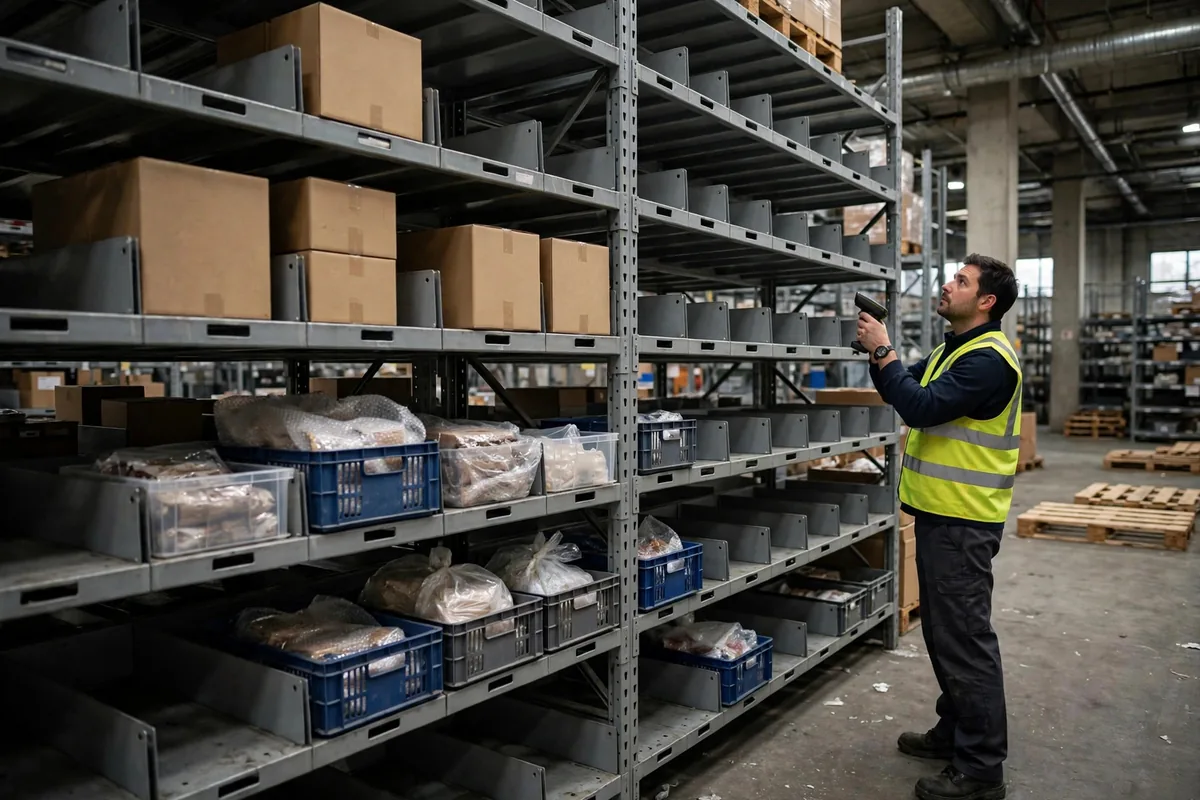
It was 6:40 on a Tuesday morning. I had barely walked into the warehouse when the night-shift lead, Old Wang, slapped a sheet on my desk: 37 mis-picks on the 11 p.m. wave. Here's the honest truth — my first thought wasn't to chew anyone out. I looked at the roster first. That wave had six temps covering peak season, and only two veterans to watch over them.
Anyone who has run a warehouse floor knows the deal. Picking accuracy vs speed is a balancing act. Push too hard on speed and errors climb. Push too hard on accuracy and orders don't go out the door. The boss wants both, the customer fines you for both. The question was never "fast or accurate." It is where the standard sits, and who it sits on.
Before You Set a Picking Accuracy Number, Find Out Where the Errors Come From
Our big mistakes fall into three buckets, and they always have. Wrong item — two look-alike models sitting side by side, and the picker grabs the wrong one. Wrong quantity — three needed, two picked, or the other way around. And missed lines — five lines on the order, four picked, box sealed.
Last November, before peak, I had quality control lay out two weeks of mis-picks and count them by hand. Out of 214 bad orders, wrong item was more than half — 118 of them. Wrong quantity was 61. Missed lines were 35. Once you see the split, the problem stops being mysterious. Our biggest issue wasn't fast hands or slow hands. It was the slotting. The two models that got mixed up most were a white box and an off-white box, stacked on the same rack one shelf above the other, and under dim light you couldn't tell them apart.
That month we did three small things, none of them heroic. First, we split confusing look-alikes apart, at least one slot between them. Second, for similar packaging, we added one line of large print on the pick label — the variant in big type, like "WHITE — LARGE" — big enough to read at a glance. Third, we swapped two dim bulbs above that rack for brighter ones. Two days of work. The next week mis-picks dropped from more than 30 a day to 12, and speed didn't drop a single order.
We also grade the checking. A new hire's picks get checked 100 percent, by the veteran training them — a mistake gets talked through on the spot before the box moves on. Veterans get a 5 percent spot check, and if a spot check catches an error, that person's check rate goes up to 20 percent for the week. Checking isn't about distrust. It is a safety net for new people and a reminder for the old hands. Plenty of folks think checking slows you down. Checking one order takes a few seconds. Fixing one wrong order takes more than ten minutes. Anyone can do that math.
So my take is this: before you set any standard, spend a week sorting your errors. If you don't know where they come from, any number you set is a guess.
Speed and Accuracy Are Not a Seesaw
People say fast and accurate are natural enemies. That is only half true. In the summer of 2024 we ranked our pickers by speed, and I still remember the result, because it was the opposite of what I expected.
The fastest ten averaged 92 lines an hour. The slowest ten averaged 54. I assumed the fast group made the most mistakes. They didn't — they had the lowest error rate in the building. The worst error rate sat in the middle group, around 70 lines an hour. Why? The fast group were all veterans with three-plus years in the building; they could find a slot blindfolded. The middle group had six months to a year in — just experienced enough to trust their gut and skip the scan confirmation.
That changed how I think about it. Speed itself doesn't create errors. Being half-trained does. A rookie picking 40 lines an hour with one error per shift and a veteran picking 90 lines an hour with zero errors are not the same problem. Put one speed target on the rookie and he skips checks to hit it, and errors climb. Put one accuracy target on the veteran and he slows down to protect it, and volume falls.
So we stopped using one number for everyone. Standards are split by order type and by experience. New hires have no speed target for the first two weeks — only an accuracy target, and more than three errors means we stop and walk through it together. Speed targets come in gradually after that. Veterans get targets based on their own best steady performance, not the building average.
The Three Rules We Use Now for Picking Accuracy and Speed
Rule one: set the standard by order type, not one number for the whole floor. Single-item orders: 120 lines an hour at 99.8 percent accuracy. Small multi-line orders: 75 lines an hour at 99.5 percent. Heavy items or anything that needs weighing: 40 lines an hour at 99.9 percent. Those numbers aren't guesses — they come from three months of data, taking the steady median of our veterans and nudging it up just a little. How much is a little? Enough that about 8 in 10 people can reach it with effort, and 2 in 10 need coaching. The ones who can't reach it don't get punished — they get two weeks paired with a veteran.
Rule two: price the error into the standard. We used to only count how many orders went wrong. Then I worked out what a wrong order actually costs: a return, a reship, the freight, the labor, the customer service time — around 40 dollars on average. Three hundred bad orders a month is 12,000 dollars thrown away. I read that number out loud at the morning huddle every month. Not to scare anyone — so the crew understands that accuracy isn't for my benefit. One picker doing 500 lines a day who makes a single error spends more time fixing it than picking 20 extra lines. That is a bad trade, and everyone on the floor can see it once you show the math.
Rule three: once a standard is set, it doesn't move for three months. We used to change it monthly, and after a while nobody took it seriously — they had just gotten used to it and it changed again. Now it goes up on the wall, and we review it once a quarter against two questions only: did errors actually fall, and did volume actually get out the door? If both are good, it stays. If one is off, we adjust only that one. Change everything at once and you never learn which change did the work.
Here's the honest truth: there is no universal number for the accuracy vs speed balance. Your products are different, your people are different, your order mix is different. Copying someone else's standard is digging your own hole. Do one thing when you get back to the floor: lay out the last two weeks of mis-picks and count them in three piles — wrong item, wrong quantity, missed line. Once you've counted, you'll know which end of your building needs fixing first.
By Chen Feng, Warehouse Operations Manager