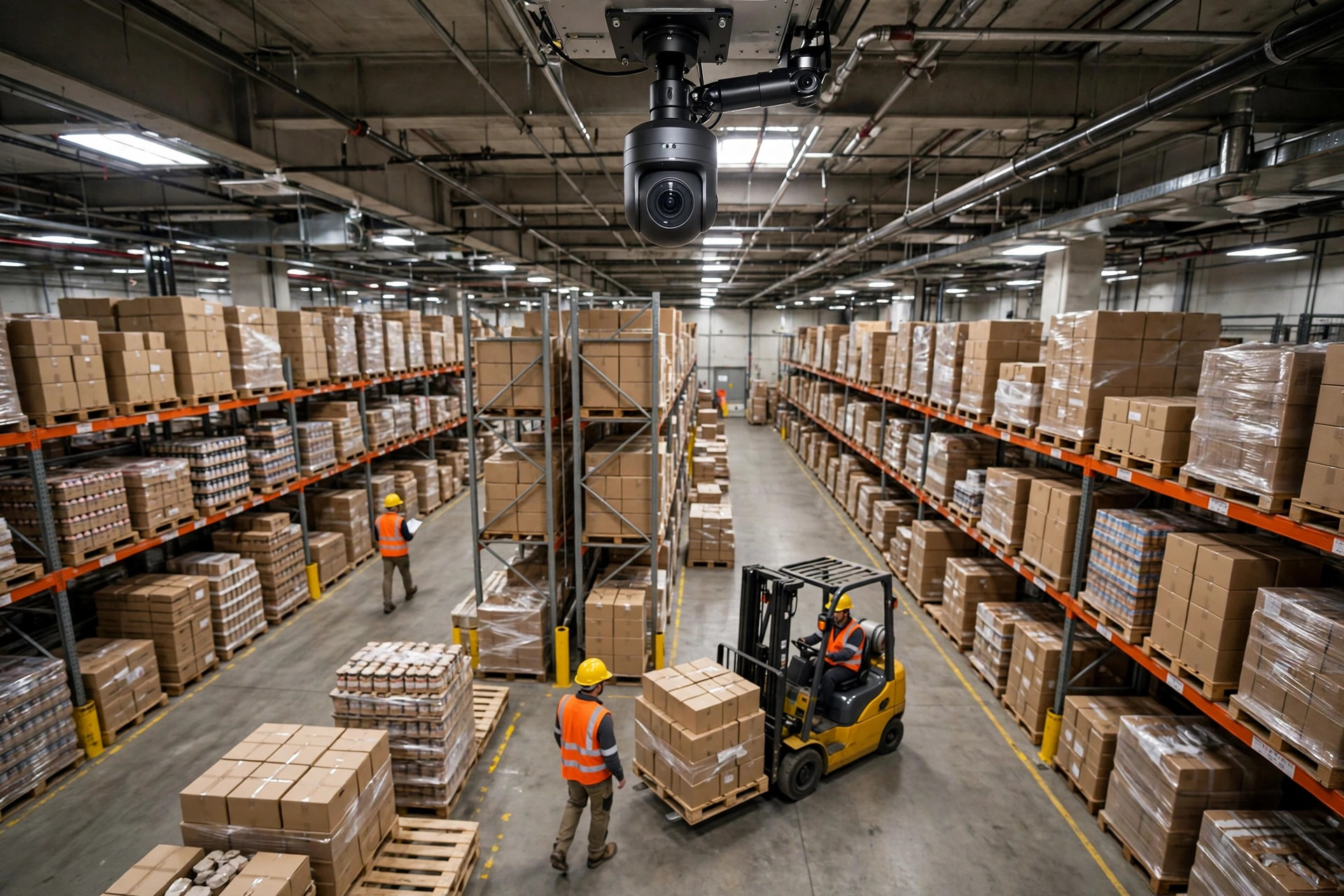
Warehouse new hire training is where our warehouse learned its most expensive lesson. It was a Tuesday morning before peak season, about 6:40, and I had just walked in when someone shouted for a forklift to stop. A young guy on his fourth day was reversing without checking his mirror and nearly backed into old Li, who was doing a stock count in the aisle. The truck stopped. Nobody got hurt. My shirt was soaked through anyway. Let me be straight with you: the kid was not lazy and he was not careless. We had put him on the road before we had taught him how to drive it.
Here is the number that changed how we train. A 2026 study by the Workers Compensation Research Institute, looking at eight million claims, found that workers in their first three months on the job accounted for about 16 percent of all workers' compensation claims. A 2024 report from the US Occupational Safety and Health Administration found that employees in their first year accounted for about 36 percent of workplace injury cases. New people are at their most dangerous in their first few weeks. Training done badly is not an efficiency problem. It is a safety problem.
Warehouse New Hire Training Day One: Watch First, Touch Second
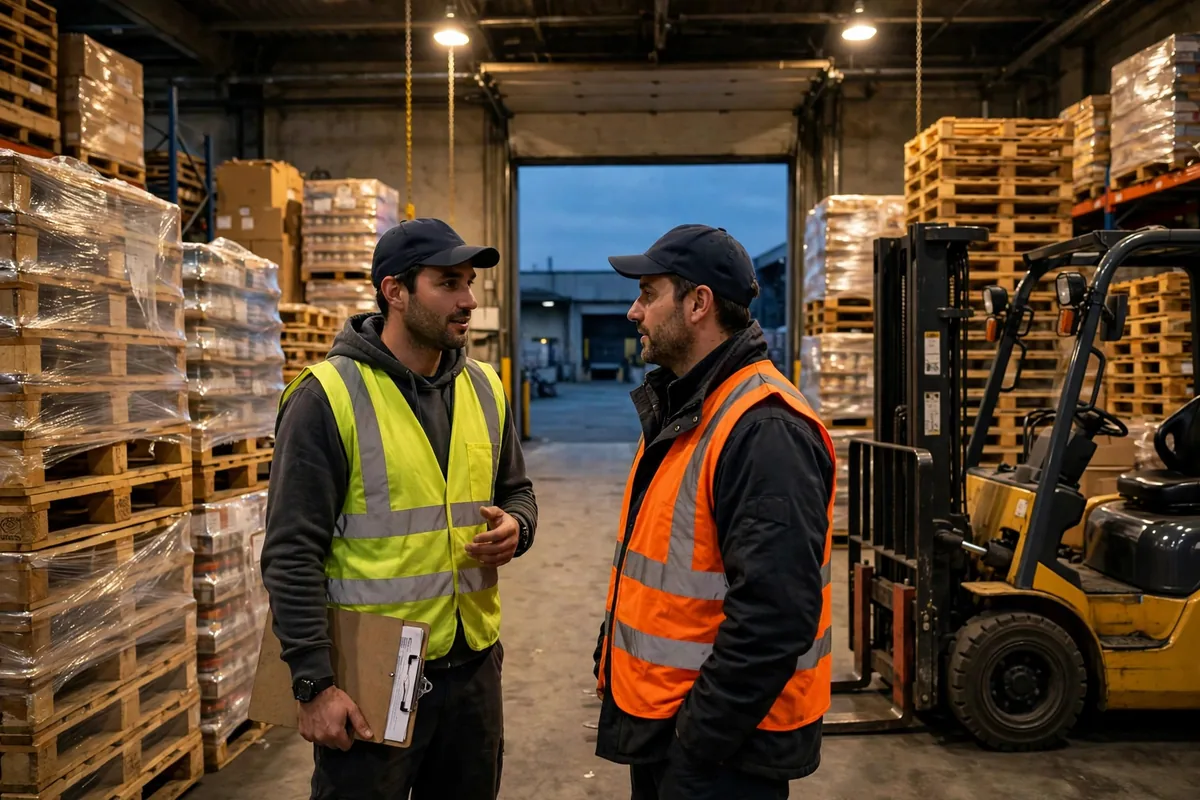
In our warehouse, day one has no picking tasks at all. The new hire walks the building with a mentor. Where is receiving, where is the returns area, which two routes are the fire exits, which lanes are for forklifts and which are for people on foot. In the morning he watches the mentor work. In the afternoon he does one job himself: move ten pallets from receiving to their assigned locations, with the mentor walking beside him the whole time.
One detail took us three years to get right. Before day one ends, the new hire has to repeat the five safety rules back to the mentor, in his own words. If he cannot say them, day two repeats the same material. We do not move on. We used to hand him a safety sheet and ask for a signature. He signed it and forgot it by lunch. Now he says the rules out loud, and they stick.
Day one has one more job that cannot be skipped: introduce him to the people on his shift. Not a wave across the room. He needs to know who to call on nights, who fixes the equipment, who approves time off. Plenty of new hires quit in the first week not because the work is hard, but because they do not know a single person in the building and have nobody to ask.
Warehouse New Hire Training: The Three-Day Plan That Actually Works
Three days to productive work is not a slogan. It is a chart on the wall of the shift leader's office. What the mentor teaches, what the new hire practices, and who signs off are all written down. Nobody releases a new hire on gut feel.
| Day | Morning | Afternoon | Sign-off standard |
|---|---|---|---|
| Day one | Walk the warehouse with the mentor, learn the zones and the safety rules | Move ten pallets to assigned locations, mentor beside him | Repeats the five safety rules in his own words |
| Day two | Mentor picks orders, new hire follows, checks, and packs | New hire picks twenty orders himself, mentor checks each one | Twenty orders, zero mis-ships, one mistake means repeat |
| Day three | New hire picks and packs alone, mentor observes | Simulated peak: two straight hours of live orders | Matches the team average pace with zero safety violations |
It took us four tries to land on this schedule. The first version rushed it: two days and then release. That group mis-shipped far more than the veterans in their first month, and the rework buried the shift leaders. The second version overcorrected: two weeks of coaching, and the new hires felt like outsiders and three of them quit. The third version found the rhythm: three days to teach the basics, a test before release, and then a month of gradually harder work.
Choosing the mentor matters too. We do not pick the fastest picker. We pick the steadiest one. The fastest worker usually cannot explain what he does, because the moves that feel obvious to him are invisible to a beginner. Mentors get a monthly coaching bonus, but the bonus is tied to how their trainee performs in the first month: more trainee errors, smaller bonus. Once that rule went in, the veterans competed to coach, and they coached hard.
Here is a finding that surprises most managers: when a new hire is slow, the problem is often the schedule, not the person. We used to put every new hire on the day shift, thinking more people around meant more help. But the day shift has the heaviest volume and the fastest pace, and the new hire got steamrolled on arrival. Now new hires spend their first two weeks on a medium-volume shift and move to the peak shift once their hands know the work. Two slow weeks up front buys a first month without a big mistake. That trade is worth it.
Warehouse New Hire Training Mistakes in Month One
After release, the first month's mistakes cluster hard. We counted our own rework tickets: about seven in ten of them came from three things. The first is reading the wrong location: a letter-plus-number location code, and the new hire swaps a row. Our fix is that for the first week after release, every order the new hire picks gets a scan check, and the system blocks a mis-ship. A mistake costs him nothing except a note for the evening review. The second is counting wrong: eight pieces, he counts seven. Our fix is to teach him to count twice, once when picking and once when placing the goods in the tote. The third is sloppy forklift and pallet work: reversing without the mirror, stacking a pallet crooked. Our fix is a weekly spot check where the shift leader pulls three people at random and tests their handling on the floor. Fail, and you retrain that same day.
The cost table below is a hypothetical example, with numbers invented for illustration at the scale of a mid-size warehouse. It is not real statistics. Say a warehouse hires 30 new people a year, each averages 3 errors in the first month, and each error costs about 200 dollars in rework and compensation. That is 18,000 dollars a year, before counting any safety incident. Two extra days of coaching per hire costs far less than that. The math is not close.
In the first month, the shift leader sits down with each new hire once a week for ten minutes. Three questions: which task still feels shaky, is anyone giving you a hard time, and what do you want to learn next week. Do not underestimate those ten minutes. One of our guys nearly quit in week three because he thought his mentor considered him slow. The shift leader moved him to a different mentor, and today he is one of the steadiest pickers on the team. Keeping people is partly about pay. It is also about being treated like you matter.
Night shifts need separate attention. Days have plenty of people around. Nights are thin, and a new hire with a problem often has nobody to ask. Our rule now is that a new hire does not work nights alone in the first month. If nights are unavoidable, he gets a fixed night partner, and the two look out for each other. One more small rule: during a new hire's first week on nights, the shift leader walks the floor in the middle of the night. It is not an inspection. It is a message that someone is watching out for him even at 2 a.m. Night violations dropped sharply after that walk became routine.
Warehouse new hire training comes down, in the end, to whether management has the patience. Plenty of warehouses know how to train. Then peak season arrives and training is the first thing thrown away, and volume comes first. The orders ship late anyway, the errors pile up, people quit, and next month a fresh batch starts the same loop. We ran that loop for two years and paid for it. Our rule now is simple: no matter how busy it gets, the three-day coaching chart is never skipped. Orders can ship late. Safety and the rules cannot wait.
If your warehouse is losing new hires to errors and early quits, check your own training chart first. Is there a day in the first three where someone truly coaches hand to hand. Is there a written sign-off standard before release. Does anyone sit down with the new hire every week in the first month. Get those three things right, and warehouse new hire training actually lands.
By Chen Feng, Warehouse Operations Manager