The warehouse picking accuracy speed tradeoff is not solved by shouting about it on the floor. It is managed, shift by shift, with three numbers in view: what the piece rate rewards, where the check step sits, and what rework actually costs. Get any one of those wrong, and the other two will punish you for it.
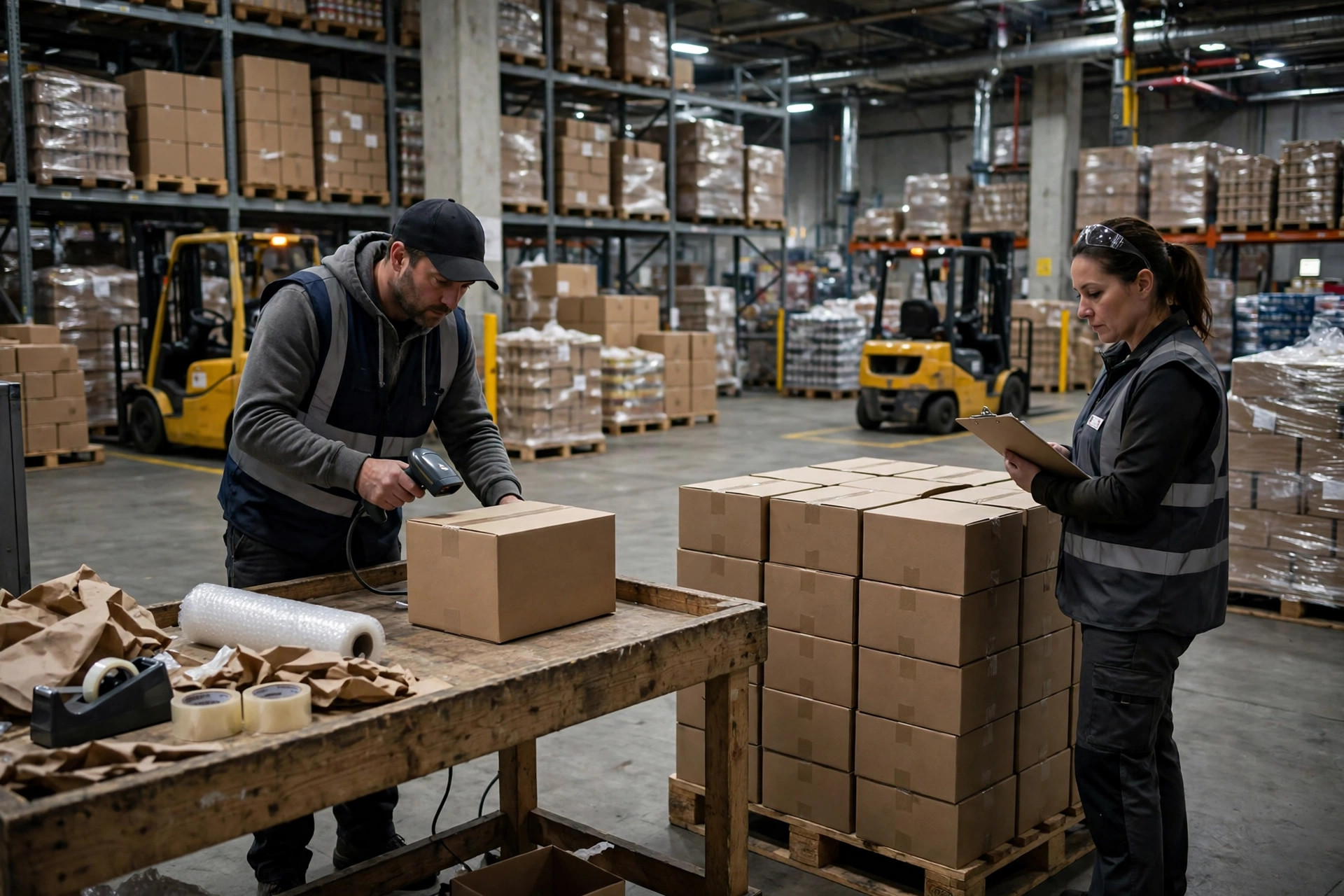
Picture a morning shift in a US e-commerce warehouse in the Midwest. It is 6:30 a.m., nights are handing over, and the day crew is clocking in. The backlog on the screen already runs to midday. The lead at the end of the aisle calls out that volume is heavy and speed needs to come up. By 8:00, boxes are stacking up at the checking benches. Not because stock is short, but because errors are piling up: wrong size picked, one unit short, two look-alike items swapped. By afternoon, what is holding up shipping is not the slow pickers. It is the rework crew. Let me be straight with you: this is the tradeoff every warehouse manager lives with, and pretending it does not exist is the most expensive option of all.
I have run both extremes, and both cost money. Pay only for speed, check only a sample, and the numbers look great for a few weeks. Then the wrong shipments start coming back: complaints, returns, reships, and apologies. Check every order twice, and errors fall, but all your labor ends up standing at the checking benches, and the moment volume spikes you are stuck. Neither extreme is a strategy. The work is putting the three costs on the table so everyone on the floor understands what one error is worth and what one rushed order risks.
The second scene is a peak-season night shift. During a promotion week in late 2023, a US warehouse night crew took on a dozen or so new hires, each paired with a veteran for two days. On the third night, volume surged, and the lead switched the check step from "scan-check every order" to "spot-check," trying to protect speed. By morning, the damage was concentrated and obvious: more than a dozen cartons had mixed sizes of the same style. Rework ate an entire day shift and cost the building two truck departures it had planned to make. The review afterward reached an unusually unanimous conclusion: it was not the new hires who failed. We had removed the check at the exact moment we needed it most.
Piece Rates and the Accuracy vs Speed Tradeoff
The first rule of piece-rate design is simple: never pay for speed alone. Workers are rational people. The rule points one way, and people walk that way. Pay per order picked with errors handled later, and the check step becomes "the thing in the way." Nobody volunteers to slow down for it.
The structure we use now splits the incentive in two. The base part pays on picking volume, which is the speed reward. The second part pays on accuracy, with a threshold set where a steady, experienced picker can normally land. That split is the warehouse picking accuracy speed tradeoff expressed as a pay rule: both halves of the job are priced, so neither half gets sacrificed for the other. The point is to make every picker do the same mental math: rushing one order saves a couple of minutes, but one error costs a bonus worth many rushed orders. Once that math is visible, most people will gladly spend the extra two seconds to scan and glance at the size.
One more rule matters, especially in the tight US labor market where a warehouse cannot afford to burn through new hires. Newcomers stay out of the piece-rate ranking for their first two weeks. They get a guaranteed base, and the focus is accuracy, not rank. The veteran training them shares in the newcomer's accuracy result, so the veteran has a real reason to teach properly instead of dropping the new hire in an aisle and walking away. A stable crew gets faster on its own. Fines do not produce accuracy; rules do.
Where the Check Sits in the Accuracy vs Speed Tradeoff
Where the check sits decides whether it saves money or costs money. Put it after picking and before packing, and an error is still inside the building: the cost is one re-pick. Let it leave the building, and the cost changes completely. The table below is a training example we use with new leads, not any company's financial statement, but every line in it is real, and running through it once changes how people think about those two seconds.
| Stage where the error is caught | What one error costs | Notes |
|---|---|---|
| Caught at the in-house check | About one re-pick, roughly a quarter hour of labor | Goods still in the building; cheapest outcome |
| Caught after packing | Reopen, re-pick, repack, roughly half an hour or more | Also occupies a check bench |
| Shipped and returned by the customer | Return freight plus service plus second handling, several times the in-house cost | May also lose the customer |
| Never caught at all | Inventory variance and later reconciliation | Worst case: nobody knows it went wrong |
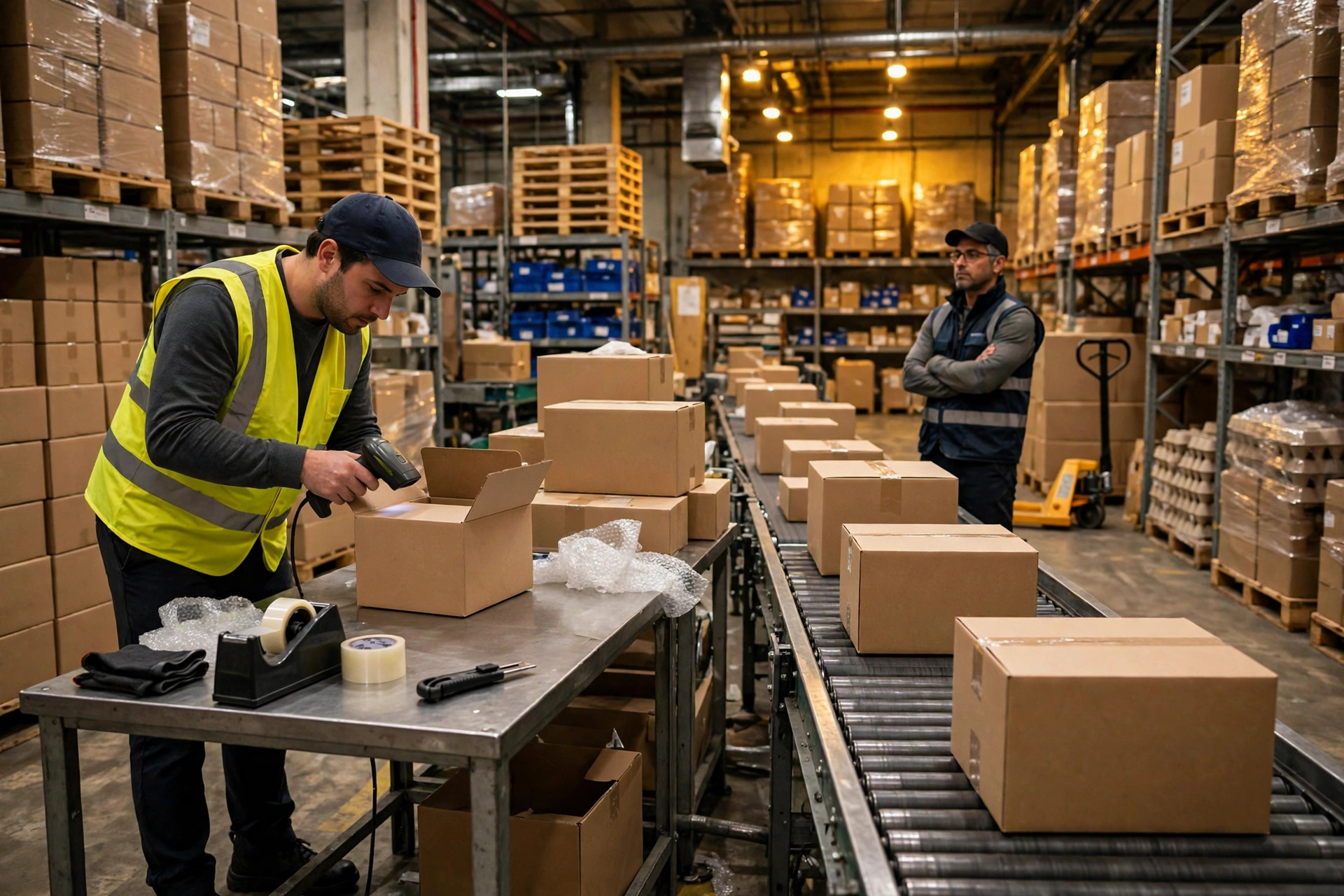
So my rule is this: the check step never goes where it is convenient; it goes where it can still stop the error. Managing the warehouse picking accuracy speed tradeoff means defending that position even when the queue at the benches makes everyone uncomfortable. In normal volume, every order gets a scan check. When volume surges, I would rather see a queue at the check benches than switch to spot-checking. A queue is visible and manageable. A shipped error is invisible until it comes back angry. Visible slowness can be planned for; invisible errors cannot.
Here is the counter-intuitive part, and it is the heart of the whole tradeoff: sometimes slowing down ships more. A crew that saves two seconds per order by skipping the check looks faster for an hour. Then rework arrives, and the whole afternoon's rhythm breaks: people are pulled off live orders, the check benches need extra hands, and the pack line waits. Those saved two seconds buy half a day of chaos. We eventually made it a written rule for leads: in peak season, the check step is never downgraded, no matter how busy it gets. If labor runs short, we tell customers honestly about a half-day delay rather than quietly cutting the check. After that rule stuck, complaints fell in peak season, and so did overtime.
One last reminder to fellow managers: the warehouse picking accuracy speed tradeoff is not set once and forgotten. The product mix changes, new hires arrive, and the order profile shifts, so the three costs need recalculating regularly. Once a month, look at the data: which SKUs produce the errors, which hours, which people. The data will tell you whether to adjust the piece rate, move the check, or invest in training. Do not manage the floor on gut feeling. Gut feeling lies; the ledger does not.
By Chen Feng, Warehouse Operations Manager