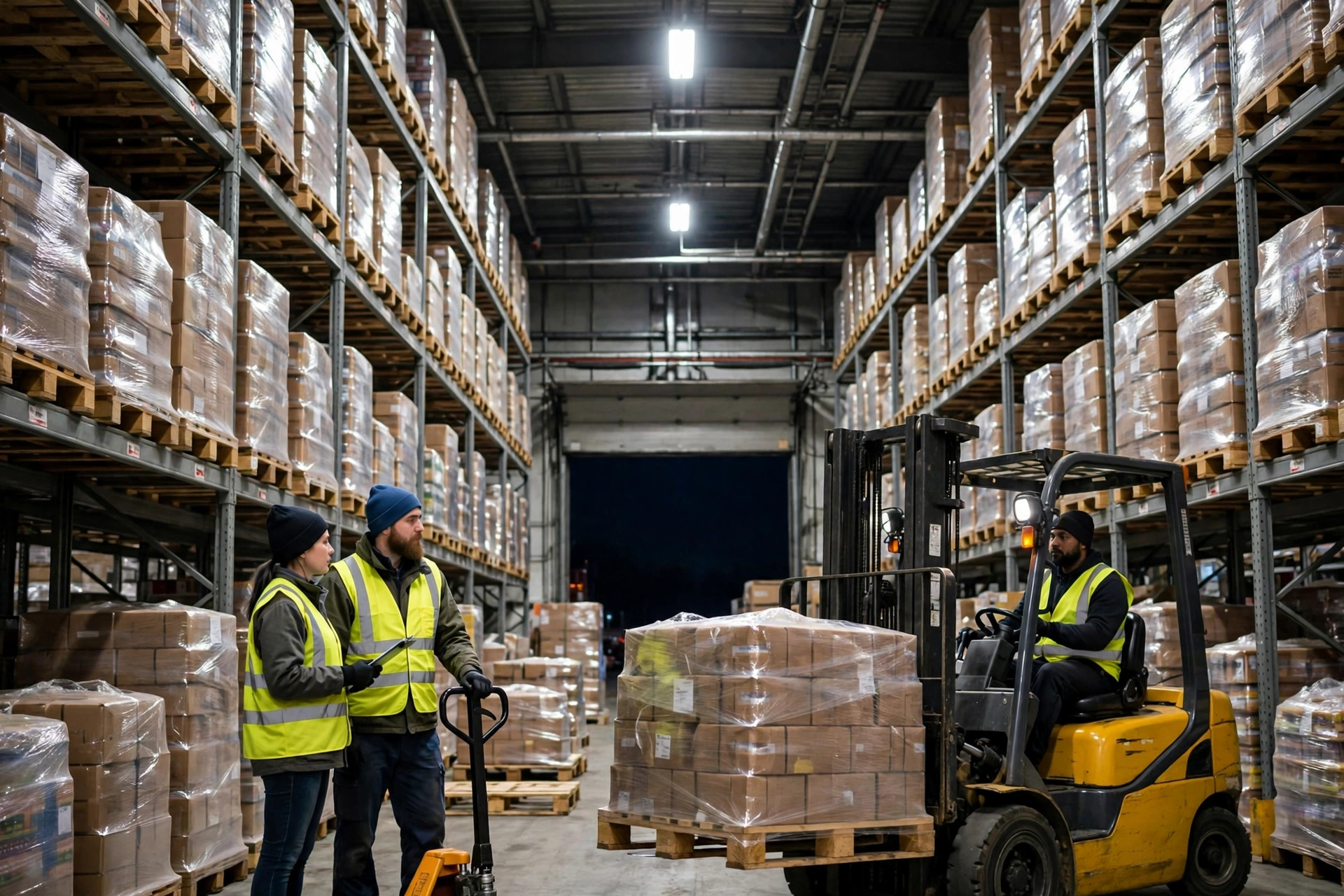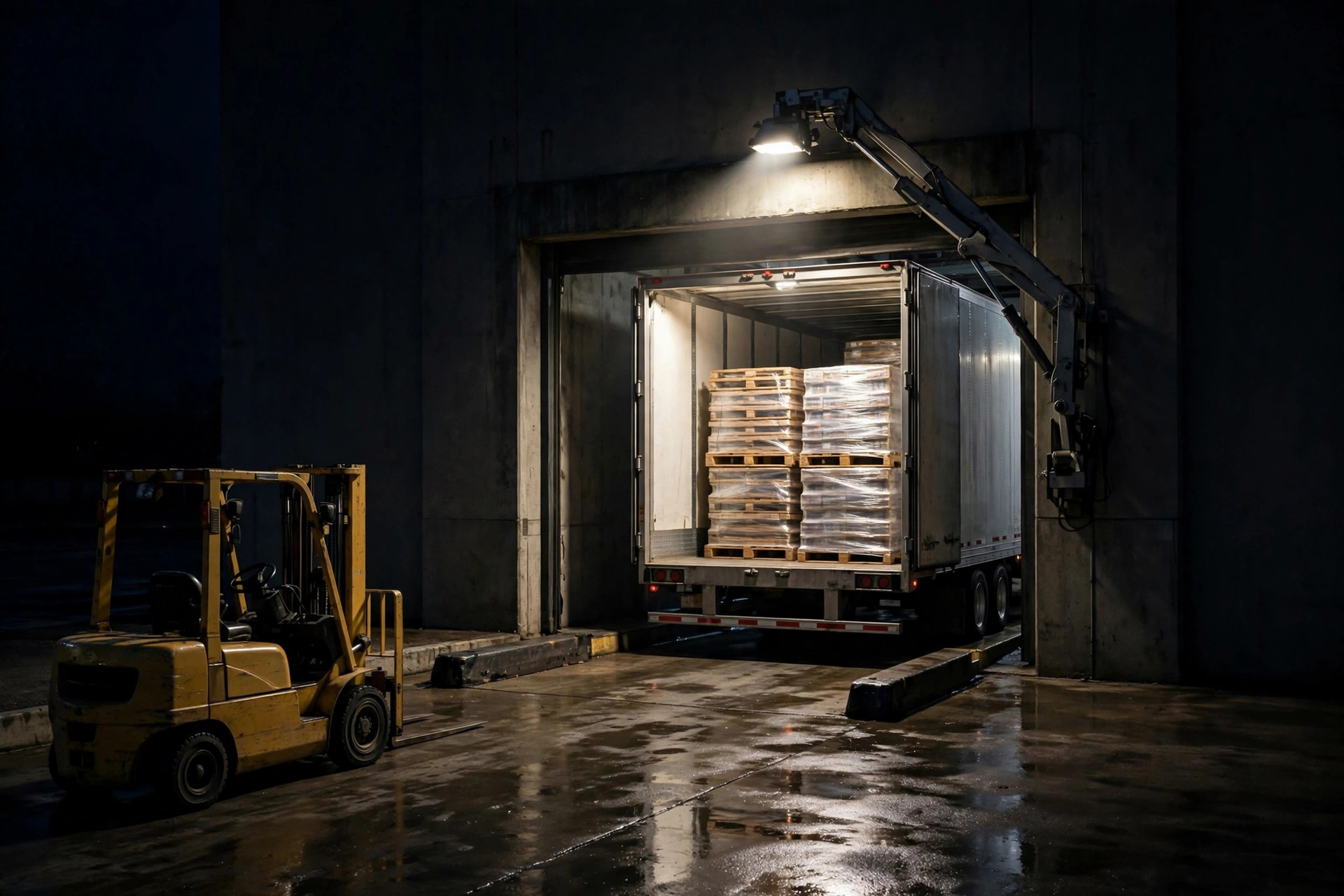
It was 6:40 in the morning, still dark outside. Old Zhang, coming off the night shift, was driving a forklift loaded with cartons from Zone B to Zone C when Xiao Li, fresh in his work uniform and cutting across the floor to clock in, stepped out in front of him. Zhang hit the brakes hard. Tires screeched on concrete. The cartons on the pallet swayed twice and stayed put. Xiao Li went white. Zhang's palms were soaked. The two of them just stood there, saying nothing. That morning taught me something I have never forgotten: when forklifts and people share the same path, an accident is only a matter of time.
Let me be straight with you. This was not about one careless person. Our warehouse used to run exactly like that: a 4-meter main aisle, forklifts down the middle, people hugging the edges, and a "Watch for Forklifts" sign on the wall that we treated as a safety program. In peak season, forklifts made more than twenty trips an hour and people crossed constantly. The sign did not stop anything. Before the near-miss with Zhang and Xiao Li, there had already been three or four other close calls. Nobody reported them, because "nothing actually happened." Nothing happening does not mean nothing is wrong. It just means the luck has not run out yet.
How the Problem Grew
Our warehouse was built in 2019, and the original layout never gave pedestrians their own path. More racks went up every year, aisles got tighter, and people's routes and forklift routes ended up completely tangled. When I sat down to figure out why, it came down to three things.
First, the pedestrian route was never designed, it just happened. Nobody ever drew a walking path. People took the shortest way out of habit, and over time those shortcuts hardened into regular routes that cut straight across the forklift main road.
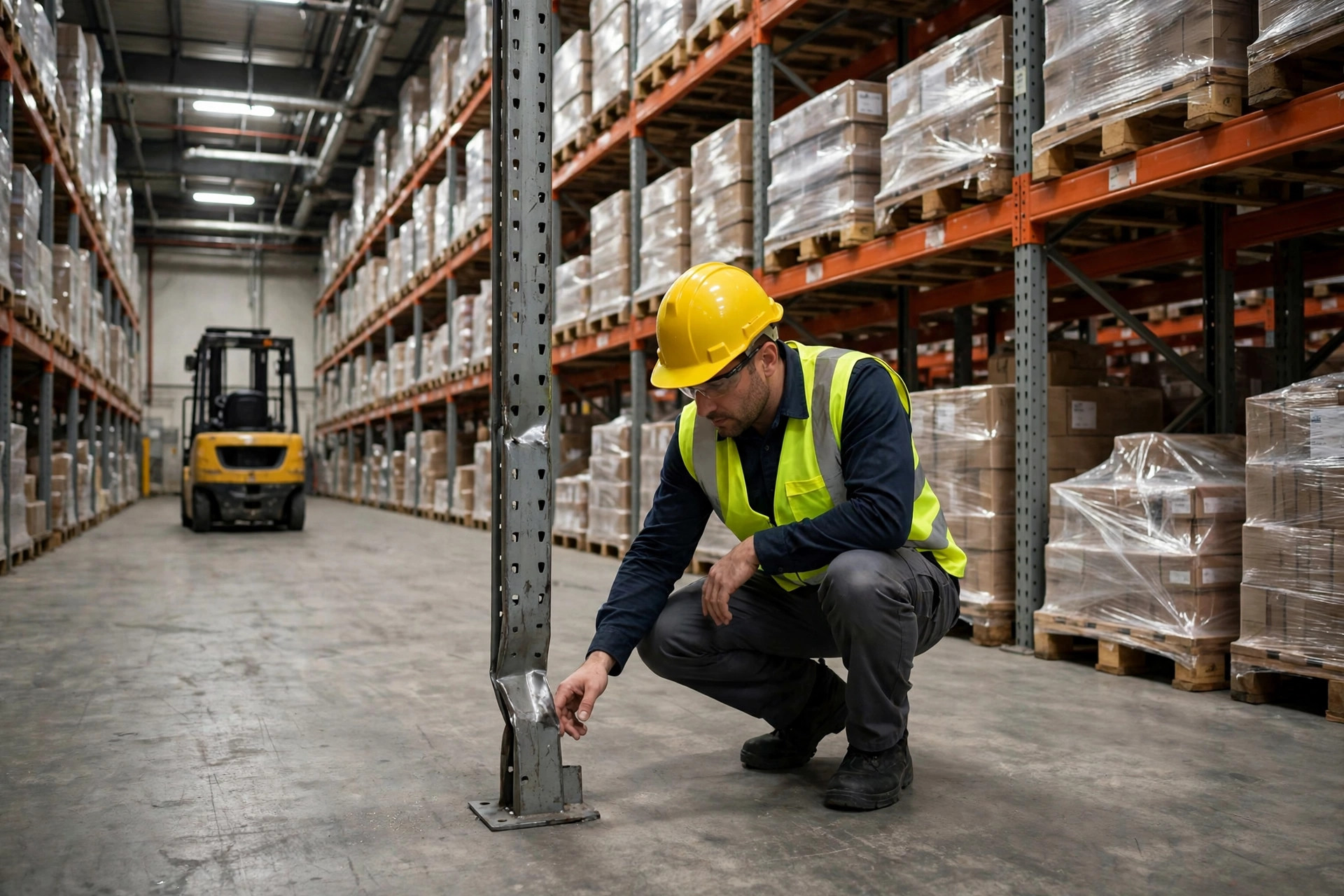
Second, forklift drivers cannot see people. Rack corners, pallets stacked 1.8 meters high, uprights on high-bay racking, all of them create blind spots. Drivers are not unwilling to yield, they genuinely cannot see. That is what happened with Zhang: the load blocked his view, and by the time he turned the corner, the person was already there.
Third, nobody owned the problem. The safety officer thought it was an operations issue. The operations lead thought it was a layout issue. Layout said "we will fix it in the next renovation." Everyone responsible meant no one responsible.
What We Tried: Mark It, Separate It, Then Manage Forklift Safety
I started changing things before the 2023 peak season, in three steps. I did not try to do it all at once, because all-at-once never survives contact with a working warehouse.
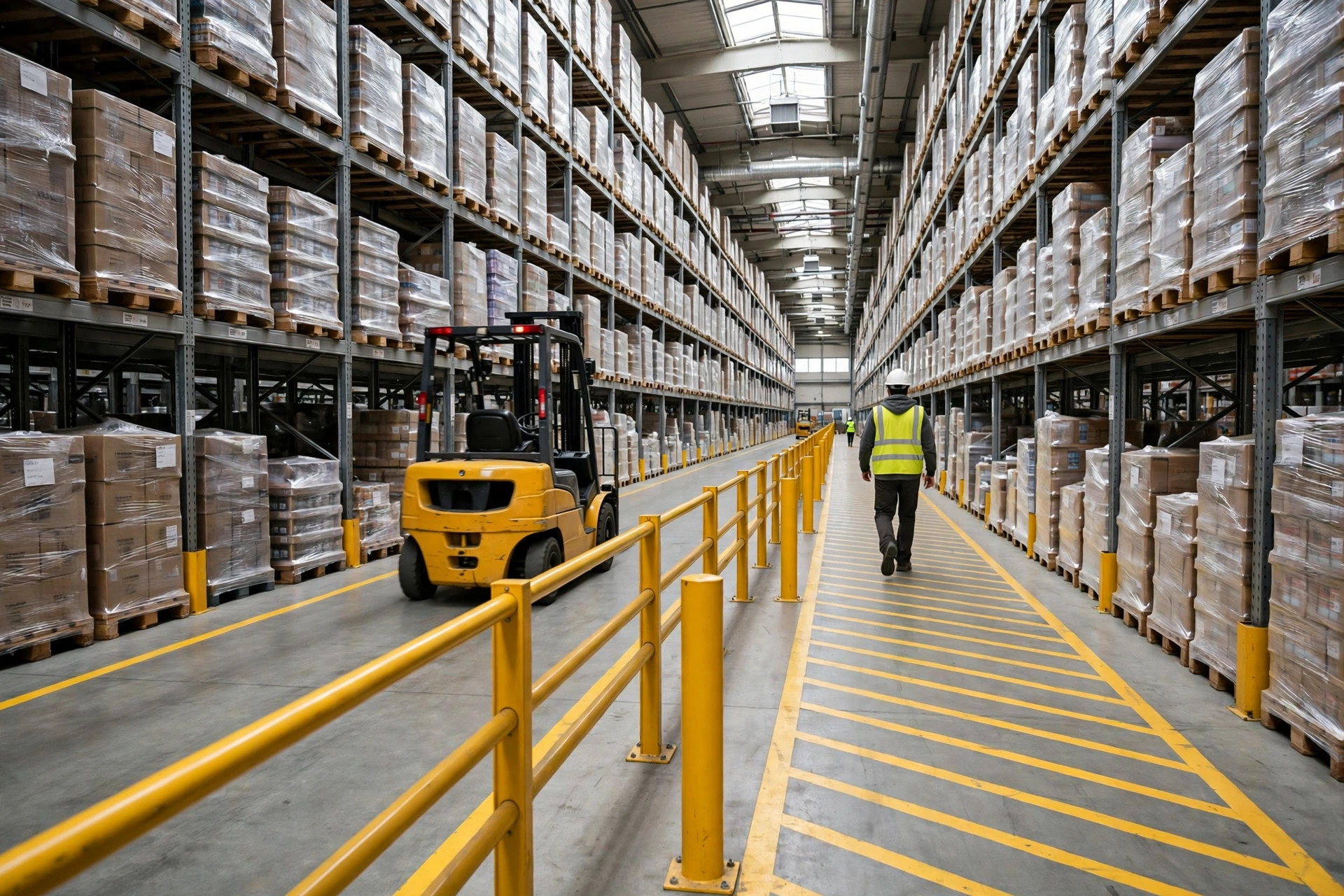
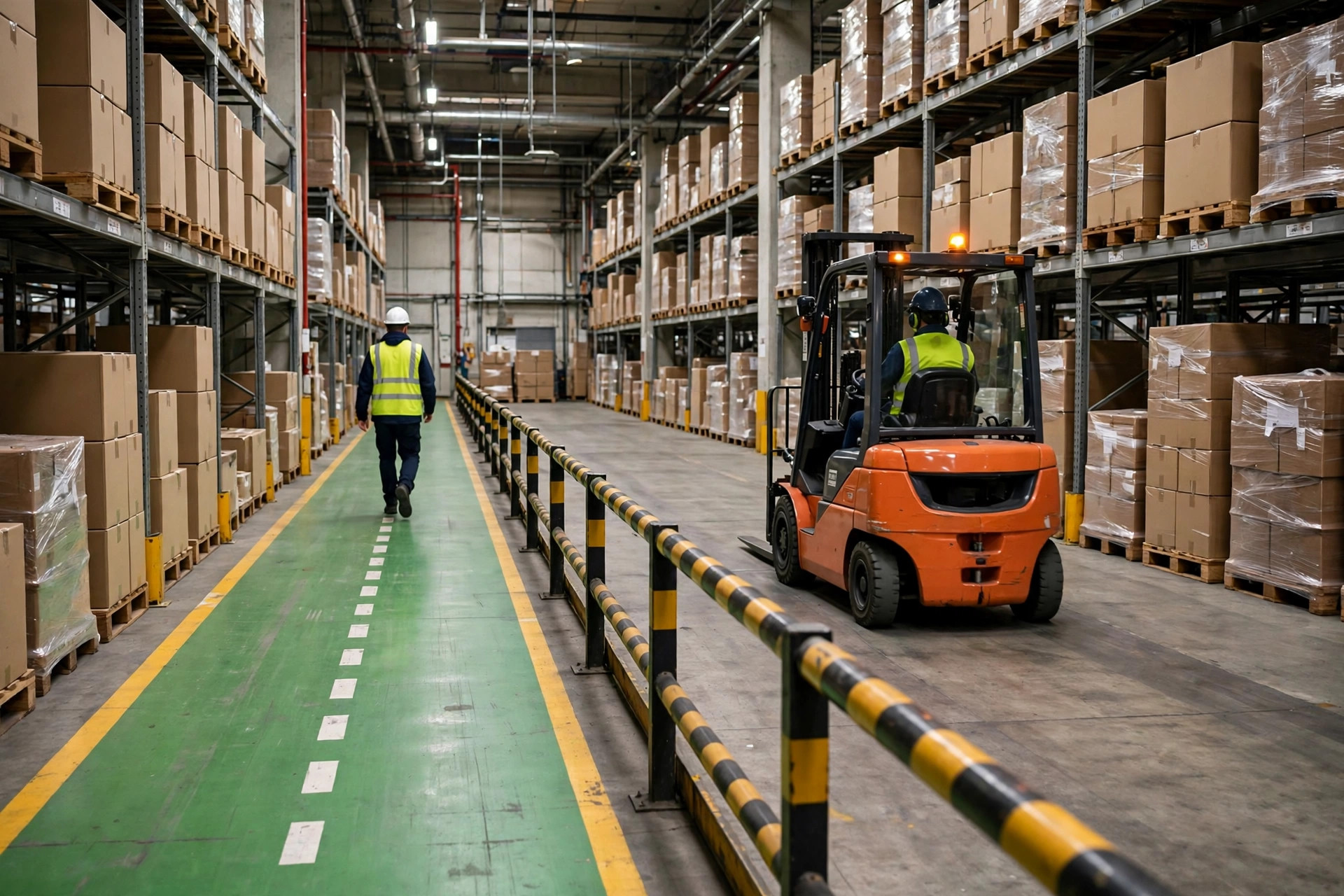
Step one: paint the lines and separate people from trucks. We marked a 1.2-meter pedestrian walkway on each side of the main aisle with solid yellow lines and painted "PEDESTRIAN WALKWAY" on the floor. At every crossing we painted a crosswalk and put up signs reading "Forklifts slow down, pedestrians have priority." Painting took two days and cost very little, and the effect was immediate: people knew where they belonged, and drivers knew where to expect people.
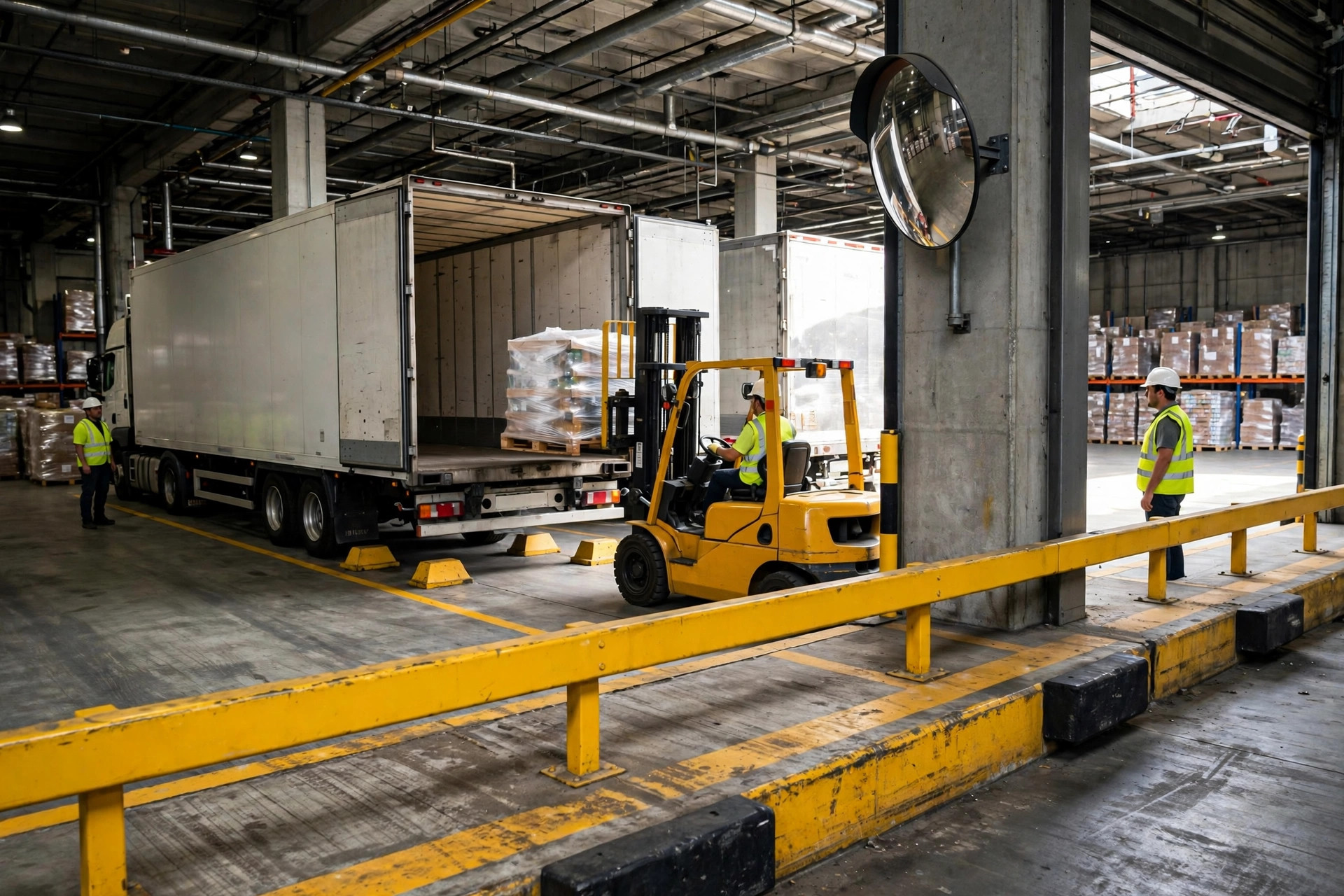
Step two: cut the number of places where crossing is unavoidable. We counted: people used to cross forklift lanes more than 40 times a day. The fix was layout, not discipline. We moved the time clock, the water cooler, and the common tool cabinets to the pedestrian side of the aisle, and shifted picker replenishment points to the ends of aisles. After that, mandatory crossings dropped from nine points to two. The remaining two got convex mirrors and audible-visual alarms that flash and sound when a forklift comes within 5 meters.
Step three: write rules simple enough that nobody needs to memorize them. We ended up with exactly three:
| Rule | What it means in practice | If it is broken |
|---|---|---|
| People stay out of truck lanes | Pedestrians walk inside the yellow lines only; stepping outside is a violation | First time a reminder, second time a team notice |
| Forklifts stop at every crossing | Full stop for 3 seconds at each crosswalk, proceed only when clear | Spot-checked on drive recorders, safety points deducted |
| Sound the horn at every blind spot | Corners, doorways, and dock exits: horn first, then move | Team lead corrects on the spot, reviewed the same day |
Three rules, posted on every team board. More than three and nobody remembers them. Three is just right.
How We Keep Warehouse Pedestrian Walkway and Forklift Safety Working Day to Day
Paint fades. Habits slip. The management routine is what makes pedestrian walkway forklift safety last.
Every Monday morning, the pre-shift meeting spends 5 minutes on one "almost happened" story. No lectures, just what happened last week, where, why, and what changed. People remember stories, not policy documents. The stories come from near-miss reports filed by the workers themselves. Reporting is never punished; hiding one is. Once that rule was clear, reports actually went up, because people saw that reporting led to real changes.
Once a month, I walk the whole pedestrian route with the safety officer. Are the lines worn? Are the mirrors dirty? Do the alarms still sound? Is anything temporarily stacked in the walkway? Temporary stacking is the most common relapse: one pallet "just for today" becomes three pallets by next week, and within a month the walkway is gone. Find it once, clear it once, photograph it, post it in the group chat.
A new hire's first day starts with a walk, not a lecture. Before any safety training, I walk them from the time clock to their workstation along the pedestrian walkway, pointing out each crossing and where to stop and look. One walk beats ten lectures.
In peak season, we add people, not speed. When orders double, the pressure to go faster is intense. My rule is: we can add overtime, add headcount, add shifts, but the 3-second forklift stop at crossings never gets shortened by a single second. Speed can be bought with more hands. Safety cannot be bought with luck.
The Counter-Intuitive Part: Stricter Rules Made Us Faster
People worry that walkways and rules slow forklifts down, that stops and detours cost throughput. We ran the numbers. In the year before the changes, we logged 23 forklift-related near-misses, and each one cost about half a day of disruption, not counting the damage to morale. In the year after, near-misses dropped to 4, and average forklift trip time rose by less than one minute, because drivers no longer had to drive scared. With fixed routes, they actually drove more smoothly. Safety spending looks like a cost, but what it really buys is certainty: drivers who dare to drive and workers who dare to walk. A nervous driver is slower than any rule will ever make him.
One last word to fellow warehouse managers: do not wait for a real collision to start fixing this. After a real collision, no fix is early enough and no settlement makes anyone whole. Go stand in your main aisle for ten minutes and count how many times people and forklifts pass within arm's reach in one hour. That number is your distance from an accident. Paint the lines first, separate the paths, and work out the rest as you go. But the first step can happen today.
By Chen Feng, Warehouse Operations Manager