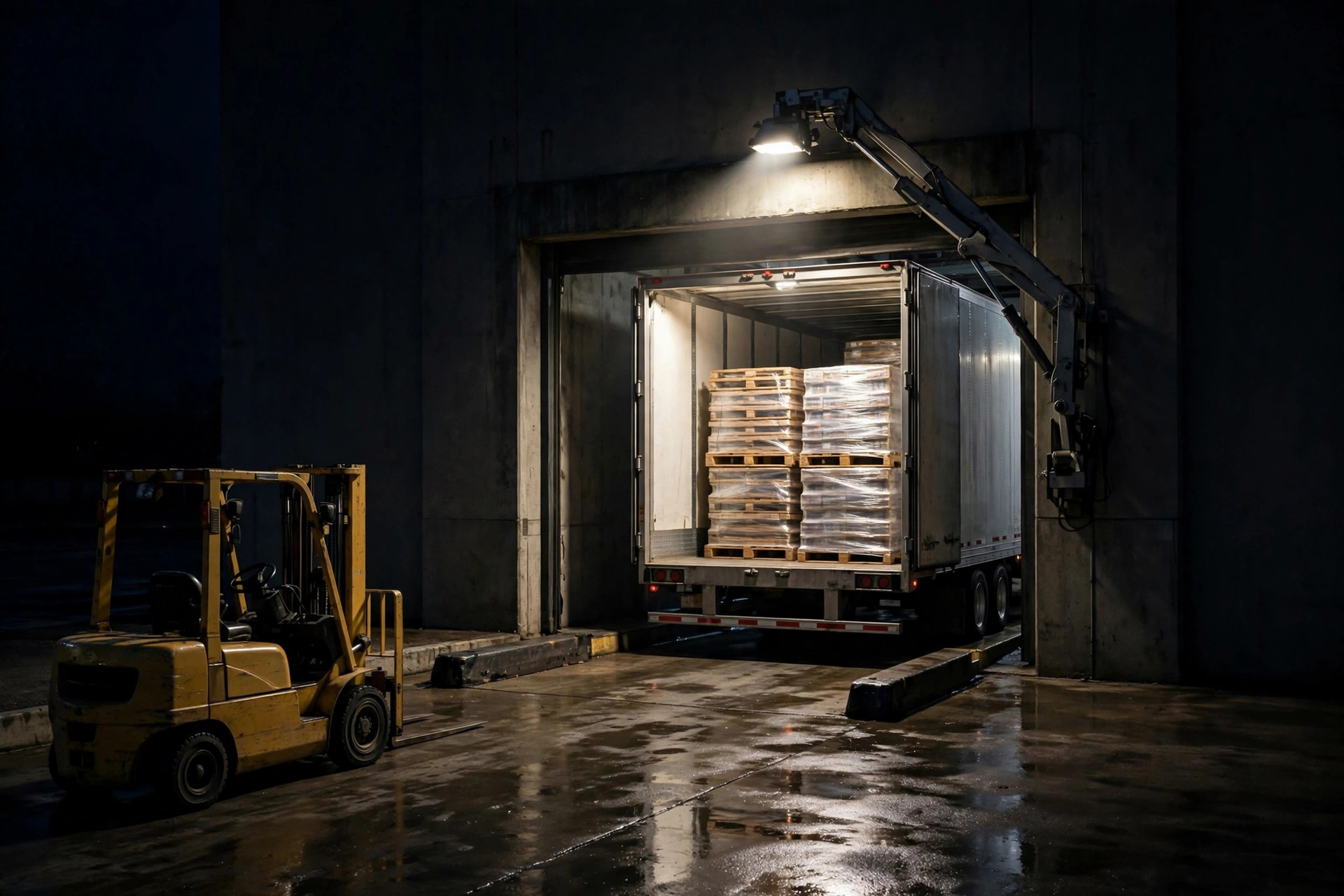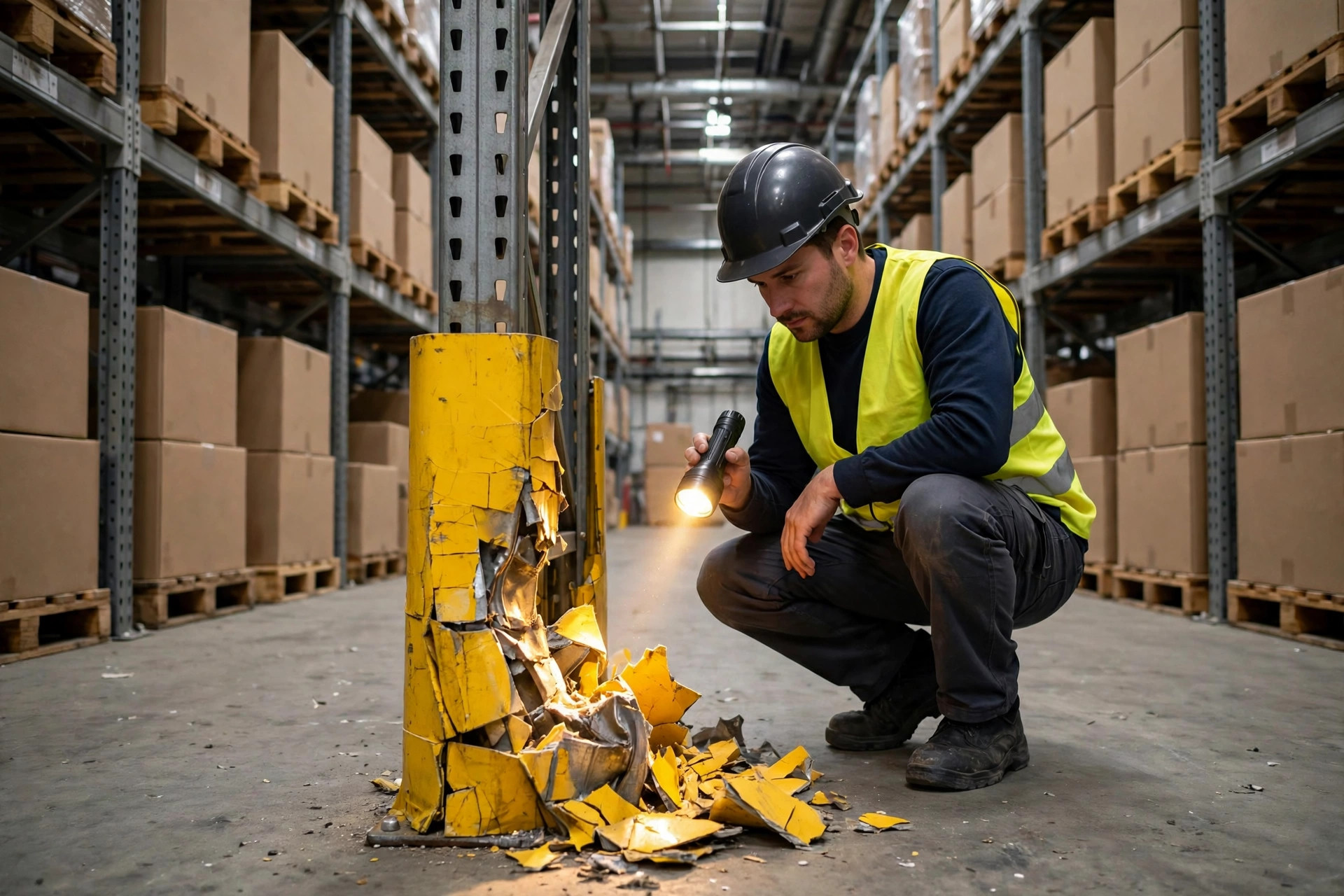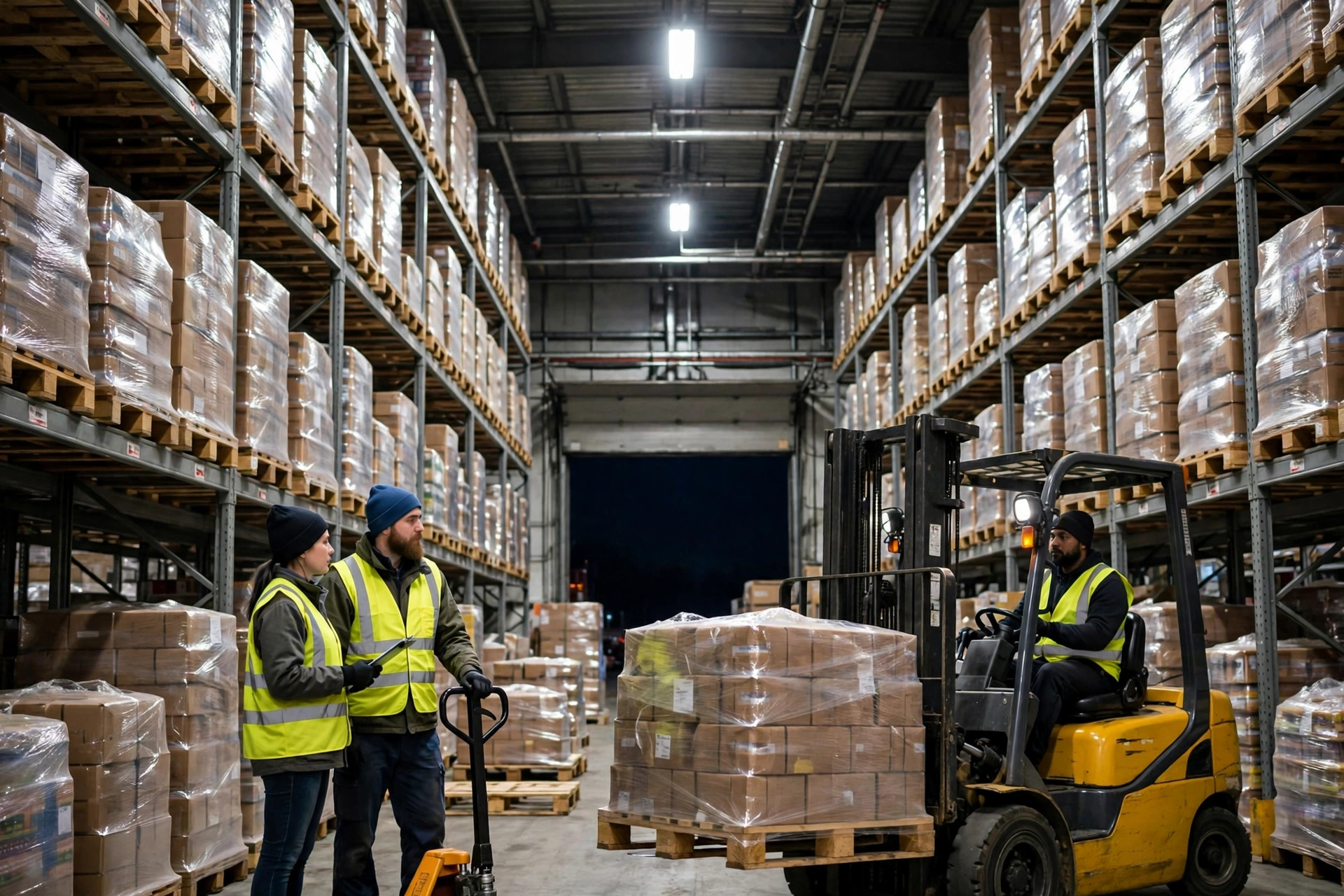
At 2:40 a.m., warehouse night shift safety stopped being a poster on the wall for me. I was walking from the office to receiving in a big warehouse out in California's Inland Empire, the overhead lights buzzing, when I saw a forklift stopped at the end of an aisle. The driver, a young guy I'll call Li, had both hands on the wheel and was staring straight at the racking, not moving. I walked over and tapped his shoulder. He jumped and said, "Boss, I almost clipped a column. My brain just blanked out for a second." I didn't chew him out. That is the first rule of warehouse night shift safety: at that hour, people get tired. Machines don't get tired. The people driving them do.
Let me be straight with you. The most dangerous thing on nights is not the equipment. It is the stretch between about 2:00 and 4:30 a.m., when even good people slow down. During the day you can push through on energy and coffee. At night, that trick stops working. Good fatigue management starts by admitting this, then building the schedule, the lighting, and the traffic routes around tired humans — not around the humans we wish we had. That is how we run our warehouse now. Nothing fancy.
After Li's near miss, I didn't rush out a new rule. I worked three night shifts myself, start to finish, and watched. The first couple of hours were fine. The danger piled up after 2 a.m., and it hit new hires hardest. Veterans could lean on habit. New folks had no habit to lean on yet, so their reactions lagged. There was also a lighting trap I had walked past for months without seeing: one aisle exit sat in shadow while the pedestrian walkway beside it was brightly lit. A driver coming out of the dark could not see a walker, and the walker could not see the driver. Nobody was being careless. The light itself was setting them up.
We had a second wake-up call on a Wednesday night during peak season, also around 3 a.m. A new hire, Chen, was pushing a manual pallet jack out of the pedestrian lane just as a forklift turned the corner from a side aisle. Neither saw the other in time. The driver stopped fast, a carton still slid off and hit the floor, and luckily nobody was hurt. Chen told me afterward he had looked — but the corner light had been out for two days and nobody had reported it. A person stepping out of darkness is invisible to someone standing in bright light. After that night, "report a dead light today" became a hard rule, not a suggestion.
Warehouse Night Shift Safety Starts With the Schedule: Fatigue Management Is Not a Poster
We tried posters first. The walls were covered. Nobody read them. Then we tried chopping nights into rotating pieces — nights one day, days the next — thinking variety would keep people fresh. It did the opposite. Everyone's sleep got scrambled, and everyone complained of being tired all the time. So we went the other way: we made the night crew as fixed as we could, the same people on nights with real days off built in. Some folks pushed back. Fixed nights are harder to hire for, no question. But the crew that stayed started sleeping on a real rhythm, and mistakes dropped. Here is the counter-intuitive trade-off every night-shift manager has to face: the schedule that looks easiest to staff, constant rotation, is the one that quietly costs you the most in accidents, rework, and turnover. The schedule that looks hardest to staff, a fixed night crew, is often the cheapest once you count the whole bill.
Our scheduling rules now are simple and non-negotiable. There is a cap on consecutive nights, and when a person hits it, they rotate off for rest — no covering it with overtime. In that 2:00 to 4:30 a.m. window, we do not schedule high-bay picks or complicated picks that need constant judgment. We move that work earlier and leave simpler, lower-risk work for the hardest hours. Every night shift has two real breaks written into the schedule, with coverage arranged, not "take a break when you get a chance." And new hires never run a forklift alone in deep aisles at night. They pair with a veteran for at least two weeks, and the veteran's job is to teach the blind corners, the floor markings, and the spots where people zone out — not to police them.
The best habit we have sounds almost too simple. Before each shift, the lead spends five minutes asking three questions: who didn't sleep well, who feels unwell, and who has a question about tonight's freight. If someone raises a hand, it is not embarrassing — the lead swaps them to lighter work, on the spot. Once people saw the swap actually happen, they started speaking up. That is what fatigue management looks like when it reaches real people. Pay and rest-day details vary by warehouse, so don't copy someone else's numbers; the point is that tired people can say so and get help, instead of pushing through until something breaks. Output squeezed out of exhausted people gets eaten up by rework the next day anyway.
Night-Shift Lighting and Keeping People and Forklifts Apart
Lighting is not a case of brighter is better. We learned that the hard way. One area got extra-bright lights, and drivers coming toward them were dazzled and missed a pedestrian in the glare. Now we tune aisle by aisle. Where forklift and pedestrian paths cross, the light has to be even — no bright pools next to dark patches. High racking gets supplemental light so a driver looking up can see whether a pallet is sticking out. Floor markings get repainted so they stay visible at night. And a dead light gets replaced the same day, not next week. On nights, that is a hard rule.
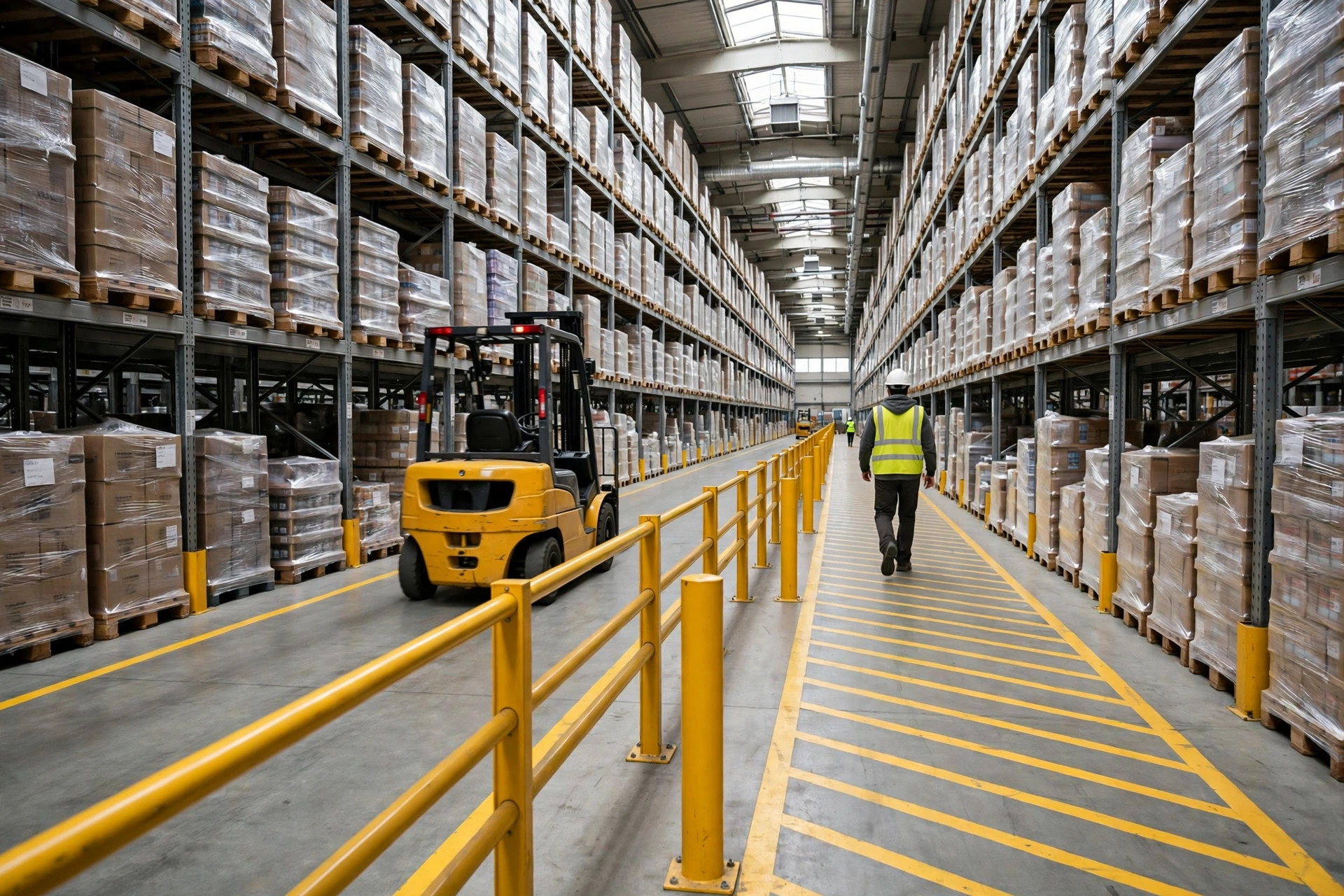
For people and forklifts, we keep it physical and boring, which is the point. Pedestrians use a fixed walkway, separated by guardrails and floor markings, and forklifts don't cut through it as a shortcut. Every blind corner gets a convex mirror, so driver and walker can see each other before they turn. At night, forklifts run with warning lights on and reverse beepers on — no switching them off. And the pedestrian walkway never holds temporary pallets. A pallet parked there during the day is an inconvenience; at night it is a dark obstacle. Before each night shift, the lead walks the pedestrian route and clears anything staged there.
| Approach | Looks like in daylight | What actually happens at night | Our verdict |
|---|---|---|---|
| Safety posters on the wall | Cheap and easy | Nobody reads them | Keep only key reminders at crossings; don't manage by poster |
| Constantly rotating nights | Flexible scheduling | Sleep gets scrambled, everyone stays tired | Dropped it |
| Fixed night crew plus real rest | Harder to hire | Steady sleep, fewer errors | Adopted; hiring cost belongs in the safety budget |
| Convex mirrors plus cleared walkways | A bit of daily labor | People see each other before turning | Adopted; checked before every night shift |
| Maximum-bright lights everywhere | Looks impressively bright | Glare hides pedestrians | Dropped; even light by section instead |
A Night-Shift Manager's Pre-Shift Check: Three Places Before Production
Fellow managers, before you look at tonight's production numbers, look at three things. First, the people: who slept badly, who is on their last consecutive night, and does every new hire have a veteran beside them. Second, the light: are the crossings evenly lit, are the floor markings clear, and was every dead light fixed today. Third, the route: is the pedestrian walkway clear of staged pallets, are the corner mirrors straight, and are the forklift warning lights and beepers working. Check those three, then talk about how much freight has to move.
Most night-shift incidents are not one person making a silly mistake in one second. They are a small problem in the schedule, the lighting, or the route that sat there quietly until the hardest hours of the night brought it out. Walk those three places every night and you will catch most of them before they catch you. Local rules and penalty details vary, so check the official policy for your area rather than going by memory.
By Chen Feng, Warehouse Operations Manager