Warehouse pedestrian safety starts with a bill, so let me hand you one first: skip the painted walkway, pay for one forklift scrape, and that scrape will cost you enough to paint the whole building ten times over.
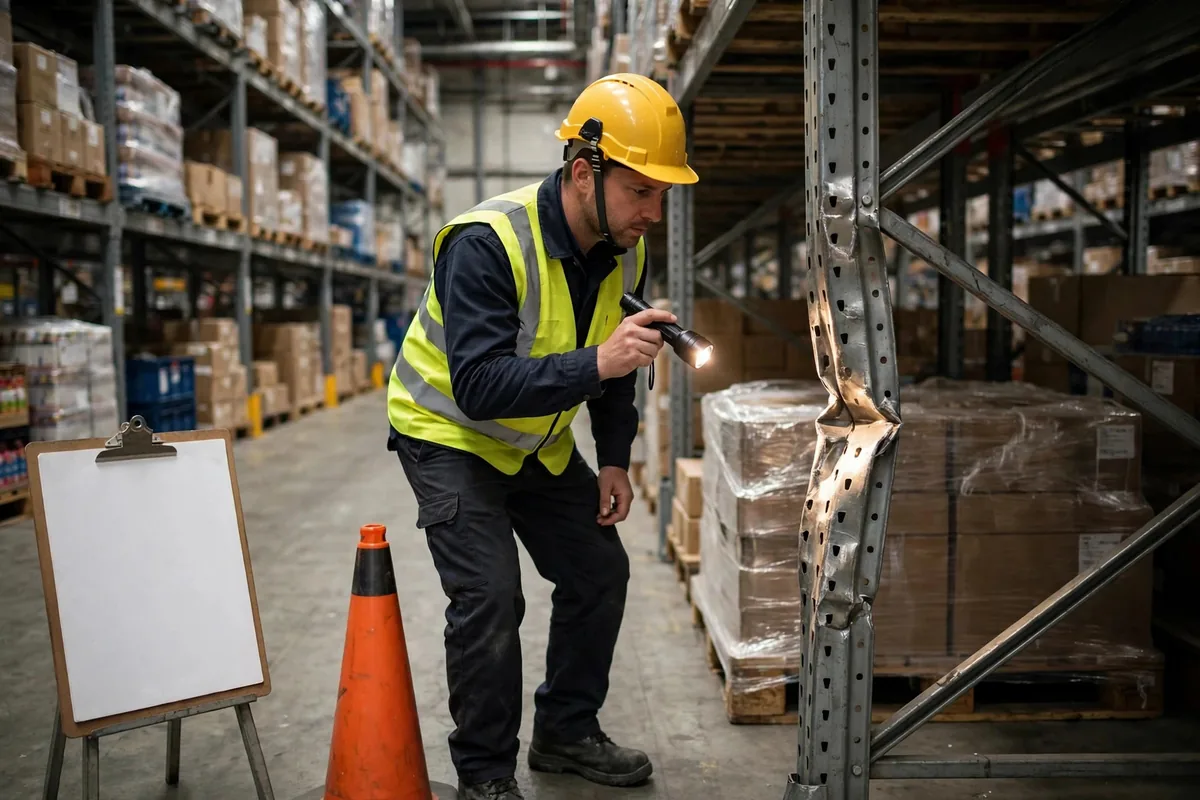
That is not a scare line. When forklifts and people share a lane, the bill is never just "a bump." Goods fall, racking bends, the forklift sits dead, the whole line waits — and the numbers stack up faster than anyone budgets for. A pedestrian lane looks like spending on the books. In practice it is the cheapest insurance a warehouse can buy.
One Scrape, Itemized: The Cost of Warehouse Pedestrian Safety Ignored
The table below is a hypothetical example. The figures are built on a typical mid-size e-commerce fulfillment warehouse — use the proportions, don't quote the amounts:
| What you lose | Hypothetical cost |
|---|---|
| Fallen goods | $1,100 |
| Racking repair and reset | $700 |
| Forklift down for half a day | $400 |
| Incident handling and reporting hours | $300 |
| Insurance uplift and miscellaneous | $300 |
| Total | $2,800 |
One scrape, nobody hurt, and the hypothetical bill is $2,800. And that is the cheap version. The moment someone is injured — lost time, compensation, inspections — the bill leaves this scale entirely. As for OSHA fines, I won't put a number on them here; check the OSHA website for the latest schedule. But one thing needs no checking: the days lost to a shutdown order cost more than the fine itself.
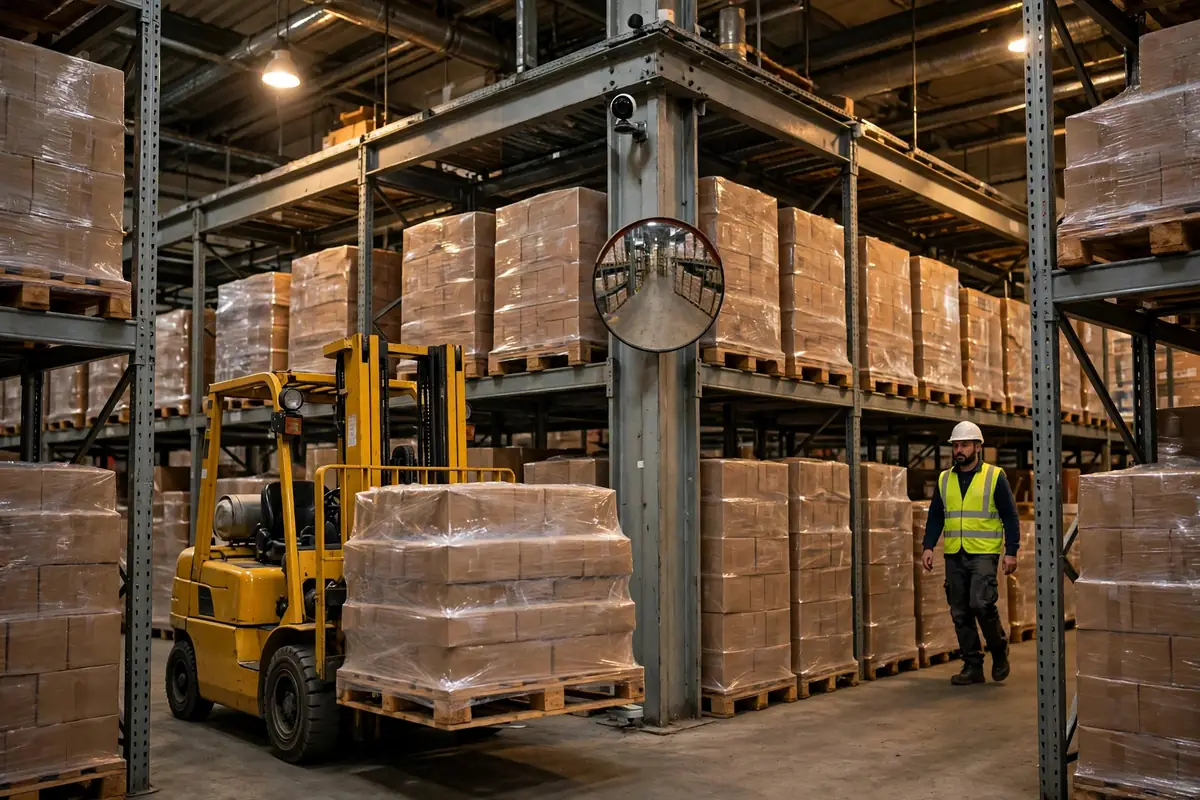
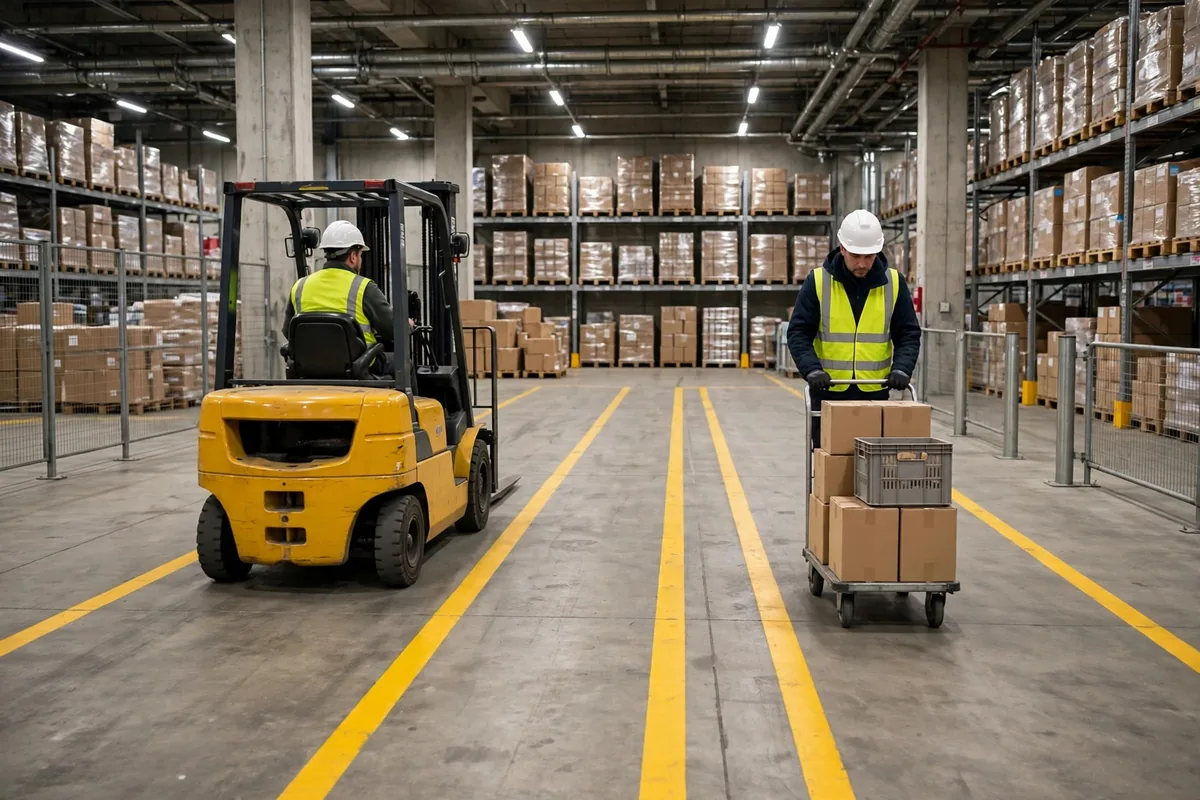
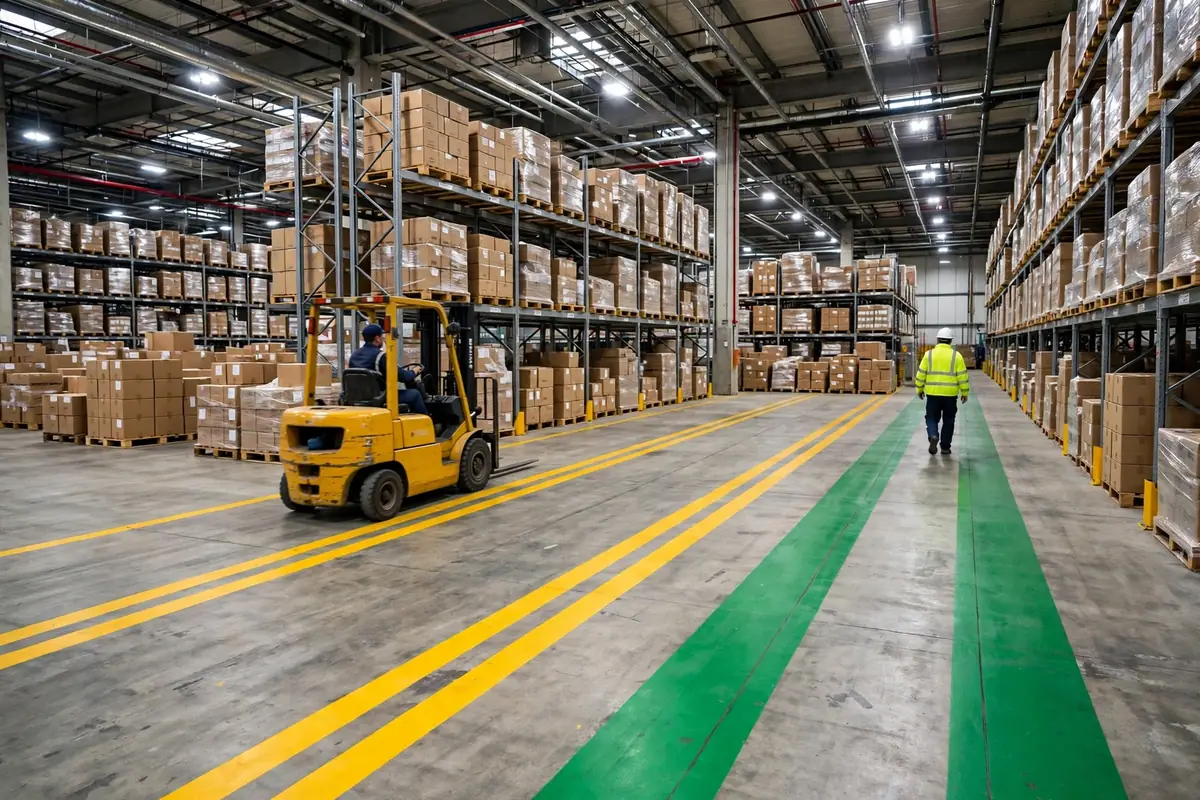
I worked with an e-commerce fulfillment warehouse in California that spent one week before peak season painting lanes, putting up signs, and hanging convex mirrors on the blind corners, separating the pedestrian walkway from the forklift lane completely. They also moved the receiving-area walkway to the outside of the racking, so drivers reversing out never had to worry about someone behind them. That peak season they had zero scrapes. On the other side I have seen a warehouse with no lanes at all, where a forklift clipped a row of racking in the main aisle and half the storage area stopped for most of the day, orders piling up until past midnight. The difference between the two wasn't luck. It was paint on the floor.
Three Ways to Spend on Warehouse Pedestrian Safety
Warehouse pedestrian safety spending comes in three tiers, and the more you spend, the less you depend on people being careful. The figures below are a hypothetical example, estimated for a mid-size warehouse:
| Tier | What you do | Hypothetical cost | Weakness |
|---|---|---|---|
| Tier 1 | Paint lanes and put up signs only | $700 | Relies entirely on people behaving; once the paint wears off, nobody follows it |
| Tier 2 | Lanes plus guard rails and corner mirrors | $2,800 | Crossings still depend on people yielding |
| Tier 3 | Rails plus badge gates, sensor alerts, training | $7,000 | Highest cost, and it needs maintenance to keep working |
Is the money wasted? Hold it against the first table. Tier 1 pays for itself if it prevents a single scrape. Tier 2 breaks even on one scrape in this hypothetical. Tier 3 is expensive, but it guards against the injury case — and injuries don't fit on this kind of table. A small warehouse shouldn't force Tier 3. Do Tier 1 properly first. Repaint when the lines wear. That beats installing Tier 3 and then never maintaining it.
Here is the counterintuitive part: a pedestrian lane isn't a favor to pedestrians. It's money saved for the forklifts. Once the lanes are separate, drivers stop riding the brake and leaning on the horn every ten meters, and their trips per hour go up. Plenty of owners think painting lines is "people management" money. It's actually "let the trucks run" money. Forklifts moving smoothly is what moves the orders out. That is how the math has to be done.
Right-of-Way: Who Stops, Who Goes — Written in Stone
Right-of-way rules fall apart the moment they become a negotiation. Who goes first at a crossing cannot depend on the driver and the pedestrian politely waving each other through — wave three times and somebody takes the gap. My rule is written down and non-negotiable:
- At every crossing, the forklift stops first and the pedestrian goes first. Nobody steps into the crossing until the forklift is fully stopped.
- At a blind corner: sound the horn, slow down, then pass. All three steps, every time.
- In reversing and loading zones, pedestrians stay out while the forklift works. A rail across the opening saves everyone an awkward conversation.
- Night shift and peak season, when extra hands are on the floor, the rules don't relax. More people means more reason to follow them, not less.
The value of a written rule shows up when something goes wrong: whoever followed the rule isn't at fault, whoever didn't owns it. A rule on the wall is worthless. It counts when it's painted on the floor, standing at the crossing, and in the first day's training for every new hire.
One cost people forget: paint wears out. Forklifts drive over it, feet walk over it, and a Tier 1 line fades until the rule fades with it. My fix is to put repainting on the weekly inspection sheet — the moment a line looks worn, repaint it. The labor and paint for a touch-up cost nothing next to one scrape. Plenty of warehouses paint once and never look again; six months later there's only a faint shadow left, drivers and pedestrians each going their own way, as if nothing was ever painted. Don't save that maintenance money — saving it throws away the money you already spent.
Night shift deserves its own line in the budget. Light is worse, the floor is emptier, speeds creep up, and a pedestrian stepping out from behind racking gives the driver no time at all. Night rules only get stricter: slow at crossings, horn at corners, keep the exclusion zones lit. The electricity costs almost nothing. One accident is what costs real money.
The Payback: A Conclusion You Can Calculate
Payback needs no guesswork. One formula: payback incidents = investment ÷ cost per incident. Run it on the two hypothetical tables above:
- Tier 1 costs $700 against a $2,800 scrape — preventing one incident pays it back with room to spare. Swap in your own warehouse's real numbers; the formula doesn't change.
- Tier 2 costs $2,800 — one prevented scrape breaks even.
- Tier 3 costs $7,000 — it needs two and a half prevented scrapes to break even, but it guards against injuries, and injuries can't be priced this way.
So the conclusion is plain: any warehouse where forklifts and pedestrians still share the floor should spend Tier 1 money on paint first. It is the highest-return investment in the building. Then look at Tier 2 and Tier 3. Run the numbers on warehouse pedestrian safety and they come out to one sentence: the most expensive thing is the luck you feel after nothing happened; the cheapest thing is the few cans of paint before it does.
By Lao Zhou, Logistics Cost Analyst