Our warehouse is 3,000 square meters, and for years palletizing automation was something only the big warehouses could afford. In peak season we ship about 800 cartons a day, and until last year every single one was stacked by hand — by Old Chen and Aqiang, two pairs of arms and two bad backs. Last July, Old Chen threw out his back. Aqiang stacked alone until midnight, and the next morning a pallet tipped over and crushed a dozen cartons. We paid the customer back a couple thousand yuan. That night I sat next to the pallet doing the math: hiring is getting harder, nobody young wants this job, and my two best stackers are both past fifty. That was the night palletizing automation started living rent-free in my head.
But let's be honest — a small warehouse like ours cannot afford to burn that kind of money. A robot palletizer costs hundreds of thousands of yuan, and if it doesn't work out, that's half a year of profit gone. So I didn't buy anything. I did the math first, then went to watch machines running at two other warehouses before spending a cent.
Hand Stacking Held Us Together Until It Didn't
Old Chen is 52, Aqiang is 47, and their hands are actually fast — when they're warmed up they can stack around 300 cartons an hour, neat and square. The problem isn't speed. People get tired, take sick leave, and throw out their backs. During the big promotion week last year, Old Chen took three days off, Aqiang covered alone, and on the third night a pallet went over. Damaged goods plus the payout came to nearly 3,000 yuan. That week I ran the numbers: two stackers cost us close to 20,000 yuan a month in wages and social insurance — over 200,000 a year. That's enough for the down payment on a semi-automatic palletizer. Do the math that way and suddenly the machine doesn't look expensive.
But wages aren't the whole bill. Hand stacking has one thing machines don't: judgment. Cartons come in odd sizes, the occasional weird-shaped piece shows up, and a human just looks, adjusts, and stacks it. A machine follows its program — if a carton is two centimeters off, the whole layer goes crooked. That's our real situation: modest volume, mixed SKUs, no standard carton size. Exactly the kind of warehouse automation hates most.
Palletizing Automation: Three Bills Before You Buy
I visited two suppliers and asked around, and this is the comparison I pieced together. The numbers are typical ranges and vary by model — treat them as a guide, not a quotation.
| Method | Upfront cost | Stacking speed | Best for | Biggest trap |
|---|---|---|---|---|
| Manual stacking | Zero | About 250–350 cartons/hour | Under 500 cartons/day, very mixed SKUs | Hiring is hard, injury risk, peak season breaks down |
| Semi-automatic palletizer | Tens of thousands to low hundreds of thousands of yuan | About 400–600 cartons/hour | Fairly uniform cartons, 800+ cartons/day | Changeovers need re-tuning, mixed loads still jam |
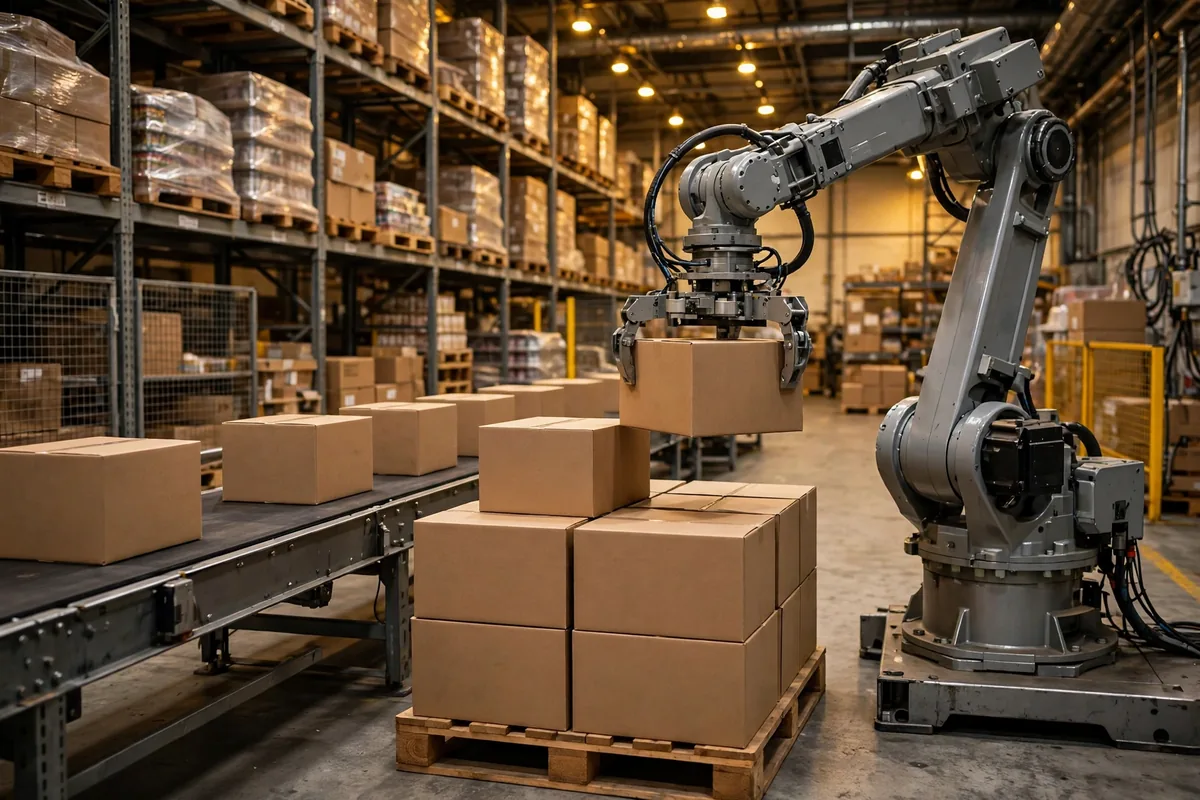
| Robot palletizer | Several hundred thousand yuan and up | About 400–800 cartons/hour | 1,500+ cartons/day, uniform cartons | Integration and maintenance are pricey, a day of downtime hurts |
There are three bills, not one. The first is buying the machine. The second is keeping it alive: electricity, servicing, replacement grippers, paying someone to come fix it — that adds up over a year. The third is downtime: when a worker calls in sick you find a replacement, but when the machine goes down the whole line waits. At under 1,000 cartons a day, our payback math on a robot palletizer stretched past three years. Too long for us.
Here's an illustrative example, not our real books: assume 1,000 cartons a day, 300 working days a year, labor at 240,000 yuan a year. A robot palletizer costs 400,000 yuan and 40,000 a year to maintain. Saving one worker saves 120,000 a year, so payback is 400,000 ÷ (120,000 − 40,000) = 5 years. Double the volume and payback shrinks to just over two years. See the point? Whether it pays off is decided by volume, not by the machine. The sales brochure will brag about speed and never show you this calculation.
The Cheap Fix I Tried First: Half Great, Half Disaster
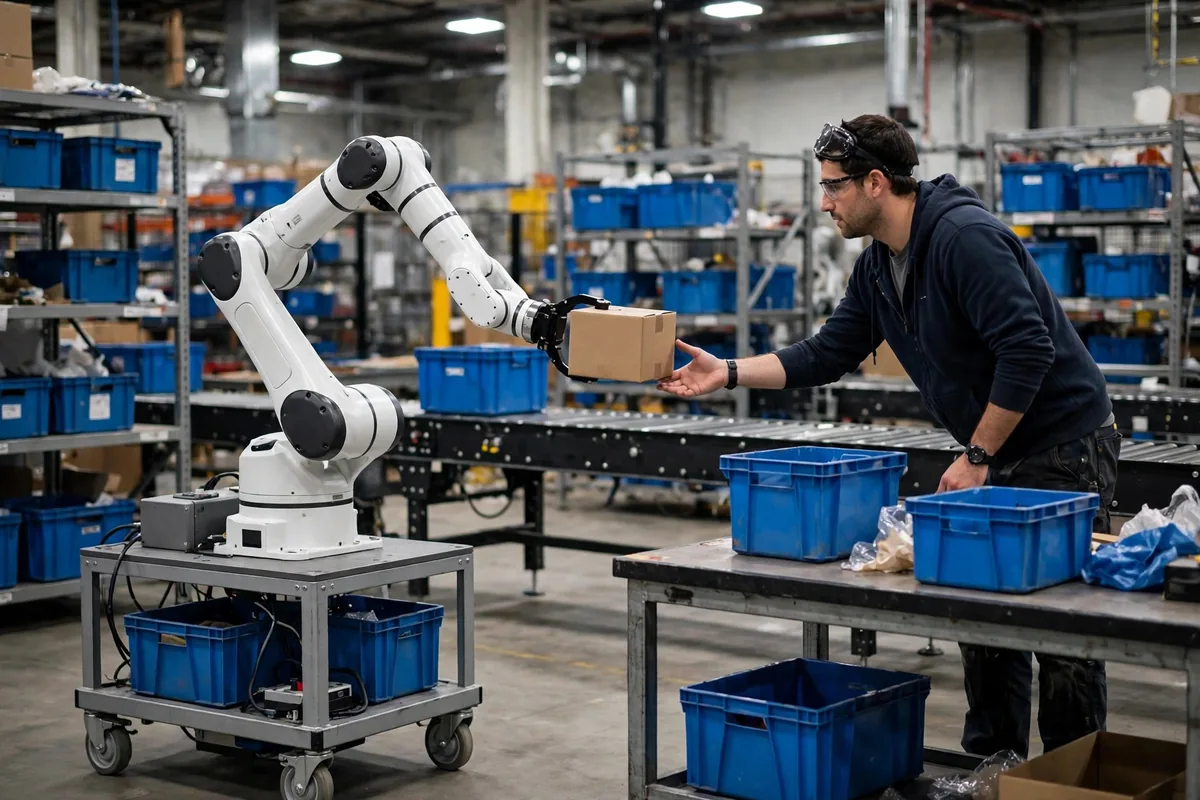
A robot was out of reach, so I bought a secondhand semi-automatic palletizer for just over 60,000 yuan, hoping to solve half the problem. The first week was wonderful: same output, Aqiang went home at 4 p.m., and the pallets looked straighter than anything we'd stacked by hand. Then week two happened. A customer's cartons were soft-sided. By the third layer they started leaning, and the machine doesn't know how to give a carton a little nudge — the whole pallet went over and we spent two hours reworking it. That's when I learned the truth: give a semi-automatic machine hard, uniform cartons and it's magic; give it soft, mixed cartons and it's dumber than a person.
My friend Lao Li learned it the expensive way. He stretched his budget for a full robot palletizer, but his SKUs were so mixed that they spent two months swapping grippers and tuning settings. The peak season came and went with people doing the stacking while the robot stood there like an expensive ornament. His advice to me was blunt: machines don't get tired, but they panic when your cartons all look different. I've remembered that sentence ever since.
There was one more lesson, and it was about the cartons themselves. We found that cartons of the same size but cheaper board would crush at the corners and lean by the third layer. A machine doesn't feel sorry for your carton — it just follows the program. Before buying any machine, get your carton board weight and crush strength under control. That small money is worth more than the machine itself.
Palletizing Automation for Warehouses Our Size: My Advice
Here's the counterintuitive part: the hardest part of palletizing automation isn't the machine, it's your own cartons. Mixed sizes, soft board, big weight differences — no robot, however expensive, stacks those neatly. If you want automation, first spend a little money standardizing your carton sizes. That's the real upfront investment.
Three suggestions for warehouses like ours. If you're under 800 cartons a day, don't touch a robot palletizer — fix your labor scheduling and pallet flow first and squeeze efficiency out of people. If you can standardize down to three or four carton sizes, look at semi-automatic: small investment, fast payoff. And if you do go for a robot, rent one first or get the integrator to run an on-site trial through a full peak month before you sign anything. Don't buy off a demo video.
Small warehouses have their own way of surviving. We want automation — but on a small warehouse's terms, not on a big company's sales pitch.
By Xiao Ma, Small Warehouse Owner