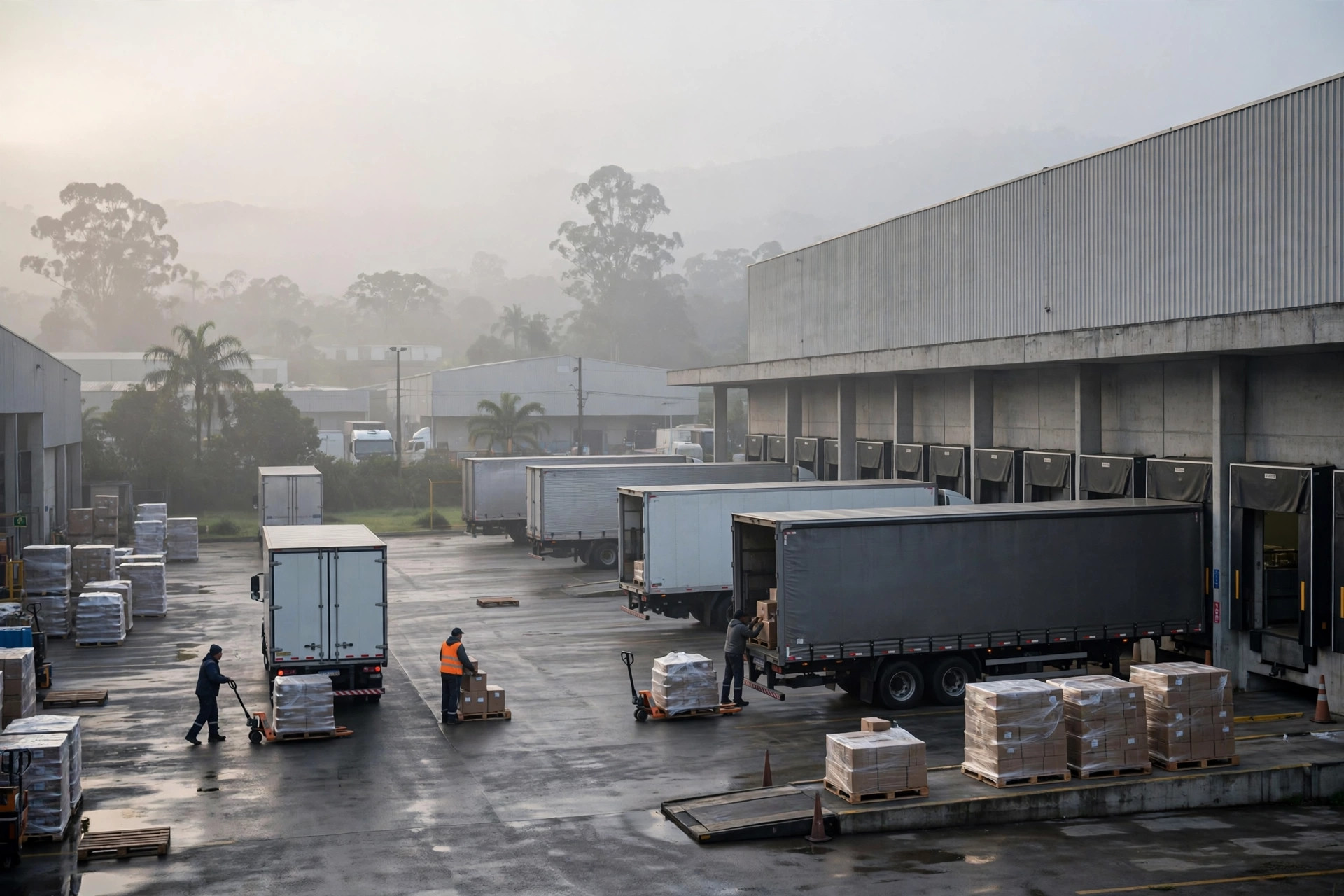
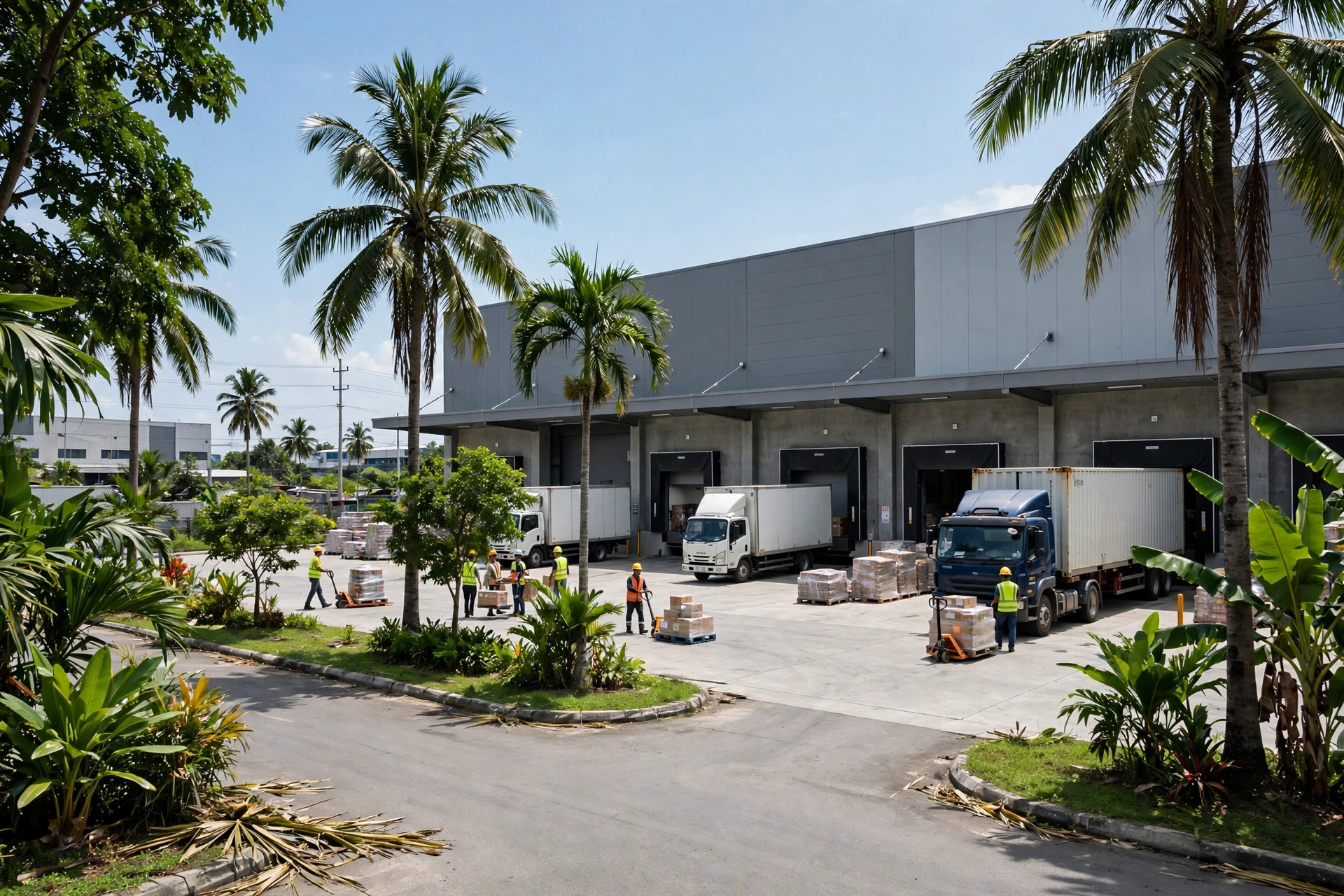
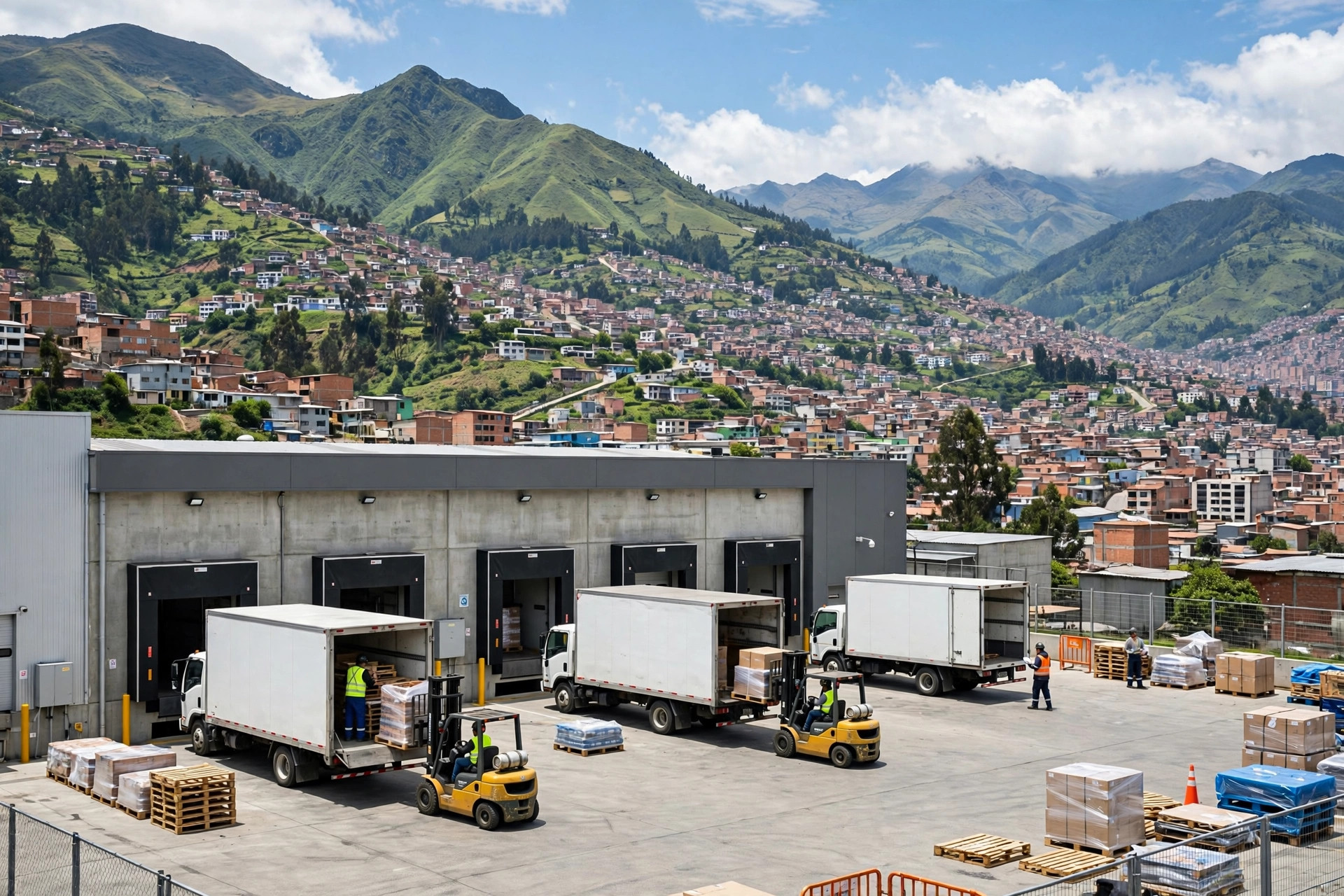
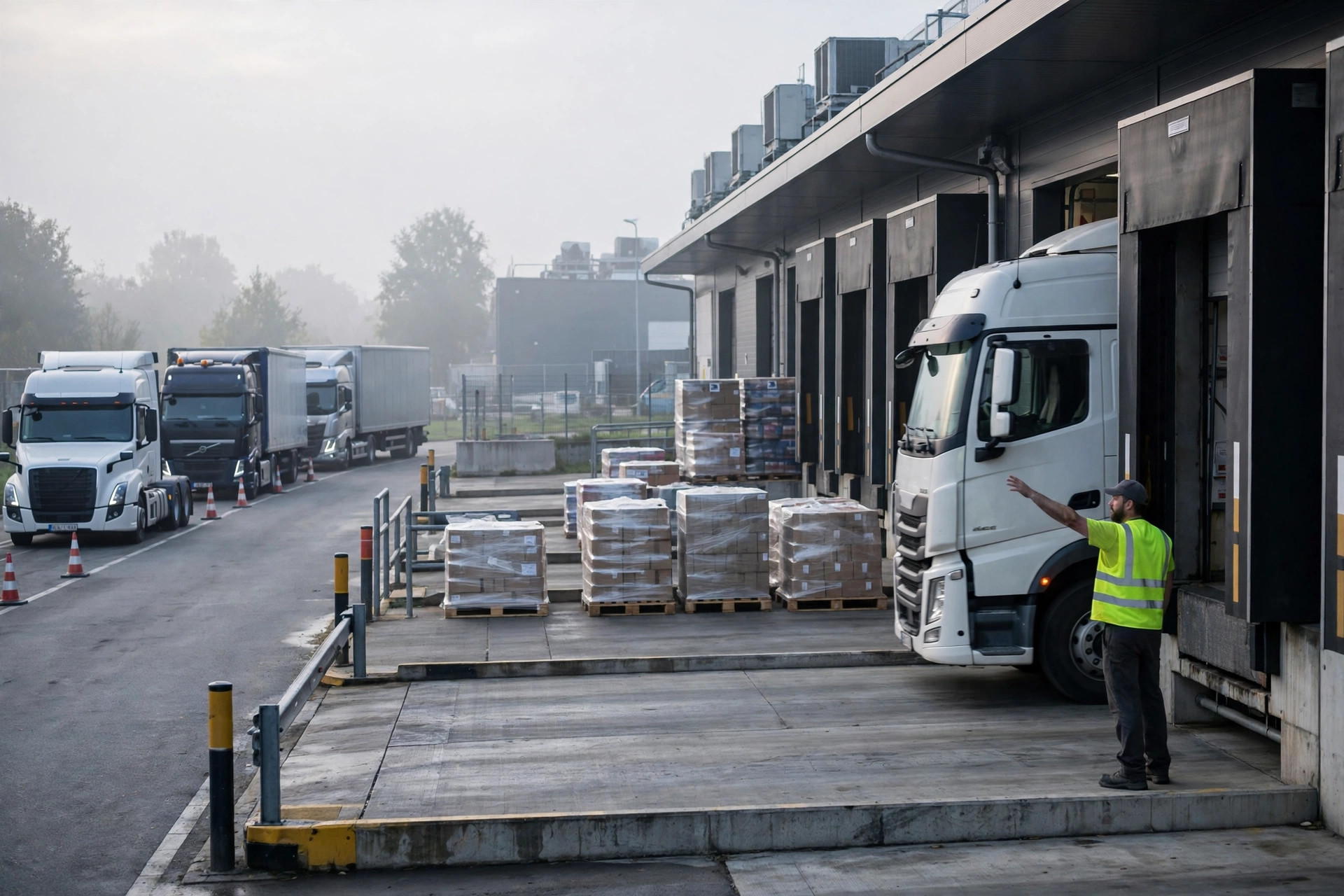
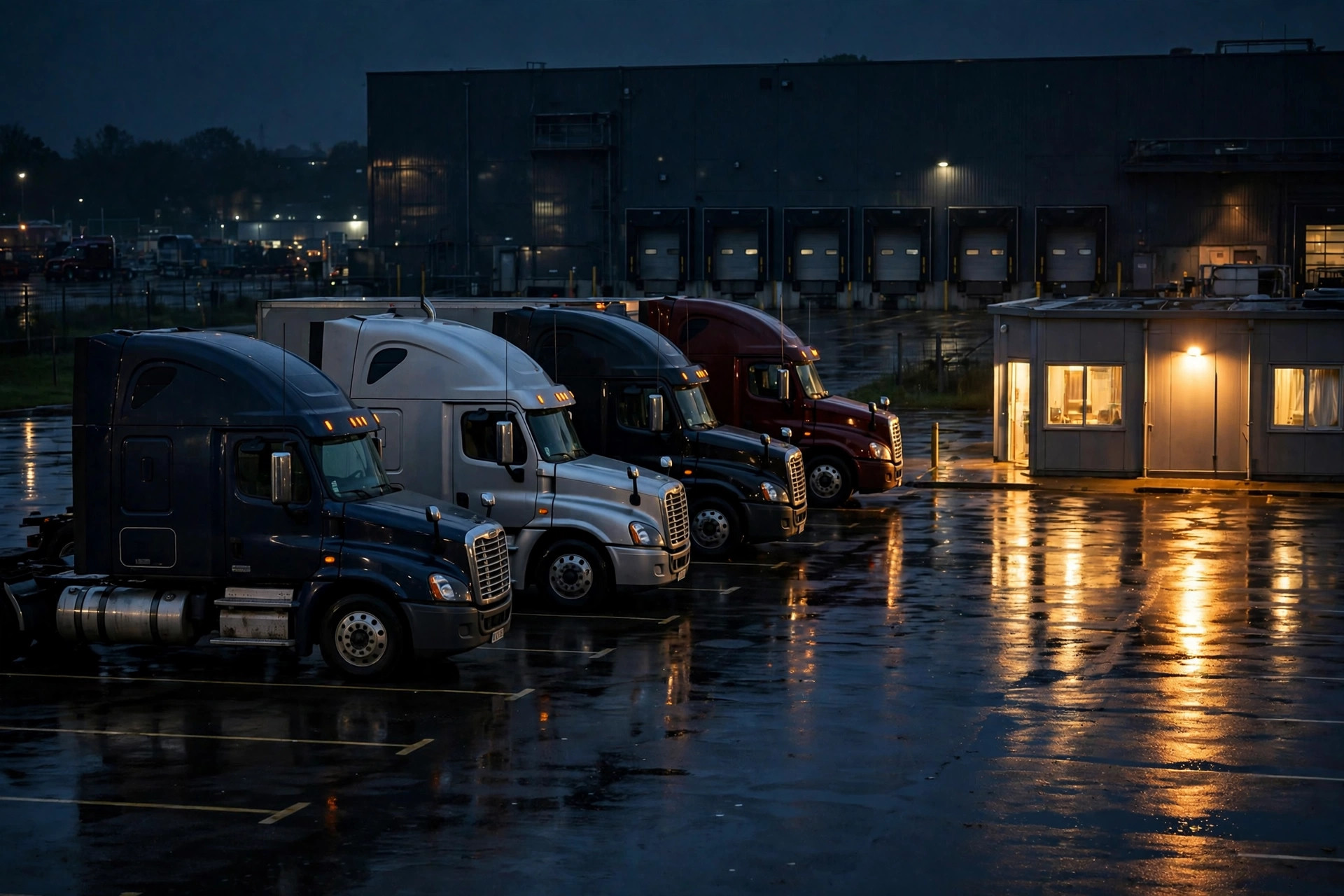
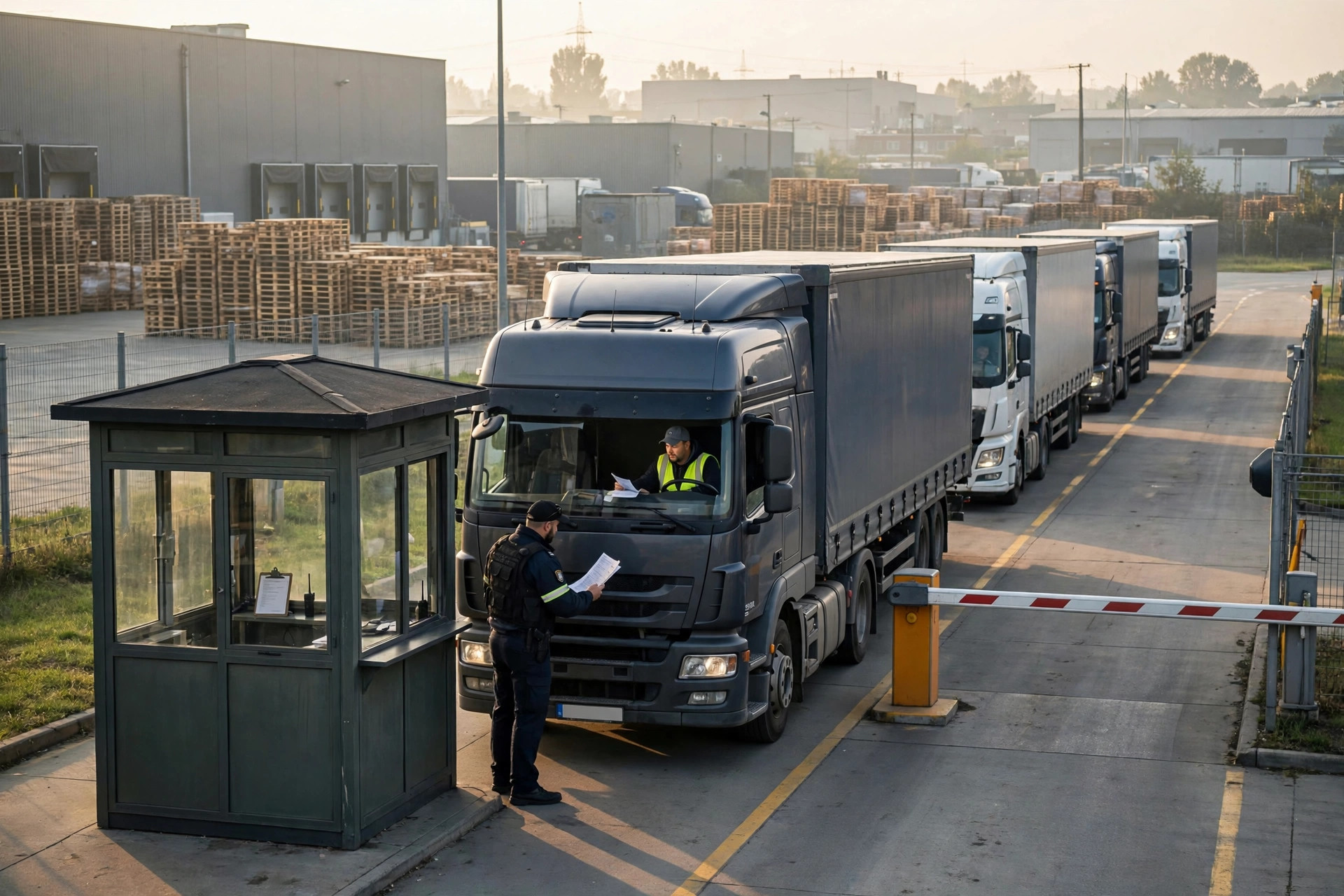
Every warehouse has a patch of ground like this: indoor slots fill up, so freight goes out to the yard. It is meant to be temporary, but temporary has a way of lasting for months. The problems of an outdoor yard rarely show up on the day the freight is placed. They show up after a storm, after a stock count, or after something goes missing, when the bill finally comes due. Reviewing the usual post-mortems, the causes are seldom one extreme weather event. They are drainage, tarping, security, and rotation left unmanaged over a long period. Get those four accounts in order, and an outdoor yard stops being a place of compromise and becomes a controllable storage resource.
Outdoor Storage Yards Fear Standing Water, Not Rain
Consider a familiar scene. A building-materials distributor in eastern China had a concrete yard, graded years earlier, with a shallow dip in the middle. On an ordinary day it looked fine. After sustained rain, water pooled in the dip and rose past the bottom of the pallets, and the cartons at the bottom came out damp and mouldy when they were finally opened. That freight was not ruined by rain falling on it. It was ruined by sitting in water.
The distinction matters. Drainage in an outdoor yard starts not with buying a pump, but with reading the ground. Before stacking anything, three questions need answers: does the surface slope toward a drain, is the low spot exactly where freight will sit, and are the drains blocked by pallets, dunnage, and debris? Many drains start out clear and become blocked through ordinary use, until in practice there is no drainage at all. The fix is unglamorous: map the yard by zone, reserve low ground for freight that can tolerate wet feet or leave it open as a lane, clear the drains before the rainy season, photograph the result, and assign the job to a named person. After heavy rain, check the low ground first and the tarps second. The order matters.
A small detail has outsized effect: a pallet flat on the ground leaves almost no gap underneath, so standing water reaches freight immediately. Raising freight on dunnage or plastic pads is the cheapest insurance a yard has, creating room for water to run off and for inspection. Check ground clearance before and after the rainy season, and fix failures the same day.
Tarping an Outdoor Yard: Covering Well Matters Less Than Recovering Fast
Tarping is often treated as manual labour. In practice it is the part of yard management most sensitive to process. Take a home-goods warehouse in southern China. The tarp was fastened tightly, its corners weighted down, and it looked invulnerable. The failure came at pick time. To reach a pallet in the middle, workers lifted the whole tarp, picked the freight, and did not put it back properly. An afternoon shower soaked everything left exposed. The tarp was not defective. The process around the tarp did not keep pace with picking.
Manage tarping as three actions: cover, pick, and recover. When covering, run the tarp so water sheds outward, and leave an inspection opening rather than sealing a stack into an unopenable bundle. When picking, open a small section, pick, and recover immediately. Recovery needs verification: whoever makes the last pick of the day confirms the tarp is back, with a photograph or a handover-log line. A spoken assurance is not a control.
Here is a counterintuitive judgement worth pausing on: a tighter tarp is not always a safer tarp. A fully sealed tarp, under large day-night temperature swings, can trap condensation inside, so packaging effectively sweats under cover. In humid seasons, airtight tarping can leave cartons soft and metal parts rusted. The better aim is a roof that keeps rain out while letting air move: rain protection on top, airflow at the sides, clearance at the bottom. Rain protection and ventilation are a pair of goals to be held together. Serving one and abandoning the other sends the bill to freight damage sooner or later.
Yard Security Is Mostly About Casual Loss and Process Gaps
When people think about yard security, they think of fences and cameras. Fences and cameras matter, but the pattern in most loss reviews is different: outdoor yard losses are rarely dramatic break-ins. More often they are casual losses and process gaps. An extra case loaded on a truck, a return counted short, a night shift that waves vehicles through without checking documents. Over time, the books and the physical stock drift apart until nobody can explain the difference.
Security, then, needs to expand from keeping outsiders out to making every movement of freight traceable. Three places are worth starting. First, zoning and labelling. Divide the yard by customer, product group, or status, and put a clear label on every stack: owner, product, quantity, and date received. Freight without a clear label is the freight most likely to be miscounted at pick time, and the hardest to account for after a loss. Second, document discipline. Outdoor movements deserve the same paperwork and second check as indoor ones. The fact that freight is “just in the yard” is not a reason for verbal handover. Third, night and holiday patrols. The point of a patrol is not to walk a route, but to look for anomalies: a tarp that has been disturbed, a pallet out of place, a vehicle without paperwork.
Loose, low-value freight deserves the same attention: spare parts, samples, and returns accumulate into real losses precisely because their records are usually looser than indoor stock, so concentrating them in one fenced, labelled area with regular counts is far cheaper than investigating after the fact.
The Seasonal Ledger: Outdoor Freight Cannot Sit and Be Forgotten
The fourth account is time. Indoor warehouses talk about first in, first out. Outdoor yards need that discipline even more, because outdoor exposure accumulates by the month: tarps age, dampness creeps in, sun damage builds. Yet in practice, outdoor yards often become places where freight is placed and forgotten, while prime spots near the gate are occupied by stock that has not moved, leaving no room for freight that actually needs to turn.
A workable approach is to give every outdoor stack a maximum outdoor dwell time. When the deadline arrives, regardless of whether there is a shipping plan, the stack gets inspected: is the packaging damaged, does the tarp need replacing, should the freight move indoors or change position? The result is recorded, so the next inspection has a baseline. The length of the deadline can vary with weather tolerance: moisture-sensitive freight gets a short deadline, hardy freight a longer one, but no freight gets an indefinite one. Indefinite outdoor storage is, in substance, unmanaged storage.
Seasonal rotation has a second meaning: the yard layout should change with the seasons. Before the rainy season, move moisture-sensitive freight to high, well-drained ground and clear the low areas. After the rainy season, inspect all outdoor packaging and bottoms, and deal with damp freight first. In windy seasons, check tarp fastenings. In hot seasons, watch what sun does to packaging and labels. A yard layout that follows the seasons, rather than staying the same all year, is what seasonal rotation actually means.
| Management action | Before the rainy season | During the rainy season | After the rainy season |
|---|---|---|---|
| Drainage | Clear drains, check slopes, photograph the result | Check low ground first after rain | Recheck drains for blockage |
| Tarping | Replace damaged tarps, check ties | Recover immediately after picking, confirm daily | Full inspection of tarps and packaging |
| Stock counts | Reconcile outdoor stock to the books | Focus checks on anomalous stacks | Prioritise damp freight for handling |
| Layout | Move moisture-sensitive freight to high ground | Do not add stacks to low ground | Reposition stacks based on inspection |
Seen together, these four accounts point to a broader trend: yard management is shifting from reliance on experienced individuals to rules plus inspection. As warehouses grow and staff turn over, unwritten experience does not survive; one checklist, a few inspection items, and a photograph on file block most of the risk.
As warehouse land grows scarcer, outdoor yards are likely to be used more, not less. The question is not whether to use one, but whether its ledger adds up: where the water goes, how the tarp is handled, how freight moves, and how long it has sat. When those four accounts are clear, a yard stops being the corner where standards are suspended.
By Dr. Chen, Supply Chain Researcher